
Translated material
Slogs will have to be returned
The nineties are closer than you think: why are the authorities prepare for the sequestra
The help that the authorities provided for the economy following the results of a quarantine crisis, the Russians will have to return it back. And they should do it as soon as possible.
This, in essence, is the idea of reducing the budget in 2021–2023, nominated by the Ministry of Finance. The total reduction in budget allocations in 2021 may amount to 1.428 trillion rubles, in 2022-1.892 trillion rubles and in 2023-1.364 trillion rubles. Add: 1.4 plus 1.9 plus 1.4 - will be 4.7. If exactly - 4 trillion 684 billion rubles. In 2020, 5 trillion rubles should be allocated for the “Restoration of the Economics”.
This is pure arithmetic and nothing more. As they gave, they took it back.
It is clear that for the specific amounts and articles of the budget will still be traded by capital ministers and capitalists simply, and state people will prove that they cannot do without reducing expenses, and indeed, they must live in the means, but the trend is obvious. For some reason, the authorities really want to return the money that the citizens just distributed in one form or another. And he wants to do it quickly, until 2024.
And this is the most characteristic and disturbing. The bosses clearly know something that we do not know, or think about something that we have no idea. Otherwise, the decision on the actual demand for “budgetary assistance” cannot be explained. They are afraid of the budget deficit and, the most curious, do not believe in the possibility of overcoming this shortage other than through the sequestration of the budget.
Five sources of money
In fact, you can finance a budget deficit in five ways. The first, the oldest, is a “monetary emission”. To this method, the bosses resort carefully and never calls it directly, because he remembers the nineties with their inflation, which people are most afraid of. In fact, no banks, including central, have no direct levers of “printing”. What we call “money emission” is actually a derivative of the demand for a loan in a particular economy.
In the modern economy, “money” arises when someone lends to someone, therefore they are called “credit”, and banks are only intermediaries in this operation. To make it quite simple - the growth of a dollar loan does not lead to inflation in the United States, because there are a lot of people who want to lend out in dollars. But no one wants to lend out in the monetary units of some Zimbabwe, except for the Zimbabwe government, so in this African country local money was measured for kilograms-there was no demand for them.
In this sense, Russia, of course, is not Zimbabwe, but the demand for a loan in rubles is not as high as it seems to us.
Another way is to increase taxes. The government has already gone along this path, direct and indirect taxes will grow, although our tax burden is already on average higher than in Europe. But you can’t increase taxes quickly, Russians in this sense know how to dodge the bossy fist.
Mechanism number three - an increase in external debt. No, the authorities are not going to do this, and the matter here is not even in sanctions - just an appeal to the “Western partners” will look, from the point of view of the authorities, as a refusal of confrontation policy.
You can increase the internal debt, the government does this, although, in essence, banks buy federal loan bonds at the funds that the Central Bank represents them. In fact, this can also be considered a monetary issue, but, as we recall, this word for use is almost prohibited.
But in any case, the main way to overcome the budget deficit of the authorities see the actual sequestration. Moreover, as we have already believed, the dimensions of this sequestra almost accurately correspond to the size of anti -crisis “budgetary care”.
Income was ordered to stand quietly
At whose expense will there be savings? The salaries of state employees, pensions, scholarships and other “normative expenses” will not touch. But from everything else, every tenth ruble will be removed. It is assumed that even the state arms program will lose about 5% of financing.
However, it must be understood that this program is not about preparing for the war, but about the content of the remains of the Soviet military -industrial complex, which the authorities continues to imagine one of the technological and industrial drivers of the economy. There is nothing to do, well, so people see the world. However, the authorities tried to reduce the costs of “defense” repeatedly, but each time nothing happened.
What this reduction will turn out: first of all, a slowdown in the rate of restoration of the economy.
More than 80% of Russians directly or indirectly depends on budget expenditures, and it is clear that there will be no rapid growth of well -being - he has nowhere to come from. Actually, a new version of “national plans”, for example, in the part that concerns the real income of pensioners, is evidenced about this.
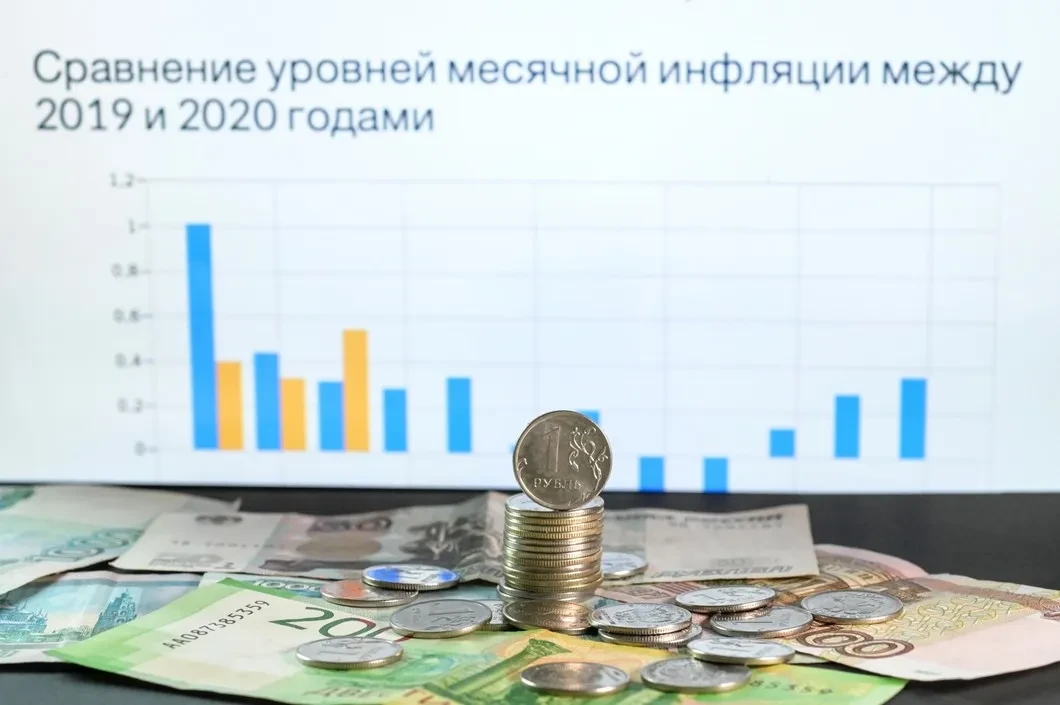
The previous version of the “May decrees” of 2018 provided for “an increase in the level of pension provision above the inflation rate” by 2024. That is, pensions should have grown to the level of "inflation plus some other percentage." For example, in 2018, official inflation was 4.3%, and in 2019, pensions were indexed by 7.05%.
Now it may not be so. In the Decree of 2020, the requirements for the growth of the pension are formulated differently. Now it is required to ensure a "steady growth in the level of pension provision at least inflation." That is, it is planned that the pension can be indexed no more than the inflation level - and this will be enough to fulfill the decree.
In general, this is the recognition that the plan does not provide for the growth of real income.
Who will be good
Reducing budget expenditures is a very controversial step from the point of view of maintaining economic growth, while governments around the world seek to increase expenses in order to provoke consumption growth.
But who said that economic growth (along with an increase in consumption) is a real priority of the government?
Neither stagnation nor income falls. The only thing that really excites the authorities is the state of gold and foreign exchange reserves, which serve as a guarantee of maintaining foreign exchange reserves of the largest Russian exporters.
There is no need to count on the growth of export and foreign exchange earnings in the coming years, the authorities understand this. So, in order to maintain “what is”, it is necessary to limit the demand for imports, accordingly and demand for currency within the country.
The easiest way to achieve this is due to a reduction in consumption. So the sequestration of the budget means such a reduction in consumption! Less money for people - more currency will remain at the disposal of exporters.