
Translated material
To an irremovable autocracy
Memory of the constitutional process (1993–2020)
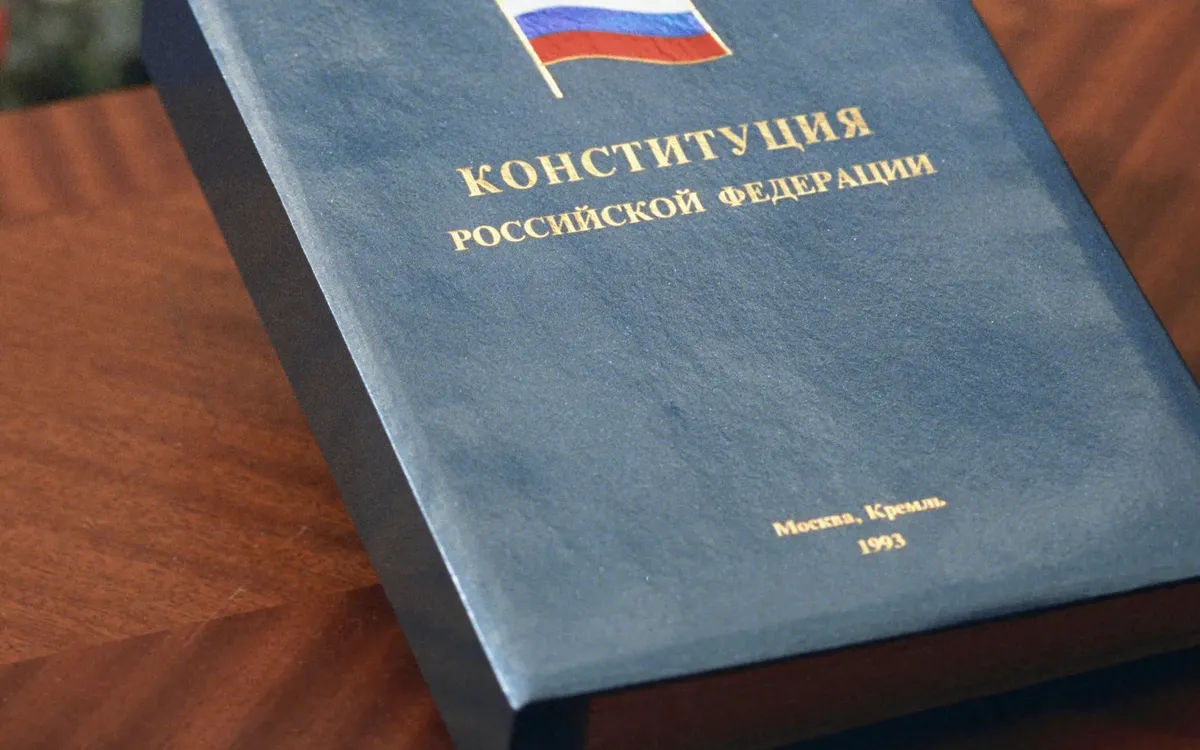
“In a seriously ill Russian state, the creation and adoption of a fair and humane constitutional document seems difficult, important, but still only the first stage of public recovery. Not only to adopt the Constitution, but to achieve the strengthening of a democratic constitutional system in the country, to turn public consciousness from the head to the feet and put it on a strong foundation of respect for the constitution, law and law, friendliness and social solidarity - these are the components of the constitutional process that began in the renewing Russia ... ”
Thirty years ago, in July 1990, such tasks were set by the Constitutional Commission of the RSFSR, created by the decision of the first congress of people's deputies.
The messenger of this commission, published in October 1990, is still one of my table books.
And with every look at him again and again the question arises: why should we talk about the “democratic constitutional system” and “respect for the constitution, law and law” today, is it possible for a mockery?
The monopolization and irremovability of the authorities, the transformation of elections into a decorative procedure, the lack of independent justice, the transformation of television into the department of state propaganda, the non -freedom of the word, the adoption of key decisions by unknown way and according to unknown criteria, equating opposition to hostile, the merger of the ruling party with the bureaucratic apparatus - the similarity with what 30 years ago were collected decisively, decisively refuse, decisively refuse, decisively refuse, obviously.
Viktor Sheinis, one of the “fathers” of the 1993 Constitution - sadly noted that “the most important driving forces of authoritarian restoration arose as a result of reformatting forces that buried the communist system.”
How could this happen?
Why, instead of progressive movement, everything went in a circle and almost returned to the previous, unkind memory of the time?
My answer:
Because in the fall of 1993, a model of a replaced autocracy was chosen for Russia, which, of course, subsequently wanted to become irremovable.
The main dispute in the Constitutional Commission, of course, turned around the future form of the state structure of Russia: the presidential or semi -presidential republic?
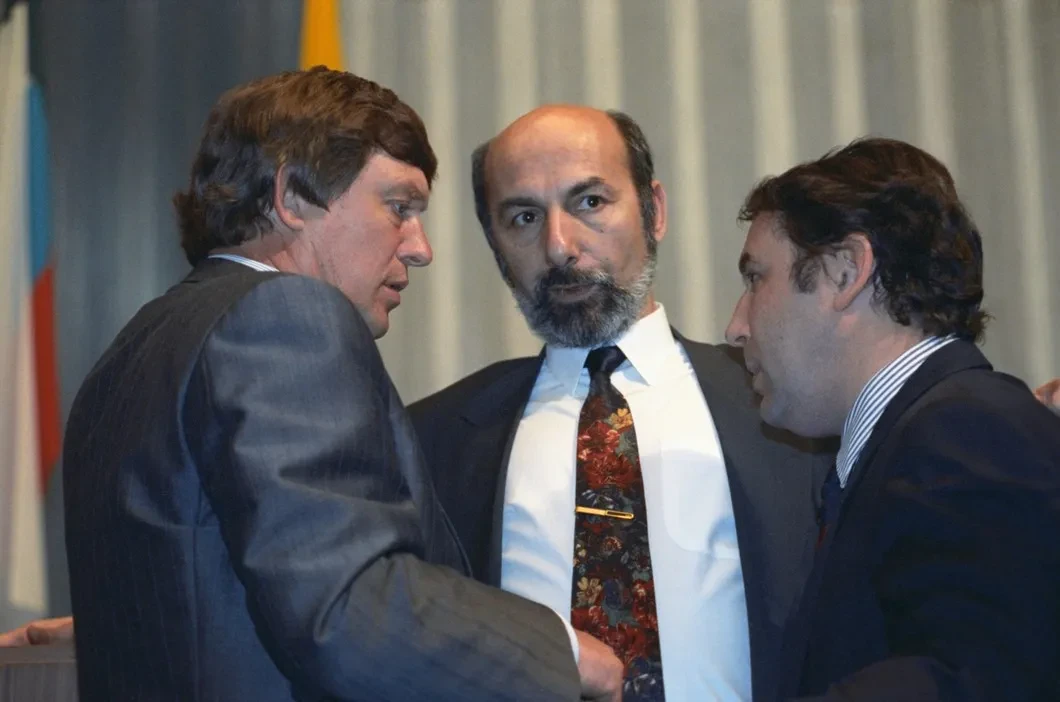
On the one hand, it was said that a strong parliament is needed and the prevention of excessive strengthening of the executive branch, which can lead to a new dictatorship. On the other hand, that in the absence of strong parties and political traditions, the presidential republic of the “North American type”, where the president leads the executive branch, will be more effective.
The option, which was defended by a group of deputies, led by Leonid Volkov, Revolt Pimenov and Viktor Sheinis, proposed a semi -presidential republic - with the government, which is formed by the parliamentary majority. At the same time, the president would not be the “All -Russian Administration”, and, ensuring the balance of branches of power, could not command them.
Another option, which was proposed by a group of experts, led by Valery Zorkin (future chairman of the Constitutional Court), provided for “strong presidential power”, in which the government “is not a hostage to unstable coalitions in parliament”. They criticized the semi -presidential republic, believing that the prime minister, based on the parliamentary majority, "turned from the servant of the president into his master."
Note: the intentions of Boris Yeltsin to become from the speaker of the parliament (that is, the coordinator of the collegial body) by the president, the ruling solely, clearly indicated in early 1991. And on March 17, 1991, simultaneously with a referendum on the preservation of the USSR, a referendum was also held on the introduction of a presidential post in Russia (then another of the Union republics). After 70% of the referendum participants voted “for”, the relevant law was adopted, and on June 12, 1991, Yeltsin was elected president.
Then the president and his supporters more and more relied on “strong executive power”, which “knows how” and for which parliamentary discussions are an annoying obstacle during the desired (but not made by a majority of society) economic decisions.
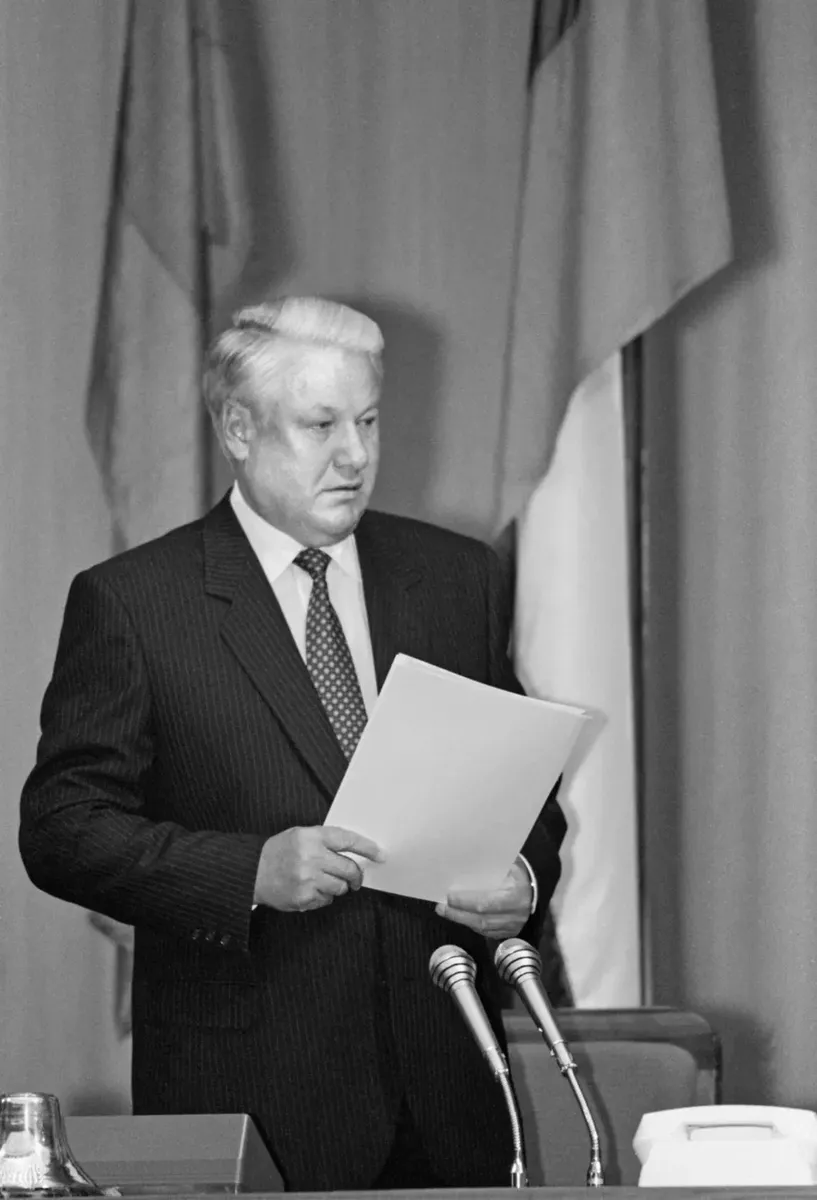
After the well-known referendum of April 25, 1993, Yeltsin created his own structure to prepare a constitutional project to the president and congress-a constitutional meeting, which began to prepare a purely “presidential” version.
The competition of projects continued until the congress and “Black October” continued, after which there was only a variant of the constitutional meeting on the stage. It was he who (and even corrected by the president at the last moment) and was submitted to the referendum on December 12, 1993.
The fact that the autocracy is programmed by this constitution was clear to many (including the author) even then. But it was useless to explain to the supporters of the “strong executive branch” that the Constitution would write “President”, and not “Boris Yeltsin”, they, striking the victory over the “enemy” in the person of parliament, sought to consolidate this victory in the constitution.
The adoption of the constitution took place in conditions, to put it mildly, not contributing to a real discussion.
And in some ways similar to those in which the current constitutional amendments were adopted.
The project was published on November 10, 1993 - a month before the vote.
Television was completely controlled by the president and government, there was no federal parliament, the overwhelming part of the regional ones, as well as all city and district councils were dispersed - there were no sites for discussions.
State propaganda worked exclusively “for” the new Constitution, and it was possible to criticize the project in a few newspapers that decided to do this, and even in election performances - in parallel there was a campaign for the election of deputies of the State Duma and the Federation Council. At the same time, the First Deputy Prime Minister (and the future head of the Federation Council) Vladimir Shumiko openly threatened the block “Yavlinsky-Boldyrev-Lukin” (the future “Yabloko”) with the election for criticizing the draft constitution.
As a result, the project was adopted, or rather, declared adopted.
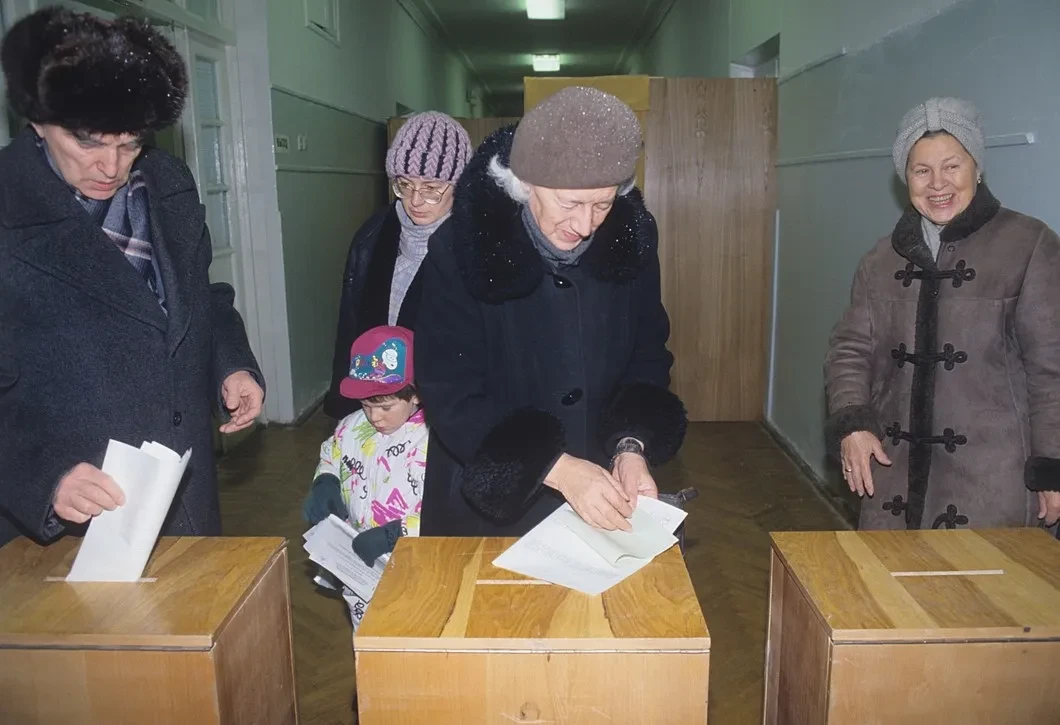
It was stated that 58% of voters voted for, but there are great doubts that more than 50% of voters participated (which was necessary) in the referendum. According to the well -known conclusions of the expert group, Alexander Sobyanin, there were large -scale falsifications (mainly attributed a turnout), and only 46% of voters really participated. But this could not be checked: by order of the head of the CEC of Nikolai Ryabov, the ballots were destroyed, and all attempts to conduct a parliamentary investigation in the chosen State Duma - blocked ...
So the still replaced autocracy was created.
But from the very beginning, all conditions were laid in the Constitution to ensure that it gradually became irremovable.
The almost omnipotent president, endowed with the widest (including personnel) powers, is uncontrolled and not taking any responsibility either to citizens or to parliament.
The almost powerless parliament, unable to insist on the candidacy of the prime minister, not even affirming a part of the government who does not have the opportunity to insist on the resignation of the prime minister, the entire government or individual ministers.
And only on paper an independent court, where the president appoints all judges.
With such introductory ones, one can only be surprised that the “conflict between the autocracy and the elections” (the expression of brilliant Lilia Shevtsova) led to institutional changes only 20 years after President Putin came to power, and not much earlier.
The way out of the situation is not just a rejection of these changes (the adoption of which was also accompanied by monstrous falsifications).
The way out is the rejection of the autocracy.
Yes, almost everything must start again.
And it is important not to repeat the previous mistakes.