
Translated material
The evolution of dignity
The Kremlin was waiting for the wrong protests. In Russia and in Belarus, society has matured to the demand to respect its political rights
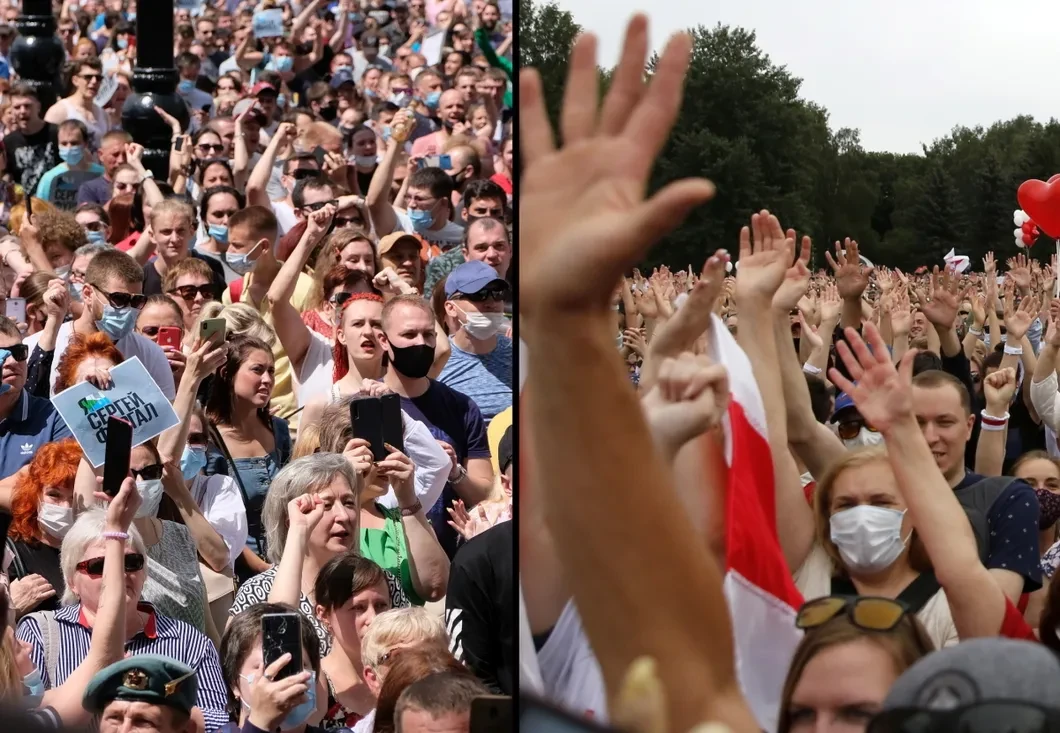
Sociologists and political analysts predicted that in 2020, protests would begin in Russia. According to the Levada Center, the number of those who are ready to protest or with sympathy belongs to the protesters has growed in recent years (by the beginning of the summer, 28% of respondents stated their approval in shares). At the same time, it was usually believed that people's performances would be social in nature and will be related to factors such as a drop in living standards, poor ecology and unemployment growing due to coronavirus.
They were preparing for the same scenario in the Kremlin, the tactics of which are to maintain support for state employees, but at the same time sequentially withdraw the remnants of political rights from people. It was in this that the meaning of “zeroing” and the laws accompanying it, in particular, was just adopted, about “multi -day voting”.
The loyalty of state employees (and there are about half of them among working citizens after 20 years of “stability”, and this is enough to win any elections) is corny. And inexpensively: the authorities rightly reason that the civil servants still have nowhere to go to the current Russian market.
However, events in the Far East, rhyming today with folk speeches in Belarus, show that the Kremlin has made a false bet. By 2020, large Russia demands for itself not only a well -fed life, but also the political representation and respect of the dignity of people.
In Khabarovsk, Komsomolsk-on-Amur and Vladivostok, people really go out onto the streets, but do this not for social reasons: they demand that their interests be taken into account when making political decisions.
A similar agenda was declared by residents of Moscow after shameful elections to the State Duma of 2011. Then the main line of explanation of these events on the part of propaganda was that the well -fed Muscovites want too much, because they do not know how the rest of the country lives. The workers from the famous Uralvagonzavod were supposed to come and put the presumptuous representatives of the creative class in place. Now the Far Eastern regions of Russia have become the center of the struggle for political dignity, where the workers and the same state employees protect the right to an honest court for the chosen one, and not the governor appointed from Moscow. One of the important slogans of Khabarovsk now - "Wake up, Moscow." The demand to present our interests in power bypassed Russia around and is now returning.
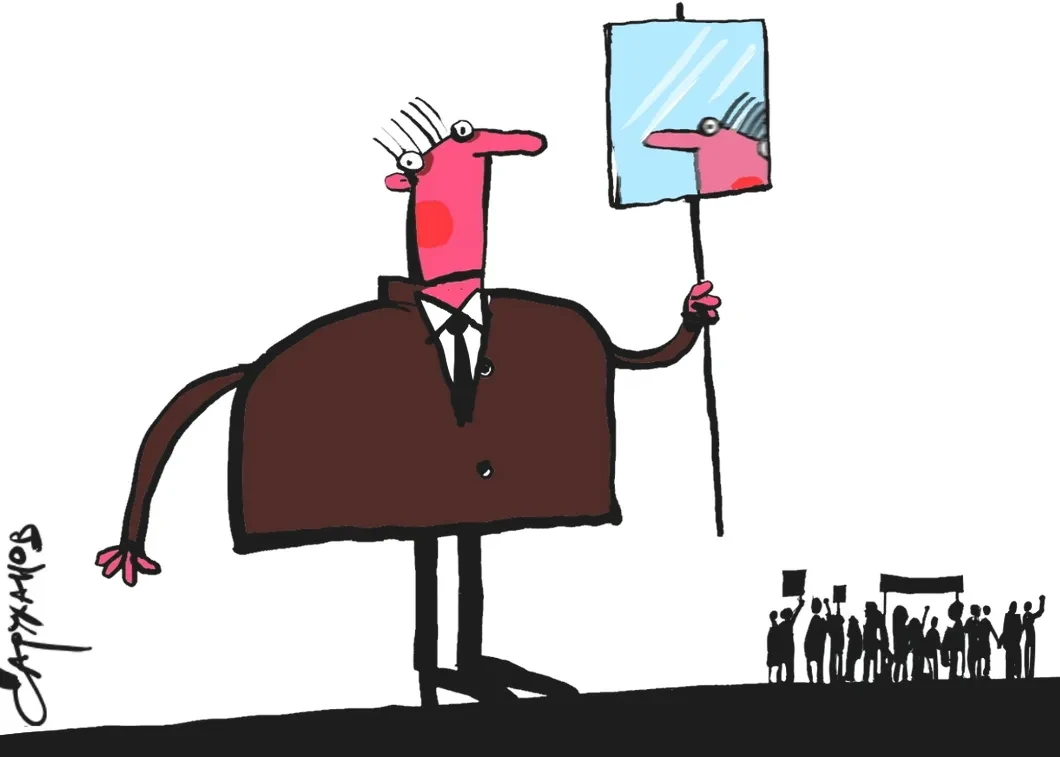
The silence of propaganda and a clear personnel mistake with the appointment of an alternatively charismatic acting acting in Khabarovsk Mikhail Degtyarev demonstrate that
The Kremlin has nothing to answer the growing number of political requirements.
In parallel, the replacement of power (in fact, democracy) is required in Minsk, and the entire long space between the Russian Far East and Belarus is filled with an infinite number of political disputes on the Internet.
It seems that the scales of Libra swayed irreversibly: a noticeable part of users of social networks across the country and even beyond, in the Belarusian regions, sympathizes with the protesters. Being an opposition is now normal.
All that the Kremlin can offer angry voters is a new, even more opaque election procedure, criminal cases against elected politicians (here is an example of Julia Galyamina) and several hastily pocket parties. This means that an escalation of a political crisis awaits us, launched a year ago by a “Moscow affair” and reinforced with “reversing” this summer.