
Translated material
Coronacrean in respirators
German scientists want to experimentally find out how to safely conduct mass events during the epidemic
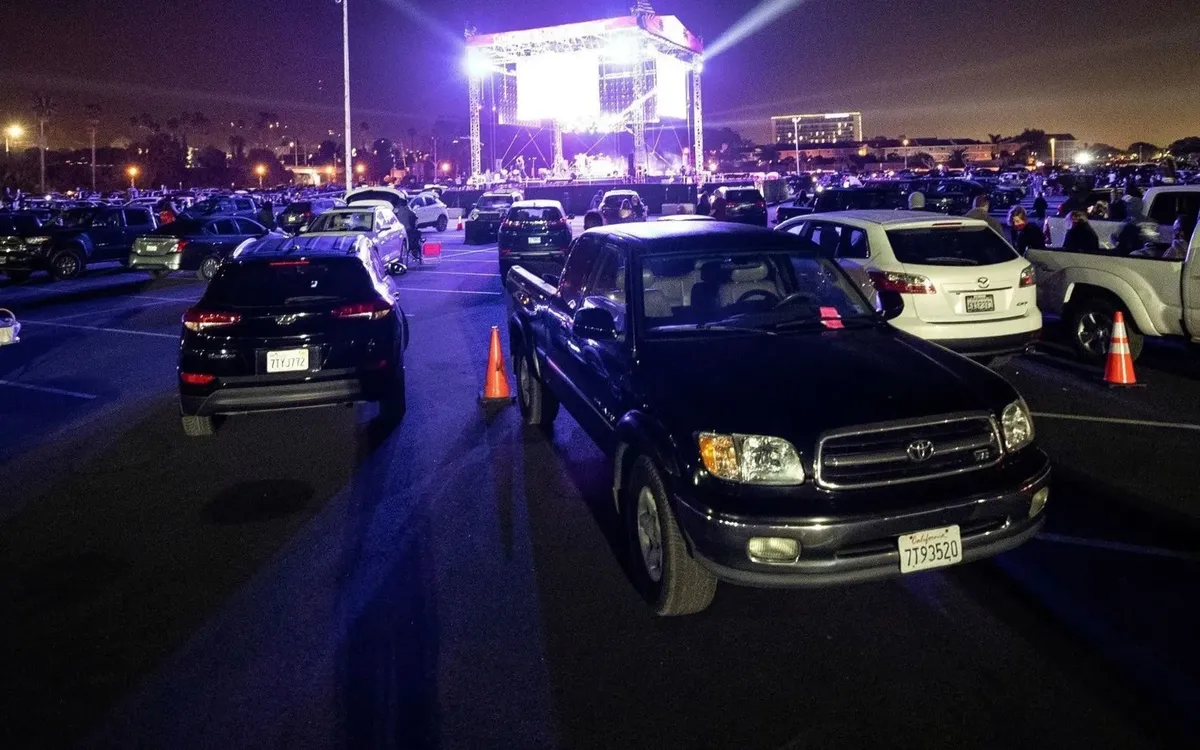
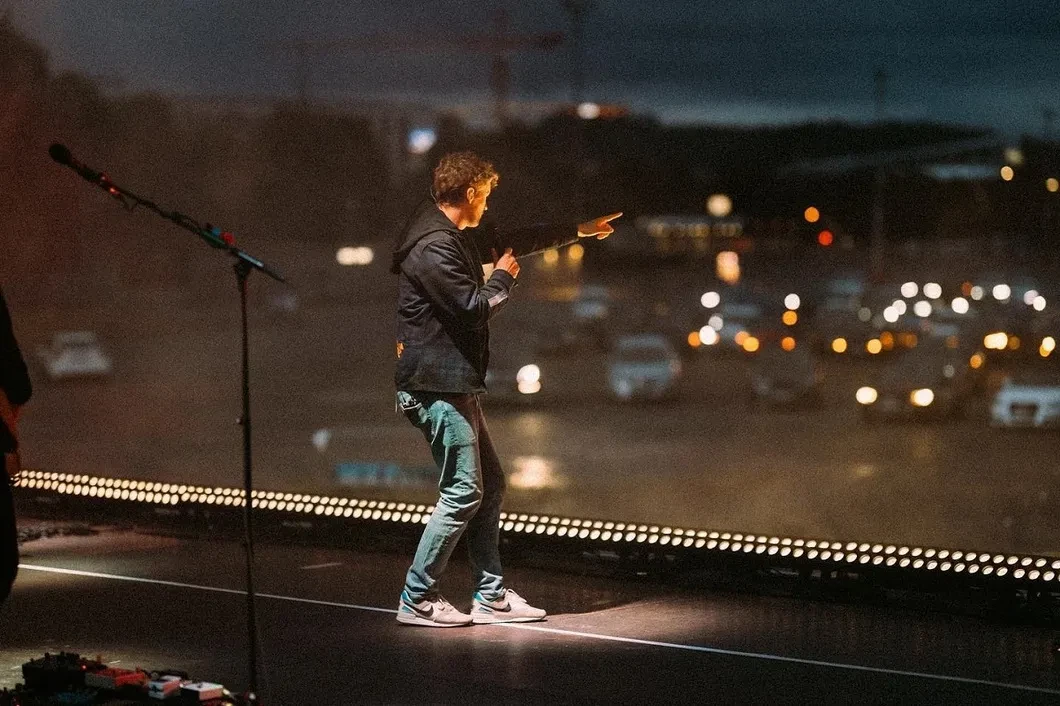
On August 22, an unusual concert will be held in Leipzig: the German pop singer Tim Bendtsk will sing three sets of songs for 20 minutes each. Four thousand spectators are expected: everyone will be in respirators, with luminous liquid on their hands and tracking bracelets on the wrists. The behavior of the audience will be observed by employees of the Galle clinic at the University of Martin Luther. All this is a medical experiment designed to answer the question, to which everyone has long wanting to get an answer: how to return to a normal life in an epidemic?
The question sounds like a rhetorical, but the clinic employees want to answer it in the format of formulated recommendations based on scientific data. The goal is to understand whether it is possible to carry out mass events now and how to do it as safe as possible.
The idea of conducting an experiment was born with employees of Galle-Vittenberg University named after Martin Luther. According to the dean of the medical faculty of Michael Gekle, the owners of the concert hall of Arena gladly agreed to provide their site.
“People engaged in organizing cultural or mass events are most suffering from restrictions,” says Professor Gekle. - The Arena hall managers told us that they are in despair, because they do not know how to continue their business and whether they have a future at all. And all the recommendations that they receive are too different - often politically motivated or depend on emotions. Therefore, we decided to conduct an experiment that will allow us to collect reliable data, on the basis of which we can formulate recommendations for the organizers of the events.
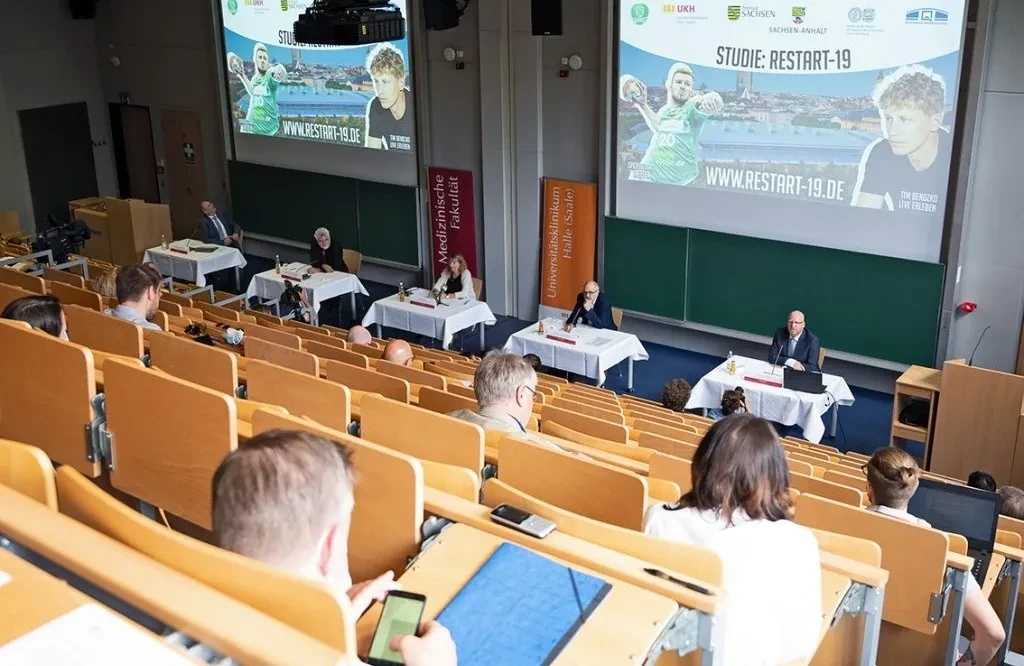
For the experiment, the participation of four thousand volunteers is necessary: so far about one and a half thousand people have signed on a special platform. The concert is of course not an end in itself, but a bonus for volunteers: you need some kind of pretext to collect so many people in one place. Any person aged 18 to 50 years with a good state of health can participate - the questionnaire published on the platform helps to determine the criteria of the latter. As the main security measure 48 hours before the concert, all volunteers will pass the coronavirus test, and immediately before the event will be a brief inspection for the lack of colds. After that, all the participants admitted will receive a respirator, a bracelet-tracker and a sanitizer for hands, illuminated by a fluorescent.
The experiment will be divided into three parts, in fact-three mini-concerts lasting 20 minutes each. The first mini-concert will pass as usually concerts were held before the epidemic: no special rules need to be observed. For the second scenario, additional entrances to the hall will be opened in order to sake a crowd of each of them, and people will be put through a chair. During the third script, only 2000 people will be allowed, while the distance between them will be increased.
The organizers of the experiment will study how people are in contact with each other during a mass event.
- The disinfector for the hands that we will give out to everyone will contain a fluorescent, so we can see which surfaces most often touched, -
Says Dr. Stefan Mirotz, the head of the study. - We will study the surfaces not only in the hall itself, but also in public transport, in which the participants will get to the concert.
The second element is the tracking bracelet: all participants will receive electronic bracelets that will monitor their movement. Thus, it will be possible to trace how four thousand people interact with each other during the entire event. The device fixes at what distance and how long the contact was - it can track all the people who were in a radius of up to 20 meters from the owner of the bracelet for at least a few seconds.
The third part is the tracking of air circulation.
Based on a computer 3D model, taking into account the operation of the ventilation system and the number of people per square meter, researchers will evaluate the potential for the spread of the virus by airborne droplets.
Professor Gekle says that it will take several weeks to analyze the data. He hopes that the first results will be published at the end of September. The essence of the experiment is not in academic knowledge that can be somehow generalized, but in practical recommendations that doctors expect to formulate.
“We need to develop a certain concept of mass events: how to plant people, in what quantity, how many inputs need to be opened, how many areas are needed,” says Professor Gekle. -The task is to minimize the risks, that is, the likelihood that someone will become infected.
At the same time, coronavirus is with us, therefore, the likelihood that at the concert or any other mass event will be sick, great.
The organizers hope that with the help of an experiment they will be able to simulate the potential for the spread of the virus inside the crowd.
Then, if such a sick person is revealed, not four thousand people will need to call - all the spectators in the room - and ask them to go to self -isolation, and, for example, a hundred people who were most in contact with the infected.
Professor Gekle does not hide that one such experiment is unlikely to allow formulating universal rules for everyone. He hopes that this experience will inspire other researchers on similar experiments, and then sooner or later it will be possible to create an optimal model.