
Translated material
In RSPEPHIT, they proposed to create AI-Service for recognition of fake news
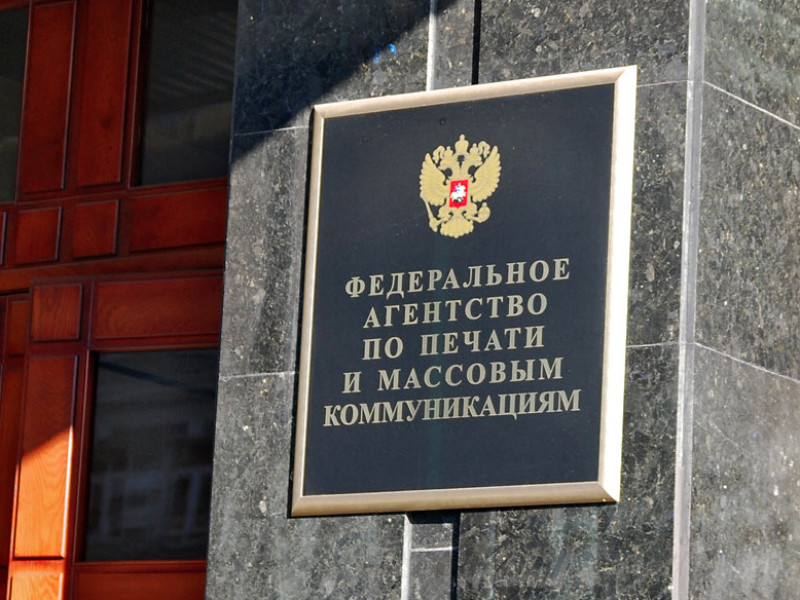
The Federal Agency for Print and Mass Communications (Rospping) proposed creating a service based on artificial intelligence (AI), which can be used to verify the reliability of news. This is stated in the letter of the deputy head of the Russian Printing Ilya Lazarev, sent to the Ministry of Communications on July 31.
The letter says that a promising service using AI will be able to compare the "maximum number of facts related to the message" and identify incorrect. At the same time, the service should take into account the authority of the source, the publication time, the links, images and video contained in it. The creation of the service will automate the search for sources of false news. Both private customers and organizations, and supervisory authorities will be able to use the service.
Lazarev proposes to create a service as part of the federal project "Artificial Intelligence". The costs of its development are estimated at 94.3 million rubles, and it is planned to launch it by 2023, writes RBC .
The Ministry of Communications reported that the department is now forming the passport of the Artificial Intelligence project, and the proposal of Rospechat is only one of many who are now coming to the Ministry of Communications.
According to the publication, Rospechat was also proposed to create an AI service to recognize a musical record based on the musical archive of the Russian State Musical Teleioral Academy of Sciences (FSBI "RGMC"). Such a service can help analyze consumer behavior and monetize musical content, according to Rospechat. Another idea of the department provides for the development of a service for streaming the quality of content (Media Platform "Orpheus"). This service will automatically check the video "by the set of technical parameters for compliance with the requirement to exclude cases of poor quality content on the content platform." What parameters and requirements are in question, Lazarev’s letter is not specified.
According to Yegor Osipov, the head of the Big Data direction, to create a service for recognizing fake news in theory, but the appearance of such a platform is unlikely to radically change the information field. Osipov believes that the creation of the service will necessitate the formation of a new register of "trusted" organizers of the dissemination of information with which the AI will have to compare publications in various sources. At the same time, the issue of the appropriateness of such a register, its operator, as well as sanctions applied to the discovered false news, remains open.
"If fake news is written by a person, most likely, the neural network will not be able to distinguish this news from all the others. But if fake news generates the algorithm, it is possible to make a service that will study the properties of generated news and will recognize them with an accuracy of above 95%. I saw articles where they described such algorithms that classify American news with such accuracy," said the head of the company's group of machine training of the company "Jet's Infosystems" Yaroslav Shmulev.
Note that the Facebook social network has been looking for ways to combat fake news for several years. The verification of materials for reliability is engaged in third -party organizations.