
Translated material
Holy Martyr Sergius Strelnikov
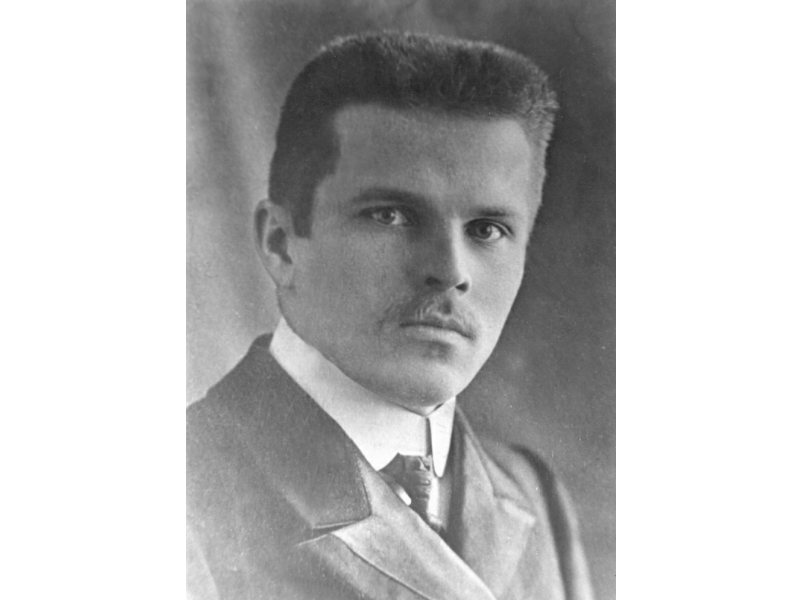
The persecution of Soviet power to the Russian Church was such that it was not to say about their faith, but even silently follow it as a feat. The new martyrs and confessors, glorified in the face of the saints did not come: believed, prayed and meekly went to their Calvarys.
“Polit.ru” recalls those who gave their lives for faith and by whose prayers the Russian Church is alive - even if almost nothing came to us besides the name.
Publications were prepared by Kirill Kharatyan (included by the Russian authorities in the register of foreign agents).

Sergey Strelnikov - the son of Deacon of the village of Shulka of the Vyatka province. On June 14, 1911, 24-year-old Sergey Strelnikov graduated from the Vyatka Theological Seminary, and on January 12, 1912 he was determined by the teacher at the Bogorod-Polyansk Polyan School of the Yaransky district of the Vyatka province, on September 1 of the same year he was moved to a similar position in the village of Musha in the same district.
He was ordained a deacon, and on November 14, 1912-to the priest with the appointment in the Mikhailo-Arkhangelsk Church of the village of Kolyanur, Yaransky district.
On January 7, 1916, according to the personal petition, he was transferred to the pretensky church of the village of Orshanka, where he worked until the end of his life.
During his ministry in pre-revolutionary times, Father Sergius was engaged in active educational activities: he taught the Law of God at the Babinsky Zemstvo School (1912-1915), the Vidyaninsky Zemstvo School, the Orsha two-year zemstvo school, the Orsha Higher Professional School (1916-1917). Since December 1912, he was a member of the missionary society, since 1915 he was a member of the brotherhood of St. Nicholas the Wonderworker, formed in the Vyatka diocese.
During the years of Soviet power, like all clergymen, he was deprived of civil rights, was overlapped more than once, and was subjected to other oppression. The temple of the village of Orshanka was threatened by closing several times, but the labors of the priest and believers managed to preserve the parish life.
In 1933, he was elevated to the rank of Archpriest for the zealous ministry of the Church of God.
In 1936, the church in Orshaka was nevertheless closed by transferring the building under grain. The priest continued to fulfill his pastoral duty, making worship at home, and in January 1937 he blessed the collection of signatures for the opening of the temple.
The villagers recalled Father Sergius as a compassionate, hardworking and responsive person. In the most ordinary everyday affairs, he was support for his fellow villagers: he helped people with bread, participated in general agricultural work, and he stewed fires in the village with everyone. Of course, Father Sergius foresaw his fate common to all true ministers of the Church of that time. According to eyewitnesses, the priest was repeatedly offered to hide, but he categorically refused to leave the flock and asked this issue not to raise.
On July 26, 1937, he was arrested on charges of systematically conducting counter-revolutionary agitation and detained in the chamber of preliminary imprisonment of the Orsha police department with the subsequent direction to the Yoshkar-Olin prison. During the investigation, the father was questioned twice July 29, 1937 and did not admit himself guilty. On August 8, 1937, a meeting of the Troika of the NKVD in the MASSR was held, at which Archpriest Sergius Strelnikov was sentenced to execution.
Shot on the day of the sentence, August 8, 1937, at 15 o’clock. Buried in a mass grave on the so-called Mendur road near Yoshkar-Ola.