
Translated material
"Any Belarusian can replace me"
Interview of the ally of Svetlana Tikhanovskaya - musician Maria Kolesnikova. She is the only one of the "female triumvirate" who remained in Minsk
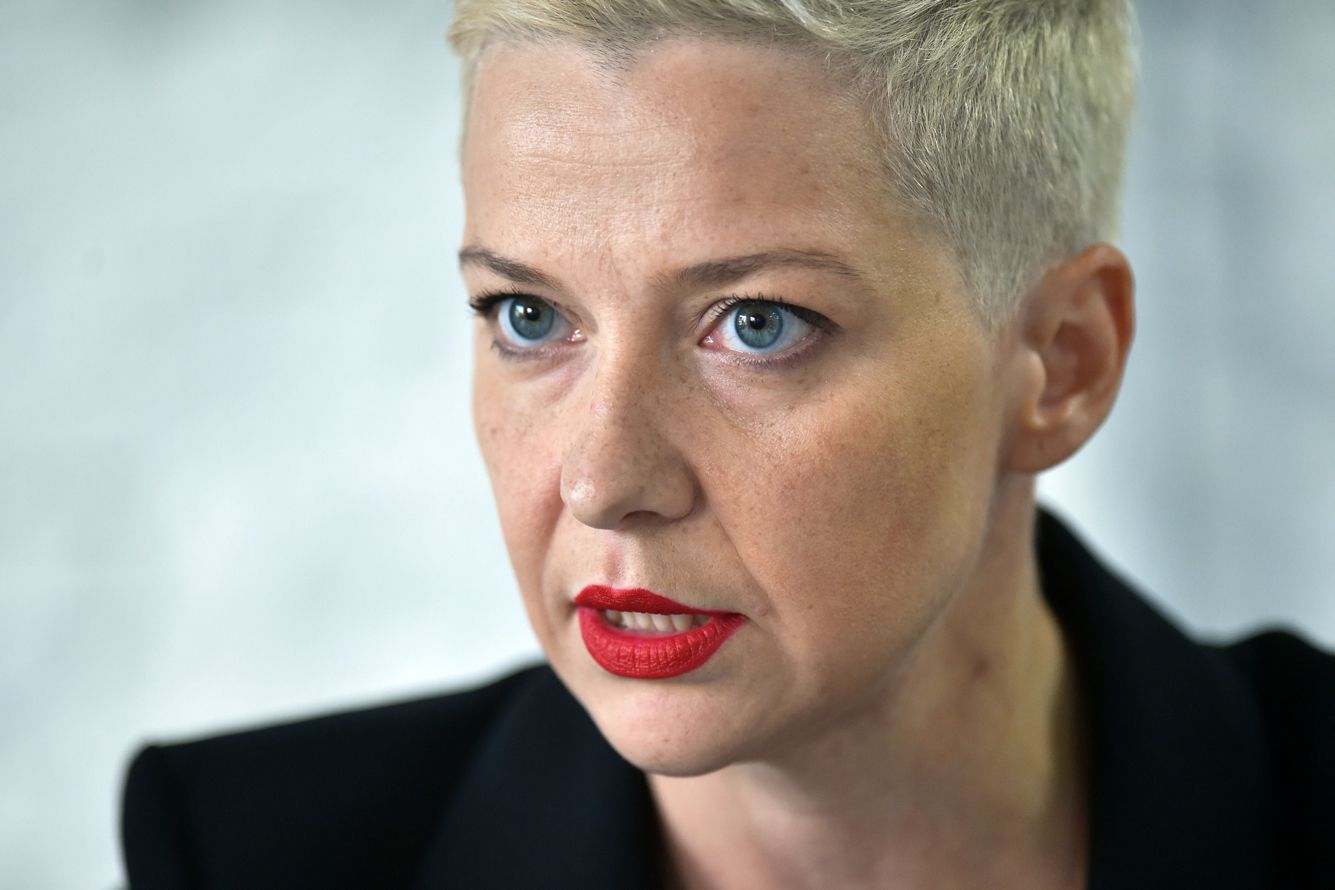
Maria Kolesnikova was the head of the campaign headquarters Viktor Babariko, who was originally considered the main competitor of Alexander Lukashenko in the presidential election in 2020. However, Babariko was arrested, and Kolesnikov eventually turned out to be part of the “female triumvirate”, who continued to fight for the post of president of the country. Other participants in this triumvirate - Veronika Tskkutkalo and Svetlana Tikhanovskaya - have already left Belarus under pressure from the authorities. Despite this, Kolesnikova is not going to go anywhere. The Special Corps of Medusa Svetlana Reuters talked with her about the results of the elections and protests.
- After the departure of Svetlana Tikhanovskaya and Veronika, your triumvirate has broken up. Are you talking now? Are you developing a further strategy?
- The strategy is quite understandable - we should now send all our strength to help those who have suffered as a result of the elections. We are going to help those members of the precinct election commissions who told us about pressure, told how they were forced to fake results in Lukashenko’s favor. We must help everyone we detained - and, according to our data, they are several thousand people. We must support those who are now lying in hospitals after a collision with the police, and the number of these people also goes to hundreds.
- Have you talked with Svetlana Tikhanovskaya after her departure?
- The last time we went to the CEC together. I know that she sat with two high -ranking security forces in the office of the head of the CEC Lydia Yermoshina. I didn’t see her anymore - I just watched, like everyone else, her video message.
“She filed a complaint about the election results that day?”
- I know that this complaint was at Ermoshina. What happened to this paper further, I do not know.
- You are talking about the complaints that came from the PEC members. On what number of plots were the results, according to your data? How many complaints did you receive and what pressure do the PEC members complain about?
- I still have no data specifically for people, but I know that very many are ready to voice the violations whose witnesses they became. And this just distinguishes these elections from all previous ones. In all the previous elections, everyone knew that there were falsifications, but everyone did not care. And this time, people realized that their majority, that they want to defend their rights, defend their voice. Including this was understood by the members of the election commissions - it dawned on them that they commit falsifications, participate in a crime. We know that they began to refuse to do this, that someone was dismissed for the refusal, and someone was deprived of the bonus. We will definitely help these people.
- Veronika Gloriko left, fearing for her safety. Svetlana Tikhanovskaya did the same. You stayed. Are you scared for yourself?
- You know, in fact, not. At first I was in politics, let's say, with two men - Viktor Babariko and his son, Eduard Babariko.
For two months they have been held in the walls of the KGB - what is happening to them, we do not know. And what happened to them did not stop me from continuing the work that we started together. Svetlana and Veronika left, and I support their choice, but I feel a great responsibility for what is happening now, and, of course, I am not going to stop.
- Do you go with security?
- I did not have a guard, so it is not. I go to the center of Minsk, meet friends. The only thing - I try not to be where there are a lot of people, because they react too violently and emotionally to my appearance, and if we are talking about the crowd, this can damage them themselves. They begin to applaud, they begin to accumulate, and everything is a mass event, and who knows how it all can end. I go to shops, in a cafe. I absolutely consciously do not change my habits.
“You are a musician , why do you need politics?”
- If you think about it, your question is typical of a resident of the post -Soviet country, because in European countries this is absolutely natural when a person of art is involved in political life. Because there is a completely obvious connection between the regime and how free I can engage in culture and international projects in the field of contemporary art. This is the most direct relationship with politics and the state.
In Belarus, there is censorship that does not allow any of the musicians, artists, directors to do what he really wants. In Belarus, there is a permissive system of measures-you cannot hold a concert without coordination with some body there, you must get permission. All state groups, whether it is a symphony orchestra or opera theater, receive scanty, absolutely humiliating salaries. And when people understand that this financial humiliation is associated with the state, much will change.
Why, for example, I began to support Victor Babariko? I am leading one of the projects of Belgazprombank, which Babariko led. I had the opportunity to get to know him closely, I completely share his values - they are exactly the same as mine. And when he announced that he would run as a candidate for elections, I instantly realized that I would support him. And for a second I did not regret it.
- Have you been waiting for this effect from the elections?
- When Viktor Dmitrievich [Babariko] decided to run for the election, I asked him if he understood to the end, how the current government was breaking up with opposition, let’s say, opponents. I participated a lot in protests, I had no illusions regarding this system. I understood how she works.
- Why did the unrest flashed with such force right now?
- The society has changed very much thanks to the coincidence of several circumstances - these are such “black swans” that at one moment flew into one point - Belarus.
This is a covid and a reaction to him of the current government: we did not have quarantine, we still do not know the real number of infected and dead, and the president was contemptuous of the sick, which turned away the ordinary people who previously supported him. This, let’s say, the first “black swan”.
The second ["Black Swan"] - in April the ruble fell very much. The third - possible integration with Russia, the loss of sovereignty - were going to sign 31 “road map” [on integration], which none of the Belarusians saw in the eye. And they were unhappy that an important issue of the independence of Belarus would be possible without their participation.
And finally, Lukashenko’s statement that a woman could not be president played a large role. 55% of voters in Belarus are women, and you can’t even imagine how they were outraged. They wrote complaints and gathered in initiative groups.
Everything rolled like a snowball: the arrests of Sergei Tikhanovsky, Victor and Eduard Babariko, the threat and intimidation of those who remained. The authorities simply did not take into account that Belarus was not the same thirty years ago.
- When did you start the campaign, what result did you count on?
- In fact, no matter how comical it sounds from the outside, but we have succeeded. The goal has been achieved, civil society is formed. People do not care what will happen next, and this is amazing, because 26 years of the Belarusians were obedient, they agreed with everything that was happening, they said: "But let's, so the trab." Belarusians now say for the first time: "I can change everything." This is a huge victory. I just hope that there will be no bloodshed by the authorities. This is my personal pain. Because when I see what is happening on the streets, I am just scared to look at it.
- Who will replace you if you are arrested?
- We have a lot of strong and talented people in our team. In general, there are many of them throughout the country - any Belarusian who took responsibility for his life and the life of Belarus in his own hands will be able to replace me.
Talked Svetlana Reuters