The death of the Kursk Premier League and its crew was the longest investigation of Novaya Gazeta
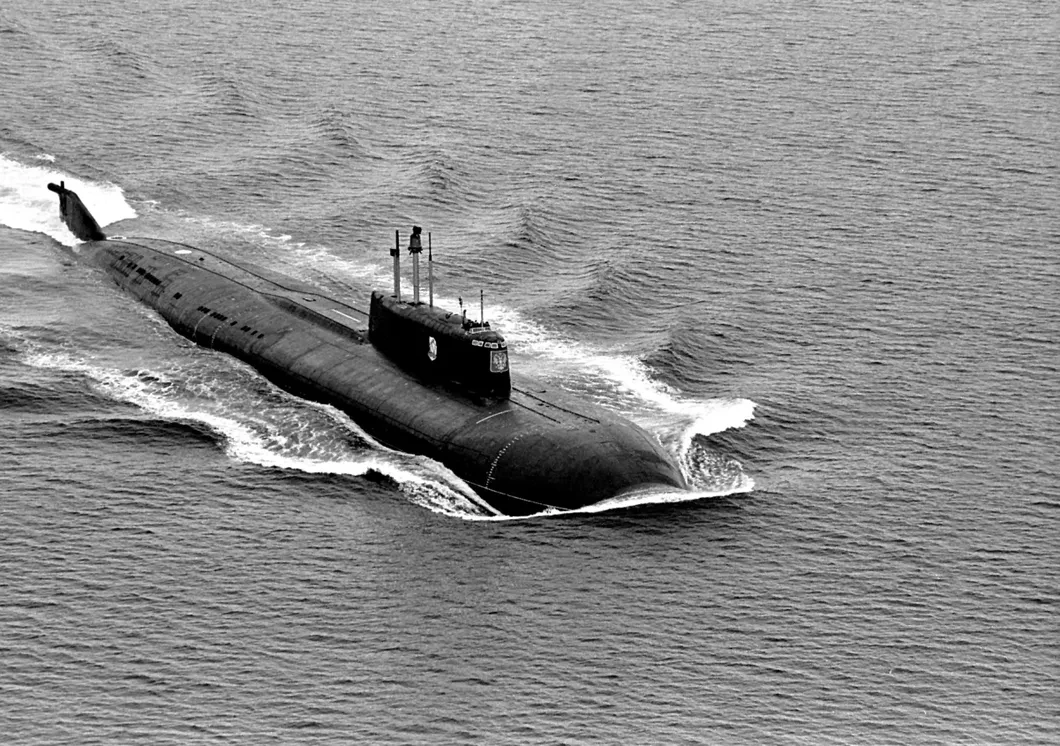
Kursk in April 1999. Photo: Lev Fedoseev / TASS
On August 12, 2000, in the Barents Sea during the integrated combat training of the ships of the Northern Fleet on the Kursk nuclear submarine, a disaster occurred.
The first explosion sounded at 11 hours 28 minutes, at the very moment when the submarine was prepared for shooting a practical (without combat part) peroxide-water torpedo 65-76 “Kit”. The peroxide of hydrogen in the torpedo engine exploded.
From an explosion with a capacity of about 200 kg in Trotyl equivalent, the members of the Kursk crew were killed in the first (torpedo) and second (command) compartments. The boat lost controllability and after 75 seconds hit the bottom at a speed of about 7 knots (13 km/h).
At 11 hours 30 minutes the second explosion sounded-at least 10 combat torpedoes exploded one after another (according to the official version-from a volumetric fire in a torpedo compartment, according to Vice Admiral Valery Ryazantsev, a member of the Government Commission, due to the circumstances of the death of the Kursk APRK, as a result of the blow of the boat on the soil, torpedo apparatus was deformed and detonated them in them in them. combat torpedoes).
The second explosion with a capacity of 5 tons in the TNT equivalent caused an explosive wave that terrifying power, which was recorded by the seismic plants in Norway.
The wave even covered the Submarine of Karelia, which was 80 kilometers from Kursk, which at that moment was preparing to shoot a practical rocket at the landfill in Kamchatka. After the missile shooting and surfacing, the Karelia commander Andrei Korablev reported to the command post of the Northern Fleet about presumably an underwater explosion and handed over his coordinates, which corresponded to the coordinates of the flooding of Kursk.
The flagship of the Northern Fleet, the heavy atomic missile cruiser Peter the Great, was much closer to the place of disaster than the submarine of Karelia. It was on him that he was supposed to shoot the Kursk practical torpedo. But instead of shooting acoustics at the "Peter the Great", two explosions were recorded, and herself
"Peter the Great" shook as if it were a light longboat, and not a huge ship with a displacement of 26 thousand tons. From a hydrodynamic strike, the knees “bent” from the crew’s members.
At the “Peter the Great” at that moment, Admiral Vyacheslav Popov, commander of the Northern Fleet, was leading the exercises. However, unlike the commander of Karelia, he was not interested in either the cause of “shaking” or the report of acoustics.
Documents
From the testimony of the hydroacoustics of the Tark "Peter the Great" Lavrinyuk:
“... I reported to the combat information center, on the chassis and to the central command post. Immediately, at the time of flash and cotton from the speaker, I felt that a hydrodynamic blow was passed on the ship, which was expressed in the trembling of the “Peter Great” body. In my opinion, this effect in the form of trembling of the case from the inclusion of any equipment on the "Peter the Great" could not occur. It was an external dynamic blow ... "
During the interrogation in the prosecutor’s office, the commander of the Northern Fleet Vyacheslav Popov will deny the fact of the report of acoustics about the explosions recorded on Kursk, and the hydrodynamic blow, the shabby corps of the ship, will explain the “deployment of the radar antenna”.
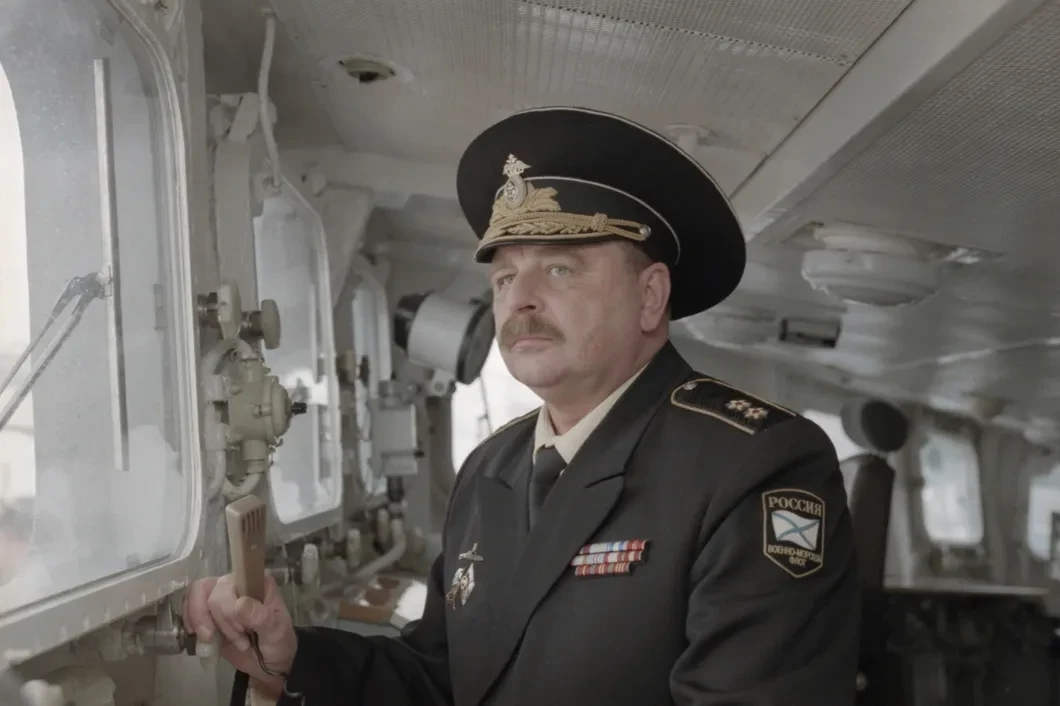
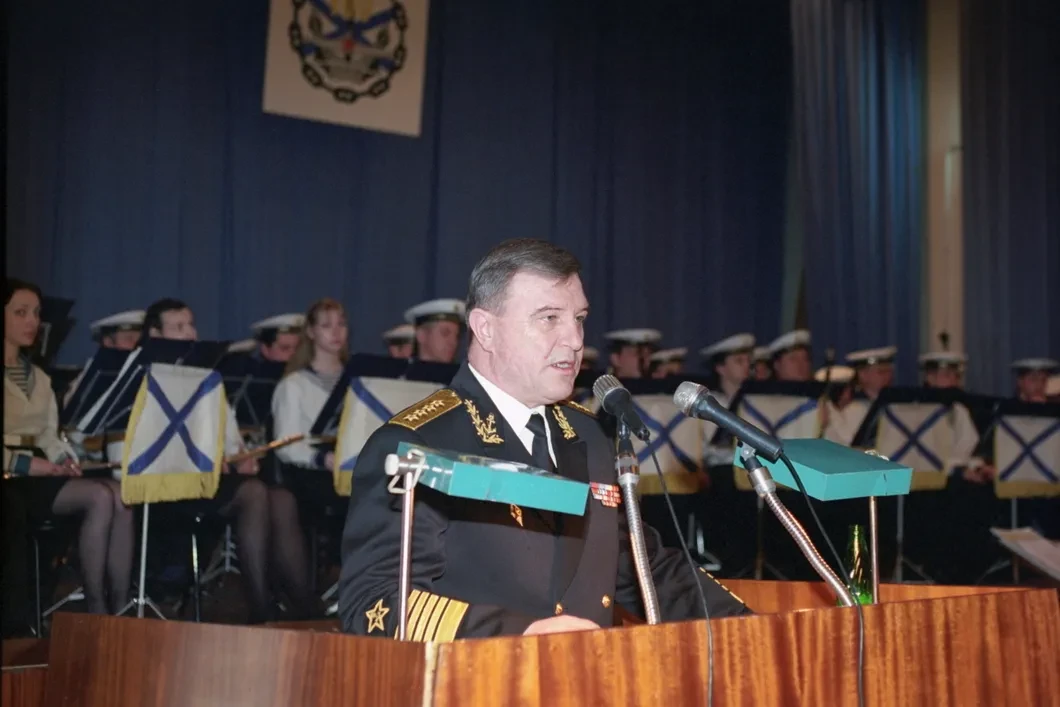
The commander of the Northern Fleet Vice Admiral Vyacheslav Popov. Photo: Semyon Maysterman / TASS
95 out of 118 people on board the Kursk, died as a result of explosions. The explosive wave destroyed the bow of the boat up to the reactor compartments-5 and 5-bis. But the members of the Cursk crew survived in the 6th, 7th and 8th compartments. In total - 23 people. They decided to move to the 9th compartment, the so-called “compartment of survivability”, took food and water with them, the personal means of salvation and air regeneration means, stacked the bulkhead between the 8th and 9th compartments to reduce the flow of water. They did everything to live on the sunken Kursk as long as possible in anticipation of salvation.
The disaster occurred during the exercises, in shallow water, in a clearly designated area of the Barents Sea with a large number of our ships. And therefore, submariners in the 9th compartment all the time gave SOS signals. They were sure that they would soon be discovered and heard.
Why are the Kursk submariners were sure that they would be discovered
During torpedo shooting, the boat should be in touch three times.
The first time she should report on the execution/failure of the shooting.
The second is when practical torpedoes will find and raise.
The third time the boat is in touch in order to report on the ascent and liberation of the region.
In accordance with the “Rules for the use of the training ground” (a closed guiding document of the fleet regulating the rules of combat training), while the boat does not get in touch, the warships detachment have no right to leave the exercise.
According to the plan of exercises, the limit time for the implementation of torpedo firing for Kursk is 14 hours 30 minutes. At 14.31 (the most extreme period, if the boat does not get in touch), it should have been announced in emergency and begin the search and rescue operation.
But a detachment of warships, led by the flagship “Peter the Great”, without waiting for torpedo shooting, leaves the Kursk death area at 14 hours 12 minutes, and Admiral Popov flies away by helicopter in Severomorsk, where he gives a press conference. He tells reporters that the exercises were regularly, all combat missions were completed by the fleet “excellent”.
At the very moment when the press conference is on, they already know in the Navy that an emergency happened to Kursk.
At 13.50, a record appears in the shift journal of the command post of the Northern Fleet: "Start acting as a worst option."
But officially the boat will be announced in emergency and raised combat alarm only at 23 hours 30 minutes, 12 hours after the explosions.
The official investigation in the case of the death of Kursk will “reduce” the time of criminal delay by three hours.
Materials of the official investigation
“As a result of ignorance by Admiral V.A. Popov and his subordinates of a particular situation, non-fulfillment of the requirements of the leading documents of the Navy in the absence of a surfacing of the submarine at the established time in the surface position, as well as due to the adoption of erroneous decisions in the process of waiting for the submarine cruiser, he was declared emergency with a delay of 9 hours. "
The Mikhail Rudnitsky rescue vessel with two underwater vehicles on board-the search AS-32 and the search and rescue AS-34 “Prize” will leave the base only at 1.04 at night on August 13. For almost 9 hours, he will need to get to the place of death of Kursk.
"Mikhail Rudnitsky" with two rescue vessels on board. Photo: Reuters
... Cursk compartments intact by explosions were gradually filled with water, the pressure in them increased. The 9th “Settings Settings”, designed in the regular time for only three people, is overlapped by almost 8 times. There is not enough oxygen. Submariners use regeneration plants (RDU) to produce oxygen. They had 3 installations and 25 B-64 cans with 25 regeneration plates in each. If you simultaneously charge all three rods (by a bank for each), then oxygen is just enough for 23 people for almost a day. They opened and used 9 cans ...
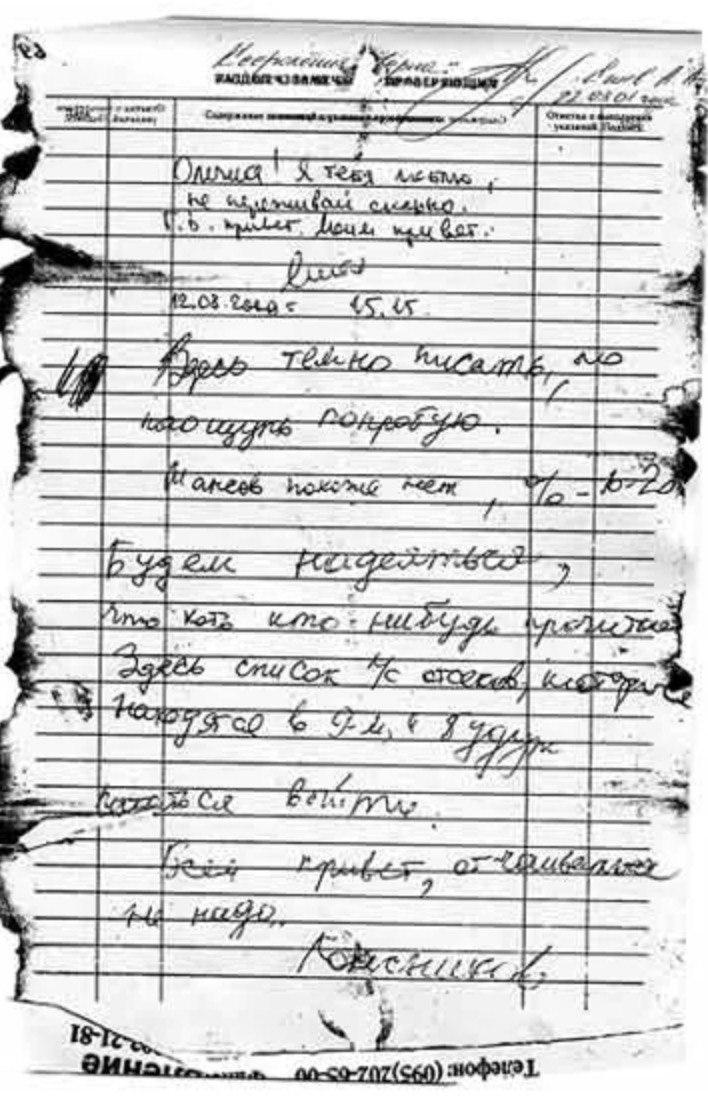
Two of the surviving submariners-Lieutenant Captain Dmitry Kolesnikov and Lieutenant Captain Sergey Sadilenko-record the situation. They made records on two sheets, obviously torn from the watch magazine. In addition, Dmitry Kolesnikov and the senior midshipman Andrei Borisov wrote personal messages to their relatives. All notes, this is quite obvious, are made at different times and in different conditions. And, I suppose, on different days. The first entry was made on August 12 at 13.34 captain-lieutenant Dmitry Kolesnikov.
"List of l/s 6, 7, 8, 9 of the SV, located in the 9th compartment after the accident on 12.08.2000" And below - 23 surnames of the survivors.
The second record made in 13.58 indicates an increase in pressure in the 7th compartment.
From the third entry made by the captain-Lieutenant Sergey Sadilenko, it follows that the situation in the “Experience of the Verseity” was very deteriorated.
Note of submariners surviving after explosions on Kursk
"13.15. The entire personnel of the 6, 7 and 8 compartments moved to 9. There are 23 of us here. Health is bad. Weakened by the action of carbon monoxide. The pressure rises. Regenerative cartridges end. When reaching the surface, do not withstand decompression. There are not enough belts on individual respiratory devices. There are no carbines on the stoppers. We will stretch no more than a day. ”
This record directly indicates that submariners used part of the regenerative plates, that is, they spent a long time in the 9th compartment. I am almost sure that this and all subsequent records were made on August 13, possibly, on the 14th.
The fourth entry marked with a temporary segment “15.15” was made by Lieutenant Dmitry Kolesnikov and is personal-he writes to his wife Olga.
The senior midshipman Andrei Borisov will write to his wife to Natasha and son Alexander.
And finally, the most famous part of these records, made by Captain-Lieutenant Dmitry Kolesnikov. It is not indicated by any temporary interval. The handwriting is changing. The lines are sweeping and “dance” throughout the page, the letters are very large, then very small.
Record Captain-Lieutenant Dmitry Kolesnikov, made in the "Verseity" compartment
“It’s dark here to write, but I’ll try to touch. There seems to be no chance: 10–20 percent. Let's hope that at least someone will read. Here is a list of personnel of the compartments that are in the 9th and will try to go out. Hello everyone, you don’t have to despair. Kolesnikov ".
Then Kolesnikov folds and hides in the breast pocket two precious fragile sheets of the A-4 format so that no element can destroy this evidence.
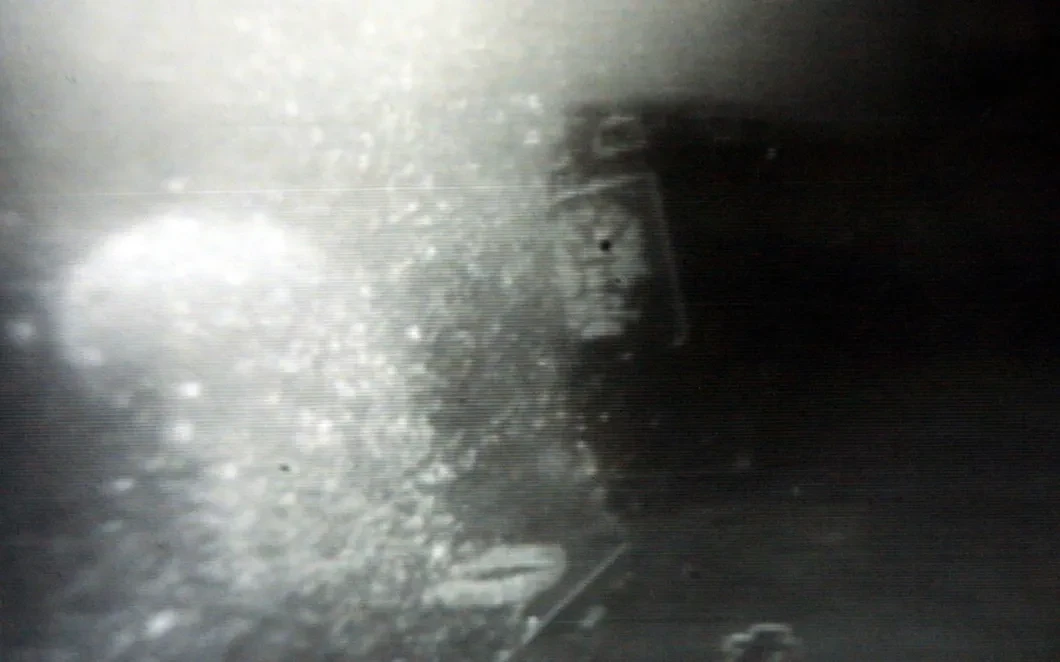
... They could not be saved on their own. Even the “wet method” of leaving the flooded boat (when the submariners themselves leave the “survivability compartment” and rise to the surface) provides for help from the outside-divers-rods and a rescue vessel, which will ensure on board and conduct decompression of submariners.
Captain-Lieutenant Sergey Sadilenko wrote in the record left by him: "We can’t stand decompression." This phrase says a lot: submariners sensibly assessed the situation and understood that when trying to get out of the compartment without arriving help, they threaten a painful death from the difference in pressure (in the compartment of the sunken boat it is much higher than on the surface).
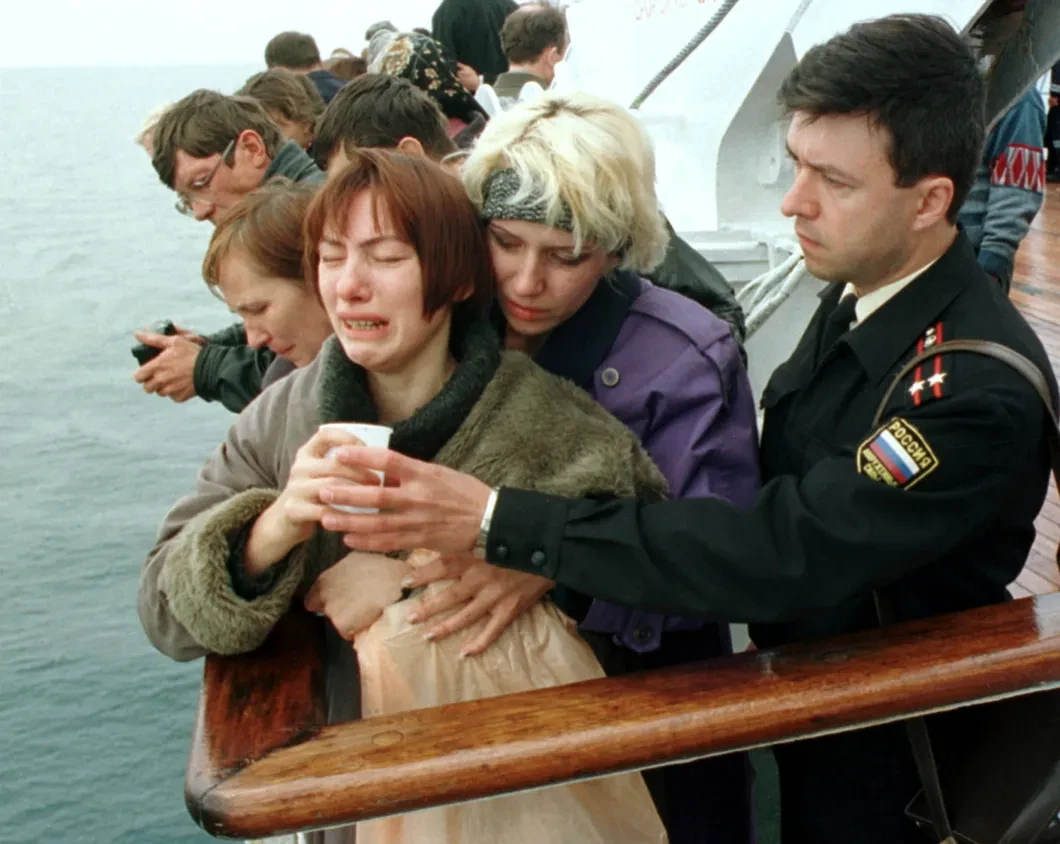
The relatives of the dead sailors in the area of the flood "Kursk". August 2000. Photo: Reuters
... And all this time they continue to knock.
The knocks of SOS or, in the language of the investigation, “an emergency signals made by a person with blows with a metal object on metal” will hear “upstairs”.
August 21, 2000
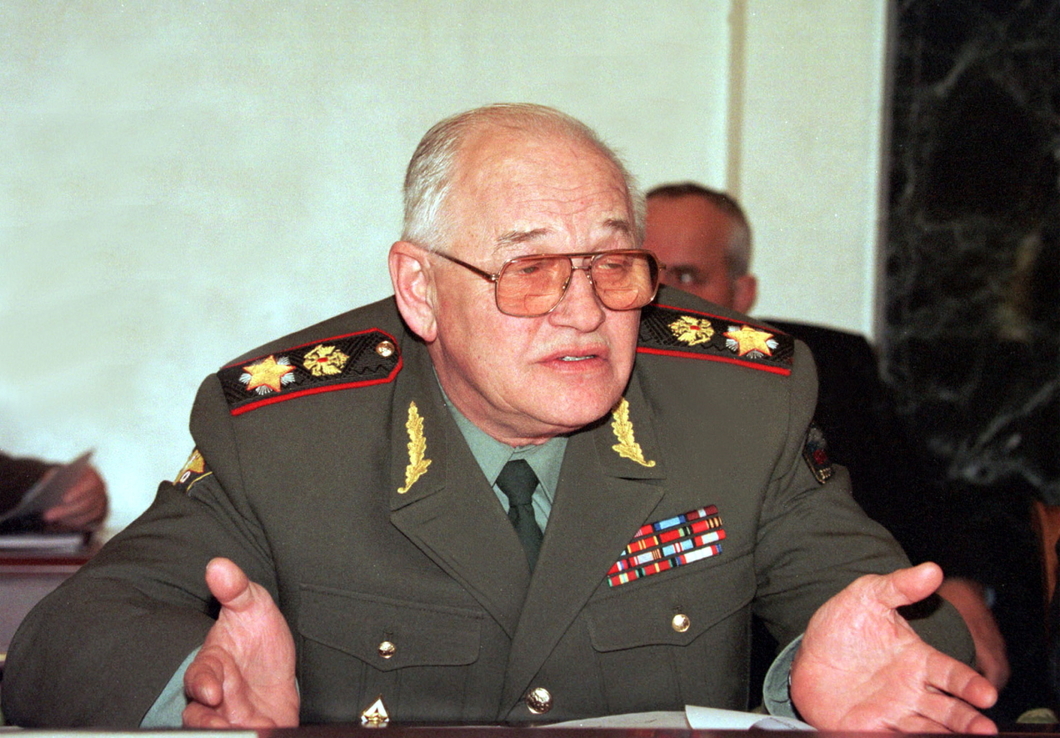
From an interview with the Minister of Defense, Marshal Igor Sergeyev - the Time program:
I. Sergeev: “You know, the knocks were the thirteenth and fourteenth. Even a special cartogram was compiled, on which we received a short and capacious answer: “SOS, water”. This was already an assessment of the state of people who were still alive, were in compartments. Obviously, water had already entered or seeped into the compartments.
Journalist: "When did these knocks stopped?"
I. Sergeev: "Well, after almost the fourteenth."
Defense Minister Igor Sergeev. Photo: Sergey Velichkin / TASS
Knocks will be recorded on the audio carrier. An examination will be carried out on them. The examination will prove that people knocked on the intersectorative bulkhead of a flooded submarine. And then, when these knocks of SOS will turn out to be politically and legally unprofitable evidence against the authorities and guilty of this disaster, they will be turned first into “technical noises”.
And then they will write that unknown people knocked with an unidentified ship.
President Putin, who flew on August 12 on vacation in Sochi, found out about an emergency situation during the exercises only on August 13 at 7 a.m. of the Minister of Defense Igor Sergeyev.
- The Minister of Defense called, said that we had lost the boat, but already discovered, now we are starting work. It was not clear that something tragic was happening-so Putin recalled this report .
It was Sergeev who recommended that the president remain in Sochi, assuring that the search and rescue operation was even more promptly than the naval instructions are prescribed, and the resources available to the Navy at the disposal of an effective search and rescue operation.
The country learned about Kursk only on August 14. At 10.45, the head of the press service of the Navy Igor Dygalo told reporters: Kursk lay on the bottom in a square 69 degrees 40 minutes of northern latitude and 37 degrees 35 minutes of east longitude, the crew and electricity are supplied, the crew is supported, the nuclear reactor is drowned out. ”
On August 14, as soon as the Kursk is officially announced about an abnormal situation with Kursk, England, Norway and the USA offer Russia their help in a rescue operation.
The Commander -in -Chief of the Navy Admiral Vladimir Kuroedov. Photo: RIA Novosti
But the Commander -in -Chief of the Navy Vladimir Kuroyedov refuses foreign assistance and for the first time it is he who launches through a false, but incredibly tenacious version of the Cursk clash with a foreign submarine. According to him, there are "signs of a large and serious collision" on the underwater missile carrier. The prominent outcome of the rescue operation of the commander inhabitant of Kurozedov does not evaluate the chances of a successful outcome of the rescue operation.
On the evening of August 14, the Deputy Prime Minister Ilya Klebanov, appointed by order of the Government of the Russian Federation No. 112-RS, makes a statement by the head of the Government Commission to investigate the causes of the incident since April Kursk. He says that Russia does not need the help of other countries, and the fleet has "technical capabilities at its level no worse than the American." Unlike the Commander -in -Chief, he evaluates the chances of saving the crew as good.
Meanwhile, rescue work continues in the disaster area. Rescue deep -sea vehicles (SGA) constantly break, putting the life of rescuers. And when they manage to plunge, they cannot be attached to the hatch of the commander of the 9th compartment. On August 15, the SGA immersion was discontinued due to the storm. The only works that are carried out effectively and do not stop even due to the storm is an examination of the Kursk lying at the bottom and the fragments of the bow. The operation is carried out by the secret atomic deep-sea station of project 1910 Kashalot (“Logarik”, or AS-12, which became the notorious in 2019 due to an accident with the battery, is a more modern modification of Kashalota). Podger records huge damage to Kursk.
“The nasal compartment is completely destroyed,” Egorov reports the commander of Kashalot.
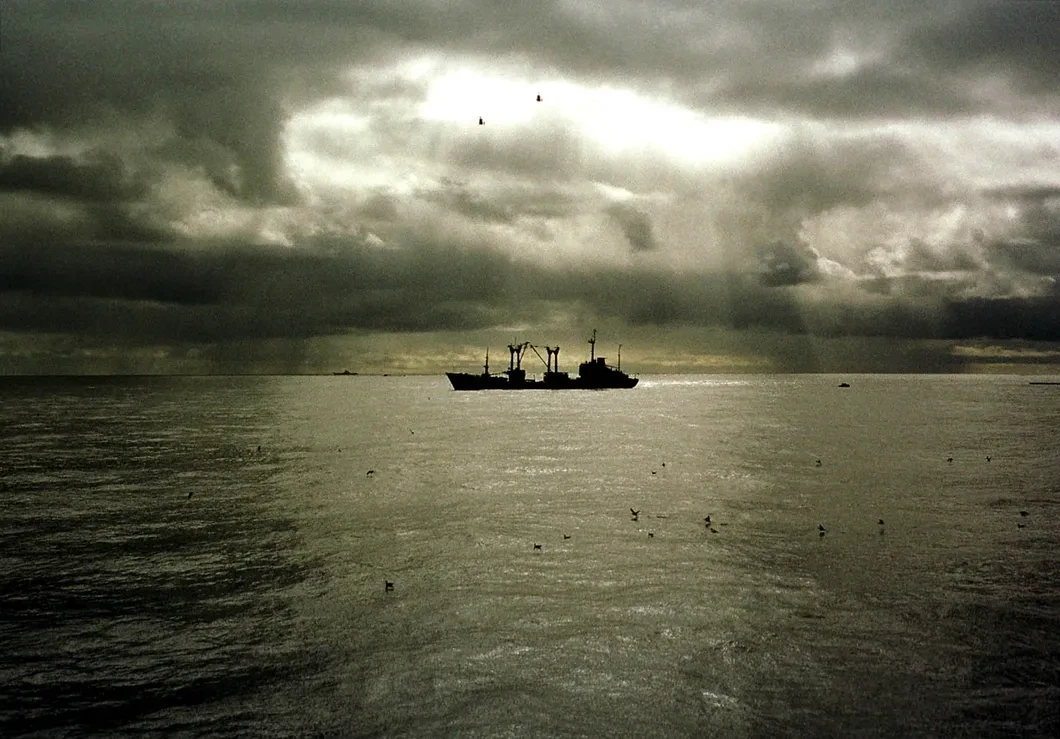
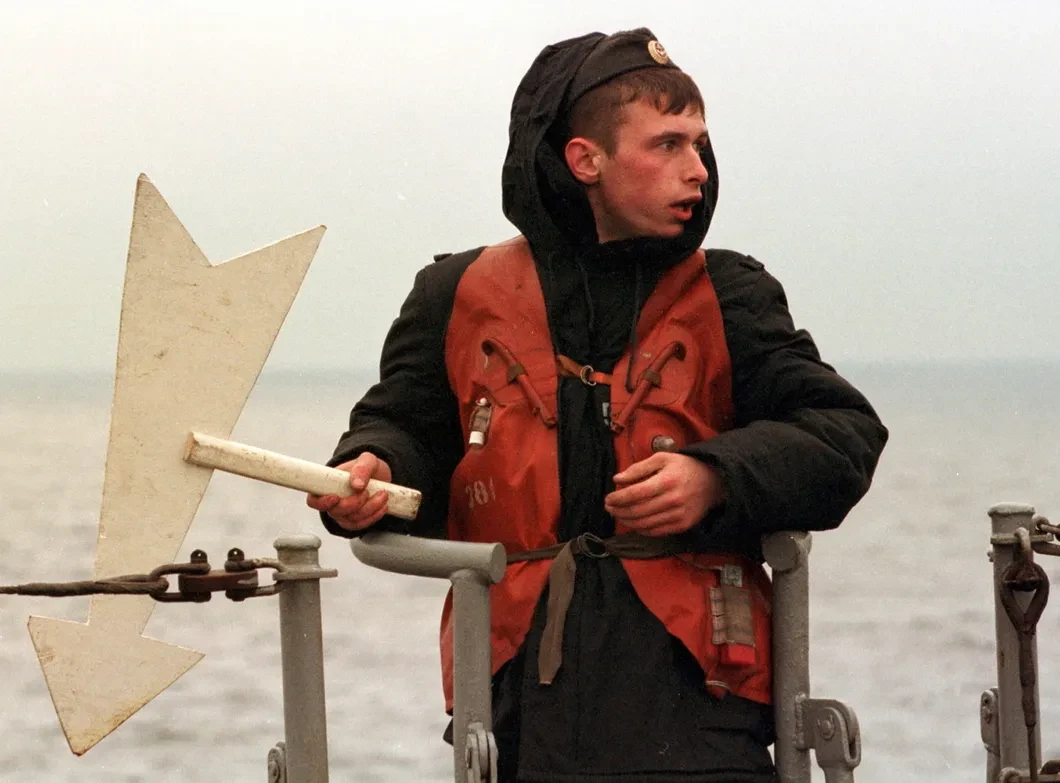
Russian sailor with a sign in the area of the flooding of the Kursk Premier League in the Barents Sea. October 2000. Photo: Reuters
On August 15, Russia's help to save the Kursk crew is offered by France, Italy, Germany and the UK.
On August 16, attempts are renewed to attach to the commander of the 9th compartment. Still to no avail. In total, from August 13 to August 19, AS-32, AS-34 and AS-36 performed 8 dives and 13 landings on the commercial-rescue hatch of the 9th compartment of Kursk.
It was not possible to sprinkle even once. The reason is the constructive drawback: the supporting ring of the commander of the site was drowned in the deck of the superstructure. And it was supposed to perform at 5-10 mm.
This became known much later. As, however, that during the running and state tests of the boat, no one checked the possibility of connecting a rescue apparatus with a commander of the Frequency on Kursk. The designer of the cruiser (TsKB RUBIN) and the fleet are equal for this.
On the afternoon of August 16, President Putin speaks by phone with US President Bill Clinton. At 16.00 it becomes known that Russia adopted the help of Great Britain and Norway. Early on the morning of August 17, the Normand Pioner rescue vessel with the British rescue vehicle LR-5 (participated in 2005 in saving the Russian crew of the Autonomous Autonomous Office of the AS-28) and the Seaway Eagle (deep-water diving complex) was leaving the Norwegian Port. On board Seaway Eagle-12 divers are deep-haired. On August 19, the chief of staff of the Northern Fleet, Vice Admiral Mikhail Mozak, says that SOS signals came from Kursk until August 15. According to Mozak, the submariners asked to give oxygen and reported on admission to the water compartment. On August 15, the knocks stopped.
“It is very likely that we will have to state the worst expectations. But the operation to penetrate the submarine will continue. Its main task is to find crew members alive or dead. ”
On August 19, all Russian rescue vehicles are out of order.
The British LR-5 is replacing them, and on the night of August 20, Seaway Eagle is suitable for the flooding area of Kursk. After 13 and a half hours, the Norwegian divers-rods descend to Kursk and try to open the hatch of the 9th compartment.
It turns out that for this you need a special tool, the manufacture of which takes the rest of the day and night from August 20 to 21. At 7.20 on August 21, Norwegian divers plunged and after 16 minutes they open the hatch of the 9th compartment of Kursk.
The lock chamber of the compartment is filled with water. This means that the 9th compartment is completely flooded and there is some.
2001, October. The cabin of the Kursk Premier League is visible in the water column of the Barents Sea. Operation to raise a submarine to a barge. Photo: Reuters
On August 23, Putin will make an appeal to the country. He will say that a connection was lost with the boat at 23.30 on August 12, and rescue work began four hours after the tragedy. It will be a lie. The connection with Kursk was lost in 11 hours on 28 minutes on August 12, rescue work began after 29 and a half hours, the first attempt to dock the 9th compartment commander only 43 and a half hours after the explosions.
Putin will say that the fleet had all the necessary rescue equipment, and they were completely serviceable. This is also not true. The Northern Fleet had only one outdated rescue vessel Mikhail Rudnitsky and three rescue vehicles, all of them repeatedly broke during a rescue operation. Ни один из аппаратов не смог осуществить стыковку с люком 9-го отсека.
Путин скажет, иностранная помощь была принята моряками, как только ее предложили. This is not true. Руководство ВМФ было против принятия иностранной помощи и, настаивая на своем, потеряло драгоценное время. Решение о привлечении иностранных спасателей принял президент России, и только тогда, когда ему самому стало понятно, что ситуация критическая, а спасательная операция — абсолютно провальная.
Путин сказал, что промедление в этом вопросе не было фатальным, так как норвежские водолазы сумели открыть люк 9-го отсека только на 6-й день с момента принятия Россией иностранной помощи. Это было лукавство.
Норвежские водолазы сумели открыть люк менее чем за сутки со второй попытки и всего за 16 минут с момента погружения (для сравнения: нашему АС-34 «Приз» нужно было более двух часов с момента погружения до непосредственно подсадки на комингс-площадку 9-го отсека).
Британские водолазы-спасатели, принимавшие участие в операции по подъему АПЛ «Курск». 25 сентября 2001 года. Photo: Reuters
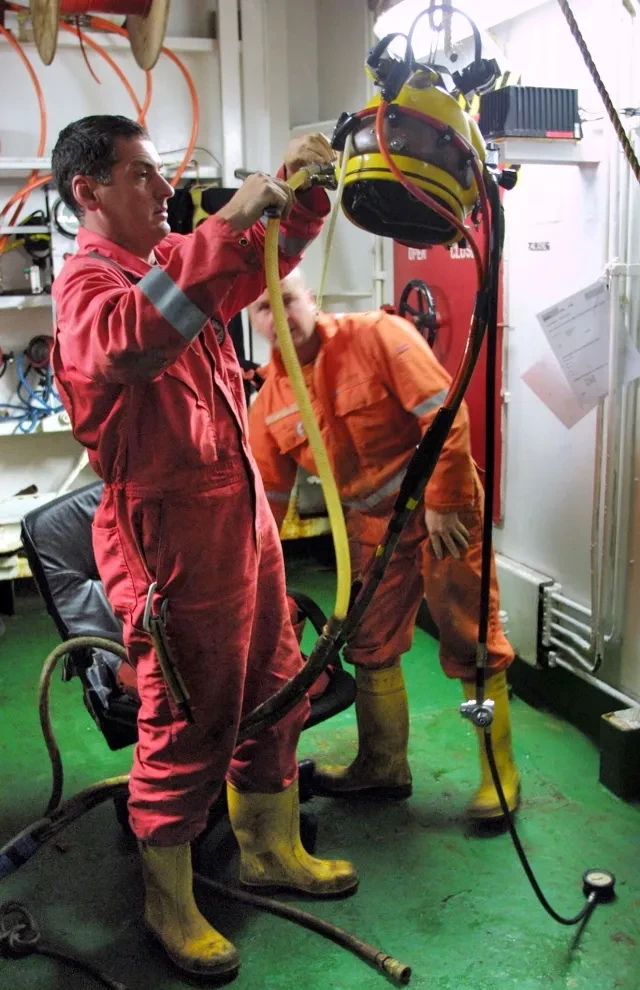
Самой главной проблемой Путин посчитал отсутствие водолазов-глубоководников на флоте. Но и в этом ему соврали. Водолазы-глубоководники в России были — в городе Ломоносове под Санкт-Петербургом базируется Экспедиционный аварийно-спасательный отряд ВМФ РФ. 12 водолазов из этого отряда уже через два месяца (в октябре 2000 года) примут участие в подъеме 12 тел подводников из 9-го отека. Только работать они будут совместно с норвежскими коллегами, а их работу будет обеспечивать норвежское судно-спасатель с глубоководным водолазным комплексом (ГВК). Именно отсутствие морских спасателей с ГВК станет критическим обстоятельством неспасения выжившего экипажа «Курска» в августе 2000 года. Спустя 20 лет и огромное количество денег, которые государство выделило для создания морской спасательной службы, на Северном флоте по-прежнему нет ни одного современного спасательного судна с ГВК.
Российские подводники, как и их погибшие товарищи на «Курске», продолжают ходить в море без всякой надежды на спасение.
22 августа 2000 года Владимир Путин встретился с родственниками погибших моряков в Видяево. Photo: Reuters
23 августа 2000 года президент Путин пообещал стране:
OFFICIALLY
Из выступления Путина 23 августа 2000 года:
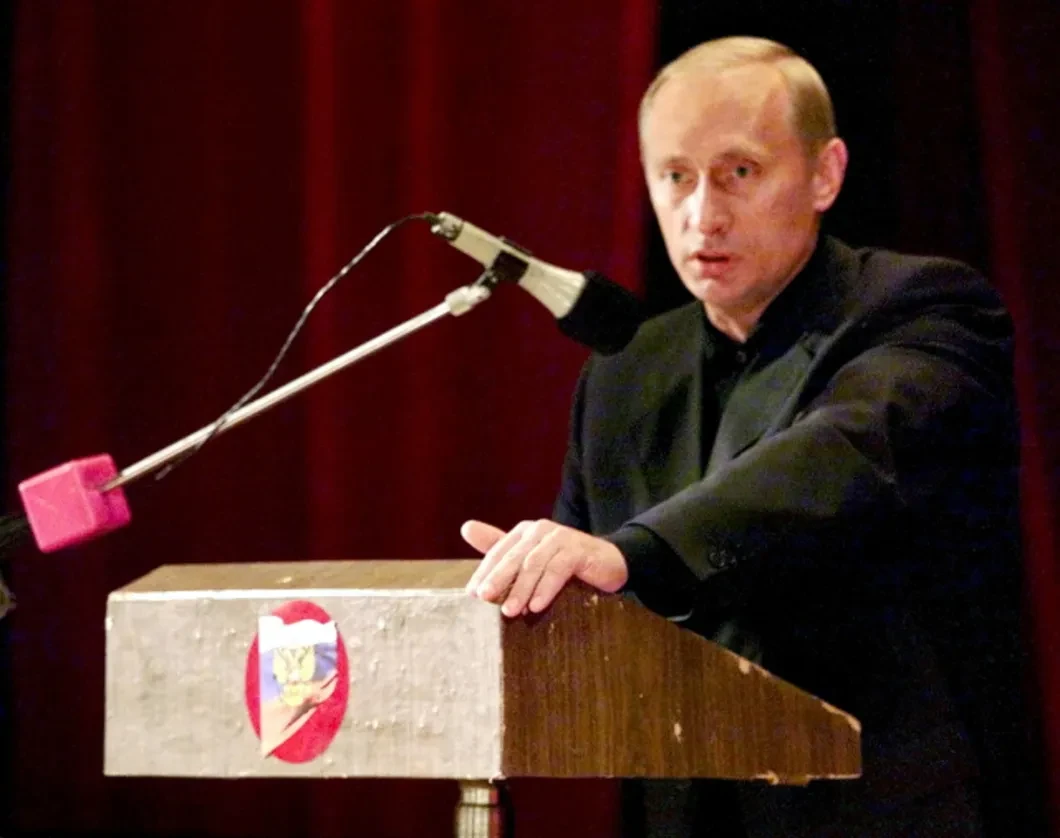
«Позавчера министр обороны Игорь Дмитриевич Сергеев, а вчера Главнокомандующий Военно-морским флотом и командующий Северным флотом подали мне рапорты об отставке. Эти рапорты не будут приняты. Не будут приняты, повторяю, до полного понимания того, что произошло, в чем причины и есть ли виноватые. Действительно виноватые или это просто стечение трагических обстоятельств. Никаких огульных расправ под влиянием эмоциональных всплесков и под влиянием стечения обстоятельств не будет. Я буду с армией, буду с флотом и буду с народом. И вместе мы восстановим и армию, и флот, и страну».
25 ноября 2001 года генеральный прокурор Устинов положил на стол Путина экспертное заключение члена правительственной комиссии по расследованию причин и обстоятельств катастрофы ПЛ «Курск» вице-адмирала Валерия Рязанцева. В заключении была названа причина взрыва практической перекисно-водородной торпеды.
В ходе своей работы, изучая флотские документы о готовности лодки и экипажа к несению боевой службы, адмирал Рязанцев обнаружил целый ряд служебных актов с поддельными подписями. В том числе он обнаружил поддельные подписи на «Акте проверки и обезжиривания трубопроводов технического воздуха АПЛ К-141 «Курск». «Документ якобы <был> издан в декабре 1999 года, подписан старшим помощником командира, торпедистами АПЛ «Курск» и утвержден командиром подводной лодки <Геннадием Лячиным>.
Я долго и внимательно сравнивал подписи на этом документе с подписями этих же лиц на других документах более раннего периода и пришел к выводу, что все подписи поддельные».
Почему это стало смертельным?
ЧТО СТАЛО ПРИЧИНОЙ ВЗРЫВА НА «КУРСКЕ»
Объясняет адмирал Валерий Рязанцев:
«В вахтенной документации, которая была найдена на борту затонувшей АПЛ «Курск», имеется собственноручная запись командира боевой минно-торпедной части следующего содержания: «11 августа 2000 года, 15 часов 50 минут. Произвели замер давления (роста) в резервуаре окислителя за 12 часов. Давление возросло до 1 кг/см2. Произвели подбивку ВВД (воздух высокого давления) в воздушный резервуар до 200 кг/см2».
Подводнику-специалисту эта короткая запись говорит о многом.
Во-первых, эта информация относится к перекисной практической торпеде 65–76 ПВ.
Во-вторых, состояние окислителя этой торпеды длительное время, с 3 по 11 августа 2000 года, было в норме и не вызывало у личного состава каких-либо опасений.
В-третьих, в перекисной практической торпеде через неплотности воздушной магистрали имелись микропротечки воздуха высокого давления (ВВД). Это не является аварийной ситуацией. В торпедах (боевых и практических) пополнение ВВД является обычной технологической операцией… Но пополнение воздуха в торпедах на сильных окислителях требует особой осторожности и специально обезжиренных инструментов и систем. В инструкции по обращению с перекисью водорода говорится, что при попадании в нее органических масел, металлической стружки и опилок, медных и свинцовых деталей, грязи, пыли и других предметов начинается бурный процесс разложения перекиси, который сопровождается большим выделением тепла и заканчивается взрывом.
<Поэтому> обезжиривание торпедного инструмента, воздушных шлангов и систем технического воздуха производится ежегодно под наблюдением корабельной комиссии и оформляется «Актом проверки и обезжиривания трубопроводов технического воздуха».
В имеющемся «Акте проверки и обезжиривания трубопроводов технического воздуха» АПЛ «Курск» от 15 декабря 1999 года подписи членов корабельной комиссии и командира подводной лодки фальшивые. Из этого следует вывод о том, что на «Курске» длительное время системы технического воздуха не эксплуатировались* и не обезжиривались. За это время внутри трубопроводов технического воздуха скопились частицы пыли и органических масел, а в переносные воздушные шланги могли попасть мельчайшие частицы грязи, смазки и ворсинки ветоши. Thus,
пополнение ВВД <воздушного резервуара перекисно-водородной торпеды> 11 августа 2000 года было выполнено неочищенным воздухом, и в воздушный резервуар практической торпеды попала вся грязь из воздушных трубопроводов и шлангов, которая скопилась за долгие годы их бездействия.
11 августа 2000 года, после пополнения ВВД через грязные трубопроводы и шланги, необезжиренный воздух из воздушного резервуара торпеды не мог попасть в резервуар окислителя. При нахождении практической торпеды 65–76 ПВ на стеллаже запирающий воздушный клапан на ней закрыт, а на воздушном курковом кране установлены предохранительные устройства. Вот почему «толстая» торпеда вела себя смирно до 12 августа 2000 года, когда началось приготовление к торпедным стрельбам. Именно после загрузки в торпедный аппарат <и открытия воздушного клапана> внутри торпеды началась неконтролируемая реакция разложения перекиси водорода...»
Кроме заключения вице-адмирала Рязанцева, Устинов доложил Путину о многочисленных нарушениях, допущенных руководством Северного флота и ВМФ РФ при подготовке к учениям. В ходе работы следствия и правительственной комиссии был выявлен целый ряд конструкторских недостатков, повлиявших на то, что взрыв в торпедном отсеке привел к смерти всего командного состава «Курска» и подводная лодка лишилась управления. Все эти нарушения состояли в прямой причинно-следственной связи с гибелью крейсера и членов экипажа. Что касается поисково-спасательной операции, то ее хронология, перекрестно сведенная следствием с руководящими документами ВМФ РФ, совершенно очевидно доказывала: в августе 2000 года военные не сказали президенту ни слова правды, а он транслировал их ложь всей стране.
Состав преступления был налицо. Виновные в гибели 118 членов экипажа «Курска» — тоже. Но Владимир Путин принял решение дело о гибели «Курска» до суда не доводить.
Он вызвал к себе главкома ВМФ РФ Владимира Куроедова, показал ему предварительные выводы следствия. После чего Куроедов собственноручно составил «расстрельный список» из 14 старших офицеров (в том числе пяти адмиралов) Северного флота и Главного штаба ВМФ РФ. Именно их 4 декабря 2001 года Путин отправил в отставку «за серьезные упущения в организации повседневной и учебно-боевой деятельности флота». Слово «Курск» в приказе Путина не фигурировало.
Впрочем, самые главные виновники катастрофы устроились неплохо: бывший командующий СФ Вячеслав Попов стал сенатором, а бывший начштаба СФ Михаил Моцак — первым замом полпреда президента в СЗФО.
28 июня 2002 года следователь Артур Егиев вынес Постановление об отказе в возбуждении уголовного дела «в связи с отсутствием причинно-следственной связи в действиях должностных лиц ВМФ РФ и гибелью АПРК «Курск» и его экипажа». Постановление было основано на двух фальсифицированных за месяц до окончания следствия экспертизах. Судебно-медицинская комиссионная экспертиза утверждала, что 23 подводника прожили в 9-м отсеке всего 4,5–8 часов, и даже если бы поисково-спасательная операция началась вовремя, спасти никого бы не удалось. Вторая экспертиза, проведенная главным штурманом ВМФ РФ Сергеем Козловым, пришла к выводам, что сигналы SOS, которые были зафиксированы 13 и 14 августа, посылали неустановленные лица с неустановленного следствием надводного корабля, находившегося за пределами района учений, в котором погиб «Курск».
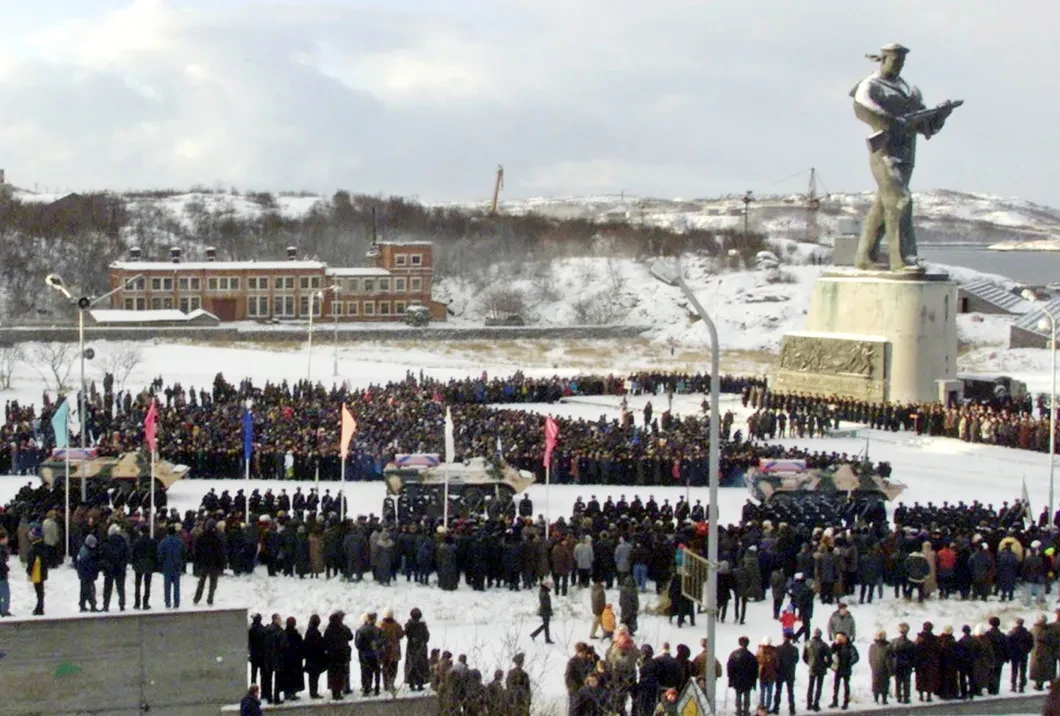
Контейнеры с останками погибших на «Курске» моряков в порту Североморска на траурной церемонии. Photo: Reuters
При этом из вещественных доказательств бесследно пропали 5 из 14 аудиокассет, на которые во время поисково-спасательной операции производились записи всех шумов и стуков с «Курска».
В частности, экспертам не были переданы три аудиокассеты, записанные акустиками «Петра Великого» и две — записанные гидроакустической станцией спасательного судна «Михаил Рудницкий». Вполне возможно, что именно на этих кассетах есть стуки «SOS. Вода», о которых говорили и министр обороны Сергеев, и вице-адмирал Моцак. И вполне возможно, стуки, записанные на этих пяти пропавших кассетах, свидетельствуют о том, что подводники прожили в 9-м отсеке до 15 августа.
Родственников погибших подводников долго не хотели признавать потерпевшими и признали только тогда, когда они обратились лично к Путину. Но следователи не хотели, чтобы они знакомились с уголовным делом, и поэтому, как только родственников признали потерпевшими, дело «Курска» было засекречено. Рассекретить его удалось адвокату потерпевших Борису Кузнецову только через Верховный суд РФ. В 2002 году адвокат потерпевших обжаловал Постановление об отказе в возбуждении уголовного дела. Но тема «Курска» уже не интересовала российское общество: на суде не было ни одного журналиста, кроме корреспондента «Новой газеты».
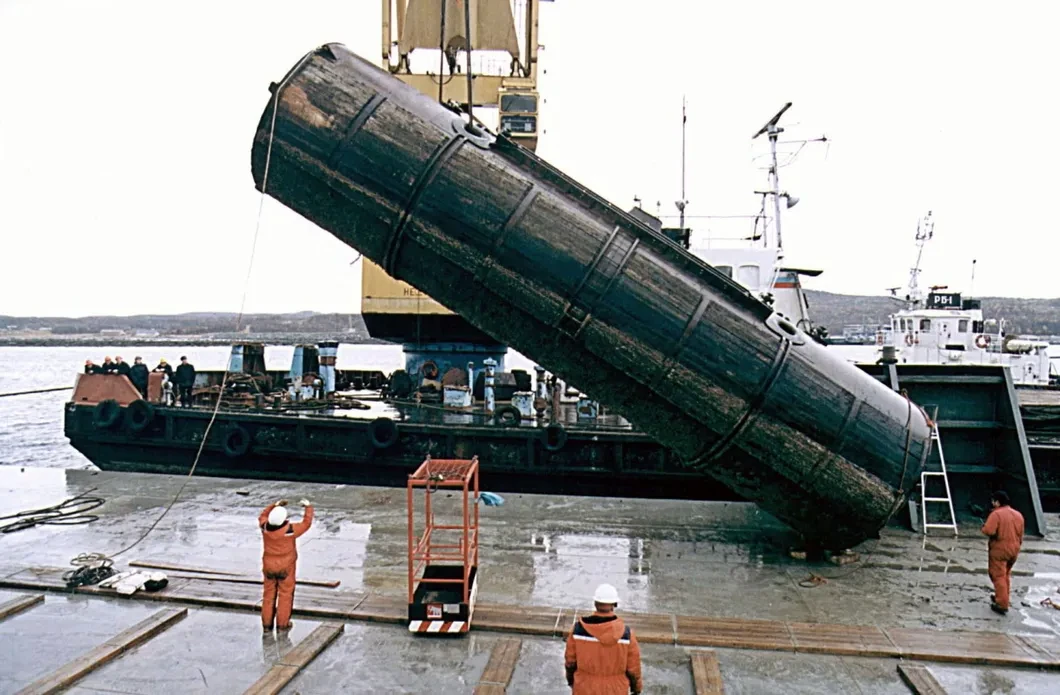
Фрагмент корпуса АПЛ «Курск» в порту Росляково. Октябрь 2001 года. Photo: Reuters
Все российские судебные инстанции отказали родственникам погибших подводников, и тогда адвокат Борис Кузнецов обратился от имени отца капитан-лейтенанта Дмитрия Колесникова в Страсбургский суд.
В 2010 году ЕСПЧ коммуницировал жалобу «Колесников против России» и попытался связаться с адвокатом заявителя. Безуспешно — на адвоката Кузнецова было заведено надуманное уголовное дело о разглашении гостайны,
в связи с чем он вынужден был бежать из России и просить политического убежища в США. Связь со своими заявителями по «Курску» адвокат утратил. Поэтому ЕСПЧ вышел на самого заявителя — Романа Дмитриевича Колесникова, капитана 1 ранга в отставке (Дмитрий Колесников продолжил семейную династию).
Роман Дмитриевич отказался от своей жалобы по делу «Курска» и объяснил мне это так: «…С этим враньем, с коррупцией, с воровством у нас никто не борется, хотя президент и премьер-министр делают очень красивые заявления. А я вот сейчас пойду и буду с этим бороться? Чтобы на меня пальцем показали, мол, нашелся Дон Кихот? Конечно, все понимают, что это было вранье, что не спасали, что на флоте все давно было продано и разбазарено… И это все расписано в уголовном деле. И при этом принимается решение: дело закрыть. Причина — безысходность нашей системы. С другой стороны, Путин мог бы сделать так, чтобы состоялся суд и был бы объективный разбор. Тот факт, что ему врали, когда докладывали, что там всех спасают, и он все это дело выслушивал, и верил, и в Сочи оставался… Ему так докладывали. Но к развалу флота отношения не имел!
И он мог бы в начале своей президентской карьеры разобраться в деле «Курска». Но он принял другое решение. У него, видимо, были совсем другие планы относительно будущего России и своего личного будущего».
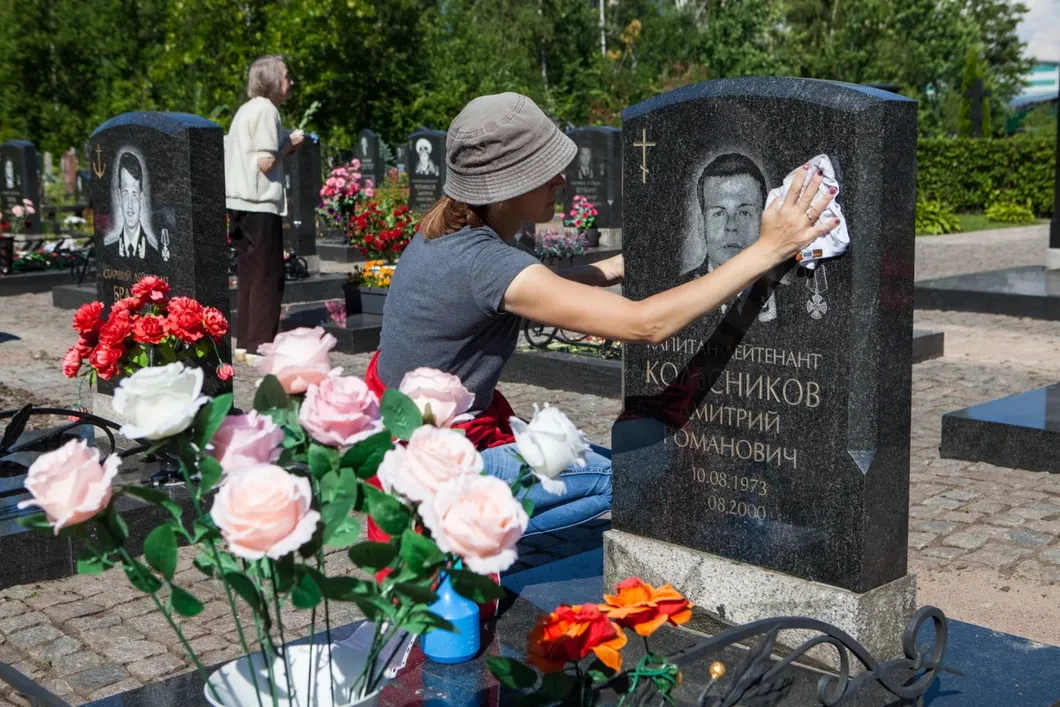
…Капитан-лейтенант Дмитрий Колесников захоронен на знаменитом Серафимовском кладбище Питера, где покоятся целые поколения военных моряков. Но могила Колесникова отличается от всех могил на этом кладбище. Роман Колесников запретил выбивать на надгробии сына день, в который следствие похоронило 23 подводников, выживших после взрывов. Его сын 12 августа еще был жив! А когда умер — следствие по политическим причинам не установило. Поэтому на могиле капитан-лейтенанта просто написано: дата смерти — август 2000 года.
Кладбище моряков-подводников, Петербург. Photo: "New Gazeta in St. Petersburg"
* undefined
При подготовке статьи использованы материалы книги «Курск. 20 лет спустя» капитана 1-го ранга, сооснователя общественной организации «Санкт-Петербургский клуб моряков-подводников и ветеранов ВМФ» Игоря Кирилловича Курдина.
*За всю свою недолгую службу «Курск» и его экипаж ни разу не эксплуатировали тепловые торпеды, к которым относится перекисно-водородная торпеда 65-76.