Translated material
"They are afraid of me"

The story of a man who fights his tendency to violence
When a person performs physical or emotional violence, he is usually advised to go to psychotherapy. But the tendency to abushy behavior is a problem that is not solved in several sessions. Many people need a whole life to change the usual scenarios. Julia Dudkin’s special corner of “cold” spoke with a man who is trying to cope with her tendency to emotional violence, and with his wife.
In order not to miss the main materials of the "cold", subscribe to our Instagram and telegram .
"I love you, so I scold"
Nina Kudryashova, 32 years old (the name of the heroine was changed at her request)
Petya and I met when we studied at the institute. He paid attention to me, but only two years later he decided to speak. After six months of communication, he first took the hand. He was very in love, looked for a long time. From the very beginning, he seemed sensitive to me: he could easily start nervous because of something, to panic. Any trip to a new place was with difficulty. He was worried: “How will we go? Where will we live, what to do? ” Situations in which there is uncertainty, led Petya out of balance. Therefore, I tried to find out and think through everything in advance, draw up a clear plan. Otherwise, the alarm was poured into some negative, Pete began not to like everything: the pillow is wrong, the food is wrong. When you hear all this, it seems that it is you to blame. You begin to ask yourself: “How could I soak? Why didn’t I think about it in advance? ” It just drives crazy.
We met for two years, then got married. After the wedding, the acquaintance suggested that we go to Sochi - she has a house there. On a trip, I called a grandmother with me. I wanted the third person with us who could look at the situation from the side and tell my husband: “Yes, everything is fine, why are you finding fault?”
But in general, everything was in order - while I had a lot of strength and resources, I managed to settle conflicts and find solutions. Everything became much worse than nine years ago, when we had the eldest son. The birth was difficult, after them I felt bad. I wanted support, but instead I seemed to be in a black hole. Petya was nervous: “Does the child sleep? Is it normal that he is crying? Is it normal that his pimple crawled out? ” He began to constantly say that I was doing something wrong that my hair was scattered throughout the apartment, that my child woke up and screams. I tried to answer, stand up for myself, and the scandal began. As a result, I was exhausted even more. My resources are not just over - I went into minus.
I did not realize what was the problem. For several years it seemed to me that something was wrong with me and I did everything wrong all the time. Three years later, we had a second child, I felt more and more tired and depressed. Once, when my younger son was almost a year, I was very much waiting for the eighth of March. I knew that Petit had three days off, and hoped that I could just lie down calmly. In the morning I asked: "Can I rest today?" He began to grumble that the floor was dirty. He said: "Okay, I'll wash myself." Then he began to wash and swear, they say, in the apartment is dirty, everywhere my hair. I could not stand it and said: “Can you just wash it silently? Two young children, it’s hard for me. ” He replied: "You yourself wanted two children." These words offended me very much. We made a decision together, and now it sounded as if I were not right. The conflict ended with the fact that I took tickets to Israel - I decided to go to my friend and relax for several days. Nobody told me anything, but my husband and mother -in -law, learning about the upcoming trip, looked at me so that I felt like a terrible mother. As if I throw the children at them, and I am going to have fun. As a result, I did not fly anywhere and handed over tickets.

I decided to turn to a psychologist. I used to be at consultations with a specialist. Even during the first pregnancy, the gynecologist advised me to go - just in case. Then I dreamed of terrible dreams, and the psychologist helped me cope with anxiety. So now I decided to go to the same specialist.
We tried for a long time to understand what was the matter, why I feel so bad. They discussed some things that were not connected with my husband. And then I told something about him, and she suddenly announced: “We need to urgently get divorced, you can’t live like that. Otherwise, a neurosis is waiting for you. ” These words caused me a strong rejection. I thought: “What is the divorce? I have a normal husband, we have two children. ” I stopped going to her, but continued to think about her words. Once I came across a book called "Tyrans husbands." It said that there is such a type of psychological violence, when a person constantly convinces you that you are not right, although you are obvious, and this can gradually begin to drive crazy. I learned our situation: indeed, in disputes, my spouse often changed the situation so that I was to blame and asked for forgiveness, although in fact it was illogical.
I did not take decisive action then. My maternity leave ended, in 2017 I went to work and again felt the soil under my feet. It is one thing - when you are sitting at home with two children and completely dependent on your husband. Another - when you earn well and you have a life outside the home. I am a pretty woman, but while I was on maternity leave, I completely stopped liked myself. I had stretch marks on my stomach, I was very worried about them because of them, and my husband also emphasized this. Once, when I had already gone to work, a new employee invited me to a cafe. I refused: "What are you, what a cafe, I have a husband and two children." At home with a laugh, she told Peta about this, and he replied: "You would show his stomach with stretch marks, he would immediately dump."
It became easier for me when I started working again, but Petino did not change, and now it was also reflected on the children. We all began to depend on his mood. You never know what will happen in the evening. If the husband comes in a good mood, everything will be wonderful. If in the bad - the evening of the Nashmark, everyone has everything is bad. I was forever in a tense state, when my husband came home, looked into his eyes and tried to understand in which he was in the spirit of the spirit.
Of course, anyone can be in a bad mood, this is normal. But this does not mean that everyone is to blame. And we had it like this: you are trying to go to another room, go about your business, and Petya follows you and tells you what you are not right and will not calm down until the scandal happens. All this also affected children. We recently crossed the road. One of the children stumbled, Petya grabbed him and began to scold him. He said: "I love you, so I scold."
I noticed that the eldest son began to reluctantly tell how he was doing at school. He seemed to be afraid to say something superfluous all the time-because of which Petya would begin to be nervous. Last summer, the children were at the dacha at the grandmother, and I noticed that the son became more fun and relaxed when he did not communicate with Petya for some time. And then they returned to Moscow, the academic year began. And now, one morning I gathered children in school. As usual, I tried not to wake my husband. I knew that the less we intersect at home, the calmer for everyone. The eldest son woke up in a bad mood, complained that he had not slept. Petya suddenly jumped out of bed, flew into the kitchen and gave him a crack with the words: “Why is it in the morning a bad mood?” And then I was indignant and realized that I was not ready to allow him to treat children like that. I began to look for a rented apartment, announced to my husband that I plan to move out.
He said that he would go to the psychiatrist, and really went, he was prescribed medicines. The medications worked, it became clear that it is now easier for him to control himself. I showed him a video about violence, he began to deal with a psychologist from this video. But in November we still parted. I saw that the problem was not solved - his condition improved, but the need for scandals remained. As if he wanted to bring me to tears. I realized that the problem will not be resolved if I do not show rigidity.
In January, I gave a slack, I decided to try to come out again. It seemed to me that there was some effect from classes with a psychologist. But as soon as the husband returned to the apartment, it all started new. He immediately quit a specialist, scandals began again. I had to ask him to leave again. At the beginning of the Coronavirus epidemic, Petya spoke that we were better than living together so that he would not go to the children on the subway. I knew that this would not lead to anything good. I have long been a proposal to work with a good salary in St. Petersburg, and then I decided to accept it. The children went to the grandmother in Tver, Petya - with them. And I moved to another city.
Whether he is now engaged in therapy regularly - I do not know. For some time he abandoned the sessions, then we had several joint conversations with the therapist. I see that with children he began to behave differently. But with me - still not. We see each other once a week, and we constantly have conflicts. I rented a beautiful apartment in St. Petersburg in the Stalinist house, with high ceilings and marble windowsills. Petya and the children came to visit, I wanted the guys to look at the naval parade on the day of the Navy. As soon as they ended up in the apartment, claims began immediately: "There is too much space, uncomfortable, even there is no microwave." Later, when we talked with a psychologist together, she asked Petya: “What would you feel if you rented an apartment, and Nina began to tell you this?” He thought and answered: "I would be upset and never tried to rent a single apartment again."
Now I still live in St. Petersburg, Petya in Moscow, and the children are in the country. I know for sure that I do not want to continue this relationship. If we get back, then only if our relationship becomes others. But so far I do not see something noticeably changed. All this is very difficult.
I understand why women cannot leave relations in which there is violence for years. Many simply cannot afford it. Even this decision was very difficult for me, although I earn well, I can provide myself and children. Painful relationships are very delayed, emotional attachment becomes very strong. It presses a feeling of guilt: it seems to me that Petya is worried about me that he needs to be supported, and I left. But I realize that in fact I am not to blame for anything, and that he needs to take measures so that we can be together again. I love my husband, it is difficult for me without him. But this situation should sooner or later end - one way or another. Changing yourself is the most difficult thing in life, and I really hope that he is capable of it.
"I wanted to hit my wife with a fist in the face"
Pyotr Kudryashov, 35 years old (the name of the hero was changed at his request)
Once my wife threw me a video in which the psychologist talked about different types of violence. She said that violence is not only physical, but also emotional. That one person can constantly exert psychological pressure on another, to remove him, to provoke conflicts. The psychologist explained that such violence may have serious consequences for all family members. I looked in horror: in the descriptions of the psychologist, I recognized myself. I thought that Nina and I had two children. The eldest son is nine years old, the youngest is five. I did not want my behavior to affect them.
It never seemed to me that I could commit emotional violence. I thought I just had such a character - quick -tempered. And if I start screaming, then someone provoked me, pushed me out. But over time, I began to notice that my wife seemed to be afraid to ask me or object once again. All last year, coming home from work, we didn’t even talk - everyone was just doing their own business.
I am 35 years old, I work in an IT sphere. Nina and I have been together for 13 years, and got married 11 years ago. At first we had no noticeable problems in our relationship. But the longer we lived at the same time, the more often I was dissatisfied with something. On the weekend, I could wake up in a bad mood and in the morning to cling to everyone-it seemed to me that everything around was wrong and everything was wrong.
Over time, I often began to break into a scream. For example, once, when our eldest son was still a baby, we rode in the car and argued about whether it was necessary to baptize him. I was so angry that I began to yell right there, in a car, with a child. He was then too small to understand what was happening. But now, when the children have grown up, I understand: my behavior has influenced all these years. I could often shout at my sons, slap on the pope. Gradually, I began to see that they were afraid of me when I raised my voice. At such moments, I hated myself. But he could not control. I think the eldest son looks like me by nature. Several times I saw him screaming at the younger one - loudly, hysterical. As a rule, because of some nonsense, for example, they did not share the toy. It was scary to watch this.

It always seemed to me that my wife and I often argue due to nonsense. Only now I understand: as a rule, it was me who began all the conflicts. For example, he clung to her because of the cleaning: “Why is this not in place? Why is it wrong here? ” Once I went on a hike with my child. Nina at this time just made cosmetic repairs in the kitchen. While we were not, she decided to paint the ceiling. I also told her: "You will not reach, there is high." We returned when she was at work. I saw that the ceiling is painted and in some places there are bumps. I began to write her messages: "Are you, a sexual rag, or something, painted?" Nina was very upset: she did a great job, spent several days, and the bumps were insignificant. Now I understand that in that situation I behaved rudely.
Once we were in the country, and we needed a canister. Sister Nina has a plot in the neighborhood, and she offered to take the canister from her. But I did not want to take someone else's - I decided that I would buy a new one. It seemed to me that Nina and I agreed on everything. And in the morning I woke up and found that she went to her sister. I got angry, gathered silently, got into the car and went home to Moscow. True, halfway calmed down and returned. We talked, and it turned out that we simply understood each other incorrectly.
It is difficult for me to accept, if something does not go in my opinion, not as I think it is necessary. I would like to prove that I am right, by all means. I begin to crush, raise my voice, nervous. And if I do not achieve my own, a frantic rage rises in me. There were times when I wanted to hit my wife with a fist in the face. I don’t even remember why. At such moments, everything floats in the eyes, you don’t see anything - only the face of the person you are angry with. I want to destroy it. Everything in the world disappears, and only endless anger remains. Hands shake, the heart is pounding. You no longer understand what you are saying-some incoherent speech pours out of you. It seems that you do not belong to yourself, some other person acts instead of you.
Fortunately, at such moments something stopped me-I never went to physical violence. When I calmed down, I understood what happened: I wanted to hit the most dear person. It became ashamed and vile from himself. But I never thought about why I was so angry, why I start screaming, which makes me get into the car and leave silently. This happens impulsively: you did not even have time to think, but you are already sitting in the car and going somewhere or screaming at your relatives.
The farther, the worse the situation became. In September, there was talk that it was time to either do something or to stop relations. And then I was really scared: I realized that I did not want to be left without a family. When Nina showed me a video about violence, I admitted that she behaved Abuser. My wife and I agreed that I would take measures. To begin with, I turned to the State Psychiatric Clinic. At the reception at the psychiatrist, I said that I have attacks of rage, and I was prescribed normotimic and sedative. The drugs helped me, I stopped reacting so sharply. I took them for two months. Then he came to the reception again, and the doctor invited me to continue to take the drugs. He did not talk about trying to find the reasons for my problems and start working with behavior. After some time, I threw the pills - I read the list of side effects and was frightened.
We also found the contacts of the psychologist from the video that Nina sent me, and I signed up for a consultation, began to go to therapy. But, despite this, in November we still parted. I did not understand why. Different thoughts climbed into my head: “What if it's a deception? Suddenly she is with another? " Now I understand that such thoughts appear due to anxiety. But still I can’t always drive them away.

At the first meeting with a psychologist, I tried to honestly tell everything as it is. We talked about my childhood, about the family. I talked about my father. When I was little, he constantly cursed with my mother, drank a lot. Once, when I studied in the eighth or ninth grade, neighbors came to us and said that my father was lying in the entrance on the ground floor in a disconnection. I had to drag him into the apartment, and it was terribly ashamed. He had flashes of rage, and when I was in high school, we fought with him several times. Father often came home and began to swear at his mother: he sawed her for hours, it was impossible to listen. He repeated the same thing in a circle, he could endlessly recall the same situation to all. Например, как бабушка однажды продала корову, чтобы подключить городской телефон. Сколько я себя помню, этот эпизод не давал ему покоя. Вспомнив о нем, он заводился и никак не мог успокоиться. Историю про корову и телефон я слышал снова и снова, пока не вырос и не съехал от родителей.
Я помню, что в детстве постоянно чувствовал себя очень плохо из-за отца. Я боялся его, мне постоянно было жалко маму. Было ощущение нестабильности и постоянного напряжения. Когда открывалась дверь, я вздрагивал. Только теперь я стал понимать, что чувство тревоги никуда не делось, и из-за него у меня много проблем.
Осенью, когда мы с женой разъехались, мне было очень грустно. Я почти ничем не занимался: работал, спал, ходил на терапию и страшно скучал. Однажды психолог сказала: «Представьте, что напротив вас сидит ваша супруга, и поговорите с ней». Раньше я никогда не думал, что могу расплакаться перед пустым стулом. Я говорил, как сильно я скучаю, и рыдал.
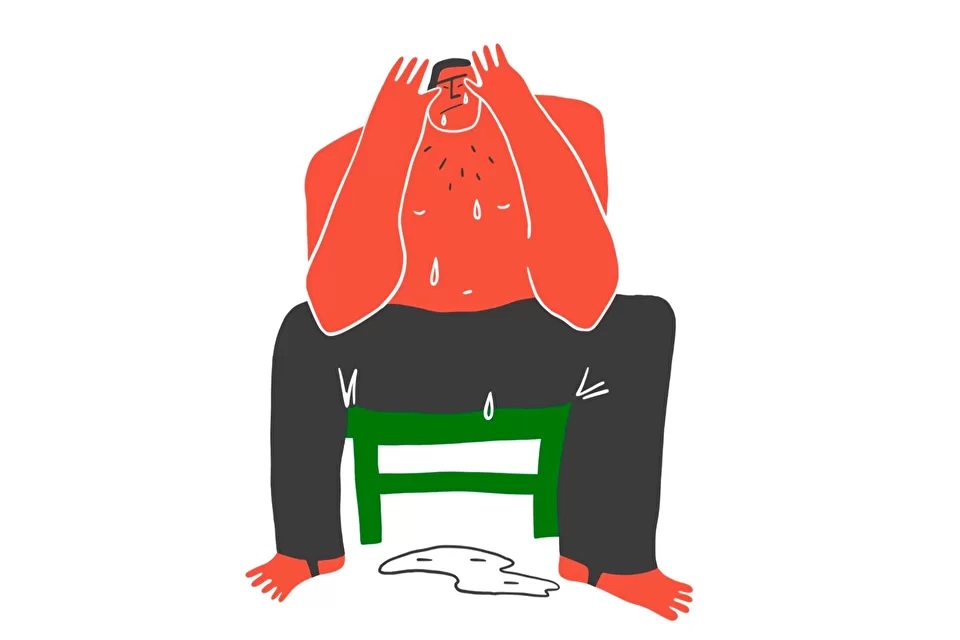
По совету психолога я начал записывать свои эмоции. В те моменты, когда во мне закипала злость, я говорил себе: «Стоп», выходил покурить, брал тетрадь и в ней коротко описывал происходящее. Еще одно упражнение, которое предложила мне специалист, — написать, что я могу сделать, чтобы ситуация стала еще хуже. Это помогает посмотреть на все со стороны и не наделать глупостей.
Мне казалось, мое поведение меняется. В январе мы с женой снова съехались, но ненадолго. Я воодушевился, мне показалось, что теперь все стало в порядке, я забросил терапию. А потом заметил, что снова начинаю придираться к домашним по любому поводу, и все становится так же, как раньше. Я стал понимать, что Нина была права, когда предложила разъехаться. Весной ей предложили работу в Санкт-Петербурге, и она уехала, а я остался с детьми и вернулся к терапии.
Работая со специалистом, я стал осознавать, что во мне очень много тревоги. Раньше, когда я просыпался в плохом настроении, я не понимал, с чем это связано, но теперь начал разбираться. Однажды, когда я проснулся в выходной день с ощущением, что что-то не так, я спросил себя: в чем проблема? Что я чувствую и почему? В этот момент я понял: у меня много дел, я отвечаю за детей, и от этого мне тревожно. Я попробовал разложить все по полочкам, составить план действий: накормить детей, погулять с ними, купить продукты, поработать. Настроение сразу улучшилось — я встал и занялся делами.
Когда я начал ходить на терапию, бабушка сказала: «Ты что, разве больной? Зачем тебе туда ходить?». Мама тоже не понимала, зачем мне это нужно. Она признает, что у моего отца были проблемы с агрессией, но отказывается верить, что и у меня они могут быть. Но мне кажется, что с терапией моя жизнь становится лучше. Раньше я приходил домой и мог вообще ни с кем не общаться, играть в компьютерную игру. Сейчас я спешу с работы, чтобы поскорее увидеться с детьми. Мы катаемся на велосипедах, играем в шахматы или в карты, а на ночь читаем «Таинственный остров». Когда Нина уехала в Питер, я старался не дергать ее по пустякам, хотя еще недавно в таких ситуациях я начинал присылать одно сообщение за другим: «Где куртка? Чем кормить детей?».
Я пока еще не во всем разобрался. Я не знаю, откуда у меня агрессивное поведение и в какие именно моменты оно «включается». На терапии мы разбираем каждую ситуацию. Мне кажется, моя агрессия связана с тревогой. Например, я всегда ругался на старшего сына, если выяснялось, что он не сделал уроки. Сейчас я спрашиваю себя: «А что в этом страшного? Что случится, если он не выполнит задание?». Вдруг оказывается, что, действительно, ничего не случится и кричать незачем.
Но, конечно, мне еще работать и работать с этим. Я до сих пор иногда чувствую, как во мне закипает бессмысленная злость. Недавно наш младший сын катался на велосипеде, и у него что-то случилось с цепью. Я пытался ее починить и не мог, а он хотел ехать дальше и пытался крутить педали. Я начал сердиться, и мне показалось, что сейчас я просто возьму и уничтожу этот велосипед. Но в итоге я взял паузу, остыл, успокоился. А потом просто взял и все починил.
«Нужно, чтобы механизм перестал срабатывать»
Татьяна Орлова, психолог
Часто людям, которые находятся в абьюзивных отношениях, говорят: «Уходи, не жди, пока человек изменится». И этот совет абсолютно правильный. Если человек применяет психологическое или физическое насилие, а жертва продолжает отношения с ним, абьюзеру просто незачем что-то менять — у него все и так хорошо. Абьюзивное поведение — это механизм адаптации, стратегия, которую мозг человека вырабатывает, чтобы справляться с чувством беспокойства и тревоги. Бывает так, что жертва продолжает жить с абьюзером, прощает его, надеется, что излечит его своей любовью, что он все осознает и изменится. Пока это происходит, получается, что механизм адаптации, выработавшийся у абьюзера, работает. Чтобы человек начал менять этот механизм, нужно, чтобы он перестал срабатывать.
Это не значит, что люди непременно должны расстаться навсегда. Но не стоит восстанавливать отношения, пока партнер, который применяет насилие — физическое или эмоциональное, — не возьмет на себя ответственность за происходящее, не начнет терапию, и не станет очевидно, что в его поведении начались изменения. Одним сеансом у психолога такие проблемы не решаются: нужно как минимум несколько месяцев, чтобы человек хотя бы начал менять стратегии поведения. А на то, чтобы полностью «вылечиться» от абьюзивного поведения, потребуется несколько лет.
Есть страны, где люди, осужденные за насилие в семье, обязаны проходить специальные психологические программы. Например, в скандинавских странах есть методика НОКСА , которую используют в работе с людьми, применяющими насилие. У нас есть организации, которые тоже используют эту методику, например, « Мужчины 21 века ». Но проблема в том, что люди с абьюзивным поведением сами почти никогда не приходят в программу. Доходят, как правило, только те, у кого проявления очень незначительны, — например, люди, способные к рефлексии, поймавшие себя на том, что совершают легкое психологическое насилие. Или те, кто однажды применил физическое насилие и ужаснулся этому.
Часто, даже если человек осознает, что совершает насилие, он начинает ходить на терапию, но быстро бросает. Ему кажется, что все уже наладилось — партнер вернулся к нему, отношения продолжаются. Зачем дальше ходить к психологу? Это ведь сложно, во время сессий нужно исследовать собственный неприятный опыт, меняться.
Впрочем, все это не значит, что, если человек склонен к абьюзивному поведению, он безнадежен. Сегодня появилось много научно-популярной литературы про тиранов и абьюзеров. Как правило, там говорится, что у этих людей вообще нет чувств, они причиняют другим боль нарочно и хотят всех уничтожить. С одной стороны, хорошо, что такая литература появилась. Раньше ведь были популярны идеи, будто бы мудрую женщину муж бить не будет или что нужно терпеть и вытаскивать партнера. Так что, когда авторы книг советуют уходить от абьюзивных людей, это выглядит разумно и прогрессивно.
Но я не согласна с тем, что у агрессоров нет чувств и они садисты. Чаще всего это люди, которые сами пережили насилие в детстве — были унижены, брошены или отвергнуты. Возможно, подвергались хаотическим воздействиям со стороны взрослых: то есть их то били, то любили. Переживали долгосрочные бойкоты. Когда человек переживает такой травматичный опыт, у него выстраиваются своеобразные защитные реакции: психика запускает автоматическое поведение, направленное на то, чтобы снова не пережить травматичный опыт. Такой человек всегда ждет удара и воспринимает все действия окружающих как угрозу. В отношениях он может неверно интерпретировать сигналы партнера, воспринимать нейтральные действия как нападение — и тогда включаются те самые механизмы, которые мы называем абьюзивными. Это может быть пассивная агрессия, психологическое или экономическое давление, воздействие на самооценку партнера, патологическая ревность, а может быть и прямое физическое насилие.
Часто говорят, что у людей с абьюзивным поведением есть проблемы с эмпатией. Эмпатические процессы действительно могут выключаться — это тоже защитная реакция, которую использует мозг. Но в целом, как правило, чувство эмпатии все-таки есть — просто оно приглушается в те моменты, когда человек совершает насилие. А потом — в более спокойной обстановке — снова появляется. Конечно, есть и те, кто не чувствует эмпатии из-за особенностей строения мозга. Но таких людей меньшинство, и даже они могут изменить свое поведение и прекратить насилие.
Когда я работаю с людьми, использующими абьюзивные механизмы, мы стараемся разобраться и с травмами из прошлого, и с тем, как человек ведет себя сегодня. Как правило, у авторов насилия есть травматический опыт, который их сознание вытеснило, не сумело принять и отрефлексировать. Важно, чтобы человек сумел справиться со своими воспоминаниями, чтобы они перестали быть для него мучительными. При этом нужно, чтобы он осознал, какие у него есть механизмы адаптации, как он контактирует с окружающими, и нашел другие способы общения — не абьюзивные.