
Translated material
Temptation by a dictator
After Lukashenko's departure, the religious map of Belarus will no longer be the same
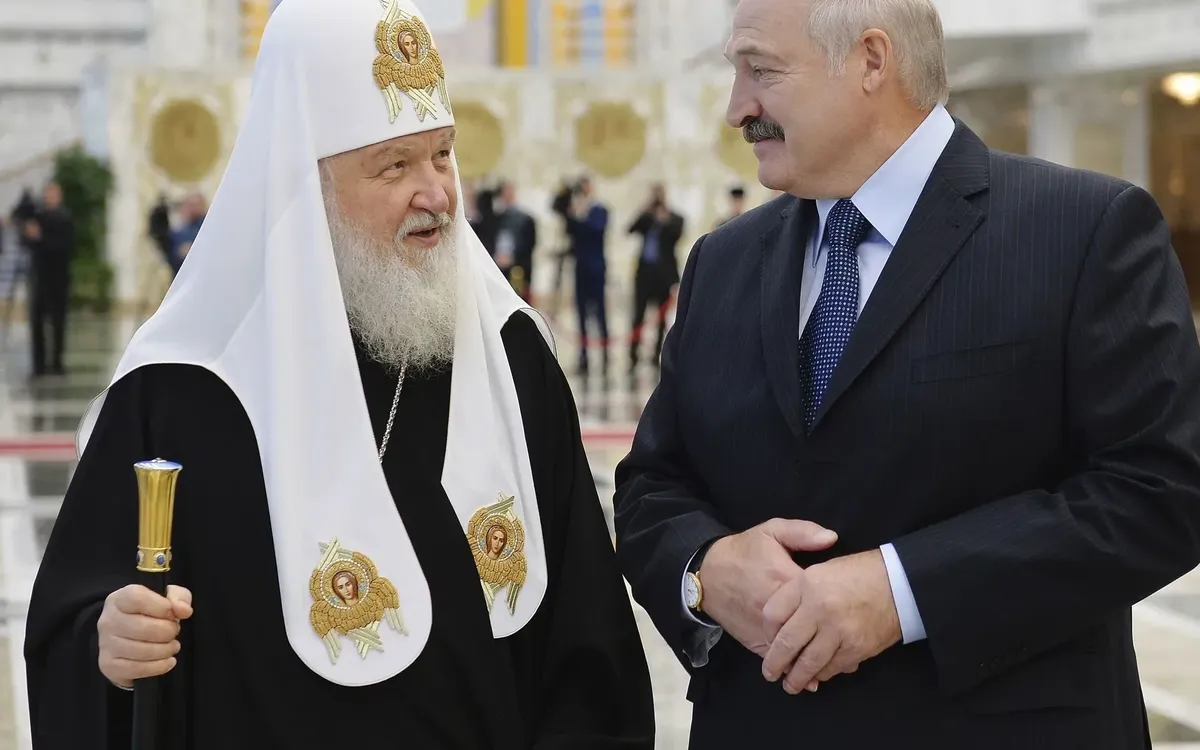
The leadership of the largest denomination in Belarus - the Moscow Patriarchate - did not find the strength and words to give a moral assessment of the atrocities of the security forces. Patriarch Kirill was one of Lukashenko’s first to congratulate Lukashenko - and fell silent. Only individual priests condemned obvious lawlessness. Otherwise, the Catholic Church of Belarus behaves ...
Such different hierarchs
Throughout 26 years of the reign of Lukashenko, the Moscow Patriarchate consisted with him in a close “symphony”. Patriarchs Alexy II and Cyril periodically came to Minsk, exchanging orders and medals with the old man. Lukashenko, calling himself an “Orthodox communist” and in his characteristic manner expressing doubts about the existence of God, constantly “inspected” temples and monasteries in the subordinate territory, allocating funds for their construction.
The atheism of the dictator, which he sometimes even talked about from the church amvon, did not interfere, but rather helped this "symphony."
In it, the hierarchs saw the key to non -interference in their internal, “purely church” affairs.
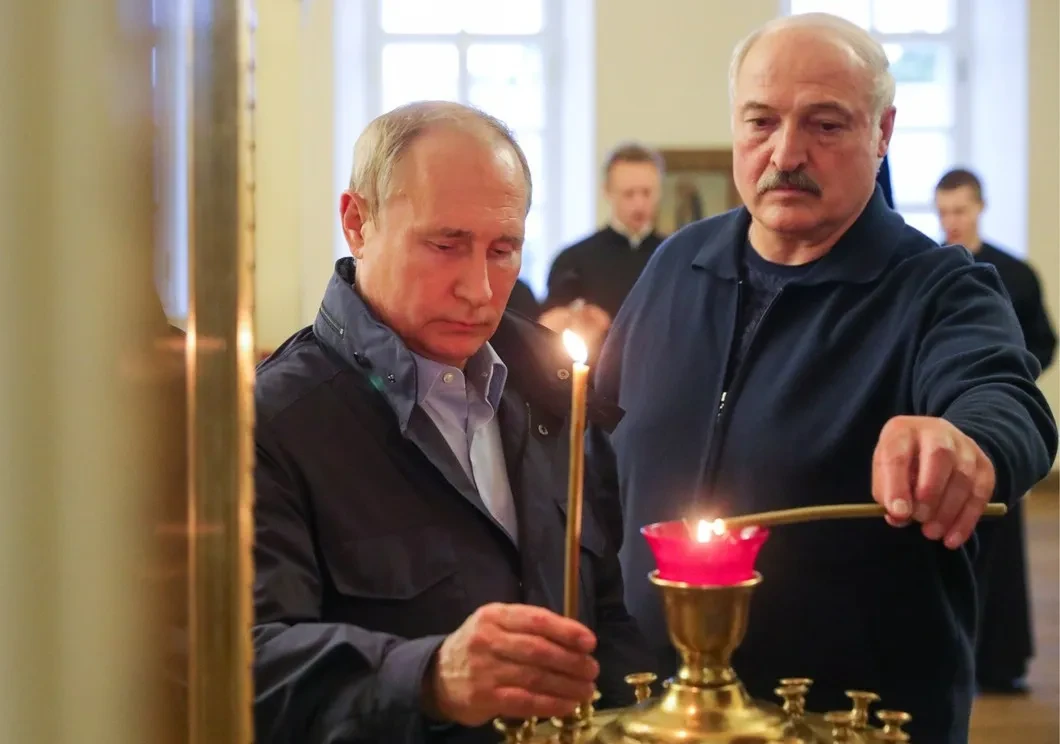
Lukashenko was not interested in the reasons for the separation from the Russian Orthodox Church - the Belarusian Autocephalous Church or various “branches” of the Russian foreign church, and stupidly forbade them, driving underground and exposing them to repressions, like any other opposition. All these years in Belarus it was impossible to register the Orthodox community outside the Moscow Patriarchate.
So now that the moment of truth comes for the “last dictator of Europe”, the Russian Orthodox Church is, as it were, connected by obligations to it. And already on August 10, against the backdrop of an increase in the protests and atrocities of riot police, Patriarch Kirill sends a touching congratulation to the “winner”. In it, he expresses the hope of "for the continuation ... cooperation, designed to contribute to ... the assertion in the society of enduring ideals of mercy, peace, goodness and justice."
After a couple of days, the link to congratulations disappeared from the title page of the official website of the Patriarchate, and now the document is completely deleted from the site. Google has retained a copy of this page.
Unlike the official website of the Patriarchate, the site of its Belarusian exarchate (inside Belarus, it is customary to call it the “Belarusian Orthodox Church of the Moscow Patriarchate” - BPC MP) was silent on August 10. Only the next day, August 11, a congratulation of the Patriarchal Exarch of All Belarus Metropolitan Paul (Ponomarev) appeared on it.
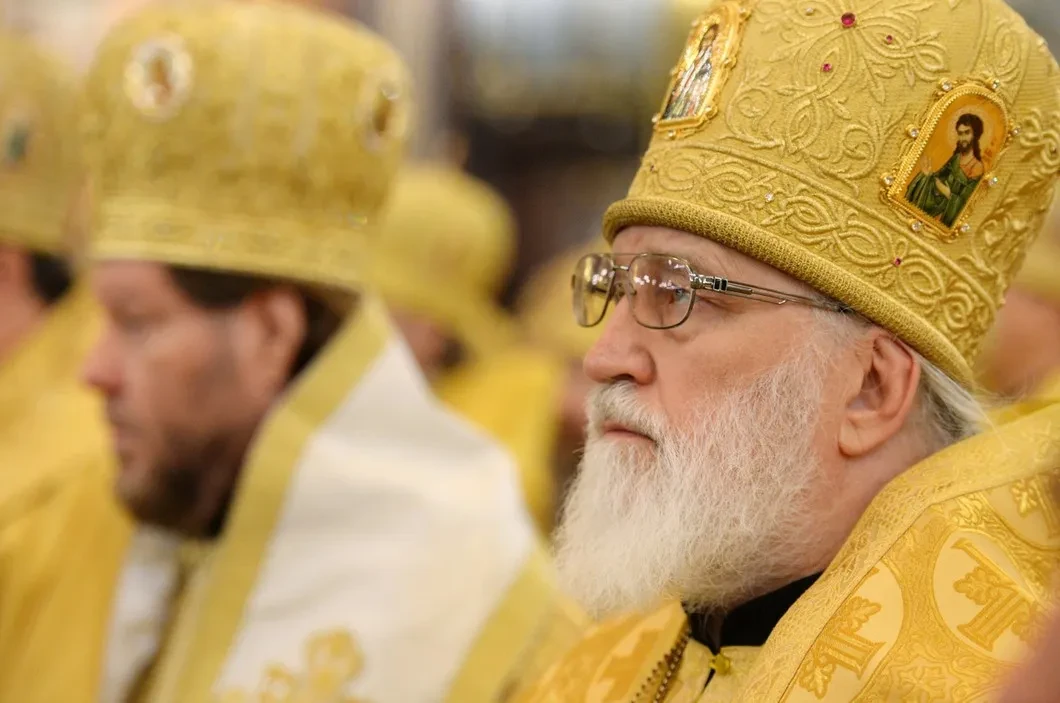
Being a citizen of the Russian Federation (which, by the way, is prohibited by Belarusian legislation for the heads of local faiths), he expressed himself ambiguously on behalf of “compatriots”, who allegedly entrusted Lukashenko “greater hope associated with the protection of the sovereignty of Belarus, preserving the national spiritual and cultural heritage, strengthening social and economic stability”.
True, on August 14, after the blood spilled on the streets of Minsk, Pavel had to apologize for this congratulation. He met with the participants of the “protest” procession in the center of Minsk - Christians of different faiths, who are not with flags and banners, but with icons and bibles in their hands protest against violence. The Metropolitan agreed that “evil should be called evil” and blessed the procession, which the day earlier, the BPC MP tried to condemn and ban.
Against the backdrop of a bewilderedly silent Patriarch and actively, but ineptly maneuvering Paul, the “Minister of Foreign Affairs” of the Russian Orthodox Church Metropolitan Hilarion (Alfeev) immediately adequately appreciated the situation. Having trampled the unwritten laws of the Patriarchate, he not only did not congratulate Lukashenko after the Patriarch, but did not even post the Patriarchal Congratulation on his department of external church ties.
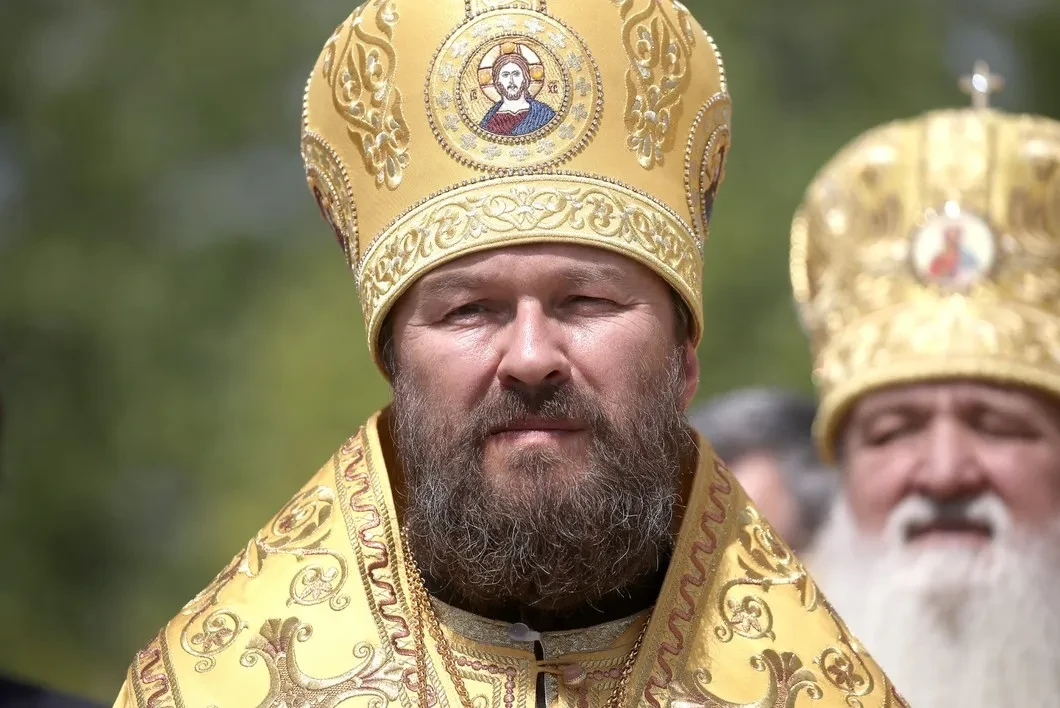
According to his former assistant Leonid Sevastyanov, now leading the World Union of the Old Believers, Ilarion now has every chance of becoming the next exarch of Belarus. And in the context of the movement of the Belarusian church to autocephaly (complete church independence), following the church of neighboring Ukraine, this can strengthen the position of Hilarion on the scale of all world Orthodoxy.
Moral stupor and voice of conscience
But this is a big church policy. The Belarusian people, who feels deceived, humiliated and beaten by their own power, are more interested in the moral assessment of what happened in the country from those who seem to be called primarily to give such an assessment.
Several hundred Orthodox from the city of Lida signed on August 13 an appeal to Metropolitan Paul:
“The cruelty of power structures in relation to civilians simply does not fit into the consciousness of any person, regardless of his religion. In the name of the saint himself - the lives of people - we ask you to protect and participate in the cessation of bloodshed and restore peace and justice on our Earth. We ask for assistance in satisfying the requirements of people to announce the honest election results. ”
So far, there was no answer from the Patriarchal Exarch.
Already on August 12, individual Orthodox priests expressed careful solidarity with the victims of the terror of the security forces, coming to different pre -trial detention centers and an IVS with water and products for thousands of detainees.
This happened, however, mainly in the Western dioceses - Grodno and Brest.
Priest Oleg Shulgin, who was nourishing the Minsk riot police in the past, turned to his former wards: “Be worthy warriors of Christ, and not the executors of the orders of the one who wants to remain in power, tracing their own and your conscience, the laws of the state and the rights of citizens!”
In the east, the country, in Gomel, the local hero was Archpriest Vladimir Drobyshevsky, dismissed from the BPC MP. He stood on August 13 in a cassock and with a cross opposite the local unit of the Investigative Committee, holding the poster “Stop violence!”. Another dismissed and banned (but very popular people and social networks) cleric - Minsk priest Alexander Shramko - actually headed the “unauthorized” procession on August 13 and delivered an inspired sermon on it.
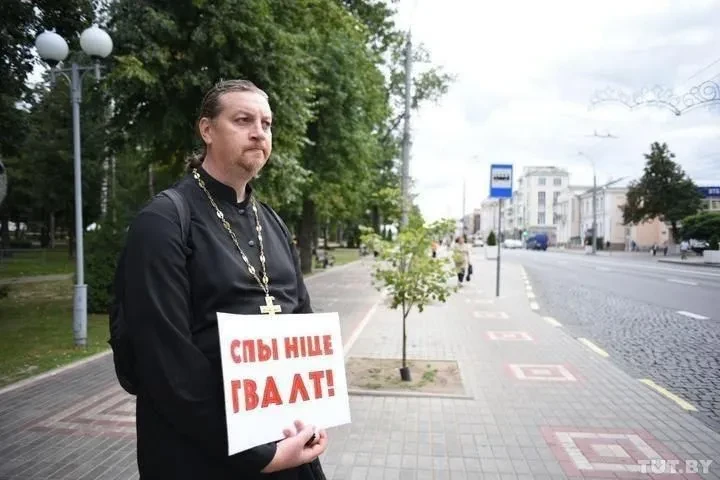
The most senior (today) representative of the BPC MP, who clearly condemned violence, was the controller of the "nationalist" - Grodno - diocese, Archbishop Artemy (Kishchenko). On August 14, he published his appeal:
“The blood of the victims and serious suffering of people these days is on the conscience of those who consciously killed themselves or forced others to kill the truth! .. We all have to do a difficult way to overcome the political crisis and moral purification.”
The archbishop contrasts the Belarusian people who demonstrated the nobility these days, which disturbed the rulers: “Love has returned the world and stopped violence! Is this not a miracle?! Let the flowers and smiles of our beautiful girls and women help to heal from the toxins of evil and aggression! ” In conclusion, Artemy calls “honestly and openly investigate all the facts of fraud, violence and cruelty, so that justice will happen and the truth triumph”.
Catholics - with the people
The only large (second largest!) Denomination of Belarus, which from the very first day of confrontation took a consistent and rather firm position, is the Catholic Church. She has always been important for Lukashenko’s foreign policy games, who was trying to arrange a visit to Minsk Pope, then offered himself an intermediary in negotiations of the Orthodox and Catholic churches.
The head of the Catholic Church of Belarus, Metropolitan Tadeusz Kondrusevich (previously served in Moscow), not only did not congratulate Lukashenko, but already called on the authorities and protesters to sit down at the negotiating table, noting that the conflict of this scale turned around for the first time in the modern history of Belarus. He called on the parties to the conflict to stop violence: “Let your hands created for peaceful labor and fraternal greeting do not raise weapons or stones. Let the force of arguments based on the dialogue in truth and mutual love reign instead of the argument. ”
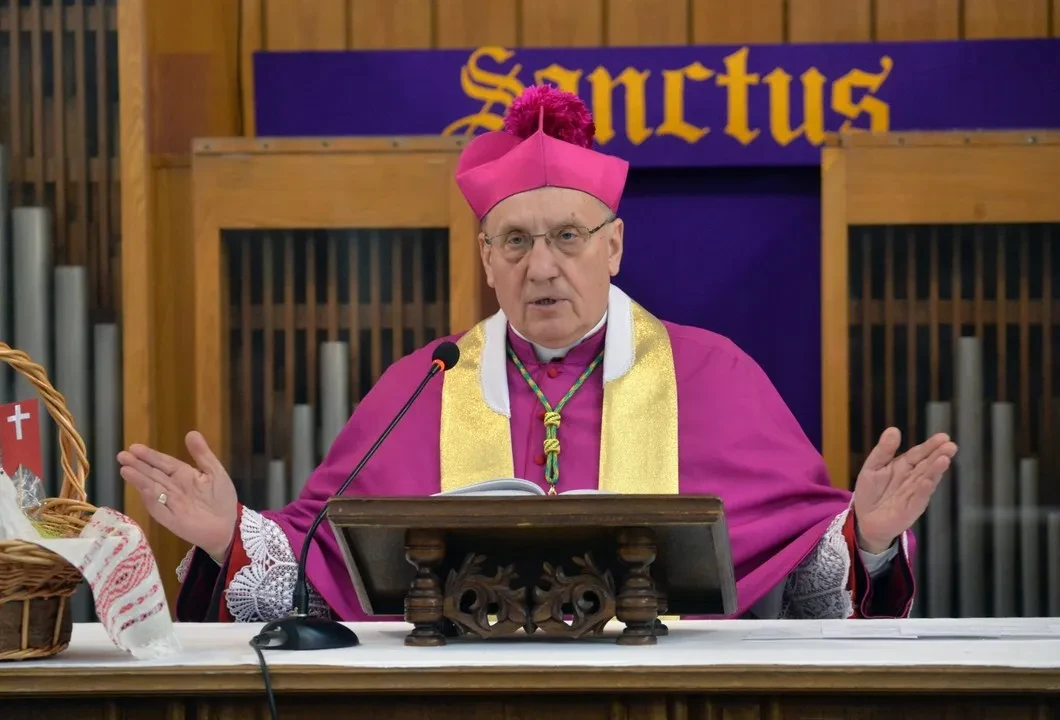
On the night of August 15, when it became clear that Lukashenko was not holding power, Metropolitan Kondrusevich published a more frank message, actually accusing the regime of "spilled blood, thousands of detained and severely beaten civilians." He accused the authorities of committing a “grave sin” and reminded Lukashenko of the last chance “to start a constructive dialogue with society, stop violence and immediately free all the innocent citizens detained at peaceful actions”.
The Catholic bishops of all Dioces of Belarus made similar statements.
And some churches (for example, in Lida) became foci of civilian resistance: they called the bells there, hung white and red-white flags, gathered protesters in their fence and, of course, tried to help the victims.
Three Catholic priests in Zhodino near Minsk managed to stop OMON when he once again tried to pounce on civilians.
The indifference that Patriarch Kirill demonstrates in relation to his battered flock in Belarus is not the “limit of the fall”. A number of nourished by the deceased Fr. Vsevolod Chaplin in Moscow “Orthodox-public” structures on behalf of the “Orthodox community” of Russia criticized Lukashenko, but not for bloodshed, but for “indecision” and the lack of appeal to Putin on the introduction of Russian troops.
The Union of Orthodox citizens, clearly not understanding what is happening in a neighboring country, requires Lukashenko to directly turn to the Orthodox and take them to the streets. The head of the Association of Orthodox Experts, Kirill Frolov, also gives the “wise” council of Lukashenko: “There is a wonderful Orthodox way to leave the Minsk Maidan ... namely, to attract [protesters] to correctional and spaced work-to the restoration of Orthodox shrines, especially destroyed rural temples.”
The Paramilitarian movement “Forty forty”, remembered by fights with Muscovites at the construction site of new temples in parks and squares, raises the question with an edge: “What is with ambitions, Alexander Grigoryevich? Is it not time to moderate them, ambitions, and ask Putin to accept Belarus back to Russia? .. After all, they played out of multi-vector. ”
As they say, with such advisers and enemies do not need.
The reaction of the Orthodox “establishment” to what is happening in Belarus is the sad result of the “spiritual revival of Russia”, which is seemed to be accompanied by Christian rhetoric, but based on false grounds. Not on fidelity to the Gospel of the Truth and the feat of the new martyrs of Russian, but on the illusion of an alliance with the state, the "symphony of the authorities", the chimera of earthly power and the greatness of the Church. On those temptations that Jesus rejected in the Gospel. After all, what is happening in Belarus, no longer applies to politics, jurisprudence or “historical truth”. Personnel of violence against civilians appeal to elementary humanity, to conscience, from the birth of in every person.
And if “religious beliefs” help to drown out this voice of conscience, it means that they do not have Christianity, and simply with humanity, nothing in common.