Date
Author
Виктор Фёдоров; Анна Яровая; Светлана Прокопьева; Софья Рогачева
Source

Preserved copy
Translated material
"Like autumn and emergency"
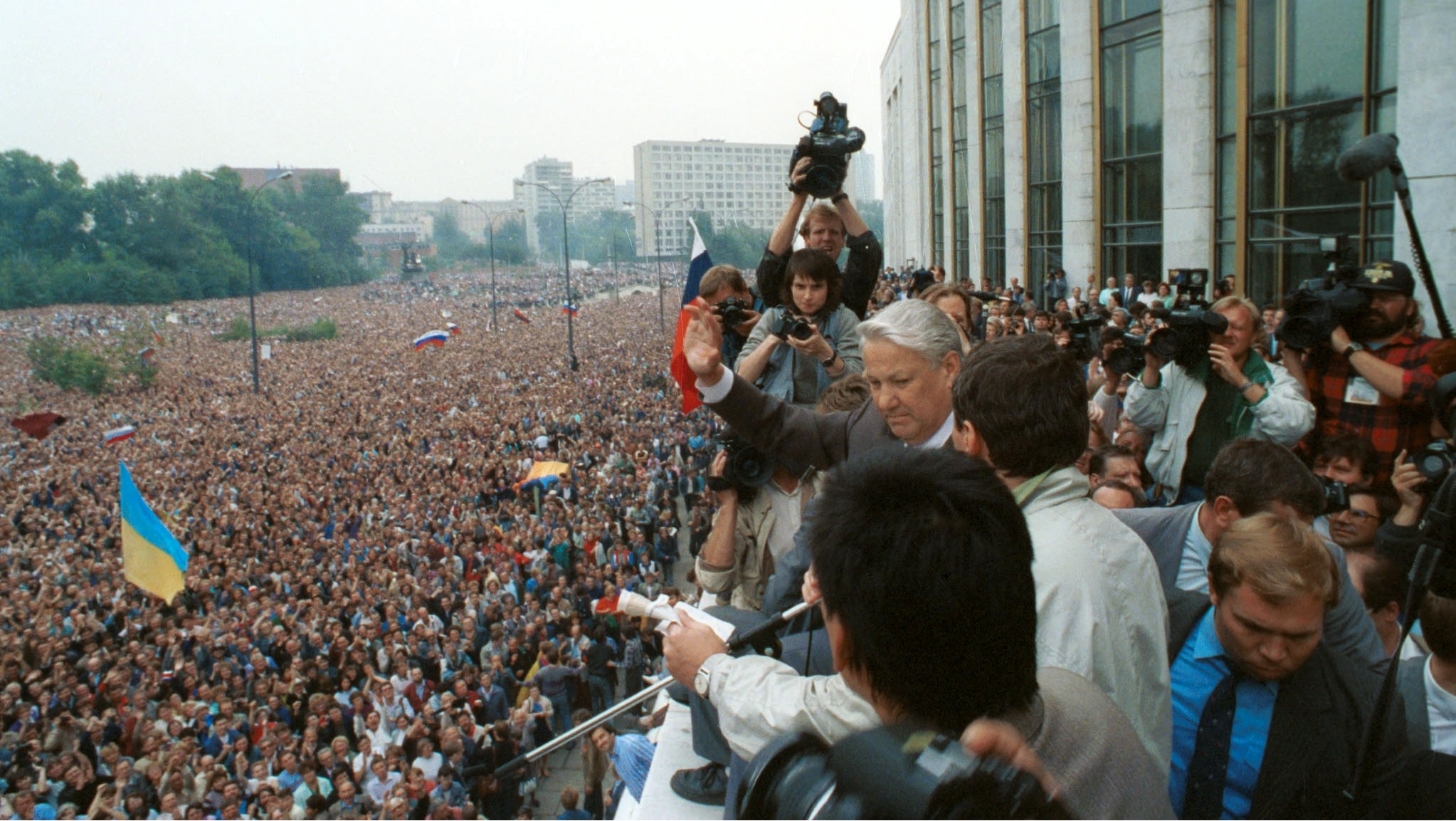
On the morning of August 19, 1991, the inhabitants of the USSR woke up and found out that Mikhail Gorbachev was no longer president. "In order to overcome a deep and comprehensive crisis, political, interethnic and civil confrontation, chaos and anarchy, which threaten the life and security of citizens of the Soviet Union, sovereignty, territorial integrity, freedom and independence of our state" The power in the country has seized the State Committee on Extraordinary Regulation.
The August putsch, as those events call, lasted only three days. The ministers and the military, which became part of the GKChP, controlled the army and all power structures, but could not use this. President Boris Yeltsin in Moscow and mayor Anatoly Sobchak in St. Petersburg called on citizens to resist the "reactionary coup". People took to the streets.
The main events unfolded in the capital, where the confrontation reached barricades, tanks and human casualties. But throughout the country on these August days, people did not understand in which country they would wake up tomorrow. The inhabitants of Belarus must feel something like this today, eyewitnesses of the putsch with whom the correspondents of the North. Reali recalled the August events of 1991.
"There was a feeling that the enemy would not pass"
Irina Tumakova in 1990 was 20 years old. She was an apolitical girl, studied at a music school, and on August 19 she needed a “blood from my nose” to buy notes, because a new school year was approaching. On this day in the morning, mother told her: "Listen in more detail, they have some kind of emergency." But Ira waved her hand: "They have a state of emergency, they have nothing to eat."
And then she turned on the radio. And there the "commandant of Leningrad" announced the rules of a state of emergency: not to gather more than two, to hand over all copying and multiply equipment.

- And at that moment I felt very scared, right very scared. And my first thought was not about the fate of democracy, but, Lord, why did I come out of the Komsomol?! - recalls Irina.
Scary, but you have to go for notes. And at the same time, for food-in Gatchina, where Irina lived then, it was impossible to buy products, they stuck in St. Petersburg. And now, already with a loaf of bread and milk, Irina went to the house of the book. And I saw an announcement: everyone who is not indifferent to democracy, go to the Mariinsky Palace on Isaac's Square.
“And then for some reason I was sticking,” she says. - I thought: "What the hell?! ..." In general, my mother and I really loved Gorbachev. And instead of going behind the notes, I, along with bread and milk, leaned on the Isaakievskaya Square to the Mariinsky Palace. There is already a crowd of people, Sobchak performed. It was very exciting, everything was inspired. It was not at all scary there, the feeling arose that the enemy would not pass, such a universal fraternity. People there have been there for a long time, they were hungry, and I had this bread - they divided it into pieces and ate. We all listened to Sobchak, caught leaflets that were scattered from the porch of the Mariinsky Palace. Then I drove them to propagate and distribute them.
Irina spent the whole day on the square, met there with a young man - "psychiatrist Misha", and then returned home to Gatchina. And all night, together with her mother, she listened to the only radio stations that worked then - Baltika and Radio Gardarika, who said they were jamming, that tanks were coming. And again it became scary.
- We lived with my mother very well. Mom is a doctor, I studied at the Muzuchiye. By and large, it was a difficult time for us. And in Soviet times, our family lived, on the contrary, good, because dad worked at the Institute of Nuclear Physics, there is a special distributor, all things. My mother and I were not afraid of tanks, not that someone would arrest us, and we were terribly afraid that this horror, this scoop would return again. All this is a lie, all this nightmare, this special distributor, saleswoman Tamara, from whom you can find sour cream. Champagne that you need to buy in the summer. Inability to read books. I look at Belarus and understand them, - says Ira.
Then, on the Isaakievskaya Square of people, "the feeling that something has changed, and now it will not go anywhere, it would be better to be better", which did not want to lose. "We knew that we have ahead. Yes, now it's hard, small salaries, coupons, there is nothing to eat. But something is very good ahead."
When democracy won, Irina and psychiatrist Misha put all their coupons for alcohol, bought the Alazan Valley and went to celebrate victory. The feeling of victory remained for a long time, until the NTV overclocking in 2001, says Tumakova. Today she works as a Novaya Gazeta specialist in St. Petersburg and can no longer call himself an apolitical person. Unfortunately, the fate of a psychiatrist Misha has developed.
- Irina, and in your opinion, today such a folk rise is possible - to go out and defend freedom in Russia?
I see the same parallel as with Khabarovsk: people have hope
- Sometimes, when I am in Khabarovsk, I have the feeling that yes, probably, this is possible. Because in Khabarovsk now people have experienced something similar to our feelings that some changes are possible. Therefore, they hate those who took away, in fact, not a van, most people spit on a vang, but took hope for a change for the better. And when I look at it, it seems that yes, something is still possible. But in general, when I drive around the country and talk with people, I have a feeling that no, there will be no such rise.
-And in Belarus-is there a parallel with our 91st year?
- Yes. I see the same parallel as with Khabarovsk: people have hope. They clung to it, as we were then in 1991. They clutched and do not want to let go: now we will grab it now and will also live like normal people. And here they, chloas, take it away. This feeling I really understand.
"Well, Leo, brought a leaflet?"
“The GKChP worked as a mine, adjusted under the USSR,” says Lev Schlosberg, the leader of the Pskov “Yabloko”. - The Gekachepists themselves set themselves the task of maintaining the Soviet Union, but they blew up it.
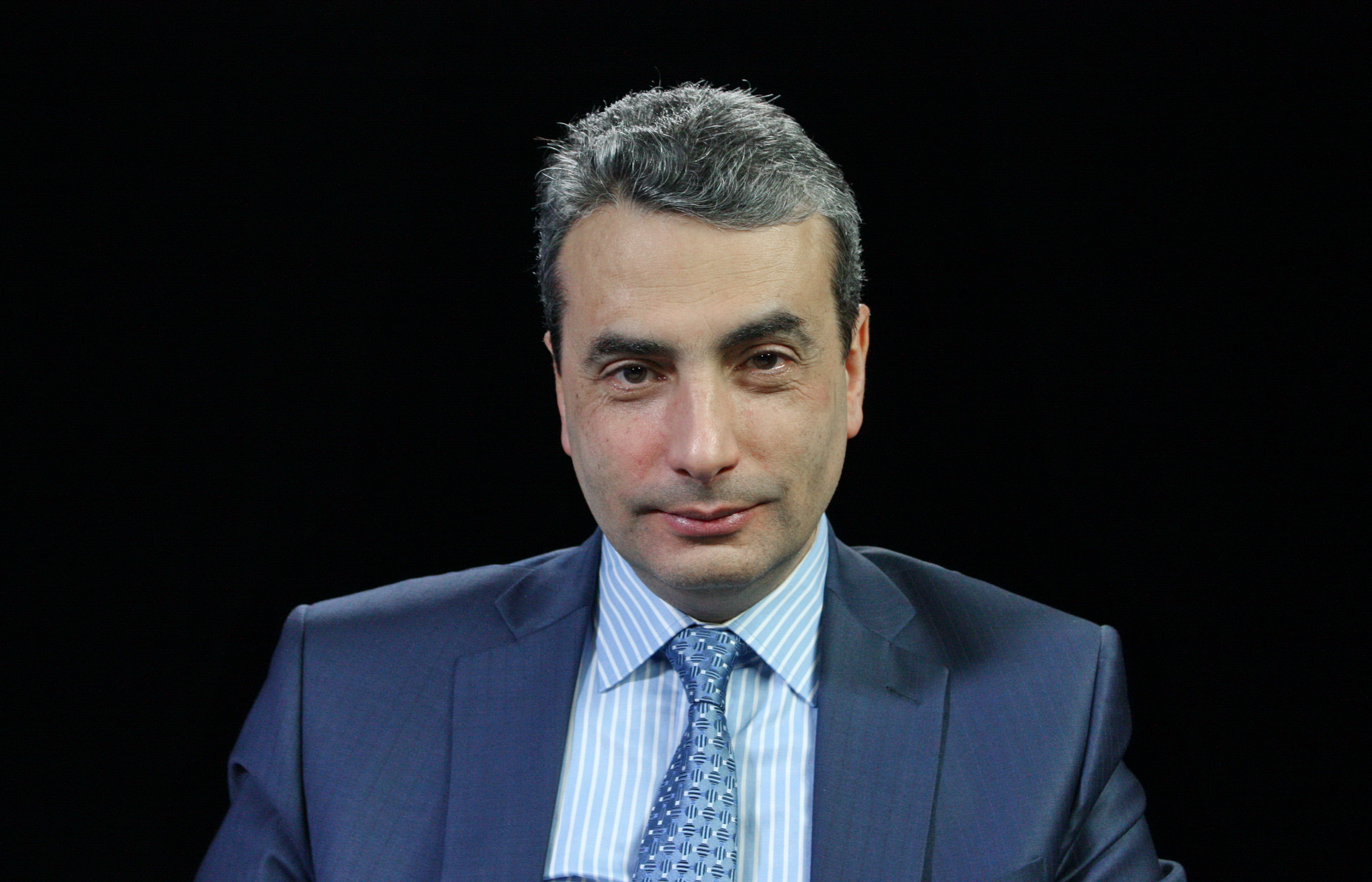
On Monday, August 19, his mother woke him with the words: "Leva, you listen to what they say." They said that "guided by the vital interests of the peoples of our Motherland, all Soviet people" must be transferred to the power of the State Emergency Committee. Schlosberg, then not a politician, but the “social innovator of the USSR” (he received this title in the same 91st year), carefully listened to his surnames: they talked about Gorbachev’s unhealthy, but did not mention Yeltsin in a word. “It was clear from this that the GKChP’s hand has not reached out to the authorities of the RSFSR,” he recalls.
On the same day, in the office of the Renaissance Center on Yana Fabriabissius, 6 (created a year earlier and closed in 2017 by court decision, already in the status of a “foreign agent”), Schlosberg consulted with like -minded people what to do. It was already clear that the situation was not a dead end - "telephone messages appeared, prints, appeals appeared, an information distribution center appeared in the summer garden, at the monument to Pushkin." Through the radios, people found someone "voice of America", some Radio Liberty. The information changed the impression of the GKChP, Schlosberg recalls: "That is, it was clear that these people could neither manage nor keep power."
- In the afternoon, on August 19, I sat down to write a leaflet, I wrote it by hand. Then, on our only needle matrix printer in the center, we printed this leaflet. We had the only one, not even purchased, but a rented AVM computer, with a 40 megabyte hard drive volume. I have not yet been able to print on it, and our programmer Igor printed this leaflet, literally looking around. We printed it in several copies, he destroyed the original file, ”says Lev Schlosberg.
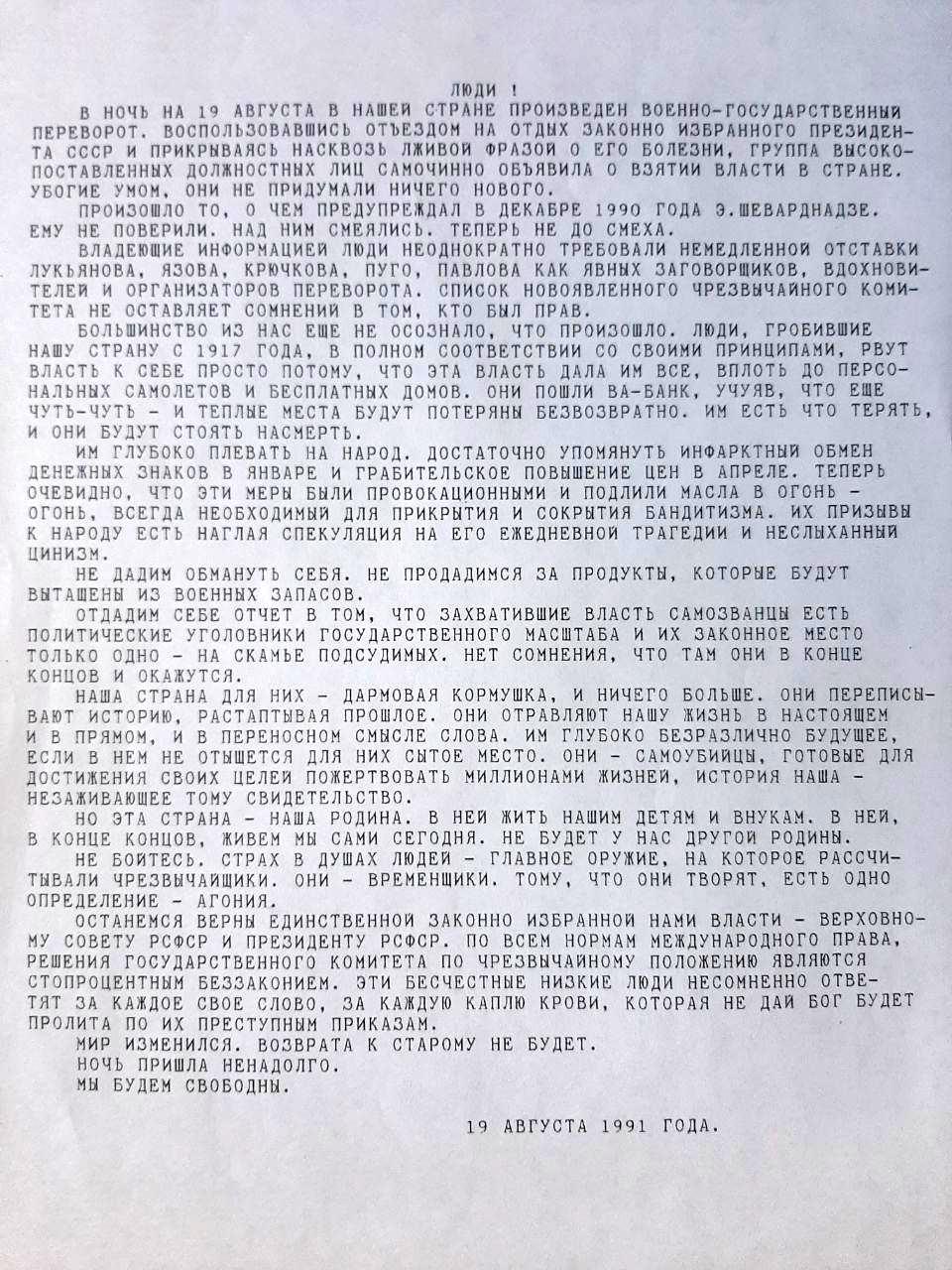
When it got dark, he carried these printed leaves to the apartment to Igor Savitsky, a large Pskov businessman today, and then a novice entrepreneur who traded office equipment and lived in an ordinary two -room Khrushchev. Savitsky opened the door with the words: "Well, Leo, brought a leaflet?"
-He had some kind of homemade Xerox Canon, an “assistant accountant”, designed for sale. We took this leaflet, photocopied it twice, and only from the third copy we made a circulation - several thousand copies. And then Savitsky later put this Xerox in the internal affairs department of the Pskov region so that no one could find it in some other organization, ”says Schlosberg.
With a circulation of leaflets, stuck in an ordinary diplomat, the lion on foot (buses no longer went) passed in half a city and then participated in the distribution of revolutionary literature. On the second day, he said, he says that the scales of Libra were hesitating: "There was already Yeltsin’s performance, and it became clear that there were alternative centers of power."
There are a lot of political parallels between events in Belarus and events in 1991.
Today, Lev Schlosberg is sure that the creation of the GKChP was an attempt to prevent the reform of the Soviet Union. Just then, the Novoogarev agreements were being prepared, which were supposed to significantly change the relations of the Center and the Union republics: "In fact, this was a new allied agreement that was supposed to change the relations of the republics within the USSR, provide them with greater economic and political freedom. It was an attempt to create a European union on the basis of the Soviet Union." Members of the GKChP wanted to stop this, I am sure Schlosberg:
- In reality, this was a reaction not just a conservative, but obscurantist part of the Soviet bureaucracy to try to democratic reform of the Soviet Union, the flagship of which was Gorbachev. They saw the process of going reforms, did not have the opportunity to influence Gorbachev and his position and came to the decision - by force to remove him from power. They thought that, physically taking his place, they could become power. But by that time, society was ready for resistance, and this is what they did not take into account. There are a lot of political parallels between events in Belarus and events in 1991. Like Lukashenko today, the members of the State Emergency Committee were inflexible, conservative people who at all could not accept a new way of life.
- Then the GKChP did not succeed. Do you now believe in the victory of the Belarusian resistance?
- Yes, I believe in their victory, but it will be very difficult, because Lukashenko does not perceive public opinion, he can only leave under the most severe pressure of his closest environment, which will simply tell him: "Sasha, we will all be taken out here. They will simply come to us, and we will be arrested here." The position of power structures is very important, and they hesitate.
"Those who have lost, and those who won"
- Why do you remember Belarus? The United States is a vivid example: the defeat of shops, the beating of innocent people with hooligans ... - argues Alexei Kanaev , deputy of the State Duma in the Vologda Oblast from United Russia. He does not see the parallels between August 91 and today's Belarus.
In 1991, he served in a military service in the special forces, which shortly before the August coup returned from the Nagorno -Karabakh. The brigade in those days was in a state of increased readiness all the time, he recalls, "and, as I understand it, it was considered the option of using the brigade, including in 1991 events." The corresponding order, fortunately, did not enter.
“ We all hoped that the situation would be solved as conflictly, in a political way as much as possible,” he recalls. About the coup of the 91st year, the soldier Kanaev learned, like everyone else, from the media. Although "the urgent service leaves its mark, and the lack of information is obviously available."
I would not have taken up to say that it was a junta, a dictatorship. This is more like a bad production, in my opinion
- Any conflict is an unpleasant event, especially when you are, as they say, at the front line and you can be directed to this hot point. Especially in the capital, especially in Moscow. We really hoped that the situation would be resolved peacefully, conflictly. Of course, Russia embarked on a democratic path, no one wanted an iron curtain, no one wanted a dictatorship. I can say this in the atmosphere among colleagues, our commanders, at least with whom we talked, and among the ordinary sergeant composition, which I belonged at that time.
- That is, you and your colleagues were not morally ready to brutally disperse the protesters?
- As for the "disperse". It must be understood that the crowd is a beast, a terrible beast. Therefore, it is not about acceleration in such situations, as a rule, we are not talking about. We are talking about preventing a clash of different parties. At least we were prepared for this. The society was polarized, the views were different. Supporters and opponents of the putschists represented significant power on one side and on the other. And the task, in my opinion, is the internal service (today it is the Russian Guard) is to prevent clashes, to prevent the transition of the Political conflict to the power conflict. As for the possible acceleration: the suppression of the actions of hooligans is also one of the components.
- But here it was not about the clash of different public groups. Here, one of the parties to the conflict is the power or putsheists, who were even called a junta ...
-What is a junta .. A group of people appeared who considered that something was happening in the country wrong, and, taking advantage of their idea of the world order, levers and ways of management, produced some goals. I would not have taken up to say that it was a junta, a dictatorship. This is more like a bad production, in my opinion. Yes, then there was tension, emotions, there was a feeling of anxiety that the conflict could develop. But today we see that, fortunately, the figures from the State Emergency Committee did not go further than the words. But further events, unfortunately, led to what happened. He is in solidarity with Putin. There was a geopolitical catastrophe of the XX - XXI centuries, the destruction of the USSR.
- Now, after all these years, how do you assess those events?
- I have always declared and now I will declare a categorical rejection of the forceful solution of a particular problem. Moreover, I cannot welcome any coups. Power should be replaced by peacefully. The change of power should occur logically, through understandable democratic procedures. Any attempt to a coup, no matter how beautiful words and goals it is hiding - is always a strategic defeat: defeat of the state, defeat of citizens, defeat in the principle of everyone, even those who win tactically.
"Freedom does not go anywhere"
Journalist Elena Fomina in August 1991 mastered the profession of a teacher in one of the schools of Petrozavodsk. Eight months before, 24-year-old Elena, together with her colleagues, left the Komsomolets newspaper in protest against the intervention of the Komsomol regional committee to the editorial office.
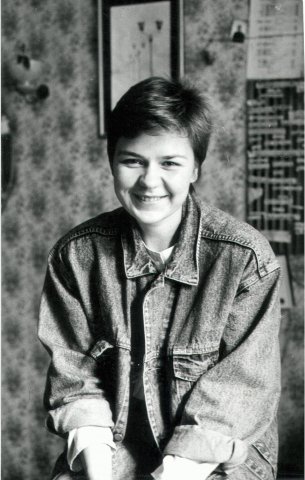
- We left December 31, 1990 simply because we did not want to obey the Komsomol, we all put Komsomol tickets on the table - this was such a demonstrative action. Although now I understand that we were practically not touched, we wrote what we wanted. Another thing is that we were asked to illuminate the away district events of the Komsomol, but we did not want to do this. We were still supported by people in the city, who also began to come to the editor and rent tickets. We left the bang and noise, left without work. We believed that we could immediately create our newspaper, but it did not work out technically, we were denied the printing house. Everyone dispersed on various work, ”Elena recalls that time.
The editors of Komsomolets reunited on August 19, 1991: after the news of the start of the coup in Moscow, journalists in almost home conditions came up with the newspaper "Team", which had only three issues, but read it thousands of Petrozavodsk residents.
-Oleg, my current husband, then a colleague, worked in the news agency "Ima Press" in Karelia. They worked mainly for Helsingin Sanomat for Finland with a translator, there were ties with Moscow, they had one of the few faxes in the city, one of the few xeroxes in the city. When the whole story began, the first half a day was all in confusion, then they began to pour out, gather, ”says Elena Fomina. -Then we went to the Nick television company, we heard from someone that you could see CIN-EN. We arrived, and there was a viewing curse there: there was then Sergey Katandov , who then led the city, Alexander Kolesov , who was then the chairman of the City Council - everyone stood and looked at these tanks. But there was no horror. If maybe the tanks entered Petrozavodsk, then we may have perceived the situation otherwise. And so they understood that they had to do something, but they did not really understand what exactly. Then we gathered with colleagues and decided that we had to do the newspaper. From all the information that we received: Radio Liberty, Si-En-En, Moscow-we all collected, printed a newspaper on a printer in Ima Press and photocopied-then we went to the city, distributed it. And when we started doing this, we even calmed down. There was a feeling that you were doing some kind of your duty.
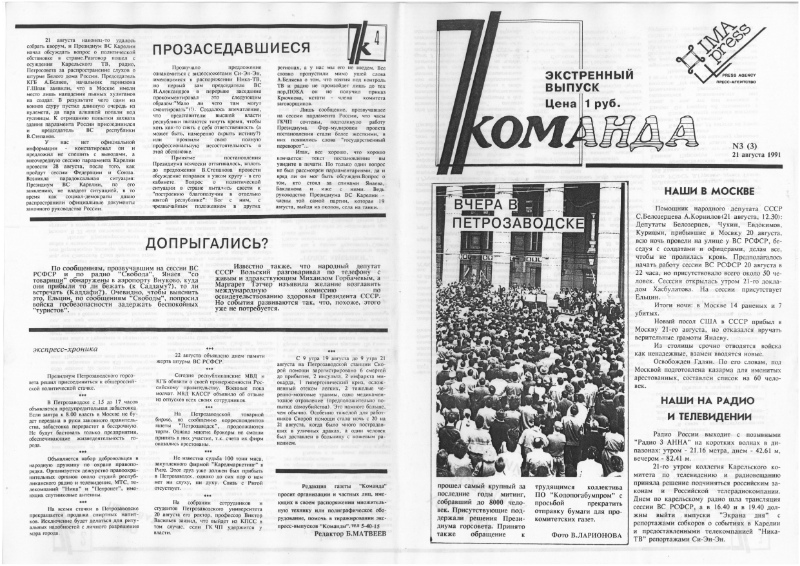
Елена вспоминает, как с коллегами прониклись симпатией к тогдашним властям города после того, как те не поддержали ГКЧП и выступили за Бориса Ельцина.
– Была договоренность, что руководители города будут по очереди дежурить. И мы ночью, часа в три пошли в мэрию, какой-то взяли термос с чаем, бутерброды. Мы зашли в пустую темную мэрию, пришли в кабинет к Колесову, ни охраны, никого не было, мы отдали чай и бутерброды, сказали "Спасибо" за то, что он бдит, и ушли, – вспоминает Елена.
На следующий день, 20 августа, в Петрозаводске прошел самый массовый митинг в истории города: на него пришли около 8 тысяч человек. Елена с коллегами на митинге раздавали свежий выпуск "Команды".
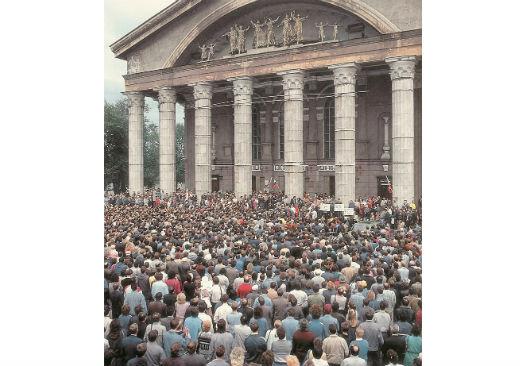
– Мы были молодые, у нас было много прекрасных иллюзий, хотелось свободы – и мы тогда почувствовали, что мы с людьми, мы выдохнули. И если в первый день было немного страшно, то тогда мы поняли, что пойдем до конца, – говорит Елена. – Этот дух свободы не утратился. Но когда ты живешь, обрастаешь опытом, то уже умеешь предвидеть события и уже понимаешь, из каких поступков что следует. Даже если говорить о той ситуации, когда мы всем коллективом ушли из газеты "Комсомолец", хлопнув дверью, то после путча люди со стороны начали нам говорить, что какими же мы были дураками, что ушли, что сейчас газета стала бы нашей и мы бы прекрасным образом делали то, что делали до этого, но лучше и свободнее. И это для меня стало уроком – принимать взвешенные решения. Но в молодости трудно принимать такие решения. А потом... Свобода никуда не девается. Но иногда оказываешься в обстоятельствах, когда ты не то что молчишь, но ищешь какие-то ниши, которые тебе позволяют оставаться профессионалом.
"Обостренное чувство катастрофы"
Виктор Степанов – действующий депутат Заксобрания Карелии, руководитель фракции "Справедливая Россия", в 1991 году был председателем Верховного совета Карелии. Августовские события застали его в Москве, куда он прилетел 19-го числа на заседание комиссии по подготовке нового союзного договора между республиками. The meeting did not take place.
– 19 августа я прилетел в Москву. Мне позвонили и сказали, что Горбачев отстранён от власти и ГКЧП взяло власть в свои руки. Моя жена была свидетелем, честно говоря, я даже заплакал, потому что это был развал СССР. Жена меня успокаивала, но было понятно, что союза уже не будет, – вспоминает Виктор Степанов. – Я считаю, что это было предательство руководства КПСС. Никто не выступил против, ни один член политбюро. И многие из депутатов до сих пор жалеют, хотя тогда поддержали все эти жёсткие меры. После возвращения Горбачева из Крыма прошёл пятый съезд народных депутатов, который окончательно похоронил Советский Союз. Депутаты проголосовали за то, чтобы он был последним. Слова мне не дали, но я призывал к тому, чтобы голосовали против этого решения – если съезда не будет, то и Союза не будет. И тогда я подошёл к трибуне, где сидели Горбачев и Ельцин, и спросил их: "А какова цена?"
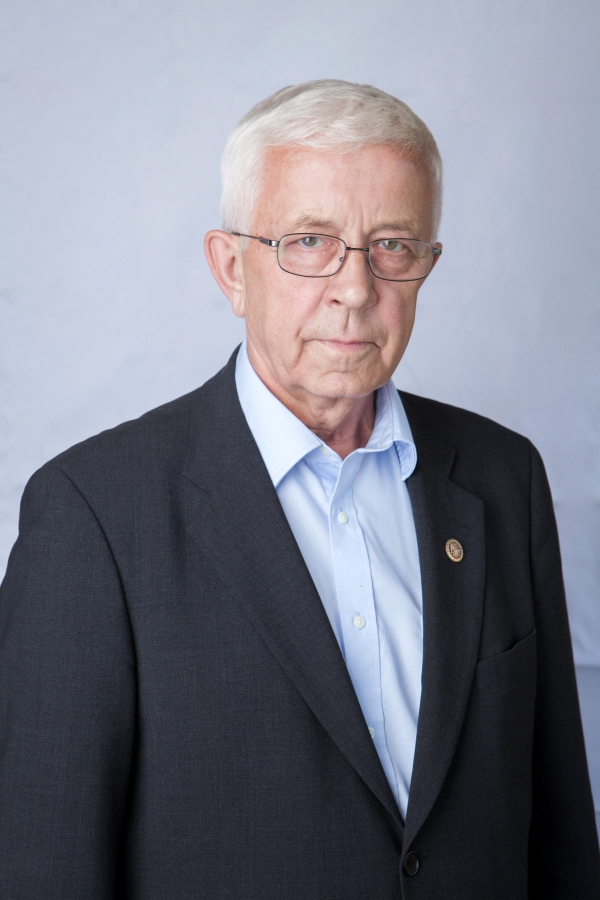
В августе 1991 года Виктор Степанов не поддержал действия российских властей и президента Бориса Ельцина.
– Путин говорил, что распад СССР был одной из самых ужасных катастроф 20-го века. Я согласен с этим, – говорит Виктор Степанов. – Разрушалась вся интеграционная система. То, к чему шёл Евросоюз, в СССР уже было – та же единая валюта. А разрушение финансовой системы – одна из основ разрушения любого государства. СССР создавал рабочие места, учитывая и женский труд, и труд молодёжи, все это рухнуло. Были огромные трагедии для всех людей. Когда в Чечне начались бомбёжки, русские, с которыми я потом встречался, проклинали и Грачева, и Ельцина, потому что от бомб погибли и русские. У меня погибла вся семья моих хороших знакомых, ветераны ВОВ, которые жили в Грозном, – вся семья погибла! Каждый человек по-своему чувствует. И у меня было обостренное чувство той катастрофы, которая произойдёт.
Против ГКЧП с детской коляской
Владимир Беляков в 1991 году был депутатом Ленгорсовета.
– У событий августа 1991-го очень много общего с теми, которые сегодня происходят в Белоруссии. Но при всем множестве параллелей, которые я вижу, у нас ситуация была лучше, общество уже четыре года развивалось динамично и было гораздо более готовым к переменам. У нас был клуб "Перестройка", Клуб друзей "Огонька", и благодаря тому, что в 1990 году у нас прошли самые свободные выборы, у нас появились демократические депутаты в Ленсовете и в других местах. А значит, появилась возможность самим назначать людей в руководство милиции. И вот, из двух кандидатур, которые нам представили, мы выбрали начальником ленинградской милиции Аркадия Григорьевича Крамарева и отвергли обкомовского ставленника Вощинина. Белорусам хуже – у них нет демократических депутатов в местных органах власти. 19 августа у нас был назначен главным по ГКЧП по Ленинграду начальник Ленинградского военного округа генерал Самсонов, он собирал на совещание руководство силовиков и спрашивал у них: а что это там за люди собрались на площади у Мариинского дворца? И он сказал Крамареву: разгоните их. Но Крамарев отказался – заявил, что будет исполнять приказы только законной власти. В общем, милиция тогда оказалась на нашей стороне.
К 9 утра он приехал в Ленсовет из Колпино, где был еще и муниципальным депутатом. Белякову запомнились лица людей, приходивших в то утро, – испуганные, настороженные, у некоторых "в глазах явно читался призрак виселиц, нависших над Ленсоветом". Трезво оценить обстановку смог депутат Георгий Васюточкин – он предложил перечитать закон о чрезвычайном положении. Перечитали и поняли, что ГКЧП полностью незаконен: чрезвычайное положение может быть введено только президентом или Верховным Советом СССР. "Это были просто самозванцы", – резюмирует Беляков.
– Таким образом, мы получили в свои руки крепкое оружие – и надо было как можно скорее и шире доводить эту информацию до людей. В 10 утра стали съезжаться члены президиума Ленсовета. И вдруг пожаловал некий генерал, представитель ГКЧП, и обратился к нам с речью – что мы должны соблюдать спокойствие и выполнять их указания. И тут к нему подбегает депутат Скойбеда – и с размаху дает ему оплеуху, так что генерал от неожиданности свалился. Их стали растаскивать, депутат Александр Беляев осудил поведение Скойбеды, мол, не надо так – но мы все были очень довольны, – рассказывает депутат. – Так что единственного представителя ГКЧП, появившегося в Мариинском дворце, у нас свергли сразу.
19 августа депутатам Ленсовета удалось прорвать информационную блокаду – вместе с Собчаком они появились на телевидении и сказали, что против ГКЧП. Параллельно всюду распространялись указы Ельцина.
Если бы эти 1000 вооруженных кагэбэшников на нас пошли, от нас мало что осталось бы, включая эту детскую коляску
– В это время мы уже знали, что 20 августа на Дворцовой площади будет большой митинг, и мы решили, что пойдем туда, – рассказывает Беляков. – И тут был один нюанс, о котором мало кто знает. Ведь в здании напротив Зимнего дворца располагалось руководство Ленинградского военного округа, и генерал Самсонов боялся, как бы толпа не устроила переворот, как бы все это не коснулось их штаба. И он сказал, что из окон у них будут торчать пулеметы и что те, кто ступят на тротуар в сторону ЛенВо, будут немедленно расстреляны. Это малоизвестный факт, о нем рассказал тогдашний вице-мэр Щербаков. И он вместе с Крамаревым и представителями военного округа организовал что-то вроде патрулей, которые курсировали со стороны штаба и следили, чтобы никто не ходил по этому тротуару. Да, и вот еще интересный момент, о котором тоже мало кто знает, – 19 августа в город прибыло примерно 1000 человек из Гарболовской дивизии КГБ, они расположились в Академии тыла и транспорта им. Комаровского. И мы решили, что мы будем там дежурить. Помню, я отдежурил свое время и меня пришел сменить депутат Васильев. Ему некуда было девать ребенка, и он прямо с детской коляской туда пришел. Если бы эти 1000 вооруженных кагэбэшников на нас пошли, от нас мало что осталось бы, включая эту детскую коляску. И еще на город шла псковская дивизия ВДВ – от Гатчины. К Самсонову несколько раз обращались: нельзя допустить, чтобы они вошли в город. И наши люди выехали им навстречу с голыми руками, листовками и указами Ельцина.
А вот откуда у людей, противостоявших ГКЧП, появлялись листовки, хорошо знает учительница Татьяна Савельева .
– Я работала в школе учителем. Директор наш очень сочувствовал ГКЧП. 20 августа у меня как раз был юбилей, мне исполнялось 30 лет. И должен был быть митинг на Дворцовой, тот самый, где выступали Собчак и Салье, я очень хотела туда пойти. Директор был строгий, дисциплина железная, надо работать с 10 до двух и точка. Но делать нечего, и я пришла отпрашиваться: "Можно, я сбегаю на митинг?" Он стал меня стращать: "Зачем это вам, вы понимаете, что у вас маленький ребенок?" Я говорю: "А в чем проблема-то? Схожу и вернусь".
Ну, я сходила, послушала выступления, вернулась, а вечером ко мне на день рождения гости пришли, сидим, смотрим телевизор. И вдруг звонит Иван Блоков, он и тогда уже был экологическим активистом, а сейчас в Гринпис работает, и говорит, что надо срочно приехать и на ротаторе крутить листовки. Я говорю: "А как же гости?" Он отвечает: "Ничего, проводите гостей и приезжайте".
И действительно, так и вышло, я проводила гостей и приехала на Васильевский остров. Квартира была немного странная, прямо смахивала на какой-то штаб, там стоял ротатор, все время приходили и уходили люди, такие озабоченные. Мне сказали крутить ротатор – и я наклеивала на него листовки и крутила. И всю ночь за ними приходили люди, складывали новые пачки листовок в сумки и уходили. Я наконец поинтересовалась, куда же их уносят так много? Мне сказали, что их распространяют в войсках, в воинских частях, стоящих около города. И так я проработала на ротаторе всю ночь. А к 10 утра мне снова на работу. И я отправилась туда абсолютно счастливая, в той самой праздничной белой блузке, в которой сидела с гостями, только блузка была вся заляпана черной типографской краской от ротатора.
"У власти остались те же самые коммунисты"
Карельский журналист Валерий Поташов вспоминает, что в августе 1991 года, почти студент 5-го курса Петрозаводского госуниверситета, активный участник оппозиционного движения в городе, соиздатель независимого журнала подумывал о том, чтобы после учебы уехать жить в Финляндию.
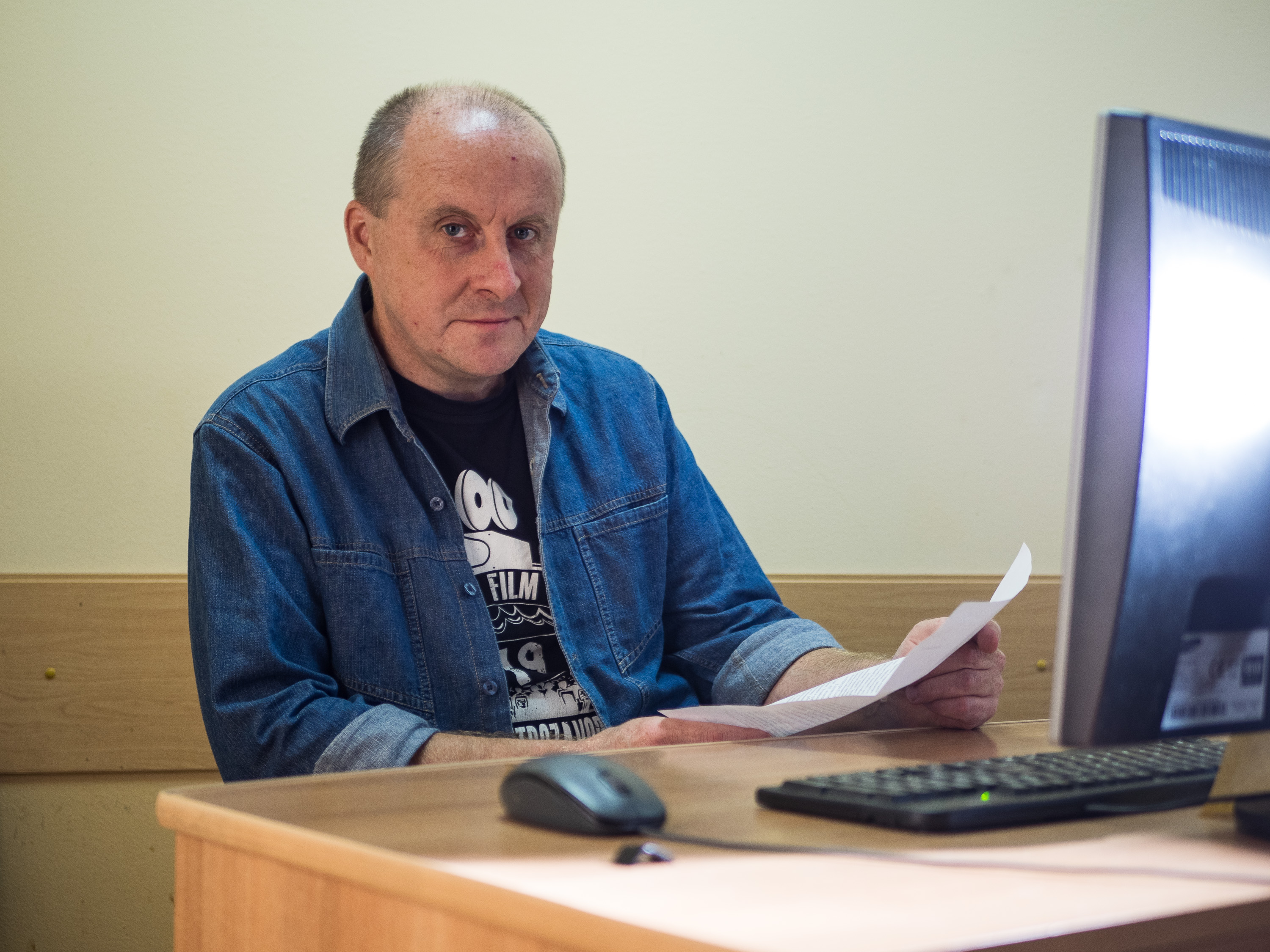
– Была какая-то всеобщая апатия от того, что ветры перемен, которые дули в конце 80-х, практически иссякли. Было ощущение затянувшегося конца. К последнему курсу созрели мысли, что это тупик, в стране ничего не меняется, нужно уезжать, потому что перспектив нет. И происходит 19 августа. Я подумал: "Наконец-то! Я дождался этих перемен!" Можно пытаться страну и республику строить заново, – рассказывает Валерий.
Валерий вспоминает, что вышел на митинг в Петрозаводске не в поддержку Бориса Ельцина, а "против ГКЧП и узурпации власти". По словам журналиста, вскоре после событий 91-го года надежды на перемены растворились.
– Очень скоро стало ясно, что у власти остались те же самые коммунисты, которые правили страной на протяжении 80 лет. Стало ясно, что Ельцин тот же имперский правитель, которые были у власти в советское время. Очень быстро федеральный центр начал закручивать гайки, и началось это до Путина, при Ельцине, – говорит Валерий.
Сейчас Валерий сравнивает те свои ощущения августа 1991 года с сегодняшними ощущениями от событий в Белоруссии и признается, что вряд ли когда-то сможет испытать эти чувства еще раз в России.
– Сейчас в Белоруссии произошел какой-то психологический слом в сознании людей. У них же тоже была эта апатия, ощущение того, что ничего уже не изменить. И вдруг они поверили сами в себя – они вышли на улицу и поверили. Я не знаю, что должно произойти в России сейчас, чтобы люди тоже вот так же, поверив в возможность изменений, вышли на улицы, – говорит Валерий Поташов.