
Translated material
Yabatki
The main signs of the Russian presence in Belarus
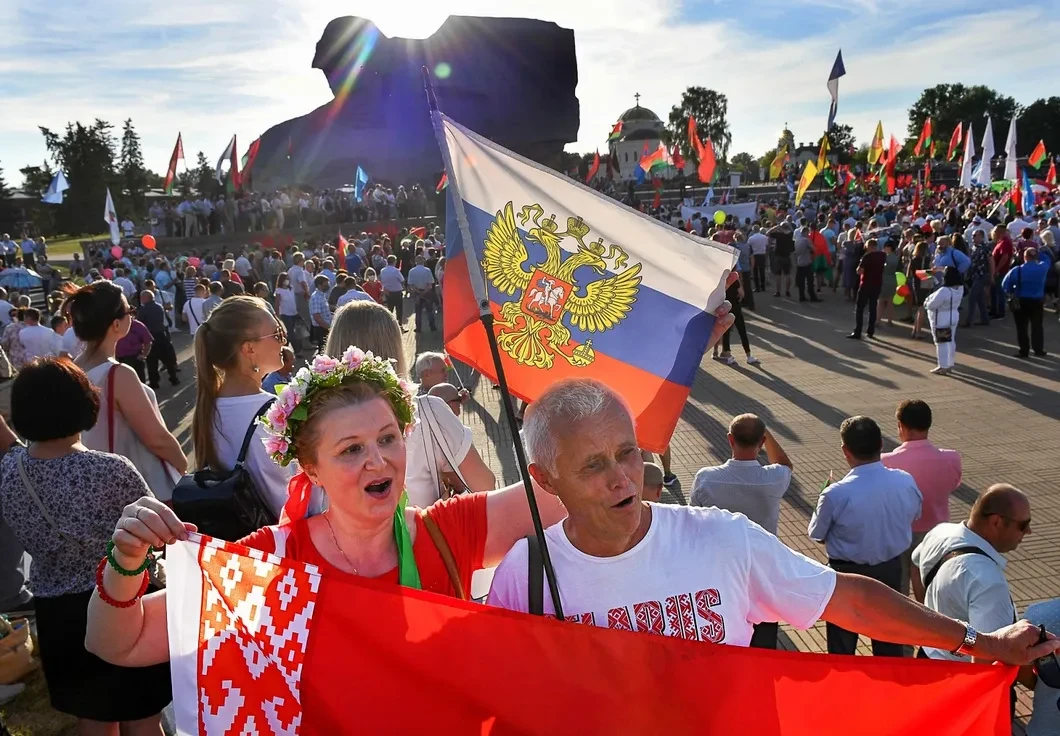
The last few days in between chains of solidarity and evening rallies on Independence Square, Belarusians are trying to answer the question of whether Russia really sent a propaganda landing to Minsk.
The situation was strange: local propagandists denied this, and Lukashenko himself confirmed.
It all started with the fact that the director of Belteleradiocompany Alena Martinovskaya could not get to work on August 19 - she was not allowed into the building. She told TUT.BY reporters that a group of Russian propagandists who would work instead of unreliable locals were brought to Belarusian television. No one else confirms this information. Officially or unofficially - they said that there were no foreign specialists in the Belteleradiocompany. True, Lukashenko said two days later: there.
On August 21, he visited the Dzerzhinsky agricultural plant. As always, looking up from a piece of paper, he began to talk about painful. I remembered the television people who "jumped out into the streets and began to rally." He threatened that there were no indispensable and others have already come to the vacant places: “You still need to understand that they are not waiting for you anywhere, the competition is big. I asked the Russians: give us 2-3 groups of journalists just in case. These are 6 or 9 people from the most advanced television. And let our youth see how they work. Listen, these 2-3 other groups did not come, and half of those who fasted and ran around the Belteleradiocompany - back. I say: okay, today we’ll take it back. Whoever leaves tomorrow is not accepting. ”
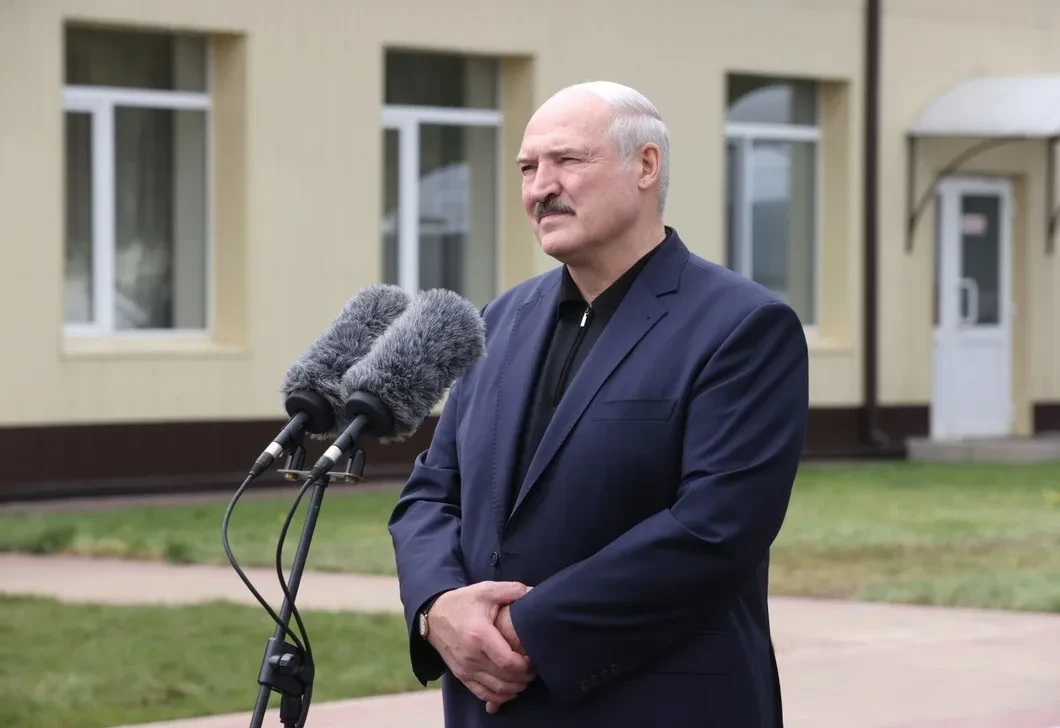
Immediately, specifically for the employees of the agricultural plant, explained that there will be no paying from the budget to Russian propagandists: “We do not pay Russians at all. Listen, do I really not find friends in Russia for 6 or 9 people who will support these people? ” That is, some “friends from Russia” will pay them from their pocket, past the box office. (However, propaganda basically works). The question is to whom exactly.
The last two days, journalists - both Belarusian and Russian - tried to find out if there are Russian television people in Minsk - and who exactly. So far, no one has been able to establish personalities. But the very presence of Russian experts is obvious, and of different professions, and not at all television people.
This is evidenced by three, even indirect, but sufficiently convincing sign.
Firstly, on August 21, the Ministry of Information of Belarus blocked access to several dozens of sites in the country. If earlier access was officially prohibited only to the most popular independent Hartia'97 website, now the Belarusian Radio Liberty service, Euroradio, the Belsat television channel, the Vyesna’s human rights center, the regional independent Internet media, Viktor Babariko and Valery Tsapkoliko, sites of several parties and even sports Internet newspapers are banned. "Tribune." In addition, access to more than twenty proxy services that were used by Belarusians during the Internet disconnect throughout the country on August 9-11 are now blocked.
And this is in the very period when the Belarusians are constantly waiting for the news and are afraid to miss something. They will go on the Internet for information through any wilds. This means that in return blocked sites, new, as if independent information, and their task - to fill the media space of Belarus covered with barbed wire. Most likely, for this they called here Russian specialists - journalists, PR managers, political strategists.
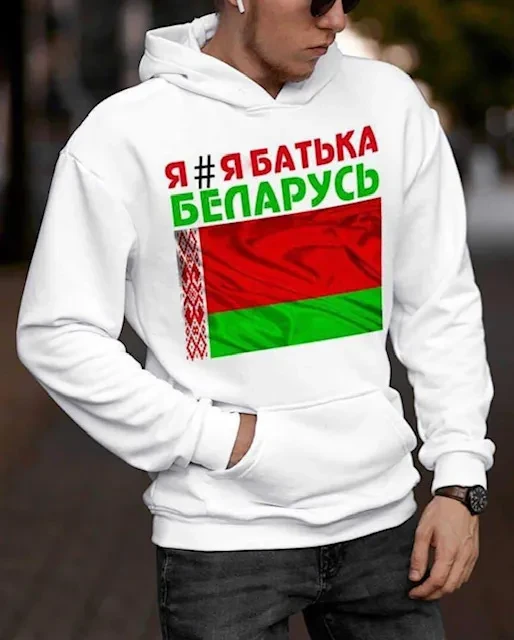
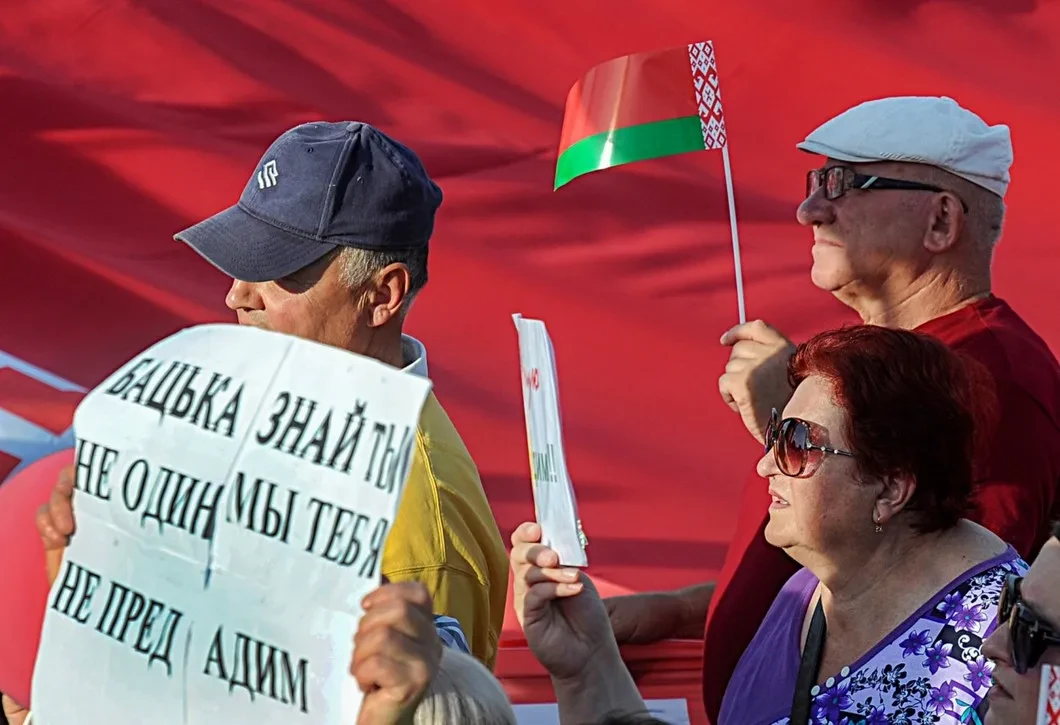
Secondly, at the Lukashenkovsky rallies, which are organized on the principle of “who will not go, we will fire from work”, a merchas appeared, which the whole country laughs for the second day. Sweatshops and T-shirts with a red-green flag and hashtag #Yababka. Yes, it's hard to stop laughing. But if at least for a second to seriously think what kind of garbage it is, it becomes clear: this is the most Russian product.
Belarusians have never called Lukashenko a "old man." For many years he has been in Belarus just onions, and in the last few months - Sasha is three percent.
For some reason, it was called the old man only in Russia. The Belarusian writer Tatyana Zamirovskaya explained the phenomenon as follows: “This is some kind of transmetonymy, when a public status is attributed to a public status in the minds of a group of people to which the speaker does not belong. Probably, there is a special term for this: when you call someone else's and distant person a word, which, as you think, is called home, only domestic ones are not called that. But if you have a condescending-colonizing attitude towards this home, then why not. ”
And the appearance of “Yabatka” as a hashtag is a failure. Even the child will understand that it was uncle and aunts from Russia invented.
Thirdly, the popularity of some Internet sites in Belarus has increased over the past week, on which Belarusians did not come in for a long time. For example, according to LiveInternet, the last seven days on the twenty of the most popular sites read by Belarusians, the South Federal - a newspaper of the Southern Federal District, UKRaina.ru and Rosbalt suddenly entered.
Neither one nor the other nor the third in Belarus never read.
And in the last week, according to LiveInternet statistics, 47 percent of the unique visitors of the Southern Federal - from Belarus, Ukraine.ru and Rosbalt - 48 and 24 percent, respectively. And it is unlikely that the readers of these sites are Moscow television people. The Deenerovsky site UKRaina.ru suggests the Donetsk miners.
On Friday, Alexander Lukashenko threatened the Belkalia to replace the Belkali, which would replace them with Ukrainian, among which are full of unemployed. The head of the miners of Ukraine Mikhailo Volynets on the same day said that there would be no Ukrainian strategrachera in Belarusian mines. But who prevents the Donetsk miners reading the UKRAINA.RU site to come to Belarus? As for the “southern federal”, everything in life, of course, happens, but the first thing that begs is the assumption: Russian specialists from this district may well be seconded to the protection of Lukashenko.
And it is clear why it is not possible to calculate the Muscovites who came to the Belarusian television. Perhaps they really do not exist, and Alexander Lukashenko simply scares the locals so as not to goose. But the signs that I have listed, albeit indirect, but eloquent enough to say: there are Russian specialists of different spheres and interests in Belarus. However, they have something in common. This is a common nickname for them, which they themselves fucked into space: "Yababki." Better and you can’t imagine.