
Translated material
Not torment, but life
School where they are dancing in wheelchairs
Usually I write articles about how difficult it is to live people with disabilities in Russia. But in this article I want to write about a school that took a step forward in education for special children. I study in it myself - and I am very happy about it.
School "Teaching Technologies" - a comprehensive school for children with disabilities. They can study in it both in person and remotely. When entering school, children receive a complete set of equipment for distance learning: a computer, scanner, printer, headphones and speakers. Schoolchildren with violations of the musculoskeletal system are additionally issued special equipment. An individual educational route is created for each child.
Natalia, the mother of a student of the school "Technology", says:
“In our school, five academic days a week, in one days the child studies in person, on others - remotely. It depends on his personal training program. On full -time days, the children who need it come, the minibus arrives and takes them to school with their parents. Our school has a completely affordable environment: two elevators, everywhere there are lifts and ramps. If children are independent, then they can be at school themselves. All classes are divided into small groups of 4-5 people. This allows the teacher to pay attention to everyone individually. At our school, as in all others, there are holidays. If the child cannot be present on them, he can get in touch on video broadcasting. Teachers always meet in terms of a flexible program of education and assistance to children, but they do not give a strictly and do not give a descent to study, thereby giving the opportunity to enter a worthy university in the future. For special children, this school is a unique opportunity to study without passes, leaving for endless treatment and rehabilitation. ”
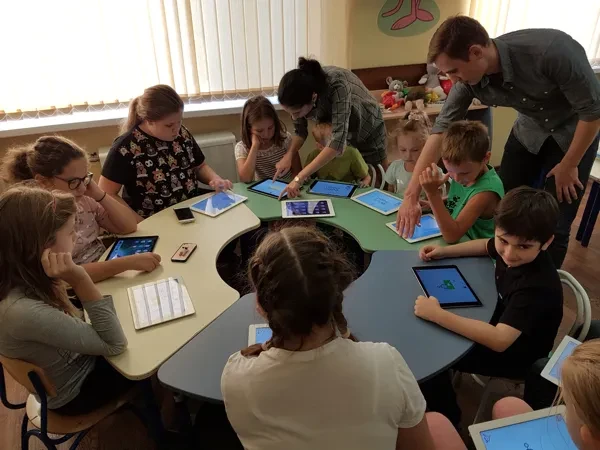
Since a significant part of the training is remotely remote, the school masters virtual services and laboratories, Moscow city resources. The school director Olga Asayanova says: “All this allows everyone to involve everyone in an interesting and productive individual and joint educational work, to ensure the participation of children in school events, city and international olympiads, competitions and festivals. We participate in the city projects “School Day in the Museum”, “Lesson in Moscow”, so now classes are held in laboratories, quantories, technology parks, and schoolchildren are working on many interdisciplinary, meta -subject, research projects. All this is not only an opportunity to gain new knowledge, experience and skills, but also a resource of social adaptation and rehabilitation. ”
A student of school, Polina told me about her school days:
“Each teacher tries not only to tell the desired material, but also to make it interesting for us. Teachers never leave us alone in a difficult situation, always try to help. If something does not work out in terms of studying, then they are always ready to devote time to us and explain the material, give the opportunity to correct the assessment. You can talk to the teacher as your friend. They evaluate us strictly, without making discounts on our health status. But this is even good, because you always know that if you have a good assessment, then this is only for knowledge, and not because you are “poor-unhappy”. At the breaks, all children play together, independently - are you sitting in a stroller or running. Our school curriculum has additional classes. There are a huge number of distance classes, but, unfortunately, only two can be chosen. And I am my sister Ulyana, with whom we study in the same class, we go to a dance circle. ”
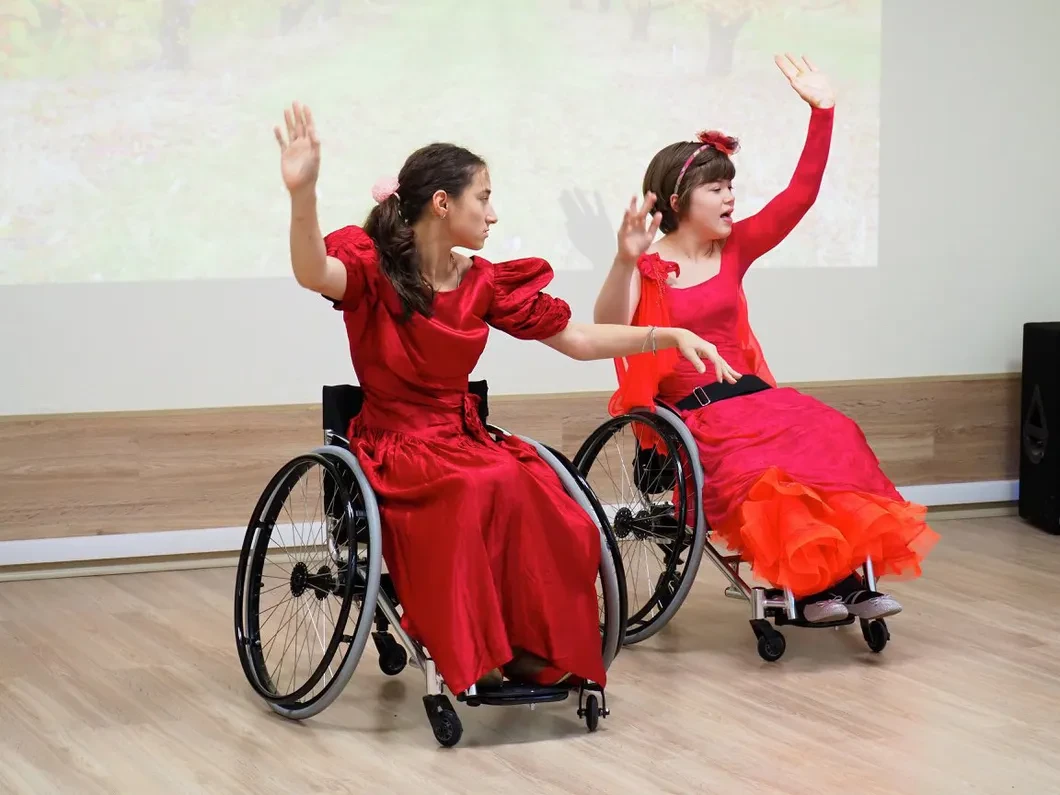
But about the dance circle, I think, it is worth telling separately. The head of the mug Ekaterina Serzantova says: “I have been teaching ballroom dancing and rhythm for more than 20 years. When I was offered to teach special children dancing in strollers, I had no idea what to teach them, and most importantly - how to teach. I had no experience with people limited in movement. First of all, I began to watch a video of dancing in strollers. At first I cried for a long time, my soul was eager, but having reviewed a dozen performances of the pairs of dancers, I realized that the dance for them was not torment, but life. Then I realized that the problem is that I am constantly subconsciously trying to compare disabled people with healthy dancers. And this cannot be done. They are no better and no worse - they are just different. I decided to go to a meeting with my future students, I realized that I could look at these children without pity and without tears. Yes, it was difficult. In ballroom dancing, I had a certain program by which I was engaged in my students. Immediately I had to act by touch. I had to invent and develop new teaching methods. Every child needs his own approach. I try to give individual exercises to everyone. My main goal is that the child feels the freedom of movement and learn to live in a dance. I believe that any person can dance, even if he is in a stroller. The main thing is desire. Now, when I look at the smiles of my students, I understand that my work is not in vain. Now I have an idea to make an inclusive project. This requires a lot of effort and material resources. But I’m sure that soon we will be able to realize this idea. ”
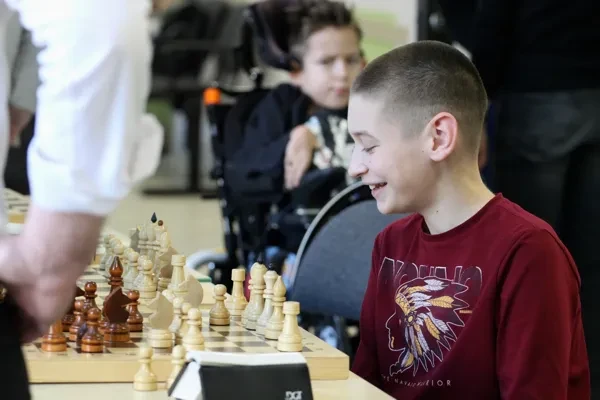
The dance circle is not the only thing that schoolchildren can do additionally. “We have a“ theater studio of the I-school ”. In the classroom, students are involved in creative activities (using theatrical technologies, art therapy and bodily oriented therapy), gain experience of experience that is important for personal and creative development, emancipation and natural expression, ”says director Olga Asayanova. - In the framework of another project - “Chess at school” - the guys participate in Russian and international chess tournaments and competitions. For the past two years, we have been actively cooperating with the "Travel Laboratory", and the first travelers have already appeared. Pupils of the school participate in many creative competitions and find talented dancers, photographers, operators, animators, musicians and artists. ”
All students have to answer the question "Who do you want to be?" And including responding to him. A person with disabilities is more difficult than others. The school tries to help his students understand what they have a soul, even in elementary grades.
“In the system of additional education, we prepare students to participate in contests of professional skill - even for the smallest. For the second year, primary school students take part in the Kid Skills contest in the “Prototyping” and “City Fermotism” nominations, ”says Olga Asayanova.
- And the eldest we offer to try ourselves in specific professions: they participate in the city project “Professional training without borders” and get a specialty while studying at school.
Our students are annual participants in the Abbilimpix contests, Juniorskiills in various professional competencies: Culinary Affairs, Photographer-Reporter, Robotics and others. More than 80 percent of graduates are determined with the future profession while still studying at school. ”
Now you will not surprise anyone with the concept of “inclusion” - and, probably, the day will come when they will take all the children to schools - regardless of their state of health. But if the mother leads the baby to a school where he will not be able to study, because teachers do not know how to work with him, this is not inclusion and not even education. Schools such as “Teaching Technologies” are able to work with special children, but there are few of them - one for a big city is not enough for everyone. And about such a teacher as Ekaterina Sergeantov, most children in wheelchairs can only dream.
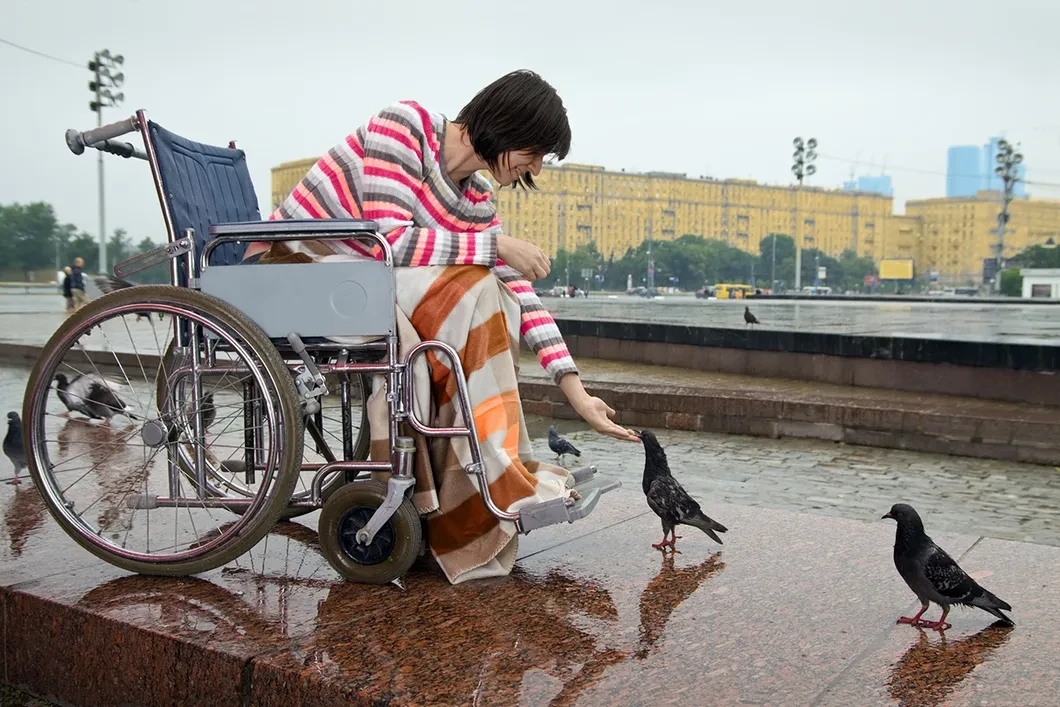
Olga Asayanova believes that inclusive and special schools for children with disabilities do not exclude each other: “They have a common task: to give a child with special needs to get a quality education. But the conditions for solving this problem are different, they depend on the individual characteristics of children. For some diseases, special schools with special conditions for learning are needed, complex and systemic assistance of specialists, rehabilitation procedures are needed, and this is difficult to organize in a comprehensive school. In inclusive practice, it is necessary to correctly evaluate the actual level and individual potential of the child, to develop criteria for the success of his education, to adapt educational materials - specialists of correctional schools can help in this teachers of secondary schools and actively help. Inclusion and special correctional schools are not mutually exclusive areas, they exist in a single educational space and are mutually useful in teaching and accompanying a special child. ”
Inclusion is a big step that will probably be taken in the future. But while it is not done, let's start small and make more such schools in which the children like to study and where they want to study with them.
After all, if we claim a civilized society, then it should have a place for everyone.