
Translated material
Mikhail Pokrovsky
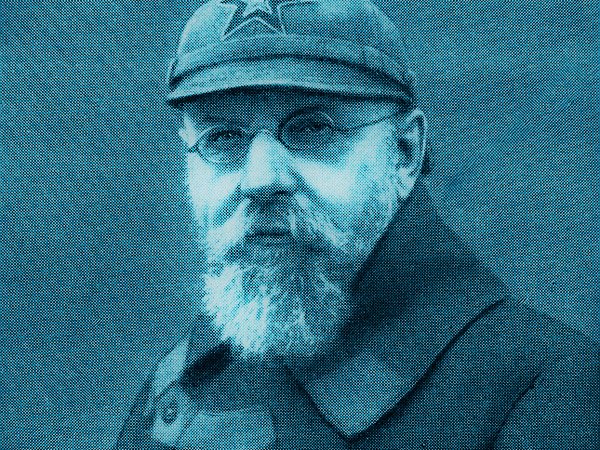
On August 29, 1868, historian Mikhail Pokrovsky was born.
Personal business
Mikhail Nikolaevich Pokrovsky (1868 - 1932) was born in Moscow in the family of a state adviser. He graduated from the second Moscow gymnasium with the Golden Medal and in 1887 entered the historical and philological faculty of the university, where his teachers were such scientists as Vasily Klyuchevsky and Pavel Vinogradov . After the end of the course, he was left for preparation for a professorship at the departments of Russian and universal history. Working on a master's thesis, he simultaneously headed the seminar library at the university, gave lectures at women's Moscow pedagogical courses and taught in secondary educational institutions.
Interest in Marxism led to the fact that Pokrovsky joined the so -called legal Marxists . In April 1905, he entered the RSDLP, joining her Bolshevik faction. During the Moscow Armed in December 1905, he provided his apartment on a dressing point. After the defeat, he was arrested for a short while. He was a delegate to the London Congress of the 1907 RSDLP, where he was elected a candidate for membership in the Central Committee, illegally transported the forbidden literature, and worked in the Bolshevik newspaper Proletarian. In 1908, due to the threat of arrest, he emigrated to Paris.
Living in France, Mikhail Pokrovsky actively participated in the struggle of various groups and currents within the RSDLP. At the same time, he worked on scientific works, including a five -volume “Russian history since ancient times” (in collaboration) and a two -volume “Essay on the history of Russian culture”.
He returned to Russia after the February Revolution. He was elected deputy of the Moscow Council of Workers' Deputies. During the battles in Moscow on October 25-November 2, 1917 he was a member of the Zamoskvoretsky Revolutionary headquarters of the Red Guard, the commissar of the Moscow Military Revolutionary Committee for Foreign Affairs and the editor of the newspaper Izvestia of the Moscow Council of Workers' Deputies. He resolutely advocated the use of force against the Kremlin and Junkers garrison opposing the Bolsheviks. Later he participated in negotiations with Germany and Austria-Hungary in Brest-Litovsk, although he was personally against the conclusion of peace.
Since May 1918, he became the deputy of the People's Commissar of Education of the RSFSR, at this post he remained until the end of his life. At different times, he also held more than a dozen different senior positions: the chairman of the Presidium of the Communist Academy, the rector of the Institute of Red Professors, the chairman of the Marksist historians, the head of the Centarchist, the editor of the Red Archive, Marxist historian, the struggle of the classes, and the member of the main editor of the Great Soviet Encyclopedia. Since 1928 - a full member of the USSR Academy of Sciences.
Mikhail Pokrovsky died in Moscow on April 10, 1932.
What is famous
Mikhail Pokrovsky is one of the most contradictory and most criticized figures in Russian historical science. There are many interesting ideas and insightful thoughts in his works, but they also have a desire to confirm the previously chosen concept at all costs, that is, a Marxist view of the historical process.
Pokrovsky had no doubt that the scientist should implicitly follow the instructions of the party. He perceived history as a field of struggle against political opponents and believed that historical studies should serve to strengthen the communist system. Of course, he believed that in science there should be one, only true direction, one historical school. In a polemic with opponents, Pokrovsky was not shy about hanging political labels, calling other scientists “Tambov landowner” or “son of the capital protopop” and this explaining their views. For more than ten years, he remained the most influential person in historical science, thousands of students listened to his lectures, and work was published in large circulations. “Russian history in the most compressed essay” Pokrovsky became a mass textbook for historians in the 20s-30s, withstanding more than a dozen reprints in a short time.
What you need to know about
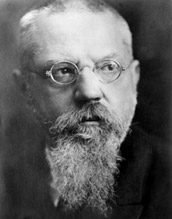 Mikhail Pokrovsky
Hard criticism of the works of Mikhail Pokrovsky were subjected to already shortly after his death. For all the commitment of the scientist of the Marxist theory, his heritage did not fit into the canonical view of the history of Russia and the method of historical science created in the 1930s. In particular, when creating the state-patriotic concept of domestic history, the denial of Pokrovsky of any achievements of pre-revolutionary power and nihilism in the assessment of national traditions was not the denial of Pokrovsky. Pokrovsky was accused of “vulgar sociologism”, “anti -Marxism”, “antipatriotism” and “denoting the history of Russia”. On January 26, 1936, the Decree of the Central Committee of the All -Union Communist Party of Bolsheviks and the Council of People's Commissars of the USSR was adopted, where the Pokrovsky School was called erroneous and was accused of spreading "anti -marksist, antylenin and anti -scientific views on historical science." The same accusations were repeated in the “Brief course of the history of the CPSU (b)” and a specially released two -volume “against the historical concept of M. N. Pokrovsky”. Accusations of belonging to the Pokrovsky School were put forward against various historians, including those who, during the life of Pokrovsky, were his scientific opponent. Partial rehabilitation of the scientific views of Pokrovsky occurred in the 1960s, but they continued to criticize it for attempts to "connect Marxism with bourgeois theories."
Direct speech
“Interesting pages from the history of the Russian intelligentsia have retreated to Pokrovsky. As a Bolshevik from the professorship, Pokrovsky brought two things to the party: steadfast contempt and hatred of professor, magnificent knowledge of this scientific environment, the lack of all fetishism before it and the excellent knowledge of science. He was a man with great abilities, witty and paradoxical. In my personal life, I knew him since 1920: it was a tyrant and slave owner. He did not respect people and terribly appreciated the political situation that he had. For him, he kept his teeth and gnawed at the blood to increase and strengthen his position, ” - from the diary of the historian Sergei Piontkovsky
“It is unlikely that in the history of Russian historical science there is a person who caused more controversy and disagreements than the“ Lear Professor ” - Mikhail Nikolaevich Pokrovsky. As a historian and as a person, he was sometimes given directly opposite assessments by scientists who adhered to various political views. Here are some of them: “Pokrovsky, whose scientific career failed, flashed only a few talented articles”; “The scale and significance of his scientific activity are such that he with all his errors and contradictions remains an outstanding person in history ... historical science”; “... Here is a truly shameful name in Russian history and a shame for the school of Moscow Russian historians”; "... it is such a person - an worldwide recognized scientist, an intelligent in the most accurate sense of the word - and was Mikhail Nikolaevich Pokrovsky." Pokrovsky subordinated all his scientific activities to the political struggle. Once having chosen a certain political direction, having connected his fate with Bolshevism, he served him by faith and truth until the end of his days, giving this work his talent, erudition and knowledge of a historian - a high -class specialist. Therefore, the best, most accurate characteristic of Pokrovsky was given by his associates: “The oldest representative of the Bolshevik guard, an active participant in the revolution of 1905 and 1917, an active participant in socialist construction, in the public education, Pokrovsky was a tireless fighter on the theoretical front, heading the Marxist historical science.” That's right. Pokrovsky-Boet historian. Each of his strings is like a machine -gun line, each of his book resembles an artillery cannonade that collapses in the position of the enemy, ” Dmitry Mikhailovich.
6 facts about Mikhail Pokrovsky
- In 1916, Pokrovsky was the editor of Lenin's book "Imperialism, as the highest stage of capitalism."
- Pokrovsky belongs to aphorism: "History is a policy overturned into the past."
- From 1932 to 1937, the name of Mikhail Pokrovsky bore Moscow University.
- According to Yuri Gauthier , it was Pokrovsky "raised the issue of selling some things from the Hermitage to maintain the Bolshevik treasury."
- In 1918, Mikhail Pokrovsky put forward the idea of creating workers in the faculty to prepare the proletariat for higher education.
- When in 1928 Pokrovsky entered the party list of candidates in the actual members of the USSR Academy of Sciences, he appealed to the Politburo of the CPSU (b) with a request to exclude him from among the candidates, but this request was rejected.
Materials about Mikhail Pokrovsky
Article about Mikhail Pokrovsky on Russian Wikipedia
Article about Mikhail Pokrovsky in the Encyclopedia "Circumvet"
Mikhail Pokrovsky in the project "Chronos"