
Translated material
Poison for "Putin's guard"
Poison of Roman Tsepov also remained unsolved
The mysterious illness of Alexei Navalny made us recall other cases of poisoning in recent Russian history. The first three reveals the death of Roman Tsepov, who at the beginning of the 2000s was called the "plenipotentiary representative of the President in the North -Western Federal District."
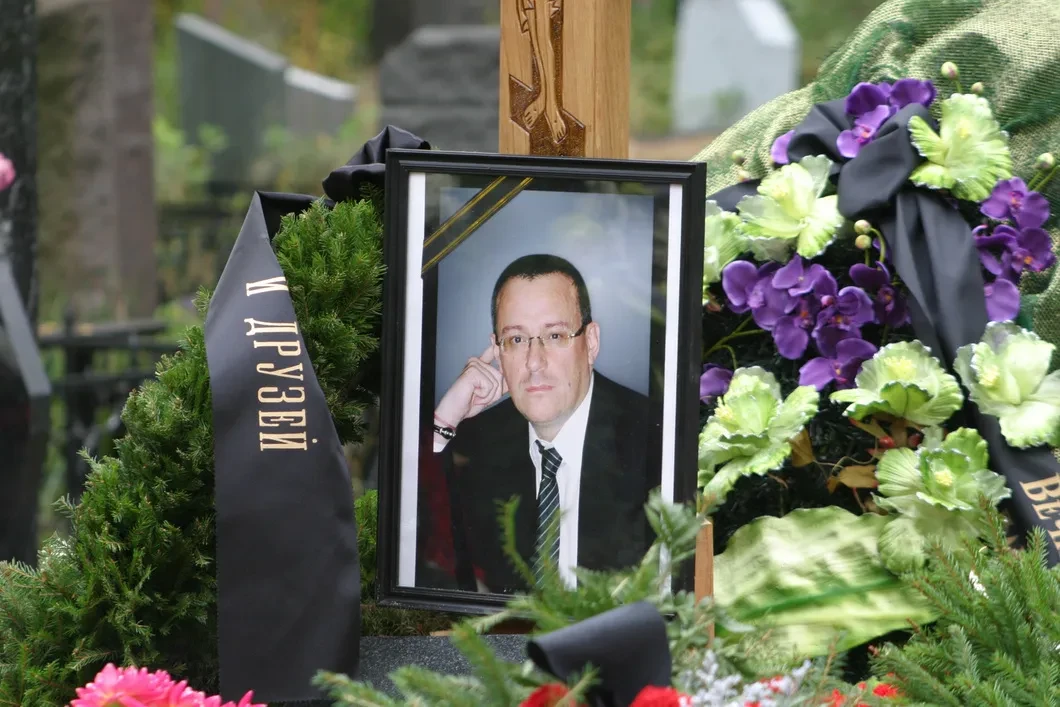
In September 2004, the former “Putin’s guard” Roman Tsepov went to the hospital with symptoms of poisoning and soon died. They say that shortly before that he drank tea in a large house - in the building of the St. Petersburg department of the FSB on Litein. Two years later, his “disease” will be compared with the symptoms that appeared in Alexander Litvinenko. Although the sources of the "new" who participated in the investigation of the case say that Tsepova was poisoned with medicine.
Roman Tsepov in St. Petersburg was called not only "envoy to the NWFO", but also "gray cardinal." Tsepov’s interests covered a variety of areas of activity, sometimes opposite. Friendship with criminal authorities-and an active participation in the life of St. Petersburg police, the resolution of business conflicts-and business absorption, support for sports societies-and “curators” of casinos and nightclubs. He produced television series, controlled the media. But in his circle, he became most famous for criminal cases: those who at any time were believed to “excite” on any opponent for any reason. The list can be continued, but the main thing here is that in the early 2000s in St. Petersburg it was hardly possible to find a more influential figure. Where did Tsepov come from such opportunities and who could stand behind his mysterious death - in the “new” material.
Security Petersburg
Roman Tsepov was born in Kolpin (Leningrad district) in the family of dentist Margarita Ceopova and engineer Igor Baylenson. After school, he worked for a year at the Izhora plant under the supervision of his father, and then entered the Higher Political School of the Ministry of Internal Affairs, which was preparing personnel for internal troops. Before entering the university, he took his mother’s maiden name. According to some reports, even at the school, he was recruited by the KGB. After graduating, he served as an assistant in the political unit in colonies in the Leningrad and Pskov regions.
In 1990, the champions resigned from the Ministry of Internal Affairs with the rank of captain. Two years later, he created a private security company Baltik-Escort and received a license to wear military weapons for its employees. This is where the ascent of the future "gray cardinal" begins.
The reasons for which the protection contract with the Kepovsky private security company was signed by the administration of St. Petersburg are called different. Copov himself later claimed that he was simply the only one in the city not related to the bandits. This is a beautiful explanation. And a more plausible version - the FSB department petitioned the Smolny.
According to the contract, the Baltic Escort was supposed to protect the first persons of the city and their foreign guests.
One of the protected was the vice-mayor and the head of the Foreign Relations Committee Vladimir Putin. The same Chop guarded the family of Anatoly Sobchak.
The mayor of the mayor was engaged in the Federal Security Service (the former 9th department of the KGB of the USSR) under the leadership of Viktor Zolotov ( in the future-the head of the Federal Presidential Protection Service, now the Commander-in-Chief of the Russian Federation ).
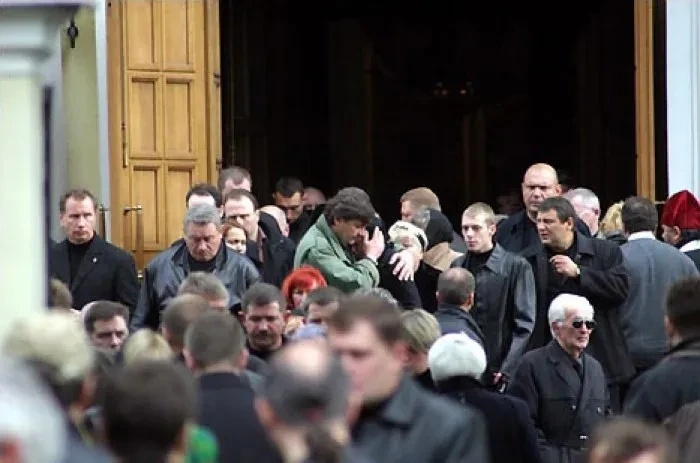
Even then, the champions and Zolotov were familiar. In 1996, Zolotov was dismissed from the FSO and was employed precisely in Baltic Escort. ( In 2004, Zolotov, judging by the photographs published in the press repeatedly, attended the funeral of Roman Tsepov. - Ed. )
Friend
In 1993, Roman Tsepov had another acquaintance that would affect his career. After participating in the Georgian-Abkhaz conflict, the former commander of the Riga riot police, Cheslav Mlynnik, arrived in St. Petersburg. He had to use fake documents, because Latvia and Lithuania put him on the international wanted list. Under the pseudonym, he got a job on St. Petersburg television, and Alexander Nevzorov contributed to this. In the city, Mlynnik moved with weapons.
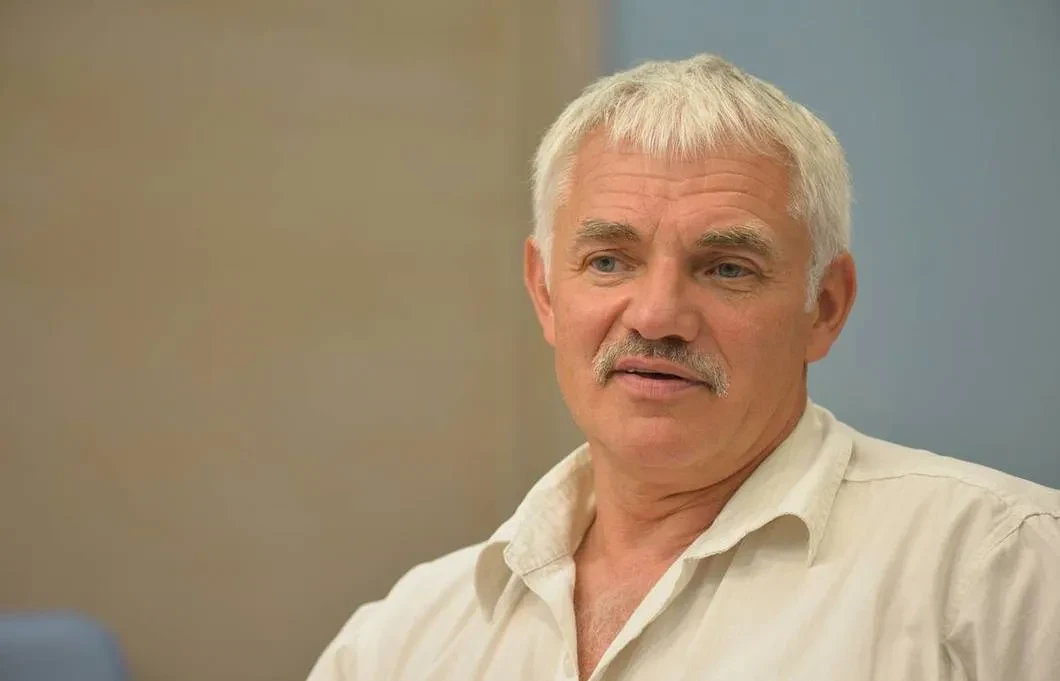
Often, Mlynnik was seen in the headquarters of the Baltic-Escort. Later, when a criminal case against the former riot police will be considered in the Kirovsky District Court of St. Petersburg, witnesses will tell about his friendship with Roman Tsepov. In the case file, excerpts from private conversations of these two friends were preserved:
In all seriousness, Mlynnik planned to become the president of the country, at worst-the Prime Minister, and Tsepov gave himself the post of head of the Ministry of Internal Affairs.
In January 1994, a nuisance occurred: Tsepova, Mlynnik and another “former employee” named Zabelkin was detained for illegal weapons.
“Someone may be surprised that the head of Chop did not have a license to wear weapons,” says a former employee of the organized crime department of St. Petersburg, Alexander ( the surname is known for the editorial office ). -He had a license, but on a pistol, and not for two Kalashnikov assault rifles that were found in his car. And Mlynnik had no license at all.
Friends fell into the SIZO "Crosses". Later, Roman Tsepov says that in the pre -trial detention center he spent time not without benefit: he met the leader of the “Malyshevskaya” organized crime group Alexander Malyshev.
Tsepov was released almost immediately, but Mlynnik spent more than 8 months in the “Crosses” and was released only after the sentence of the Kirov court. He, as they say, "was given according to the settled." But before that, during the hearing, it turned out:
The former riot police sat in custody for all these months because his bosom friend Roman Tsepov gave his bosom friend.
He handed over Mlynnik with giblets, hanging the machine guns on him. Friendship on this ended, Mlynnik had to leave Petersburg.
Businessman
Thanks to the connections at the St. Petersburg City Hall, Tsepov in those years managed to receive a casino protection contract that worked under the Neva Chance sign. The administration of St. Petersburg had a 50 percent share in this company. The committee on external relations oversee the gambling.
A brief prison acquaintance with Malyshev also benefited the chain to the benefit: he also acquired connections in the criminal environment. This, in turn, contributed to new business opportunities, such as: the protection of businessmen for some bribes (many called it the word “roof”), the collection of debts by informal methods, and so on.
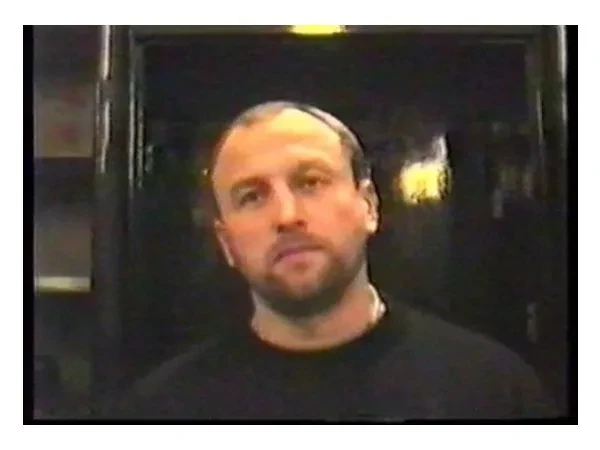
In 1998, the St. Petersburg UBOP detained Tsepov on suspicion of extortion of 70 thousand dollars with an authoritative businessman, nicknamed Yura Vsevolozhsky. Former Enlargonian operatives say that there was a video: in the process of receiving the money of the chains, I firmly went to the opponent on the face of a bourgeois. I could not immediately arrest the head of the Chopovites. And he considered it the best from St. Petersburg to leave.
In 1998, the criminal case against Tsepov was safely stalled, and already in May 2000 a businessman, a philanthropist, patron of the film industry and press Roman Tsepov among the guests attended the inauguration of Russian President Vladimir Putin.
Envoy
Police officers who at that time at the Central Internal Affairs Directorate of St. Petersburg and the Leningrad Region say: they say:
Not a single important appointment in Peter’s police was dispensed with without the approval of Roman Tsepov.
The criminal investigation department in the Central Internal Affairs Directorate of St. Petersburg and the region in December 1999 was headed by Vladislav Piotrovsky, four years later he will move to the chair of the head of the criminal police ( later he will also be the head of the Central Internal Affairs Directorate, but this is another story ). Moreover, this happened after the order was already signed on the appointment of Alexander Smirnov, whom the St. Petersburg detectives considered San Sanych as a professional to the “nachkrim”. Smirnov after that resigned from the Ministry of Internal Affairs and was soon appointed federal inspector of the North -West Secret Envoy in St. Petersburg.
In 2003, the head of the 7th “leadership” department of St. Petersburg UBOP Igor Gusev tried to “dig” against Tsepov: there were too many complaints from the affected businessmen. Gusev’s reputation was such that this one would definitely plant. Its department was the most effective in the Central Internal Affairs Directorate, which brought to the court many “gangsters” cases and sent several serious authorities to the places of imprisonment. But then there was a sudden reorganization of the enema: it was the 7th department that was disbanded, its employees were taken out of the state. The initiator of the reorganization was Piotrovsky, who said that "the time of the Vedglovs passed."
Tsepov’s business continued to develop, and his opponents began to regularly go to prison. Moreover, the victims in these matters were appeared by Roman Tsepov himself - a meek, harmless, gullible person. Either money was extorted from him, he was “thrown” with an apartment, but each time the police restored justice.
Man
In 2002, Roman Tsepov ordered the finish of the country house of the Lithuanian construction company, which was engaged in the construction of cottages in a suburb of St. Petersburg. According to the director of the company, when the work was completed, Tsepov simply refused to pay. The directors were accused of fraud, arrested, placed in “Crosses”, where he spent several months. Only the threat of an international scandal, which seriously threatened the Lithuanian Foreign Department, allowed the businessman to be released. After liberation, he sold the company for nothing and went home. And in the business circles of St. Petersburg there was a rumor that the lands under the Cottages owned by Lithuanian, went to the firms of Tsepov.
Kupov had a close friend. Favorite woman ( the surname is known for the editorial office ), then, the former slaughterhouses say, something went wrong with love. They say that the chapter, like a real man, when parting, took away from his favorite gifts, and it soon became clear that the ex-loving seemed to sold a chain apartment with an encumbrance (in the pledge of the bank). The price of Baltic-Escort included the following service: a check for the cleanliness of the transaction when buying real estate.
Why did not the company check the deal its owner is unknown.
When the investigation began in the case of Tsepov’s poisoning, at first she appeared as a possible suspect. But around the years of his work of such “motivated” people there were a lot around the “gray cardinal”. ( For example, shortly before his death, he tried to become an intermediary in transactions with assets of a defeated Yukos, which made many enemies. - Ed .)
Disease
On September 11, 2004, Roman Tsepov, as it often happened, drove into the FSB Office in St. Petersburg and the region, to the building on Litein, 4. Having been talking with his man over a cup of tea , he returned to the office. On the way I felt a strong malaise, and the driver turned into the nearest hospital. Doctors immediately suggested poisoning, but for a long time could not determine the poisonous substance. Ceopov was getting worse, he lost consciousness, doctors spoke of brain edema and shook their hands. Relatives of Tsepov began negotiations with the clinic in Germany, but doctors did not advise transporting the patient.
Finally, the doctors found that the bone marrow was damaged by Kepov, and on September 22 he was transported to the Sverdlov city hospital, where transplantation was carried out. But the next day after the transfer, the patient died.
Experts gave a conclusion:
Tsepov was poisoned by a cure for leukemia.
According to one of their versions, with a poisonous reagent, it was fed for some time, until a critical concentration was created in the body. There was even a version that the chains were sick with blood cancer, so he took the medicine himself. But it is known that shortly before these events, he underwent a complete diagnosis in Germany, there he did not find any pathologies except some problems with the heart. As prescribed by doctors, he took only heart drugs.
After reports about the causes of Alexander Litvinenko’s death in London, the press appeared that the former employee of the FSB and chains were poisoned in the same way - Polonia. But the symptoms of them appeared different.
Be that as it may, if someone poisoned Tsepov, then this was a great specialist in poisons. The criminal case under the murder article was opened immediately after the death of Tsepov, but there are still no suspects in it. The investigation is suspended, and relatives can not even get acquainted with the materials that are in the case and find out what steps were taken to search for the poisoner in general. (However, as far as the new, the “new” is known, some of the acquaintances of Tsepova tried to establish the truth by an unofficial manner and during their private investigation were also interested in the circumstances of the poisoning of the deputy head of Novaya Gazeta, State Duma deputy Yuri Shchekochikhin. - Ed. ).