
Translated material
Novels of September
On a single voting day, citizens will be excommunicated from political competition
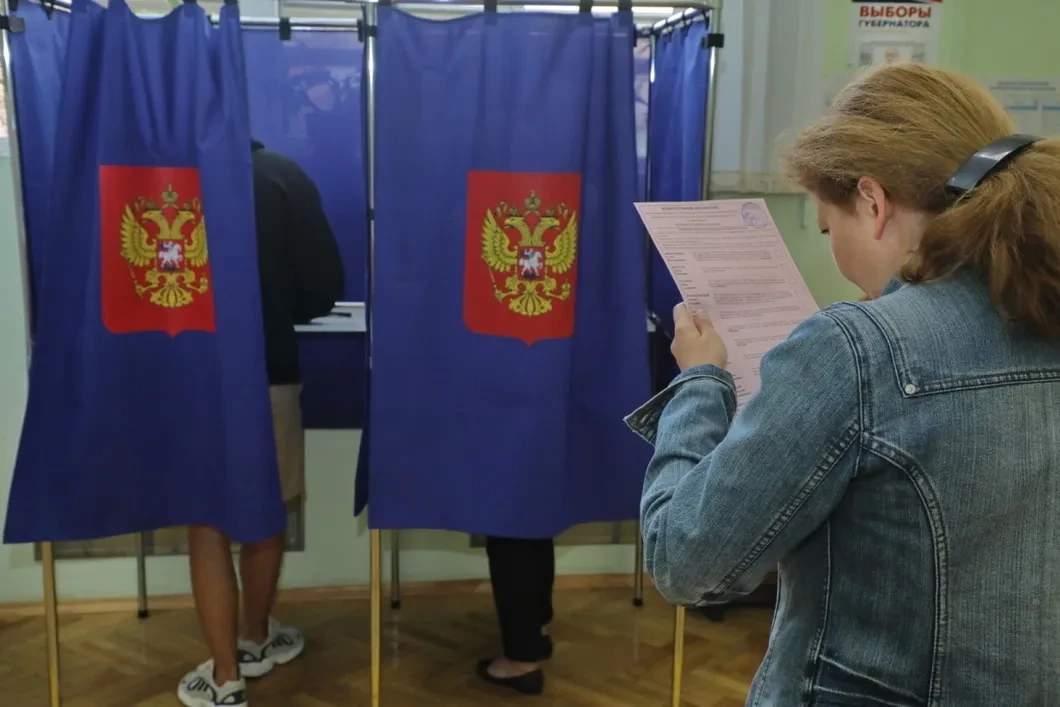
Protests in Khabarovsk, Bashkiria, Belarus and poisoning by Alexei Navalny shifted to the second information plan on September 13 a single voting day. Meanwhile, as indicated in the report “Voice”, on this day the elections of the heads of 18 regions, missions of State Duma deputies in four districts, elections of 11 regional parliaments and 22 city councils in the administrative centers of the regions will be held. In these elections, held a year before the State Duma elections (according to plan - autumn 2021), the last innovations in the electoral legislation initiated by the Kremlin will be tested, and the “three -day voting” will be applied for the first time. In combination with both old and new methods of preventing opposition candidates, this further reduces political competition. The analysis of the “Voice” and the information available to the author is convincingly confirmed.
Formally, we note, the competition has even grown a little - but only at the expense of the “new parties” obviously loyal and completely safe for the Kremlin, almost everywhere admitted to regional elections, unlike really opposition parties and candidates. Apparently, they want to give them the opportunity to get into at least one regional parliament - which automatically gives the right to put forward candidates and lists to the State Duma without collecting signatures, and then play the role of spoilers for the opposition.
But first - about the elections of governors that will be held in 18 regions.
Here, the “Polyana” was completely cleaned: only representatives of the four Duma parties, slightly diluted by traditional sparring partners of the “Party of Growth”, “Party of Pensioners” or the Communist Party of Social Justice (CPSU), were allowed to the elections.
The overwhelming part of the current governors or the duties temporarily performing their duties is either nominated by United Russia, or it is supported by it, and other candidates, as a rule, do not pose any danger to them
(Unless in the Irkutsk region there may be surprises).
And in the Smolensk region and Chuvashia, where the acting governor from the LDPR Ostrovsky and the acting governor from Fair Russia Nikolaev, respectively, did not even nominated the candidates - showing that these regions were given to the system parties for proper behavior.
Huge problems for the Kremlin could arise in two regions - the Arkhangelsk region and Komi. The reason is simple: Shies.
This story made the former heads of the regions resigned, assigned to their place the right “weight” had not yet gained, and the leaders of protest firmly intended to run for governors: Oleg Mandrykin, proposed by the coalition of ShiES, was nominated in the Arkhangelsk region from Yabloko, Oleg Mikhailov in Komi - from the Communist Party. And most likely, they would have won - but that is why they were not allowed to elections using the “municipal filter”.
In both cases, which is extremely rare, opposition candidates really passed this “filter”, collecting the necessary number of signatures of municipal deputies, but then they were eliminated according to a long -worked technology: supposedly part of the deputies who put signatures for them had previously signed up for others. Both Mandrykin and Mikhailov announced administrative pressure on deputies and that municipal signatures were gathered for candidates from the party in power and their sparring partner so as to “concrete” the passage of the “filter” by unwanted candidates. And it could have been easier: having realized that Mandrykin overcomes the “filter”, the authorities would urgently imitate the signatures of a number of deputies who supported Mandrykin allegedly previously set for other candidates.
As for the elections of regional parliaments (in 11 regions) and the elections of deputies of administrative centers of regions (in 22 regions), in addition to the Duma parties and parties presented in the relevant parliaments and having a “benefit”, everyone else had to collect signatures for registration.
At the same time, after amendments to the legislation, it has become even more difficult to register on signatures: firstly, now not 10%, but only 5% of “marriage” is allowed, and secondly-now the voter must put his surname, name and patronymic in the signature sheet (earlier this was done by the signature collector). Thus, the likelihood of random errors increases, and the percentage of “marriage”, as already mentioned, is halved. And the results are obvious: the subscription barrier managed to pass, with rare exceptions, only to those who agreed with the authorities.
We give only one digit: according to the "Voice",
90% of parties from parties who were supposed to collect signatures were eliminated.
With rare exceptions, only souping parties passed-both traditional and newly created.
The general picture is as follows (data “Voices”): all lists are registered in the elections of regional parliaments from the Party of Pensioners (two by privilege and seven according to signatures), “Growth Party” (five, all according to signatures), CPSU (four, all according to signatures).
Also, all lists are registered with the new parties - Prilepinskaya “for truth” (eight, all according to signatures) and “Green Alternative” (two, according to signatures).
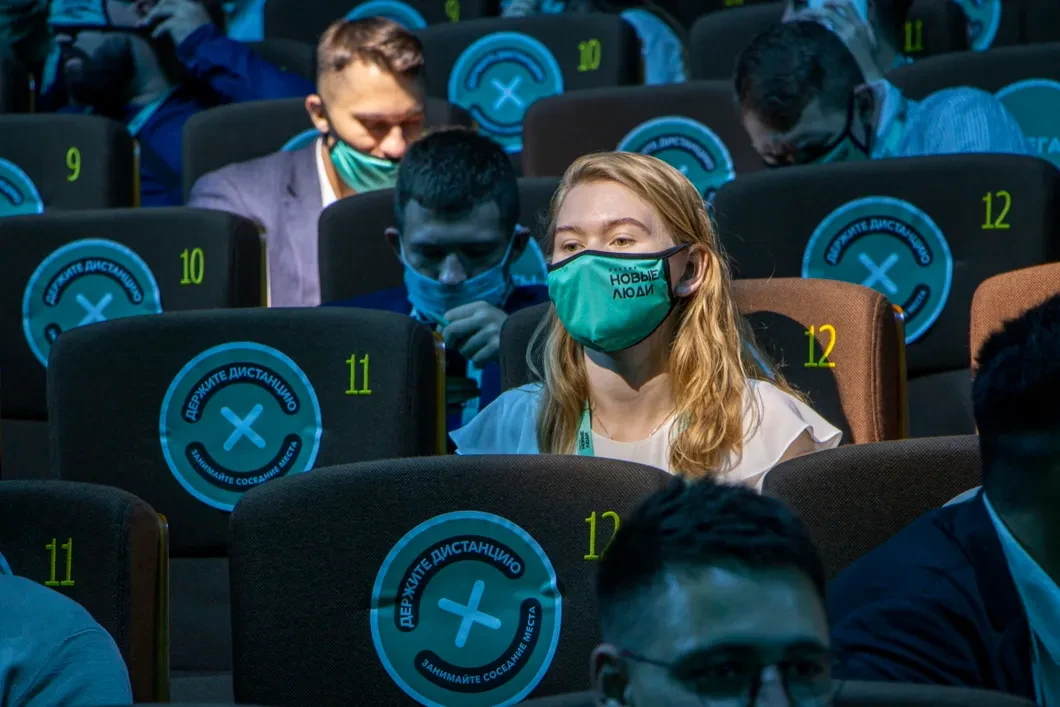
Six lists were nominated by another new party - “New People” (four registered by signatures), four - a new “Party of direct democracy” (three registered).
“Voice” notes the rapid registration by the Ministry of Justice of the listed four “new” parties - on average they were recorded in less than a month.
Against the backdrop of the fact that Alexei Navalny is not allowed to register his party for years, and Dmitry Gudkov left the “civil initiative” without waiting for the opportunity to rename it,
This regime of the greatest favors can be explained only by their complete safety for the Kremlin and the intention of using them as spoilers for the opposition.
The “Communists of Russia” nominated eight lists (four were registered: three by the benefit and only one according to signatures) and “Homeland” (six were registered: three by privilege and three by signatures).
“Yabloko” put forward four lists, but only one was registered (on the benefit in the Kostroma region; in the Chelyabinsk, Kurgan and Ryazan regions were refused signatures). Parnassus had the only put forward list.
In the elections in the capitals of the regions, it was not so tough. Without losses, according to Voices, the “patriots of Russia” passed (all four lists were registered), rap “green” (two), “for truth” (one). The “Communists of Russia” has eight lists of nine, the “Motherland” has seven lists of eight, the “Growth Party” has four lists of five, the “Party of Pensioners” has six out of eight lists, the “New People” party has three lists of Five, and the “Yabloko” has five out of ten, the CPSU has one list of the Civil Platform - one list of three.
How were the objectionable? And familiar and new methods.
Two traditional ways of waging are the recognition of voter signatures allegedly affixed by other persons (according to the conclusions of handwriting) and the supposedly incorrect indication of these voters (according to the Ministry of Internal Affairs or GAS “Elections”).
It is known that handwriters who marry signatures do not bear any responsibility for false conclusions, but it is impossible to make excuses - the courts do not accept any evidence, even if citizens personally are in court and indicate that these are their signatures.
For the first time, such witnesses were refused to believe in 2007, when Yabloko was removed from the elections to St. Petersburg ZAS, and the last loud scandal was in 2019 in the election of deputies of the Moscow City Duma. This year, the "Absurd theater" continued - at the "Yabloko" in the Chelyabinsk region, in Ivanovo and Nizhny Novgorod the election commission (up to the CEC) and the courts did not accept any evidence of the authenticity of voter signatures. But two situations are striking even against the background of everything that we saw before.
One - in Ivanovo, where the judge, who considered the complaint of the candidate from Yabloko Andrei Avtoneev, called him and, believing that he was saying with the representative of the election commission, began to explain what materials he lacks to recognize the refusal to register the candidate legitimate (!). After that, the judge had to take self -expression, but the court, despite the fact that Avtoneeva even supported the prosecutor, still refused the candidate.
The second is in Nizhny Novgorod, where several candidates of Yabloko were removed at once, although voters personally stated that they were signed in their support. At the same time, in the case of one of the candidates - Alexei Sadomovsky - the judge of the Nizhny Novgorod District Court, Julia Kucherova made a decision where it was written in black and white: the testimony of citizens who declare that they personally filled out the subscription sheets and personally signed them, the court belongs “critically, taking into account the fact that they are supporters of the administrative plaintiff and want him to be elected.”
This is called - stew the light: the collection of signatures as a condition for registration is carried out precisely in order to confirm the support of the candidate by voters. So, they support him - but they refuse registration?
It did not even help that the process of collecting signatures was shot on video that were demonstrated in court. But they did not convince the court that the expert’s conclusion preferred (whose conclusion, as it is written, is “probabilistic” in nature) ...
The second reason for the withdrawal-due to allegedly incorrect voters-is also almost impossible to challenge in court. Even when it is possible to prove (such as, for example, Yabloko in the Ryazan region) that the voters are not incorrect, but the Data Database “Elections” that differs from the FMS database.
Finally, a new refusal technology appeared, which is the “apple” in the Chelyabinsk region, when the characters who are members of the election commissions are sent to the opposition parties as opposition parties as opposition parties. By law, they cannot collect signatures, and everything collected by them automatically goes into marriage. But how to protect yourself from this, if it is extremely difficult to find the full lists of members of all election commissions in open access and check if there is someone who came to offer their services as a collector?
The final picture, as already mentioned, is not very joyful. But still, it was not possible to completely eradicate real competition - which means that at least in part of the election on September 13, citizens can achieve changes.