
Translated material
Belarus. Antidote
Why did France announce the arrest of the Informant “GRU” when Europe is concerned about the poisoning of Navalny and the prospect of “Repetition of Ukraine”?
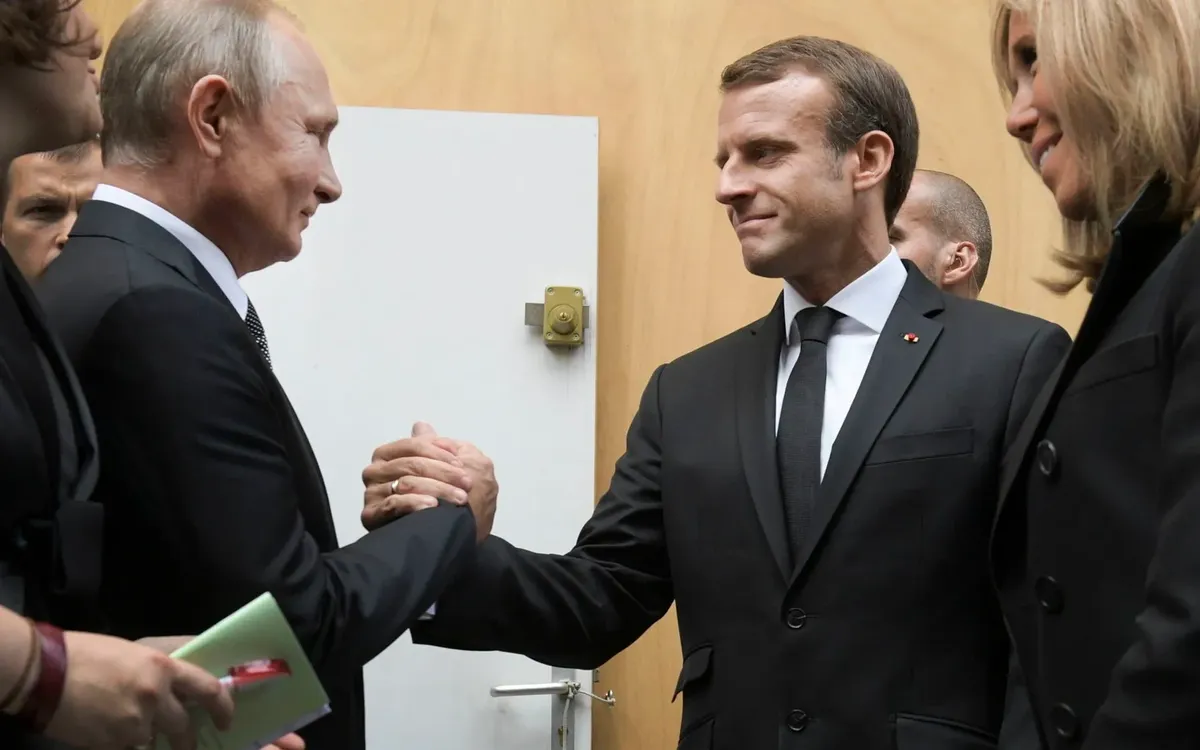
France revealed the fact of the arrest of its officer, a lieutenant colonel accused of working in Russia. She revealed right now, after the next aggressive “manifestations” from Moscow. That is, after the poisoning of Alexei Navalny and Putin’s statement that he formed the “reserve” of his security forces for sending to independent Belarus. She revealed on August 30, although the alleged French agent of Russian military intelligence was detained on the 18th. The unnamed source of Le Monde in the “French leadership” directly connects the release of a spy scandal with the desire to send a “signal” about the inadmissibility of new acts of aggression.
What is known about the scandal
Information appeared on Sunday morning, August 30, on the Europe 1 radio, and a few minutes later the Minister of Defense of France, Mrs. Florence Parlia, “confirmed it” in an interview.
Then new details began to appear in other media ...
A lieutenant colonel was detained, who was “in the region of 50”, “father of five children”, who was “in good account” at the command, had awards. In addition - "Russophone", which has "distant Russian roots." He recruited him, as claimed, who worked in Italy “GRU employee” (now this department is officially called the Main Directorate of the General Staff of the Russian Federation, but the old “brand” is still used in the Western media) . The lieutenant colonel served in the united command of NATO in Naples. The command site among the tasks named the NATO headquarters in Sarajevo, Skopier, Belgrade, as well as operations in Iraq and Africa. In principle, the command coordinates the actions of the alliance in the south and south of Europe - including, in particular, Libya, notes Le Monde. BFMTV emphasizes that it also “oversees operations in order to withstand Russia's activity in the Eastern Mediterranean - both intelligence, conducted with the help of submarines and to supply troops in Syria ports”.
According to the sources of the newspaper Le Parisien, the Italian intelligence service spotted the “suspicious” French lieutenant colonel.
She drew attention to him after this officer “got into contact” with the Russian Russian, for whom the Italians have followed “since 2019”.
Then the Italians reported a “suspicious” lieutenant colonel to colonels from the French military reconnaissance and defense security department (DRSD). It, in turn, collected evidence that now formed the basis of accusations of espionage.
On July 22, the Ministry of Defense of France appealed to the prosecutor's office of Paris, who started a criminal case. Almost a month later, on August 18, the officer was detained in France, where he came on vacation, and was arrested on the 21st and placed in the Parisian prison of Santa.
He has been made charges on four articles:
"Transfer of information to a foreign state",
“Intelligence activities in favor of a foreign state, which is damaged by the fundamental interests of the nation”,
"Collection of information causing damage to the fundamental interests of the nation",
"The issuance of secrets of national defense by a person who is a bearer of secrets."
Further investigation was transferred to French internal intelligence - DGSI (Main Directorate of Internal Security).
Why did you decide to betray the case of publicity
The French media and experts in the field of intelligence note that the tradition of such public stories is rare.
What made the French go to an open scandal?
Le Monde emphasizes that it would probably be difficult to conceal an awl in a bag, since everything happened on the territory of a foreign state, and besides, since the officer worked in the united command of NATO, all other countries of the Alliance were informed about “these facts”.
Secondly (quote): “According to data collected by Le Monde from the French authorities, the choice in favor of going along the path of justice is also connected with the desire to direct the“ decisive message of Russia ”. By directing the case to court, we thus condemn the aggressiveness of some country. In this case, this publicity echoes the charges made by the Western camp and NATO against Russia in connection with the events in Belarus and Ukraine. ”
Why in Ukraine? It seems that there have not been any fundamentally new events there recently, and the “old” (fighting in the Donbass and the annexation of Crimea) did not prevent the macron from leading an active “rapprochement with Russia”, proclaimed in August 2019 by almost the main priority of foreign politics.
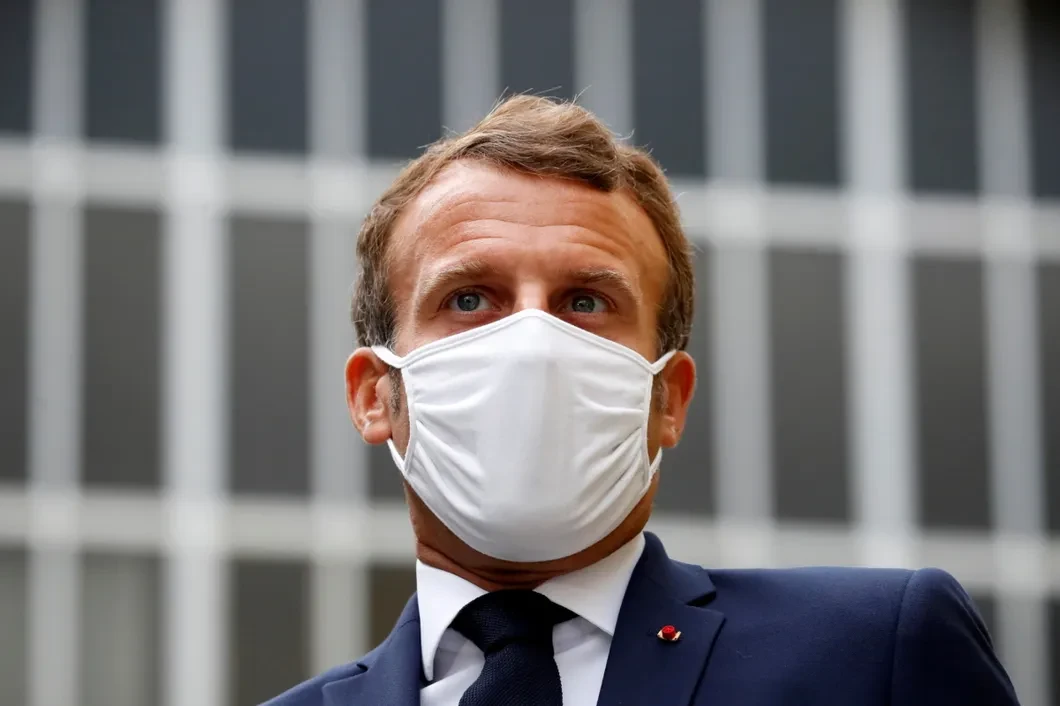
The article by Le Monde was released on August 31, and the parallel between Belarus and Ukraine was drawn by Emmanuel Macron. Commenting on the Putin statement that he had prepared a “reserve from law enforcement officers” to help Lukashenko,
The President of France said: "Any external intervention would lead to the internationalization of this issue." He emphasized once again: "Russian intervention is the worst option."
And he recalled that earlier he personally spoke about this on the phone of Putin. He added that this position is supported by Angela Merkel: "We do not want to repeat what happened in Ukraine." And he said that he wants Putin to “make efforts” so that Lukashenko would go to negotiations with the opposition through the mediation of the OSCE. He explained: “President Putin (earlier) told Chancellor Merkel and I personally, that he is favorable to the mediation of the OSCE, but not President Lukashenko. So, we need to make efforts to help us in this regard. ”
Macron himself in a vein reported about Putin’s “favor” through Twitter on August 20. He wrote: “Russia is favorable” to the prospect of organizing such negotiations “with the participation of France, Germany and the European Union”.
A few minutes before that, Macron there, on Twitter, made a cautious statement that “the situation with Alexei Navalny is concerned”: “We discussed it with the chancellor. We are ready to provide him ( *Navalny. - *Yu. S. ) all the necessary assistance ... ”and emphasized:“ Complete clarity should be made in what happened.
What was done by the Russian authorities about “complete clarity” in this matter, Macron soon recognized. As well as the fact that the specialists of the Berlin clinic, where they save Navalny, turned to the British laboratory, which in 2018 revealed the poisoning of the Skripals "novice".
Who then, according to the British authorities, committed poisoning? That's right, "GRU agents."
Well, on August 27, after Putin’s television interview, Macron also found out that he could actually be hidden behind Putin’s words that he was “favorable” to Lukashenko’s negotiations under the auspices of the OSCE. Putin’s answer: other countries should not intervene in the internal affairs of Belarus, but Moscow has already “formed a reserve from employees of Russian law enforcement agencies” to help Lukashenko.
On the 28th, as was said, Macron warned: in no case should we be allowed in Belarus to “repetition of Ukraine”. On the 30th, they pulled out a story with espionage in favor of GRU.
The Le Parisien newspaper, referring to the opinion of the “former high -ranking French intelligence officer”, also believes that in the fact of the promulgation of a spy scandal, “a strong message (Moscow) made in a geopolitical context, noted by the poisoning of Russian opposition Alexei Navalny and the situation in Belarus”.
If you develop this line, it should also be reminded that the piquancy of the story with the recruitment of the French officer by the Russian “Gereushnik” is given by the fact that it was the cooperation in the military sphere (along with the diplomatic) that Macron adopted the “rapprochement” policy with Russia.
In September-2019, on his initiative, after a long break, the Franco-Russian Cooperation Cooperation Council (SSVB) in 2+2 format was convened.
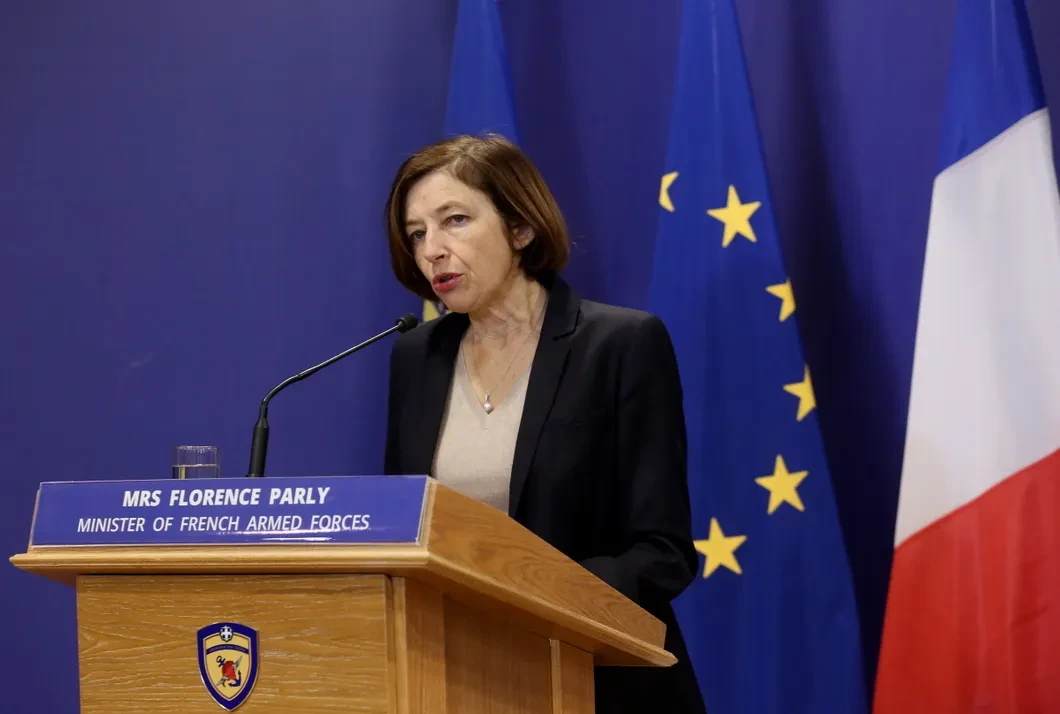
In Moscow, at one table, foreign ministers and defense ministers gathered at the same table. Florence Parly, Minister of Defense of France, gave the Russian Minister of Defense Shoigu a photograph of the 1944 Neman pilots, and he in response handed her the fresh issue of the Red Star newspaper with a photograph of 1943
And he also told how, after the terrorist attacks in France, which occurred in November 2015, “Russian pilots in Syria, in solidarity with the French people, applied“ for Paris ”to air bombs of the Air Force of the Russian Air Force.”
In March 2020, in the material entitled “The Army is tuned in the wave of Russian-Macron discharge,” the specialized French publication Intelligence Online reported that “about 30 French senior officers” were in February with a “educational visit” in Moscow, the delegation also included representatives of Northern Europe. “This visit is a strong political signal” after the resumption in September-2019 cooperation in the 2+2 format, the publication noted.
And now the Minister of Defense of France publicly announces the charges of a French senior officer suspected of working for Russian military intelligence.
Is it worth it to really see a serious “warning signal” that Paris wants to send to Moscow? The same expert Le Parisien, a “former high -ranking” French intelligence worker, assures: “We can solve such issues with a diplomatic way, without the tradition of these things by publicity. If this surfaced, then France wants to say: we are not going to allow this. ”
At the same time, in December 2019, Le Monde talked about another spy scandal, which, at first glance, could become a reason for a much more sharp reaction of the French authorities. But there was no public reaction. Meanwhile, the French intelligence agencies then handed the newspaper information that “15 specializing in the killings of GRU officers” from 2014 to 2018 used resort town in French alps as a “base” for “operations” in Europe. Among these “alpine” “Gereushniki” there were alleged participants in the operation of the annexation of Crimea and “destabilization in Moldova”, and the organizers of attempts to coup in Montenegro, and participants in the poisoning of the Skripals. One of them-Denis Sergeev (aka Sergey Fedotov)-is also suspected of participating in an attempt to poison in 2015-also a “novice”-a Bulgarian weapon of weapons of Emelyan Goebreva.
Then, for publication, the sources of Le Monde in the special services specifically noted that
“GRU killer agents”, according to the data available, did not conduct operations in France and “avoided all kinds of connections with Russian spies acting under diplomatic cover in consulates and the Russian Embassy in France”.
And now an important factor in the possible “serious reaction” of the highest French leadership was the fact that the “Gereushniki” affected the immediate interests of France? And the fact that one after another, new demonstrations of the murderous “potential” of Moscow were added to this - in the case of Navalny and Belarus? Or is it the only thing that this “public” story could not be concealed in any case?
Let me remind you that in March 2018, Macron has already signed a joint statement of the UK, the USA, France and Germany about the poisoning of the Skripals.
The statement said: “Our general security is threatened”; “Russia's inability to respond to the legitimate requirements of the British authorities only exacerbates (its) responsibility”; "Our concern is intensified in the context of the dynamics of previously irresponsible Russian actions."
In addition to the signing of the statement, Macron then made another “diplomatic demarche”: he canceled a visit to the Russian stand at the Paris Book Fair. But already in May he flew to St. Petersburg to the Economic Forum, where he became the main foreign guest (and in the same place, at the forum, at a press conference, he actually “swallowed” the next “hybrid” statement of Putin about the tragedy of the MH-17 passenger aircraft).
The current “black mark” with the publication of a spy scandal is also a threat of a book fair level?
Le Monde in the same material written with reference to the “French leadership” reports that “political consequences that France, other NATO members or the North Atlantic Alliance may be considered in connection with the detection of these acts of state treason and espionage.” “If it turns out that the information transmitted by this French officer caused serious damage, can be taken by response, in particular in the form of expulsion,” as was the case in March 2018, when 160 Russian diplomats around the world were sent after the Skripals poisoning.
Can you expect something more serious?
The answer in any case depends on the development of the situation in Belarus. Although the French Foreign Minister Jean-Yves Le Drian, and the German Foreign Minister Haiko Maas also continue to insist on the importance of a complete and impartial investigation of Alexei Navalny's poisoning.
The last “signal” to Russia was sent on August 31 from Paris, where Haas and Le Drian together performed before the French ambassadors in European countries. Maas said: "We expect Russia to provide more active assistance in the investigation of Navalny's case."
And he emphasized: “On the one hand, we need constructive connections with Moscow. Because without Russia or (speaking) against it, Europe will not become safer. On the other hand, we say very clearly that black clouds hung over our relations. ”