
Translated material
The raider of the Third Reich
80 years ago, Soviet pilots spent the northern sea route of the German auxiliary cruiser Comet, which was pierced in the Pacific Ocean for 500 days
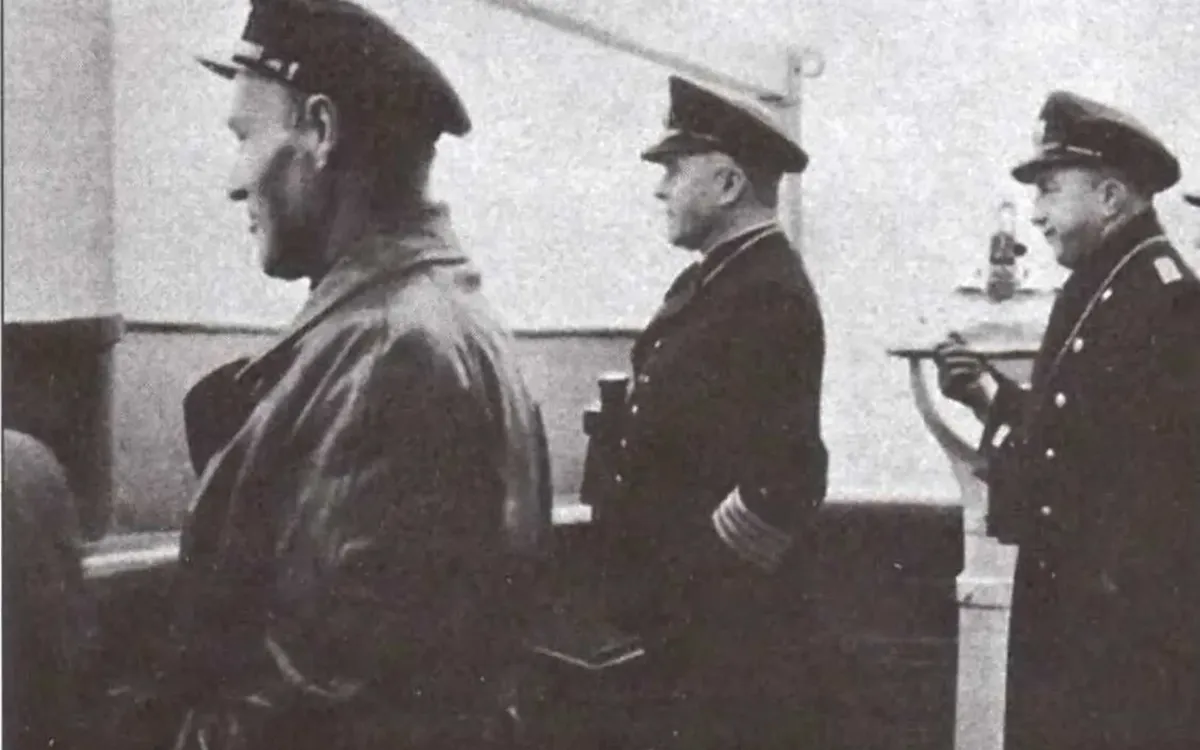
The German ship "Comet" (Komet) under the command of Captain-Tsur-Tsee (captain of the 1st rank) Robert Eisessen passed Bering the Strait on the night of September 5-6, 1940. Behind him 3300 miles of swimming along the Northern Sea Route remained. This transition “Cometes” made within a record 23 days, breaking the previous record of swimming along the Northern Sea Route - 26 days.
If we take into account that of these 23 days the chassis was 15, the achievement looks at all fantastic.
True, the newspapers did not write about this outstanding record: under the cover of the deepest secrecy, Soviet icebreakers and Soviet pilots spent along the entire Soviet Arctic coast to the Pacific Ocean the Kriegsmarin combat ship, whose task was to conduct combat operations on the ways of British shipping.
It is estimated that the general tonnage of the vessels sunk and captured by this Nazi raider-the British, Australian, New Zealand, Norwegian and Dutch-amounted to 42,000 gross-registered tons. Along the way, the raider by artillery fire destroyed the British processing plant for phosphates and the oil storage on the island of Nauru, operated off the coast of Australia, made a noise in the waters of the Antarctica ...
Guns for "merchant"
The formal countdown of this pirate epic is carried out on July 3, 1940, when the Cometes, which was listed in German documents as well as “ship No. 45”, left Gottenhafen (as the Germans called the captured Polish Gdynia), heading to the shores of the Soviet Arctic. A month before, on June 2, 1940, Cometes, converted into an auxiliary cruiser from the EMS dry cargo (EMS), was officially included in Kriegsmarin.
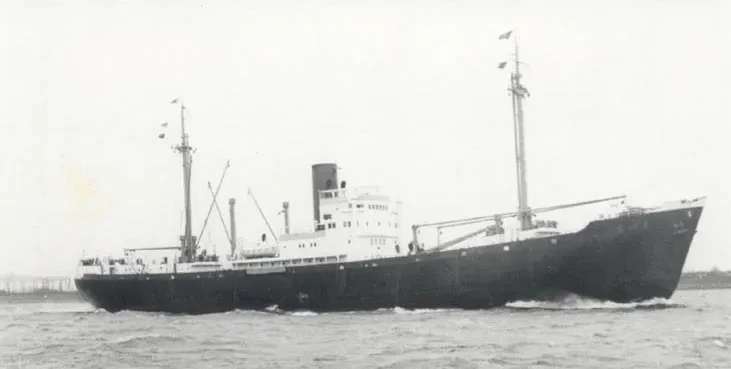
In fact, it all started much earlier. The EMS dry load was launched in Bremen on January 16, 1937, but at the very beginning of the Second World War, like all other civilian vessels, it was requisitioned by the military, and on December 1, 1939, Captain-Tsur-See Robert Assen was appointed by its commander. The ship itself was subjected to significant reconstruction, having received very powerful weapons: six 150 mm guns, one 60 mm gun (according to other sources, 75 mm), as well as six units of anti-aircraft weapons-a paired 37-mm anti-aircraft unit and four 20 mm anti-aircraft machine gun.
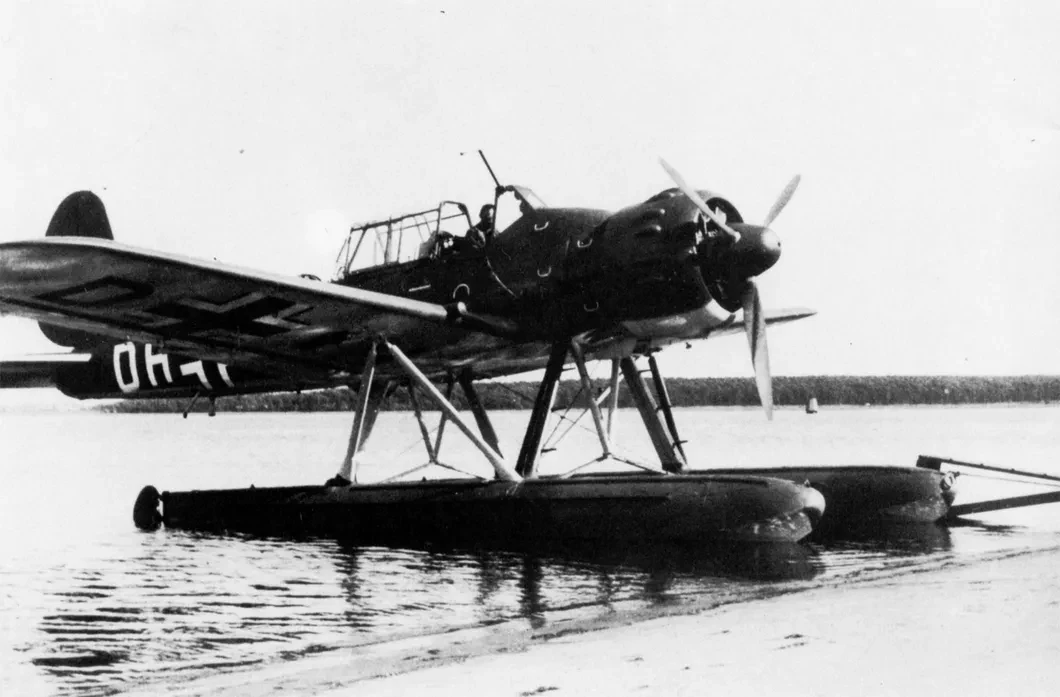
The ship was also equipped with six torpedo vehicles (although a number of sources claims that there were ten torpedo devices) - 24 torpedoes ammunition, and Ming -raider fades took on board powerful anchor galvanic mines of the EMS type. For a hidden production of mines on board there was a high -speed boat. In a specially constructed hangar, there was also the Arado AR 196 AR-1 seaplane designed for air intelligence.
All artillery weapons were disguised and reliably hidden from strangers behind the folding gun ports, shields and hatches. The bridge and the most vulnerable mechanisms were protected by armor, the radio equipment was replaced by the latest, navigation equipment at all at that time was brilliant.
In addition, there were many devices on the ship that allowed to quickly and radically change its external appearance and silhouette - fake chimneys, fake sides, etc. Residential premises could accommodate up to 300 people (despite the fact that the usual team of a carbon carrier of this type is 24–35 people), the range of autonomous swimming was at least 70 thousand miles.
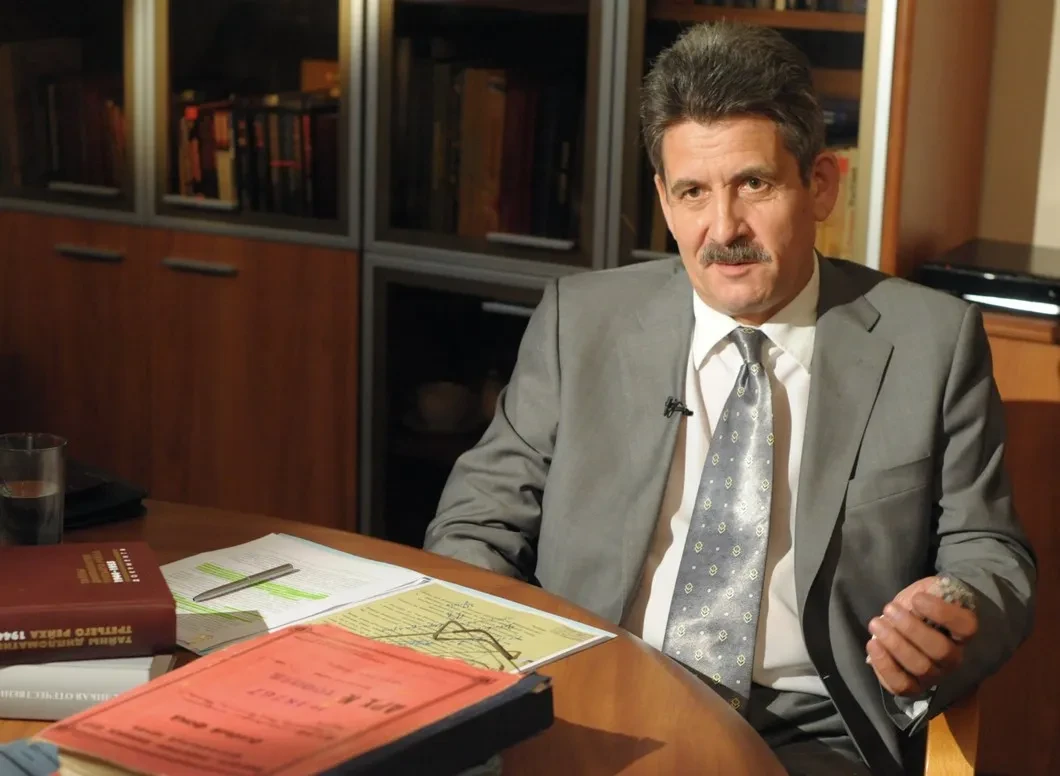
For the Soviet side, neither the purpose of the German ship, which was to be carried out by the Northern Sea Route, was not a secret to its equipment. FSB-Lieutenant General Vasily Khristoforov, a former chief archivist of the FSB, published a certificate presented by the high instance by the Main Transport (GTU) of the NKVD of the USSR, which oversee the raider's special operation:
“The German steamer“ Comet ”( so in the document. - Auth. )-an auxiliary cruiser-in a whisper, a team of 200 people, a converted pipe, a double side, a command bridge is armored. Lucky: artillery shells, torpedoes for submarines, aircraft - parts. Armed, but weapons are hidden in the holds. The displacement of the vessel is 6-7 thousand tons. " Another source of the NKVD reported: “Fyrol” ( the Soviet code name of the raider for the duration of its wiring in the Severomasput. - Aut *. *) <...> A new good ship, equipped with all the latest navigation devices. His echo sounder, his gyro -compass in many respects exceed the devices installed on our ships in its accuracy. ”
It was also reported that the ship “has a well -equipped radio station ... 24 days, without removing the headphones, 6 radio operators are sitting. The seventh man does not listen to himself, he has the rank of officer. ” “The cruiser’s command did not hide that they were military officers and that the team consists of military sailors on board. During our stay on board, this is already from the report of Soviet pilots - a full military ceremonial was made daily. ” “Soviet pilots could easily recognize the military“ comets ”of the military in the crew, any disguise, even for disciplinary reasons, was impossible,” Robert Eisen himself wrote in his memoirs. “All sailors wore real naval uniforms, and I held all negotiations in the form of Captain-Tsur-See of the Navy.”
The issue of wiring the raider by the Northern Sea Route was decided during the negotiations in February 1940.
According to one sources, initially it was about the wiring of 26 German vessels from the Pacific to the west, two more from west to east. Formally, the load is soybean beans (west), which went east, as it were, empty - "in the ballast." Then the number of vessels that were supposed to be from the east were reduced to 10, and on April 3, 1940, the German embassy completely canceled this proposal.
But they agreed on the passage of one raider to the east. At the same time, it was especially stipulated that the wiring would be carried out in the strictest secrecy mode: the German ship had to go under the guise of Soviet - with the Soviet name on board, under the Soviet flag. By the decision of the Kremlin, the wiring was entrusted to the Main Directorate of the Northern Sea Route and the People's Commissariat of Foreign Affairs. Ensuring the secrecy of the operation was assigned to the Main Transport Administration of the NKVD of the USSR.
Of course, the Germans received all these “rugs” just like that - the Soviet side also had their own “marine” interest.
Stalin passionately wanted to get one of the Fuhrer's pocket battleships, a heavy cruiser like Deutschland. All negotiations between Moscow and Berlin on sea topics were carried out in a direct link with this topic. On February 11, 1940, the unfinished cruiser Luttsov became “ours”: it was sold to the Soviet Union. On May 31, 1940, Luttsov was finally towed to the Baltic Plant.
Soon “Cometes” went to his raid. Along the coast of Norway, he walked under the Soviet flag - like the icebreaker Semyon Dezhnev. Further, he also repeatedly changed the “sign”, appearing as the Soviet Danube dry load, then as a German “Donau”, then again became “dezhnev”. Of course, all this was agreed with the Soviet curators of the “project”. Moreover, ensuring a reliable cover, they even removed the real “Dezhnev” out of sight, sending to serve the most remote stations of the Kara Sea and the Laptev Sea.
On July 9, 1940, he entered Soviet waters, and on July 15 he stood on an anchor parking lot northeast of Kolguev Island in the Barents Sea: the Soviet leadership was not ready for the raider wiring. More precisely, the Soviet submarine of the Sh-423 was not ready for the campaign, following the expedition for the wiring of which the “comet” was supposed to go. The raider was waiting for permission, almost daily changing the place of anchor parking. For two weeks, the false “Semyon Dezhnev” completely fell out of the field of view of the Soviet “competent organs”: so far no one knows where and what he was doing, and out of thirteen of his parking lots, only two were installed.
It must be assumed that the warship and his team did not lose time in vain, but what exactly they did-they carried out reconnaissance, the depths of the depths, examined the shore, led the layout of hiding places, the hidden installation of some devices-this can only be assumed. As not without reason, the authors of a number of studies about Nazi operations in the Soviet Arctic, captain 2nd rank Sergey Kovalev and Anatoly Fedorov, “Aissen conducted extensive studies of depths, soil, currents in many areas of the Barents Sea, and already on the basis of these studies, were probably prepared for detailed cards for German submariners, which later allowed them to choose the most profitable beneficial ones Waiting areas on the approaches to the Kola Bay and Throat of the White Sea. ” According to the researchers, it was on the basis of Eissen's data that the blockade of the blockade of the Denitsa of the Kola Bay, which was successfully used during the war, was developed.
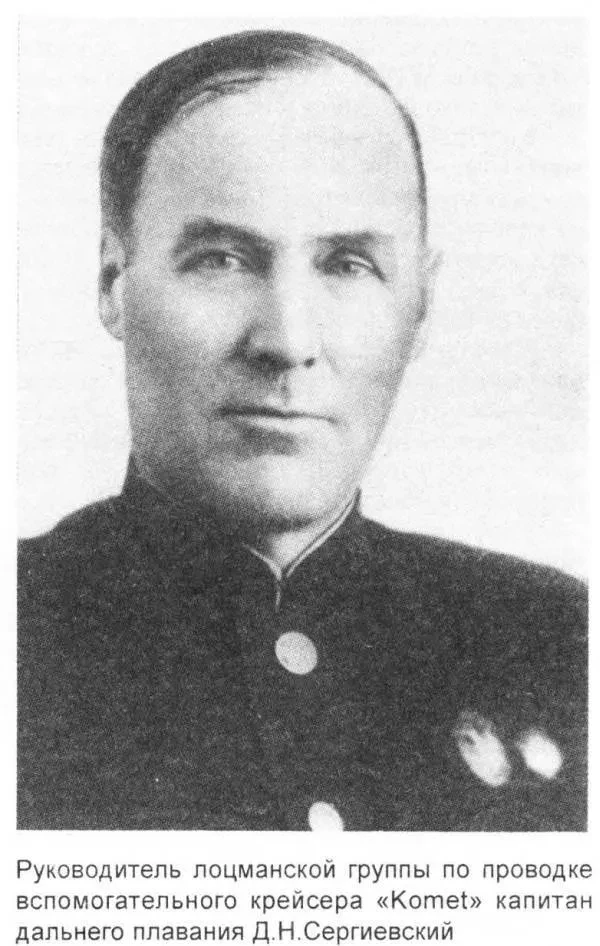
On August 14, 1940, Esessen, going to the Strait of Matochkin, took on board the Soviet pilots Dmitry Sergievsky and Athanasius Karelski. The epic of the “comet” was described in detail by Esessen himself, who released a book of memories after the war. However, on April 3, 1943, his own article “Cometes” goes around Siberia ”reached the Hamburger Fremdenblatt . Naturally, the decoding of a special operation!
But by that time, Germany and the USSR fought with each other with might and main, and the “comets” rested at the bottom, so that Berlin could no longer damage Berlin.
This was clearly a purely propaganda attempt to suffer allies, making a confusion into their far from slim ranks: look, they say, but the Russians helped us to drown the British! However, it was unlikely that this was a discovery for Churchill and his services, so the propaganda effect was no.
Assen described how he regularly made parking and landed the “comic landings”, despite the protests of the Soviet pilots, regularly. While one batch of sailors was looking for a fin, the other collected mushrooms and berries, the third ... - And who knows what all these "comic landings" actually did on the New Earth? The two Soviet pilots were not able to keep track of all this, as well as to control whether all of the 270 sailors of the list then returned aboard.
In fact, a impudent, undisguised reconnaissance operation, reconnaissance of possible landing and sabotage groups.
In any case, from the reports presented by the pilot, it followed that throughout the way the Germans conducted constant photography of the coast, the study of the fairway, and the depths of the depths in the straits. Ether reconnaissance was also conducted around the clock.
On August 19, the raider entered the Kara Sea, and on August 22 again stood on the three -day “holidays” near the island of Tirtov, again using this opportunity to land reconnaissance groups and obtain hydrological information. Through the ice fields of the sea, the Laptev raider led the icebreaker Stalin, then the icebreaker Lazar Kaganovich took the baton. But on September 1, 1940, when there were some 600 miles left before clean water, the head of marine operations in the Eastern Sector of the Arctic, Athanasius Melekhov, who arrived from Kaganovich, delivered an unexpected instruction of Moscow: accompanied by an icebreaker to return back.
According to the Soviet representative, American ships allegedly run in the Bering Strait, which ... should not find out that the German ship passed by the northern sea route with the help of the USSR! It is difficult to say why the Soviet leadership decided to play “back.”
Admiral Golovko in his memoirs wrote that Stalin made this decision, allegedly “suddenly” having learned that the ship was following with the military team. The explanation does not withstand any criticism: that this is a warship - with a military team, under the leadership of the personnel officer Kriegsmarin, who has strong weapons and the following to perform purely combat missions - the Soviet leadership knew initially.
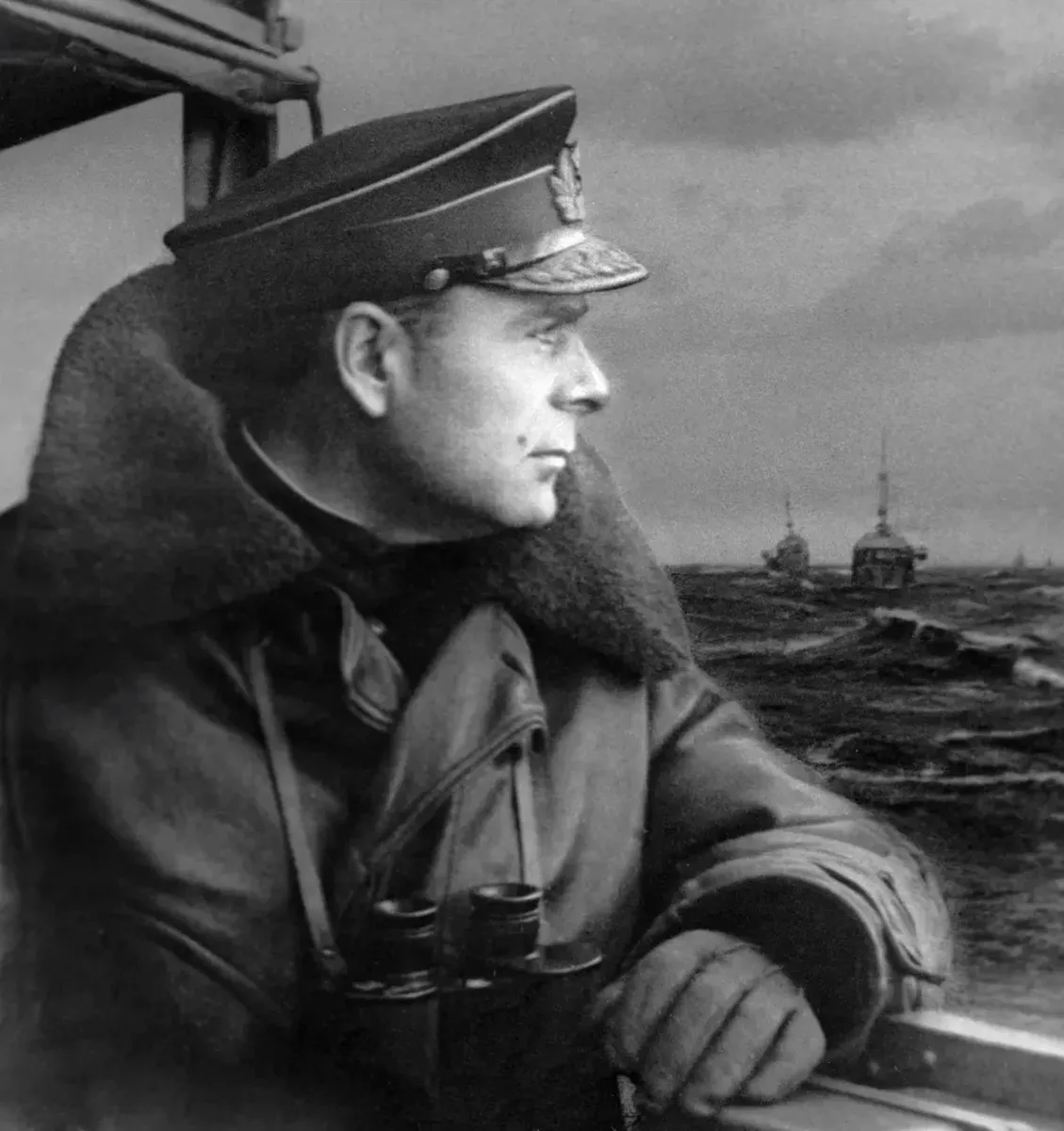
On September 2, 1940, Captain-Tsur-See Assen said: I obey only Berlin, because I will not fulfill the Soviet instructions, then the following is the following. It is clear that the Soviet icebreaker had not the slightest opportunity to prevent the actions of the German warship. Having landed the pilots from his side, the “comets” moved on ...
Four fleets of Admiral Essen
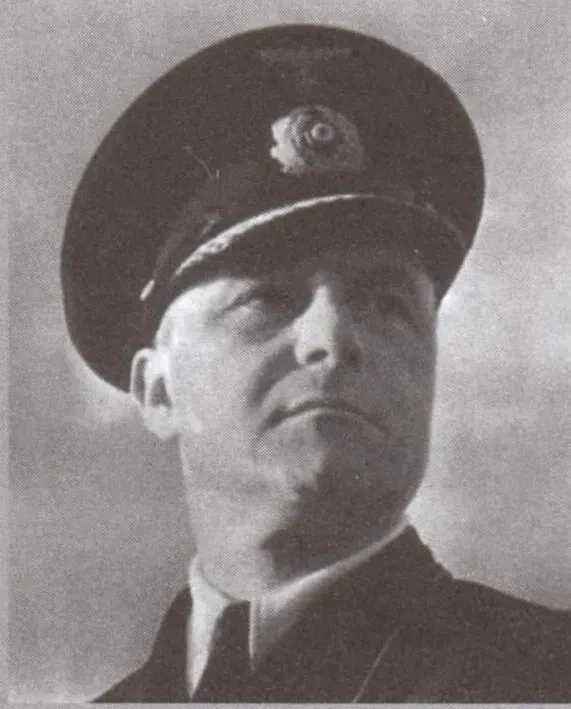
The biography of the one who conducted the raider by the northern sea route, and then commanded him with combat operations, deserves a separate description. Robert Esessen was born in 1892 in Frankfurt.
Since 1911, in Kaizermarin: the cadet of the Naval Academy in Murvik, the service at the Hansa armored cruiser, and since April 1912, Fenrich-Tsur-See (candidate for officers), Eisene, has been practicing at the Bremen light cruiser. Then the transfer to the light cruiser of Karlsruhe and on August 3, 1914 the first officer title should be awarded: Lieutenant-Tsur-See. Here, on board this cruiser, Esessen gained his first combat experience: Karlsruhe, sent to the West Indies in advance, from the first days of the war, operates in the Caribbean and the South Atlantic as a raider.
For three months, the cruiser captured and sunk 17 trading ships, mainly British, with a total tonnage of 76,453 bc. This was, one might say, the first pirate practice of the future raider of the Third Reich. True, for the ship and most of his team, this practice ended tragically: on November 4, 1914, 350 miles east of Trinidad and Tobago, during a rendezvous with a coal minister, a series of spontaneous explosions tore the nasal part of the cruiser. The stern lasted 27 minutes.
262 sailors were killed, including the cruiser commander, the coalist managed to save 146 people.
Lieutenant-Tsur-See Essen was lucky to find himself among the rescued. In December of the same year, he was already in Favterland, and in January 1915 he began to carry out service on the light cruiser Amazon.
A number of domestic authors can be found that Esessen took part in the combat campaigns to the shores of Murman as an officer of the auxiliary cruiser “Meteor”. In particular, the already mentioned S. Kovalev and A. Fedorov write that Esessen allegedly even “was among the initiators and developers of a mine fence scheme in the White Sea, which almost thwarted the plans for the union convoys in Arkhangelsk.” Moreover, "perhaps at the same time he participated in the development of activities in our North and Kaiser submarines."
But it is doubtful that such a young officer who did not pass the school of an independent command-at least a boat, could be the initiator and organizer of something serious in such a conservative and extremely strict-hierarchical structure as Kaizermarin.
It is reliably known about the service of Essen on destroyers and sending submariners to the school at the very end of the war to the school. During his first war, he was awarded the iron crosses of the 2nd and 1st grade, as well as the Order of the Ceringian Leo of the II Knight's class with swords-the award of the Great Duchy of Baden.
After the war, Assen did not leave the fleet, continuing the service in the Reichsmarin: he served on minesweepers, in 1922 he received the title of Captain-Lieutenant, in 1924-1926. He commanded the destroyer, and in 1929 he was appointed as a senior officer of the Meteor hydrographic vessel. On January 1, 1930, he received the title of Corvetteen-Captain (Captain 3rd rank), from July 1, 1935-Fregatten-captain (captain of the 2nd rank), and in September of the same year he began the same “Meteor”, who was actively engaged in hydrographic research in the area of Greenland and Iceland.
On January 1, 1937, Robert Esessen was awarded the title of Captain-Tser-See, he receives the position of head of the Naval Directorate of the Military Ministry of the military, he is deservedly considered one of the most experienced hydrographs of the German fleet. On December 1, 1939, Assen was appointed commander of the auxiliary cruiser Comet, in this position he remained until February 20, 1942.
For the transition through the Arctic and the first military successes in raiding on December 25, 1940, Captain-Tsur-See Assen was awarded with bonds to his already had iron crosses of the 2nd and 1st grades, and on January 1, 1941 he was awarded the title of Rear Admiral, although raiders were usually not complained of so high ranks and for where great successes. On November 30, 1941, Cometes, having completed the rounding towards, returned to Hamburg, and the day before Esessen received a radiogram about the awarding with a knightly cross of the Iron Cross.
... On October 14, 1942, Cometes, which was published under the start of the new commander in the next raid, was sunk in La-Channel by the British torpedo boat, no one was saved from the team. But this is another story. But Rear Admiral Robert Esessen lived until 1960, having managed to serve as the head of the hydrographic service of Bundesmarin at sunset-it was the fourth fleet in his life ...
I must say that Esessen served his ranks and rewards in full by his Arctic transition alone: for mere pennies - 950 thousand Reichsmarks that Berlin paid the USSR - the Germans conducted brilliant intelligence of the most depths of the Soviet Arctic, simultaneously gaining the invaluable experience of the Arctic voyage. Все это позволило Кригсмарине успешно действовать в том районе до самого конца войны и дорого обошлось морякам советских и союзных арктических конвоев. Зато Сталин получил недостроенный «карманный линкор фюрера», оказавшийся в результате бесполезным…