
Translated material
"Look around, always look back"
Due to Pandemia, LGBT refugees were in danger: some could not leave the country, others are stuck in transit camps
"
Nick pronounces these words, looking somewhere through me. All the time, while we are talking, she looks like that - as if not seeing.
A few years ago, Nika began to rapidly lose his eyesight: on one eye, myopia reached -4, and the field of view narrowed to 5%.
Doctors suggested that this could be hereditary, but Nika is sure: vision of vision is provoked by a concussion that she received when she was attacked in 2017.
- I stood at the entrance, smoked and waited for my man. Three came. At first they began to ask to smoke, then the name began to say: "Oh, you are not a girl, you are a homosexual." One hit me. I have sparks from my eyes sprinkled. I was able to lay one of them-I was engaged in boxing. But the second broke me, so much so that I fell and hit the ramp - I still have scars on my forehead.
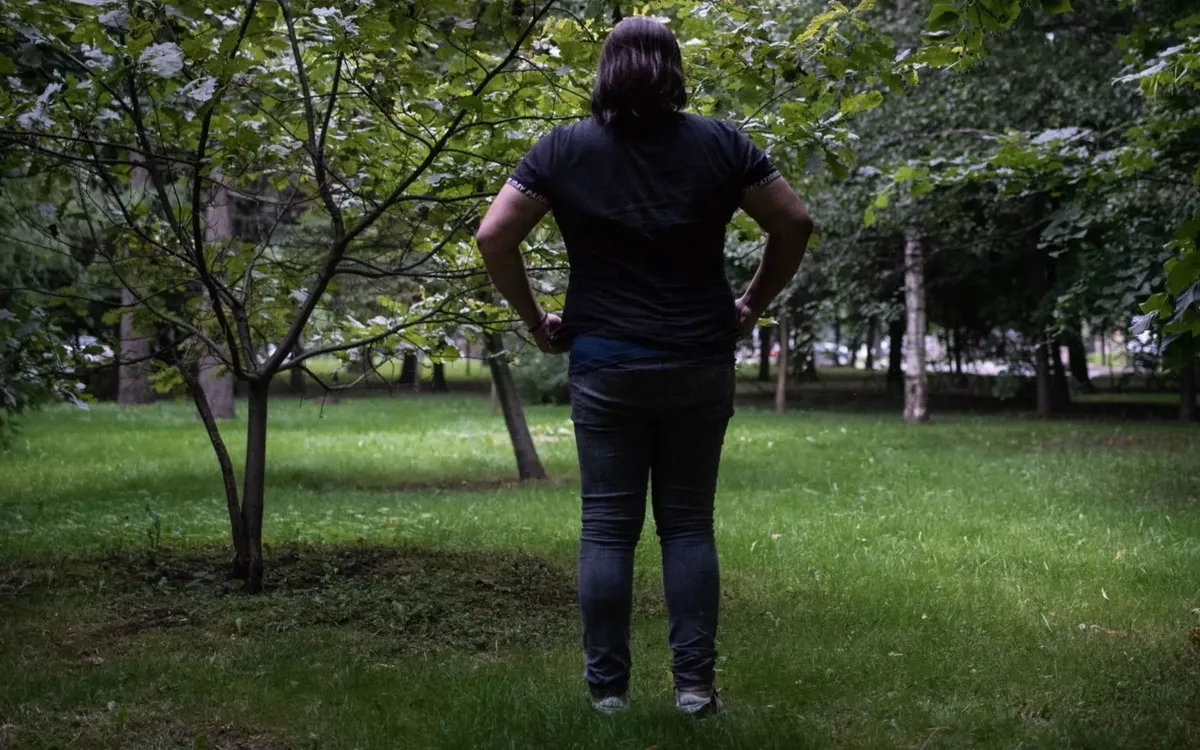
Nika is short. In a black T -shirt, her muscular hands, a broad back and big breasts are especially visible. According to Nick's documents, a man, but she dresses in women's clothes and is painted. She speaks of herself only in a female gender. Nika is a transgender woman
There are no exact data on the number of transgender people in Russia. The data of Europe and America say that such people make up an average of 0.1 to 1% of the population of each country. If such calculations are fair for Russia, then
In our country lives at least 150 thousand transgender people.
Due to the pandemic of Koronavirus, Nick could not leave Russia, although almost all documents were ready to obtain refugee status in one of the European states.
For the past three years, Nika has been living in Shelter: practically does not go out into the street, rarely uses social networks, communicates only “with its own”, cannot work and even arrange a SIM card in its name.
She is forced to hide her location from relatives who want to kill her because she is a transgender woman. Where it is from, for this they punish death.
Nick was born in the late 80s in the North Caucasus. She grew up in a large family: four brothers, five sisters, mother and stepfather in good positions ... Nick was then called a very courageous name, however, as if contrary to this name, Nika loved to play dolls and try on her mother’s dresses.
- I always felt like a girl. Even in the kindergarten when I went. I always asked my mother: why do my sisters wear bows, but I don’t wear it. Mom cursed. The sisters brothers laughed. In the 5th class, she could already paint the nails, lips. Parents were often called to school because of this: they said immoral behavior. But my grandmother normally treated this: she immediately said to everyone that the girl was growing.
In the 9th grade, I fell in love with a guy for the first time in my life. And he reciprocated me. At that time I was engaged in boxing, I took the first places, won the medals. This is the Caucasus: such luxury as weakness is not permissible there. Before that, I came home very often. It happened to cope with me, someone stunned me from behind with a stone or a bottle-what came across the arm-and they beat me together.
And when the guys from school found out that I was dating a guy from a parallel class, he was also beaten. Mom after that transferred me to another school. We have a small city, so in the new school classmates and teachers quickly found out who I am.
My class teacher generally treated me normally, but my mother said: the child needs to be treated. It was believed that it was a disease.
In the same 9th grade, Nick got into a boarding school for children without parental care.
- My stepfather was killed then. On the basis of this, my mother went crazy ... A little. She was put in the hospital.
And the orphanage ... There was such a son of the director of the orphanage - Yuri. Now I do not know what is happening to him, but after I got out ( from the orphanage. - Ed. ), He was imprisoned for molestation of young people. We had such a capture where all the equipment stood: computers with broadcasting from video cameras. And so he often, two more from the group turned there, put it on his knees and forced us ... Well, you probably understood. Railed. Both boys and girls.
For regular shoots from an orphanage at the age of 14, nickname was determined in a specifter.
- I stayed there for about a year. The bulls were stewed about me, the educators forced the emphasis to take, if you have been a bit, forced to walk with a goose step ... I will never forget. If you are guilty, you were beaten so that you do not have bruises - they wrapped it with towels, and a piece of paper or cardboard on top: with your feet, hands were beaten on these towels. I had broken ribs. And not only me - everyone was beaten. “Difficult teenagers” - we were called that then. I don’t know how my favorite teacher found out about all this ( from the orphanage. - Ed. ) - Lyudmila her name was. She was the only one to me humanly. She came to this colony with the guardianship authorities, with the police, and I was taken away. Two or three warders were arrested - for cruelty with children. When I left, a psychiatrist was observed for three months.
In 2004, after graduation, Nick moved to Moscow in order to enter the college for a cook. But with the characteristic issued by the school, this turned out to be almost impossible.
- In the characteristic it was written that I am a child with deviations of dautism, or what's right? It was written that the child is afraid to make contact not only with adults, but also with animals.
It was written about my homosexual orientation. That I need to be determined in a special institution, that I can’t be in society.
In Moscow, Nick had to unlearn a year in the evening school, get a good description. In Moscow, she finally accepted herself a new one.
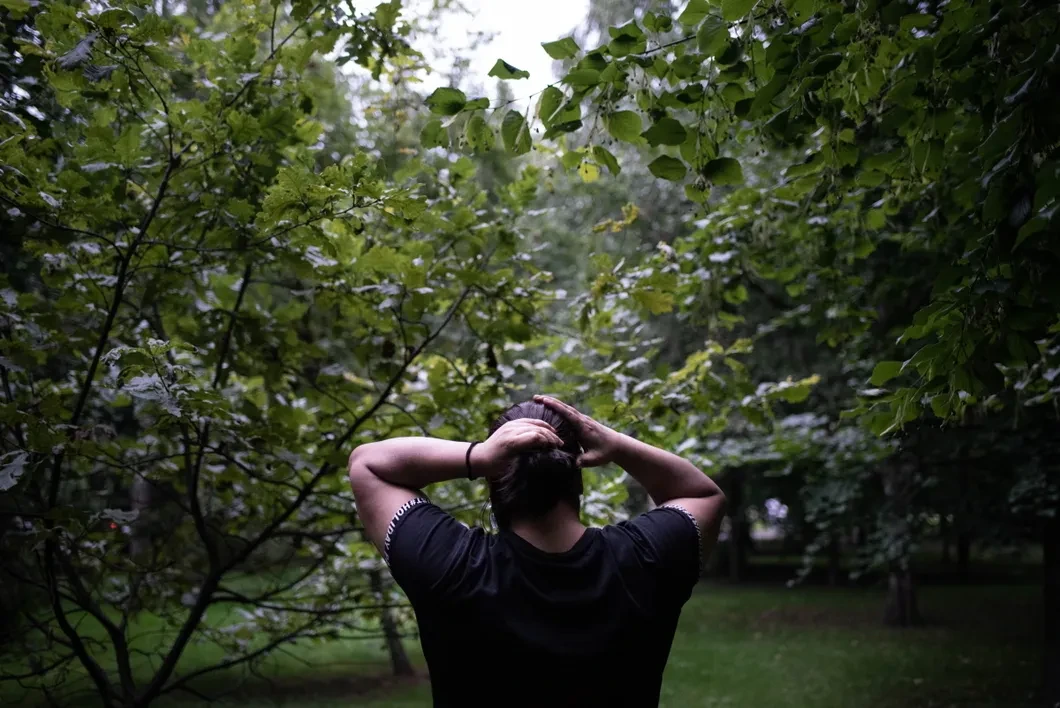
- I just then realized that I want to become a different person: I already started to grow my hair, I pinned my eyebrows, I began to use the tonal: in the Caucasus I did not do this. And I liked it: I saw a beautiful girl in the mirror and represented some beautiful guy nearby-Nick smiles and runs his hand over her black square-she stopped growing her hair for a long time. - Before moving to Moscow, I could not open to anyone. I did not want to poke a finger at my grandmother or brothers because of me-I understood what would be. I did not talk about this to any of the relatives.
For 15 years lived in Moscow, Nick received several formations: I studied on a cook and a make -up artist. From the very move, she had to rent an apartment: in a hostel she was afraid to appear in her skirt. At first, I handed out leaflets, then I worked as a waiter and administrator in the restaurant "Christmas tree-firing".
-I rented an apartment for myself-somewhere in $ 150 a month. This is now not money, but then it was a lot of money. And to make money normally, I had to go to the escort. This is not a very good job. But I managed to send money and to help my family.
In 2006, Nick called her grandmother on the phone, began to cry in the phone and first told who she actually feels herself. Then she drank female hormones, and called herself Rimma. Grandmother took her recognition normally, she only said: "I always knew that you were not growing like everyone else."
Six months later, Nick admitted to her mother: she was most afraid of her reactions. But mom said: "You are my child, I love you as you are."
Mom several times came even to Nick in Moscow. She warmly recalls how her mother taught her to dress correctly, paint and wear skirts.
To talk about her gender identity, mother and grandmother were then banned, they knew what reaction would be for relatives. These same relatives learned about everything much later: in 2012, mother did not, Nick was able to come to her grave only a year later, after the hardest depression.
-In 2013, in June, I went home in a female image. I arrived by car with the driver directly from the airport - I did not plan to stay. I took a ticket there and back. My uncle saw me in the cemetery, did not immediately find out. I can’t tell everything ... I had such long hair, to the coccyx. He cut them there there. Then a lot of things came to me at VOTSAP, an email address. Uncle sent photos with severed heads and the signature "It will happen to you soon." His people tracked me in different cities by geolocation-a SIM card, issued on me, social networks. Uncle had a connection ( in the organs. - Ed. ). Now I almost do not use social networks and social networks.
During the year, Nika changed many cities and apartments, but she was found everywhere. Found, tracked and beat. Just strangers who came in cars with numbers of the region from where it was from.
The last message received from the uncle to the old number of Votsap: “Look around, always look around. After all, I can be somewhere nearby. "
After that, Nika turned to human rights activists from the Russian LGBT network and for several years completely abandoned the usual life: neither work, nor love, nor active movements. All life over the past three years is an ongoing expectation.
Today, Nika lives with the hope that the boundaries will open soon, and already there, outside, she will be able to start a new life. Perhaps even once he will do an operation in the eyes that he dreams about.
- I want to become a medic, a nurse. It’s never too late to study, but I love to study. I don’t know when I leave, but I would like to live so that I have my own corner. I would like to go to work. I would like a lover who would understand me to appear, would replace all relatives, all friends in whom I was so disappointed.
"We all experienced the intermediate position of the refugee"
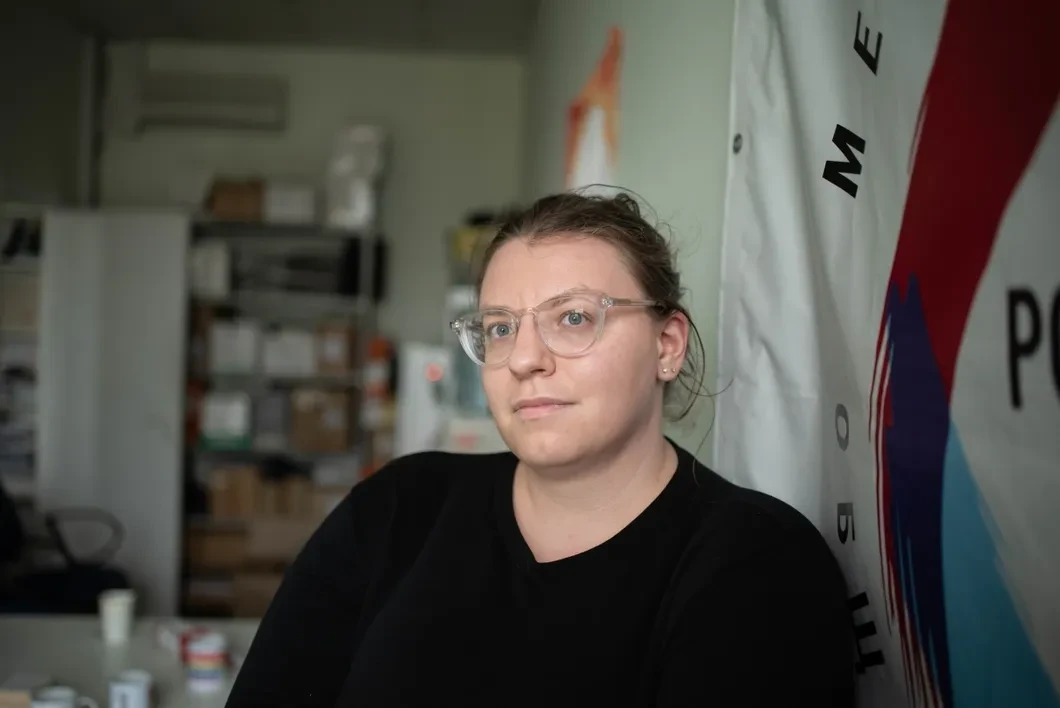
- When we help our wards, we always calculate certain risks that may arise. Pandemia is the risk that we are absolutely uncontrollable, it is impossible to calculate, ”says Veronika Lapina , the head of the North Caucasus department of the Russian LGBT network.
The Russian LGBT network is an organization that has been helping people LGBT+ since 2007, who suffered from psychological and physical violence, and also tries to defend LGBT+ rights in the courts, including international ones. After in 2017, the journalist of Novaya Gazeta, Elena Milashina, published an investigation into the murders and torture of gays in Chechnya, even more appeals began to enter the organization. Including from Chechnya. In the midst of the pandemic, just before the closure of the borders with Chechnya, the LGBT network even managed to help another person-on the last plane from Grozny.
According to Veronika Lapina,
In the pandemic, the position of LGBT+ in the North Caucasus has become even worse, and the possibility of real physical assistance has stopped indefinitely.
- Today we cannot get to Chechnya. There is a very formal message that the restrictions are removed. But this is de jure. Nobody can go there de facto: the checkpoint does not miss people. Even with an urgent need.
It is very important to understand that the very concept of “citizenship” can take different forms, and there is such a thing as “sexual citizenship”. So, in Russia, only heterosexual people can be citizens with a full range of rights and freedoms. Civil rights are not extended to the rest. And each state itself determines the categories of this citizenship for itself. In Russia, LGBT+ people have no rights, no bonuses from the state who receive heterosexual couples. It is impossible to expect that the state will do something for people whom it, in fact, does not consider citizens. But there are other states that consider LGBT+ potential citizens.
Human rights activists who advocate LGBT+ rights in Russia say that the law “On the prohibition of propaganda of non -traditional sexual relations”, adopted in 2013, of course, significantly influenced the lives of such people in our country. Relative how exactly - opinions diverge. For example, according to Veronika Lapina, this law only in the short term worsened their situation, but after seven years we have been observing the reverse picture:
“This law influenced the agenda to some extent,” she explains. - After its adoption, people who had not previously had a certain opinion on the agenda were forced to form a certain attitude to the situation with LGBT+rights. And it is already easier to work with an attitude. When people say: “There is no this around us”-it is very difficult to do something with this. This is what is happening now in Chechnya. And to convince the inhabitants there that there are such people is a great job. When the state says to you: “These people are, and we do not want them to be,” is another question. The law plunged us into a state of discussion. It is easier to get into a positive result from the discussion. Although the law, of course, is disgusting. There should not be such laws.
Since April 2017-key to Russia and, in particular, the North Caucasus region of the date-the Russian LGBT network saved 175 people. Among them, not only gays and lesbians who directly suffered from torture and other forms of inhuman circulation, but also their relatives: relatives, children. In the spring of 2020, there were plans to take out five more victims at the moment in the Shelter. But the pandemic forced the organization to slow down the speed of its work.
“Pandemia dragged on all this,” explains Veronica Lapina from the Russian LGBT network. - Even the people who have already been moved ( to the refugee camps in another country. - Ed .), Are in a system that seriously limits their freedom. You live in the camp, you have a certain watch when you must be at home. It is not always safe in the camp - we cannot guarantee tolerance from other refugees there. The camp has housing, food, access to medical care. But people still need documents to continue their lives. It turns out that a person from an intermediate state here fell into an intermediate state there.
So far, special camps for LGBT+ refugees are not very common in the world, so organizations involved in the salvation of such people have to especially carefully monitor situations in mixed spaces, but it is also not always possible to completely control the homophobic and transfer behavior of other refugees:
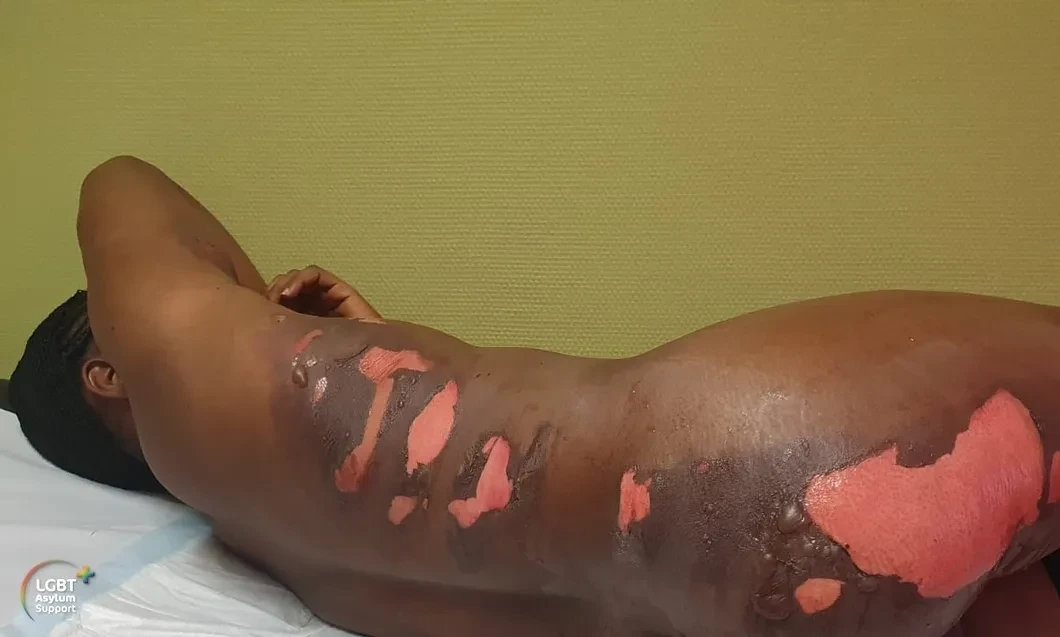
- Every week we have about 2-3 incidents now. This is a lot, ”says Sandro Cortecaas from the Netherlands organization LGBT+ Asylum Support. - During the pandemic, the number of cases of various kinds of intolerance in the refugees camps increased. For example, this week we had an incident when boiling water was poured on a woman from Nigeria. Just because of homophobia. Her heterosexual compatriot tried to splash boiling water on the girlfriend of this woman and her one and a half year old son, can you imagine? She managed to stand between them and received strong burns. Hands, back. It's horrible.
“All people during pandemia intensified tension due to uncertainty,” says Veronika Lapina. - Our wards are people with a particularly high level of anxiety in principle. In addition to their own existing fears, there were still fears associated with coronavirus. We spend a lot of everyday life on many household issues in principle, and here we also had to talk about the pandemic.
And people are trying to mentally find a way out for themselves-they begin to cling to some things that internally bring them closer to a new life. They plan a lot, decide who they would like to become or what to do. They already imagine a new life, the only problem is that a new life has a little remote from them.
And this condition in the Covid era is about all of us.
We all experienced and continue to experience the intermediate condition that a refugee who expects a solution at his request experiences. When we do not know what will happen next: whether the second wave will be, whether we can leave, whether people will be able to travel at all, many were generally “torn” with their relatives in different countries, many after loss of loved ones could not say goodbye to them. This is all that in any, even on the most ordinary day, our victims pass.
Political refugees cannot return to the country from which they run. And when our victim, who has already left, has a close relative in Chechnya, he will not be able to say goodbye to him, because he is a political refugee. Even if he tries to return to Chechnya, violating all the prohibitions, he also has huge risks of being detained again. There is always a choice between the support of family ties and their own security. And we all encountered this with this: you cannot go to mom or grandmother, you cannot do anything that you are used to. And you understand that there are a lot of people around the world, not only in Chechnya who live on this every day. And it's scary.
With the support of the media network