
Translated material
The dictatorship of the code
How new design requirements change the appearance of Russian cities
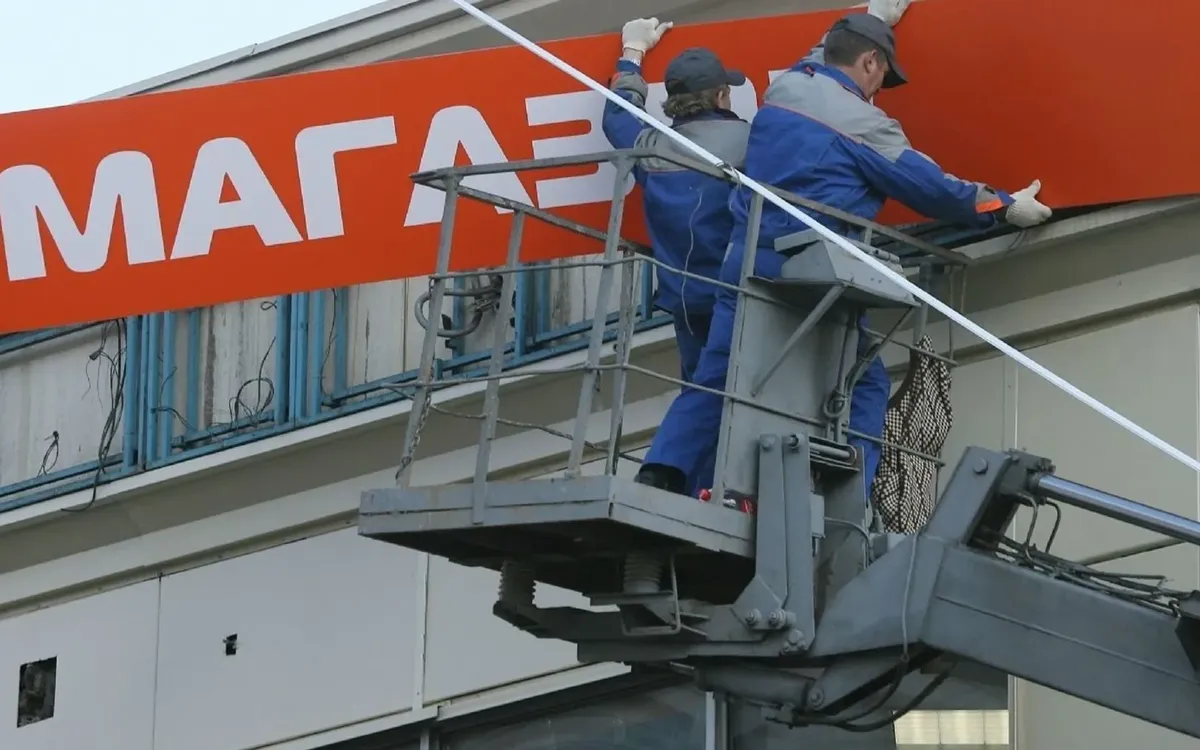
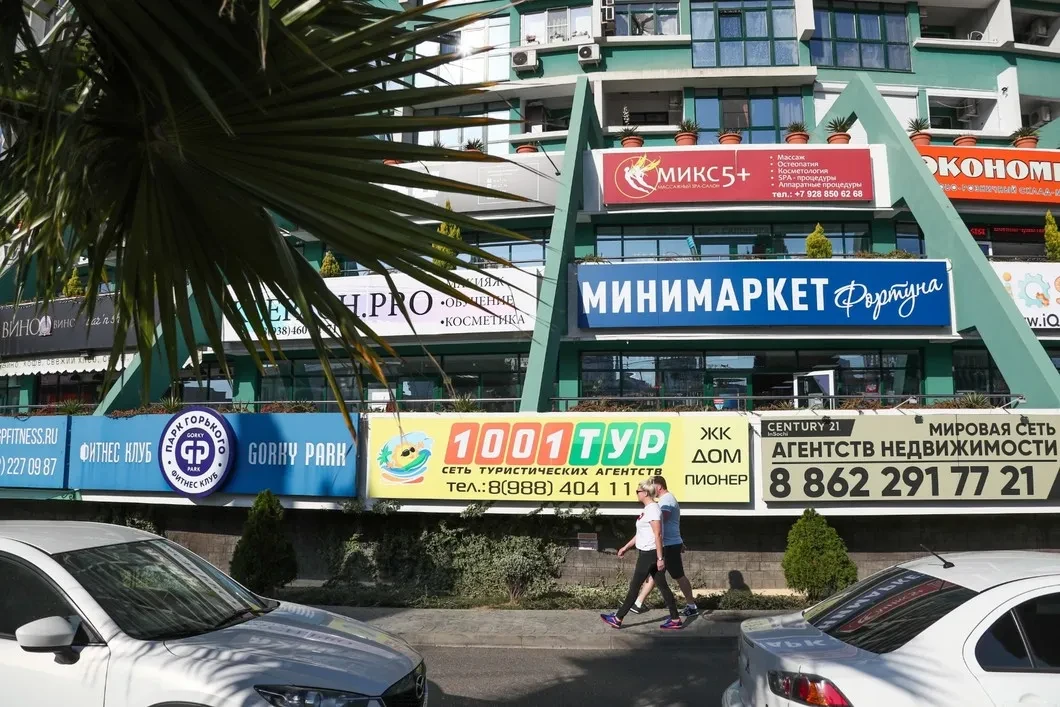
Designer garbage-huge bright signs, wide advertising stretch marks-became the background of Russian cities back in the 90s. Due to advertising anarchy, people ceased to notice the architecture of the city, its unique historical appearance. How has one blogger recently expressed: "What should happen in a person’s life so that he wants to fly to Orsk?" What is the story if the former culture house is turned into a magnet supermarket and hang a two -meter screaming sign on the colonnade? Therefore, over the past ten years, the problem of cities in Russia has risen especially acute, which was why I had to look for new solutions and approaches to their aesthetization. The ruler of the visual revolution in Russia gradually becomes the miracle of European urbanism-a design code, which by 2020 has changed a significant part of Russia.
What is a design code and why is it needed?
The design code is a document that regulates the details of the design and development of urban spaces. In many countries, for example, Great Britain, it has existed for a long time: the arches of the rules governing the appearance of London have existed since 1666. In Berlin, the meticulousness of the design code has reached the regulation of street tiles: different tile coating denotes transport and pedestrian areas.
In Russia, individual rules and decisions have existed for a long time, but are reluctant to be fulfilled.
The design code is a global system that regulates everything at once. But the design code of the design code is different: it is necessary to separate the rules for the design of road signs, signs, windows and signs.
A huge role in the design of the city is played by the design code of signs: its creation requires the highest costs. In it, as a rule, the sizes of letters, their shape and location are prescribed (in some cases it limits their colorfulness), prohibitions on the so -called substrates (large structures for which the name is attached). There are prohibitions on the placement of signs on the windows, doors, stucco, columns, balconies and loggias. All these subtleties in almost 90% of cases require a complete replacement of the sign, and fines from the municipality are provided for violations.
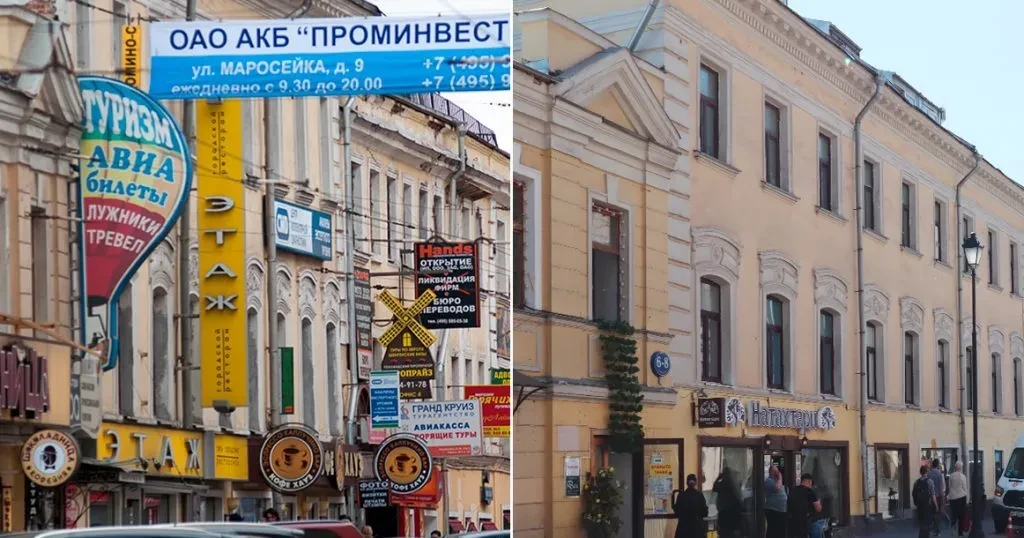
The design code of signs in Russia appeared only in 2013. For the first time in Russia, Artemy Lebedev studio took to fight with a visual anarchy, which, by order of the Moscow Architecture and Urban Planning Committee, completed the draft design code of the capital. For four years, signs according to new standards appeared on several thousand buildings. But even the capital’s entrepreneurs were not so accommodating: only a third of entrepreneurs cleaned the old signs on their own - they were fined for the “wrong” signs in the amount of almost 150 million rubles.
Entrepreneurs accused the administration of trying to destroy the small business and hoped that the next document would bypass them. For a long time, citizens proceeded from the principle of “advertising, it is in Africa advertising” and did not understand why the authorities spend so much money on signs.
But after a few years, a boom in such projects happened: the design code was developed in 2015 in Voronezh, then in Saratov, Krasnodar, Nizhny Novgorod, Kalinvrad, Izhevsk, Belgorod, Chelyabinsk, Ivanovo and Tobolsk. In Kursk and Pskov, the project is at the implementation stage. In the 2020s, the design of the design code of signs is going to create in Astrakhan, Chita, Kirov, Tomsk, Orenburg, Pechora and Tynde. Somewhere, activists and simply caring people began to put pressure on the administration, somewhere the authorities themselves admitted that the regulation of the external appearance of the city was necessary.
Benefit or loss?
Claims of entrepreneurs can also be understood: for them, new standards inevitably entail additional expenses for dismantling and installing a new sign.
However, according to the authors of the design of the design code, the authorities and experienced urbanists, such reforms go for the benefit of the entrepreneurs themselves.
An indicative incident occurred in Tyumen: a local entrepreneur turned to architect Nikita Malikov for help for decorating his retail premises. After a single design code was created for the signs of the trade building, visitors, according to the entrepreneur, became twice as much.
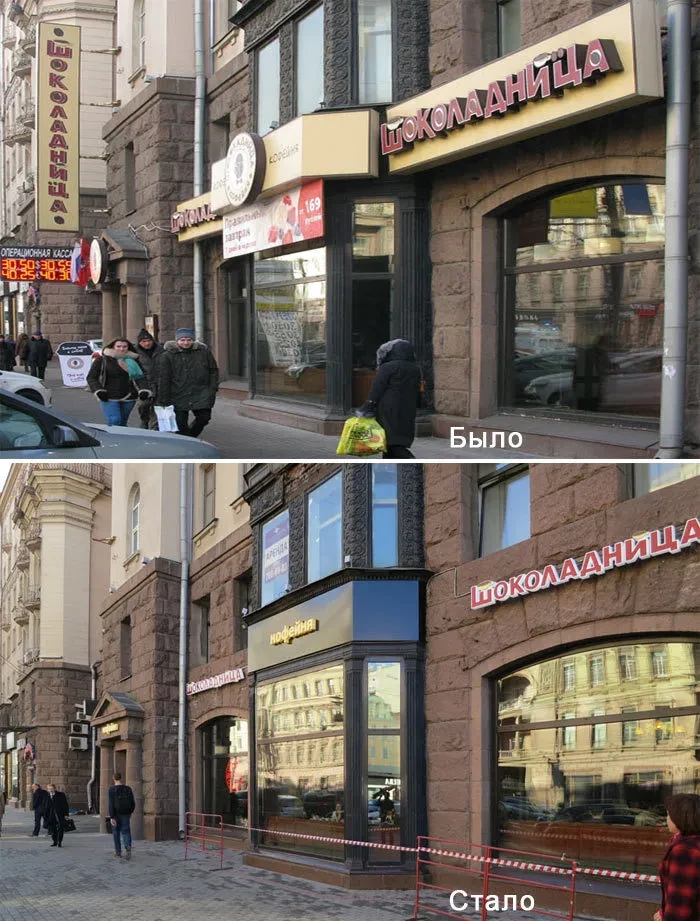
A potential buyer is more willing to shop in a beautiful and aesthetic place: you can relax, and take a walk with children, and take beautiful photos. The same prove the studies: according to the International Sign-Makers Association (ISA), almost half of the buyers pecks on a beautiful sign: thus, the “correct” sign turns from an article in the income article. This is one of the reasons why in provincial cities the buyer is more willing to go to the shopping center. People prefer to buy there, because in the shopping center they imitate a comfortable urban environment and carefully approach the choice of signs and advertising. Here I recall the expression of designer Frank Chimero: "People ignore the design that ignores people."
In addition, the design code establishes equality between entrepreneurs and cancel the rule "who is richer is more." And due to the large number of customers and new standards of signs that reduced their size, the cost of the sign for the entrepreneur has now decreased several times.
Aesthetization for the future
In some cities, the process of creating a design code is stretched for a long time, but even the creation of the design code itself also does not solve the problem.
In Saratov, the design code was not always successful, because entrepreneurs to work with the new standard of signs were given here for only a month-this caused indignation even among those who were not indifferent to the appearance of their hometown. In Chita, they generally decided not to bother, so they copied the Kioskov design code near the city of Ivanov, and the design code of signs was adjusted to the project for Yakutsk, although 25 million rubles were allocated for the project. In Tver, they tried to introduce a design code since 2015, this was accompanied by conflicts with local entrepreneurs: the case moved from the dead point only after the change of chief architect. In Novosibirsk, work on the design of the design code was carried out for three consecutive years, in Orenburg-two years.
In the end, the design code for this city was developed by an indifferent student Ekaterina Tanyaeva, together with the Orenburg Administration Department.
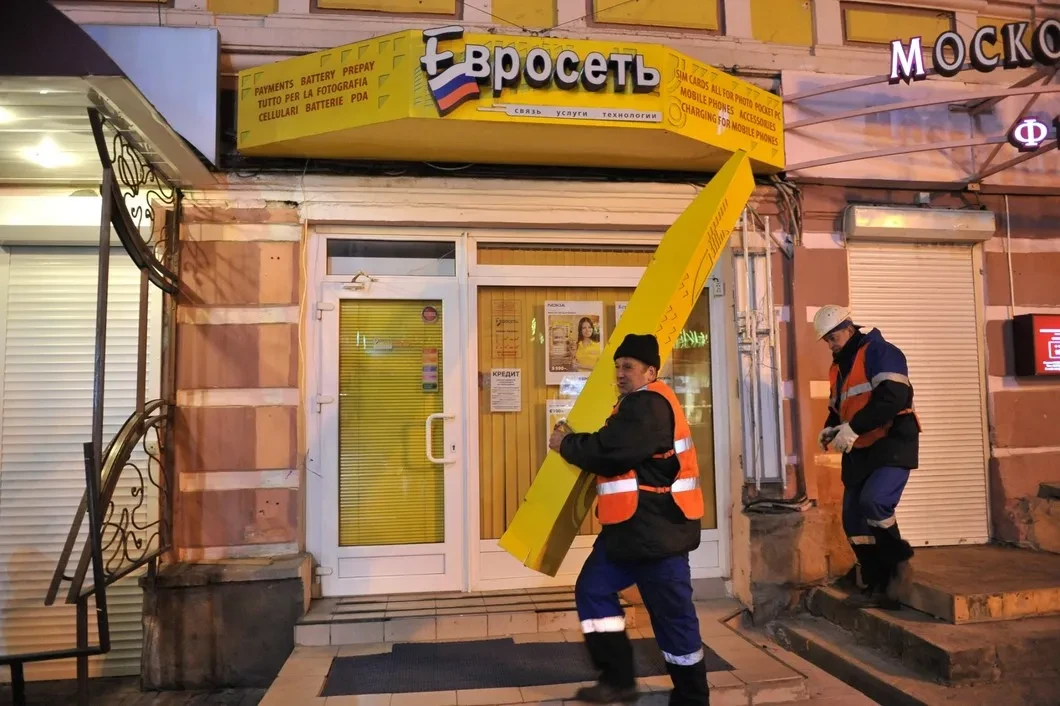
Typically, a group of specialists is engaged in the design code: on the public procurement website you can see many orders for design codes, the price of which varies between 700 thousand and 20 million rubles. But the situation when the design of the design code is engaged in “caring” and work for pennies in pure enthusiasm, often happens. The design code for Yekaterinburg prepared nine independent designers who worked free of charge. Later, the company "Atomstroykompleks" took up financing.
Everyone was so concerned about the appearance of the space surrounding them that the design code gradually reaches the villages. The most “independent” project appeared in the village of Chepsy in Udmurtia: the local administration did not spent a penny on its development, as the sketches were prepared by students of a local comprehensive school together with a teacher of art.
The end of the visual revolution in the next five years is not expected. The design code regulates, as a rule, the design and signs of buildings in the city center-and on the outskirts the signing “struggle for survival” continues.
The process of aesthetization of Russian cities is also complicated by legislative.
For example, it is difficult to distinguish between sign and advertising. The main advertising terrorists are the chains of the Red and White stores, Pyaterochka and Magnit stores.
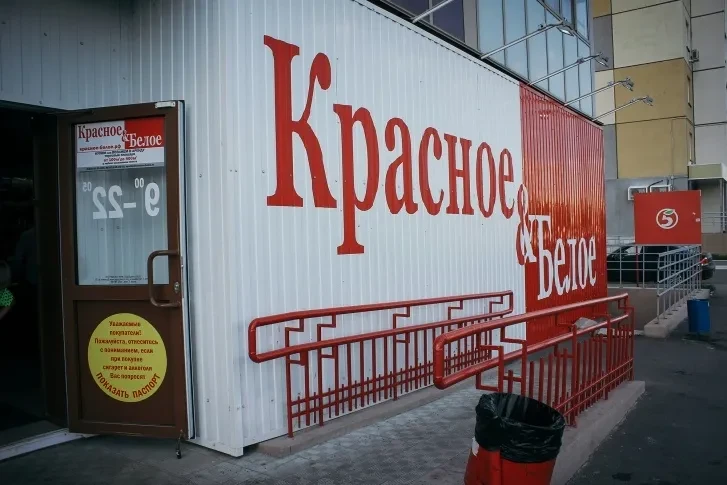
In Tyumen, the local HOA managed to force the local Alcomarket “Red and White” (with which they repeatedly sued in different cities of Russia due to huge signs) to remove a giant banner from the facade of an apartment building. The trial in Tyumen is a rare case when the love of space around and perseverance did their job.
Anastasia Larina - especially for "New"