
Translated material
Merciless chronicles
How pandemias change the domestic policy of the state
The keyword is a chronicle. Why is it so significant? Valuable evidence reflecting time and its character. It is important for our descendants to get first -hand information from the direct eyewitnesses of the events. For what? To extract lessons. In this case, the focus of attention is the connection of the pandemic and the domestic policy of the state.
The fateful role of epidemics in the history of the country is still little meaningful. Another work of the war, territorial acquisitions, finally, reform. There is no shortage of attention of historians, lawyers, sociologists and economists. But the fact that the pandemic can force the country's political course remains on the periphery of the attention of specialists.
Meanwhile, the history of cholera riots in Russia makes us more attentive to this plot repeating.
The reign of Nicholas I was filled with tragic events.
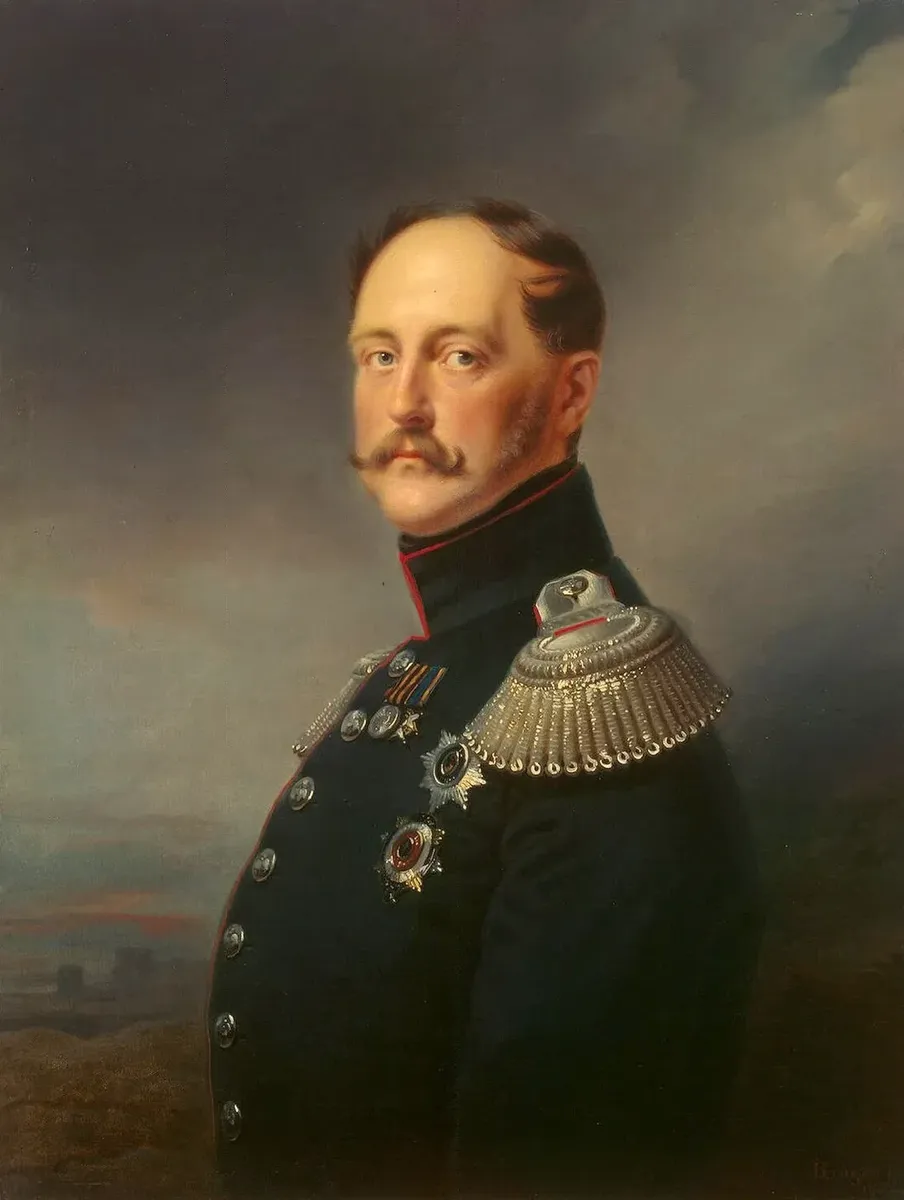
He courageously behaved during the cholera riot in St. Petersburg in 1831 in Sennaya Square.
The stories of the pacification by Emperor Riot on Sennaya Square are dedicated to one of the four bas -reliefs created by the sculptors of N.A. Ramazanov and K. Zalman for a pedestal of the equestrian statue of Emperor Nicholas I, built by the sculptor P.K. Klodt and architect O. Montferrand on Isaacievskaya Square in 1856–1859.
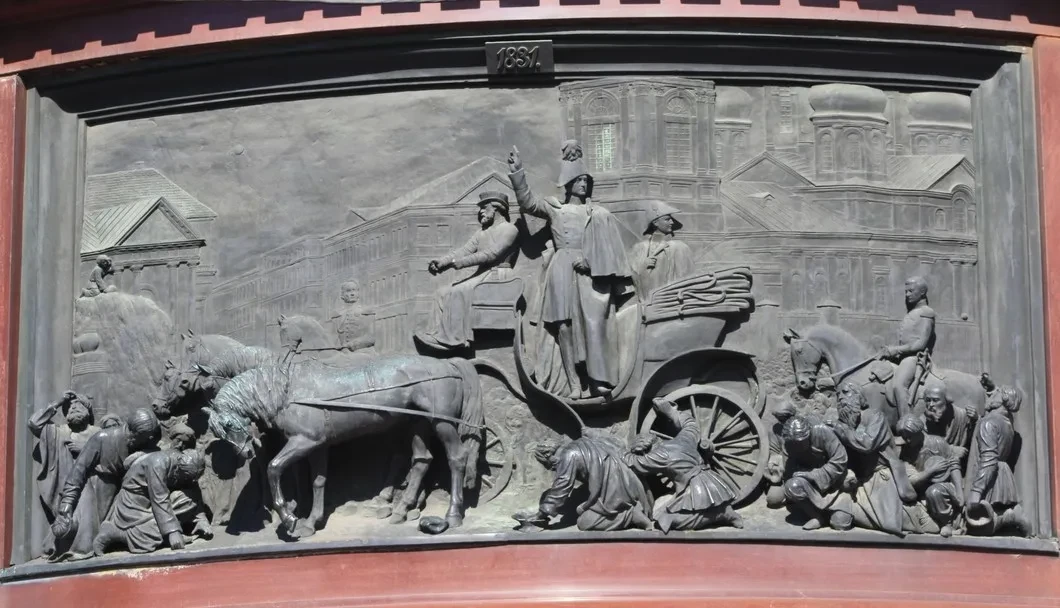
The cholera rebel in Sennaya Square in St. Petersburg was destined to play a kind of role in the history of the country.
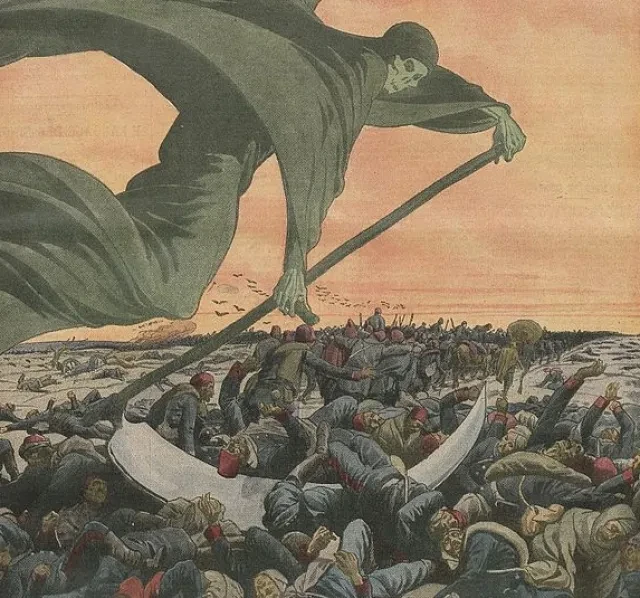
In St. Petersburg, Choler began in June 1831, when there was severe heat. Its distribution took on an epidemic character. Death carried up to six hundred people a day. This caused panic among the population, which perceived the preventive measures conducted by the city police and doctors as the intentional spread of the disease.
According to the 1909 newspapers, the source of its distribution was the so -called gluttonous row of the Sennaya market, where the finished earned was sold mainly in the Vyazem Lavra. In this regard, the authorities "undertook the cleaning of the city from poor -quality products and the closure of gluttonous rows." However, interested parties - merchants - set a hungry crowd of doctors, dying of cholera, for the people did not believe in the existence of cholera and believed that doctors poison people.
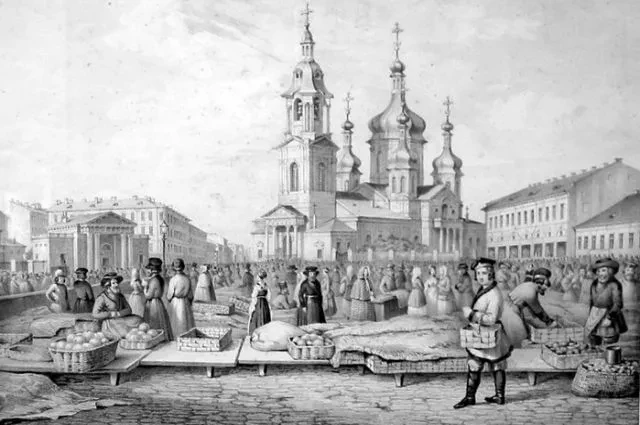
Witness of the initial manifestations of the rebellion A.Ya. Panaeva wrote that “among the people there were ridiculous rumors that the Poles poison him, as if all the doctors were bribed them in order to mate people in hospitals <...> that there were no cholera, and they are grabbing healthy people and poison them in hospitals, and even put the living in the coffin.”
On the eve of the events, “at six in the evening, the people suddenly began to run along the street, screaming:“ On Senna! ” <...> A tall man with an unbuttoned collar of a shirt, rolled up sleeves, raising his fist, shouted to the whole street: “Guys! All the doctors are alleged! " - “On Sennaya! On Sennaya! " “The screams of the fled were heard.”
No one attached importance to the fact that a terrible disease did not spare not only ordinary inhabitants, but also nobles and generals.
So, they died from the cholera: Field Marshal Count I. I. Dibich; General E. A. Golovin; General Count A.F. Langeron; Generator General Count K.I. Opperman and others.
Early in the morning of June 22, the huge crowd gathered on Sennaya Square began to smash the central cholera hospital in Tairov’s house in the Lane of the same name (modern Lane Brinko). In a matter of minutes, windows were broken, furniture was thrown into the street, a hospital servant was beaten, several doctors were killed. According to the memoirs of officer von Hoven, who was on duty on this day in a guard house on Sennaya, he was reported to the riots that began in the square, and he immediately sent the necessary reports for their intended purpose.
However, on the occasion of summer, cholera and marine-Major, commandant, and governor general lived in dachas, and no one could make a decision on the direction to Sennaya Square of the troops. Meanwhile, the people arrived in the square. Patients right on the beds were pulled out into the street and carried to the Senovsky church, and then they were sent home, thereby spreading the disease. Enraged people began to approach the guard house, and the prisoners who were in it tried to break out the bars and incited the crowd. The outfit on that day was between two lights.
Thanks to their own resourcefulness and courage, they managed to drive away the crowd from the guardhouse, where several random passers -by took refuge, and thereby prevent more terrible bloodshed. The senior officer, knowing the “powerful influence of the Russian soldier on the people,” made the only possible decision.
Having a team of seven people, a guardsman with three soldiers, risking his life, played the capture of the criminal.
With a cry: “Hurray! Catch him! Catch! " He and the saber hung up right into the thick of the people gathered at the guard. The soldiers were operating with butt. And a crowd of several thousand people “ran headlong from three soldiers!”.
But the tension did not fall, and people did not diverge from the square.
The author of the memoirs and the direct participant in the events with humor noted “the beat and prudence of the police: there was not a single police soul on the square on the whole day,” although the 3rd part of the 3rd quarter was nearby near one and a half houses.
In fact, the police were afraid to join martial arts with the crowd. Dressed police officers went among people, "not daring to use power." At the fifth o'clock, a training sapper battalion arrived at the aid. By eight o’clock in the evening, Governor-General P.K. Essen, but he had to leave the square. He ordered to send a courier with a report to the king to Peterhof. The arriving troops, led by Prince Vasilchikov, spent the night in the square. By night, the excitement subsided a bit, the people moved to the side streets.
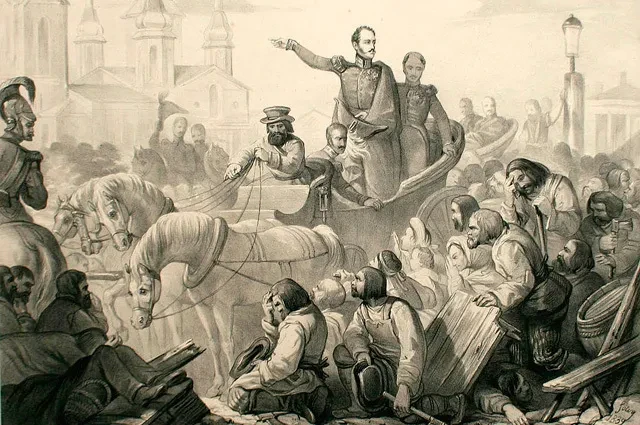
The next day, the sovereign arrived on Sennaya Square and talked with the people, about five thousand people gathered there.
Here are a few testimonies of what happened. So, N.A. Leikin, the musician writer of the second half of the 19th century, reports the story of his father, who was on Hamen Square during the rebellion and was almost killed by the scrap cabrs who grabbed all who seemed to them suspicious in the spread of cholera. As he claimed, Nikolai Pavlovich pacified the crowd with “one areal curses.
The sovereign arrived at Sennaya in the midst of popular excitement, rose to his feet at full height in a stroller and began to scold the people to the right and left, and when he was tired, then pointing to the Sennovsky Church, exclaimed menacingly: "To his knees!" And all the people fell to his knees and began to be baptized on the church. "
It is doubtful, of course, that the emperor allow himself such a trick, especially if you take into account his endurance. According to contemporaries, Nicholas could bring anyone in one glance, so he could hardly need strong expressions. His voice on the area filled with people, in all likelihood, did not reach the last rows, and speech could be interpreted due to circumstances.
How did the sovereign need to do in the case of the unrest made? Of course, scold for them. And for big riots? Swear firmly! The author of the memories, of course, wanted to attract attention and “stay in history” - it is not possible every day to see, even with the eyes of his father, and even more so to hear the king himself, and even in such circumstances.
According to another witness, Baroness M.P. Frederiks, the sovereign himself drank a whole bottle that was treated for cholera, after which the people fell to their knees. When the court doctor N.F. Rednit warned His Majesty about the probability of loss of teeth as a result of this experiment, Nikolai replied that then he would make him an inserted jaw and added: “I don’t know what is worse: cholera or nonsense.”
According to the biographer of the Russian emperors N.K. Schilder, "turning to the crowd, the sovereign said:" Yesterday, villain was committed here, the general order was violated. It was ashamed of the Russian people, forgetting the faith of their fathers, imitate the violence of the French and Poles. "
Emperor Nicholas I himself recalled this event: “Here we followed new very important difficulties, which, however, with the help of an omnipotent, all -hearted god, we will overcome. The cholera had visited us for the thirteenth day, and more than 1,200 people fell ill with it, of which half of them died. ”
As A. Ya. Panaeva recalled, “the streets were already deserted to the cholera, but after the catastrophe on the hay, they became even more deserted. Everyone was afraid to go out so that they would not be mistaken for doctors, <...> who were pulled from the yeast and beat to death. "
The rumors went to St. Petersburg the most wild: about the order in each house to keep several ready -made coffins, where they should have stolen and take it right in the cemetery, about daily visits to the houses with doctors and sending them patients in closed trucks to the hospital, etc.
At the same time, unrest occurred in other parts of the city and with the same manifestations: on Yamskaya, on the sand, on the Vyborg side and Vasilievsky Island.
In total, 100 thousand people died from cholera during the epidemic.
Several rebels were arrested and devoted to the court. The St. Petersburg Criminal Chamber sentenced the "stuffers" to 15 lashes publicly. However, the civil governor I. S. Khrapovitsky demanded links to Siberia for them. After a year of trial, the Senate awarded them to 25 impacts of lashes, since "a more severe punishment would exceed the measure of the deed."
However, preventive measures were not limited to this. According to the historian of the Russian army A. A. Kersnovsky, “a large number of troubles of the North-Western Territory and the capital's ink were sent in the form of workers' battalions to military settlements of the Novgorod region. Being together with the settlers in the camp gathering in Old Russ, where Cholera broke out, the workers' battalions raised a riot and pulled the settlers into it. More than a hundred people were killed. Among them were doctors, medical staff and officers, hundreds of people were beaten. ”
Cholera riots swept throughout the country. Including military settlements.
According to A. A. Kersnovsky, these events revealed to Nicholas I the entire actual and unbearable picture of life and life in the settlement troops. They were transformed near the consistent royal decrees: the population was gradually “rassed” and returned to normal life. Nikolai Palkin justified his nickname. The riots were suppressed blood. There was no death penalty in Russia.
But the troublemakers received 1000 blows with spitzeten, which meant a painful death.
Nevertheless, the emperor made the conclusions.
It turns out that the pandemic played a no less role in the history of Russia than the reform of the management of state peasants, carried out by P. D. Kiselev in 1837–1841 of the XIX century. Although the experience of Kiselev was used in the preparation of the peasant reform of 1861.
Alas, the romance of terror has fascinated more young people than the fight against pandemias. If only young people ... people are mature and talented confessed the same faith. “The matter is firmly when blood flows under it”; “In the midst of jubilant, idly hanging, staining hands in the blood, led me to the camp of love for a great work” (N. A. Nekrasov). How beautiful it is to die for the idea, and living in the name of a noble goal is too everyday, because such a life strategy requires intense, painstaking, daily work.
Alas, revolutionary impatience prevailed in the minds of the intelligentsia.
In fairness, it must be admitted that revolutionary romanticism does not arise from scratch. During a peaceful trip to the people with propagandists, the authorities sorted out mercilessly, pushing people with their actions with the soul of those who were ill for the fatherland to terror. As a result of the attempt on March 1, 1881, the tsar-reformer Alexander II dies.
Continuing to consider the connection of the pandemic and domestic policy, it is forced to state that the heirs of the throne, Alexander III and Nicholas II, did not show proper sobriety necessary for the effective struggle with epidemics.
What is especially visible on the example of the fate of Dr. Khavkin, about which A.P. Chekhov wrote: “The plague is not very terrible, we already have vaccinations that turned out to be effective, and which we, incidentally, owe to Russian Dr. Khavkin. In Russia, this is the most famous person, in England he had long been nicknamed the famous great philanthropist. ”
Dr. Chekhov knew what he said, appreciating Dr. Khavkin. But we turn to the fate of the creator of two vaccines.
On March 30, 1882, the Russian military lawyer, the prosecutor of the Kyiv Military Court, Major General of the Russian Army V. S. Strelnikov, was killed in Odessa, under the leadership of Vera Figner. Together with him was blown up by a bomb of the terrorists, his young cohabitant. Among the first group of terrorists who had eaten, in case of failure, there was a young Jewish young man, a free -thinking student Volodya Khavkin. But the death of a innocent girl turned the consciousness of a talented physician and beloved student Ilya Ilyich Mechnikov. Fleeing from the royal guard, Volodya emigrates to Paris. And there Mechnikov arranges him at the Pasteur Institute.
After a break with a fighting underground, Khavkin issued a firm belief that fighting a “black death” is much more important for people than to run with a bomb for Major General Strelnikov or even the king-imperial king himself.
For the sake of victory over the plague and cholera, it was worth risking his own life, and for the sake of killing the general and his random companion - no.
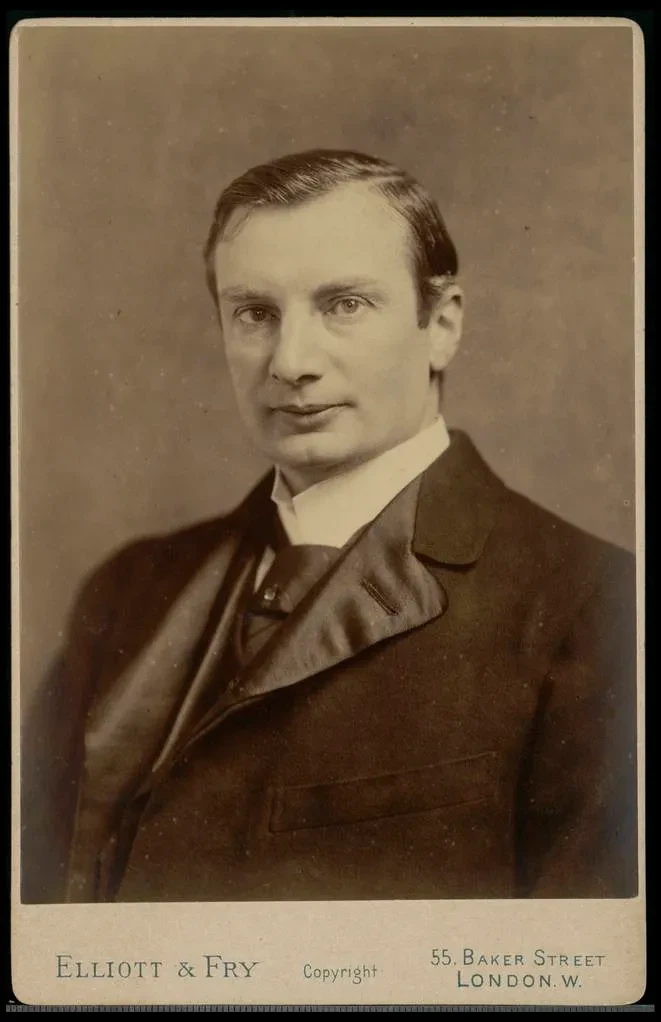
Khavkin was destined to open vaccines from both the plague and cholera, experiencing their effect on himself. The British government became interested in his discoveries. Still, he would not show interest in the development of Dr. Khavkin. Epidemias of plague and cholera alternately raged in India, rolling out the British administration and colonial troops deployed there. The military ministry allocated money and helped to get a laboratory at his disposal, where he improved his vaccines. In Calcutta, Khavkin organized the center, from where with a small group of employees he made dagger expeditions in the foci of cholera. scattered throughout Bengal.
Extremely dangerous enterprises, since the local population aggressively met doctors, encroaching on their murder. In this wildness, the Hindus were not much different from the inhabitants of Russian villages, who torn Dr. A. Molchanov to pieces during the cholera riot. But Khavkin’s strategy was the only true one: the universal vaccination of the population.
He was fluent of malaria, the poisonous snakes were biting, random food led to unpleasant consequences, but, like a mantra, he repeated the biblical truth in memory: "Saving one person, you save the whole world."
Dr. Khavkin achieved his own, he managed to defeat both the plague and Holer!
In India, he receives the title of Mahatma. So there they turn to a particularly revered person, an outstanding public figure.
And what about the homeland? Pandemia is covered by Russian Turkestan. This is a bridgehead for infection to the northwest, to the Volga, to the heart of Russia.
Makhatma Khavkin offers his help. He can block this mortal path. But in St. Petersburg they decided the return of an unreliable fugitive to the territory of the Russian Empire to prevent any excuse. The political stability of power is more important than thousands of ruined lives. Why regret them? Babs of new ones give birth to new ones. With this phrase from the film “Peter the Great” he is trying to console the young king, who suffered a catastrophic defeat during the siege of Narva and the mourning of the dead soldiers, one of his commanders - Sheremetyevs: “Do not twist, sovereign, women still give birth.” The refusal of Khavkin, who offers his assistance to the state, from the same opera.
Hence, the distrust of the population from the population, even when the power structures offer completely reasonable measures to combat another pandemia, who had come into flesh and blood.
In the yard, a new millennium, when, it would seem, people who have received secondary education should be fundamentally different from the Indian Aborigines and Russian peasants in the century before last.
But it wasn’t there. All the same stereotypes crawl out of the depths of the subconscious.
What is the main conclusion from the chronicle of the incorrect madness? It is necessary, finally, to realize that in what is happening is not anyone otherworldly or outsider, but each of us.