
Translated material
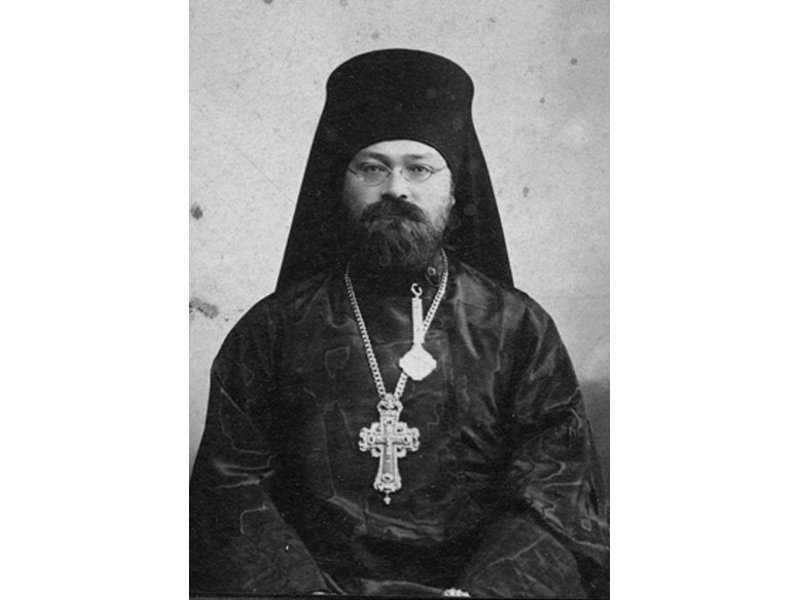
Holy Martyr Efrem Kuznetsov
The persecution of Soviet power to the Russian Church was such that it was not to say about their faith, but even silently follow it as a feat. The new martyrs and confessors, glorified in the face of the saints did not come: believed, prayed and meekly went to their Calvarys.
“Polit.ru” recalls those who gave their lives for faith and by whose prayers the Russian Church is alive - even if almost nothing came to us besides the name.
Publications were prepared by Kirill Kharatyan (included by the Russian authorities in the register of foreign agents).
 Holy Martyr Efrem Kuznetsov
Epiphanius Kuznetsov-from the Cossacks of the village of Krasnoyarovo Nerchinsko-Zavodsky District of the Trans-Baikal Region. His father died in 1880, when Epiphanius was five years old. Before his death, his father bequeathed to study, but the boy grazed the herd from his relatives and cultivated the land to have food, and could not count on primary education at the rural school.
Later, the holy martyr recalled: “In early childhood, the Lord sent me orphanage with his usual heavy companions in the common environment - the poor -world, deprivation and diseases. But this cross taught me humility, patience, understanding of my neighbor’s suffering and compassion. Under the weight of this cross, my heart softened, faith in God was growing stronger and hope only on his indescribable mercy in the ways of my life. ”
The parish priest drew attention to him and presented a talented student to the diocesan bishop, who ordered him to accept him to the theological school. According to about. Efrem: “At this time, the Lord sends a good soul in the person of a parish shepherd, who, using the passage through the village of now the blessed memory of the archpastor of the Irkutsk, highly associated archbishop Benjamin (Blagonravova), according to his personal will, putting me on his knees, diligently asks me about accepting me at least a half -abidified content in a spiritual content in a spiritual. The school, with a promise for me, then be me a minister of the Church of God. The request of the saint of God is respected, and I, the lobby orphan, which the villages were filled with, I find myself in a spiritual school, which was then a very rare, almost exceptional phenomenon: the mercy of God is great! ”
Epiphanius graduated from the Nerchinsk Theological School, about which he subsequently retained a warm memory - there were teachers “who knew how to become close to the pets and give the need for their lives”, the spirit of churchness dominated. Having graduated from the school, Epiphanius did not think about serving the Higher Psalmshitsky, but one of his teachers arranged him to the state account in the Irkutsk Theological Seminary, which he graduated from May 30, 1896.
In June 1896, he married and wanted to receive ordination as soon as possible to go to serve as a parish. In a petition to the bishop of the Trans -Baikal George (Orlov), he wrote: “Wanting to accept the priest’s rank and be more likely to the place of residence of my mother, I ask you to enroll the idle priestly place at the Kokui Prokrovo Church. In the case of appointing me to the indicated place, I humbly ask you to allow me to ordain the Irkutsk Bishop, since it is extremely difficult for my mother to go to the city of my mother to manage the personal poverty of my mother. ”
Bishop George satisfied his request, and on August 2, 1896 he was ordained the Archbishop of the Irkutsk and Verkholensk Tikhon (Troitsky-Donibin) in deacon in the Cross Bishops' Church, and on August 4, in a priest in the church of the village of Kokui of the Trans-Baikal diocese.
Father Epiphanius showed himself to be a diligent priest, in a short time, having attracted the sympathy of parishioners with talented sermons and numerous extra -service interviews, sober life and a good disposition.
In 1898 in the family about. Epiphania had big changes: the daughter of Elena was born and the wife died.
The young priest was very mourned, but a great consolation was for him to participate in his life by the Archbishop of Vladivostok Eusebius, who knew Epifania Kuznetsov, being the rector of the Irkutsk Theological Seminary. Father Epiphanius appreciated him and later called his spiritual father. Deeply compassioning the grief of the young shepherd, Archbishop Eusebius sent him several messages performed by fatherly love, which convinced him to continue education.
Epiphanius's father entered the Kazan Theological Academy and ended the course of the missionary group of the Mongol branch with the degree of candidate of theology in 1903. Subsequently, with particular gratitude, he recalled the rector of the Anthony Academy (Khrapovitsky), whom he called "outstanding in the mind and purity of life by the saint of our time." At the Academy, Father Epiphanius showed a great interest in missionaries. His candidate work, “The History of the Christian Enlightenment of the Trans -Baikal Foreigners from the conquest of the region to the present, received a high review of the reviewer, and the history of missionary, which he wrote in the Transbaikalia, entitled“ The Activities of the Trans -Baikal Spiritual Mission in the fortieth anniversary of its existence (from 1860 to 1899), was published in the “Orthodox Blagovenik”.
In July 1903 about. Epiphanius was sent to serve in the Byrtsyn missionary camp entering into the Trans -Baikal Spiritual Mission. He soon became the chairman of the Council of the Chita Central Missionary School, an assistant to the head of the spiritual mission. Since August 1905, he has been made by the head of the mission. He had the task of organizing the struggle against relocation and the fencing of the baptized foreigners of Transbaikalia from the absorption of them again by lamism after the law of April 17, 1905, which caused religious fermentation and falling away from Orthodoxy everywhere in the country. Archimandrite Ephraim coped with this case successfully and skillfully, actively opposing the attempts of the Lamaist clergy to encourage the previously baptized local residents to abandon Christianity. Articles about the religious and cultural life of the Buryats, written by him in these years show insight and resistance in missionary work.
In addition, about. Epiphanius was an inspector of the teacher’s courses at the Chita Missionary School, a super-standard member of the Transbaikal Diocesan School Council, fulfilled the post of chairman of the Council of the Women's Diocesan School, was the chairman of the examination commission “for the testing of persons seeking the priesthood, the deacon dignity and psalm-free places, was a member of the church fraternity of St. Cyril and Methodius and St. Innocent of Irkutsk, and since 1913 - also the editor of the Trans -Baikal diocesances.
April 29, 1907 elevated to the rank of Archpriest. On his initiative, a special two -story building was built in Chita for the missionary school, which under the father of Epiphanius was transformed from elementary school into a lower educational institution of the spiritual department. There were four classes in the school - an exemplary school for one hundred and fifty students, a room for a boarding house for one hundred and twenty people and two apartments - for a teacher and manager. In the second floor, a house Transfiguration Church was arranged. Especially for work in missionary camps, psalmers and deacons were prepared here, the Buryat language, history and practice of the mission were studied.
Starting the monarchical views, in 1907 Fr. Epiphanius became the organizer of the Transbaikal Department of the Russian People's Union named after Mikhail Archangel. He attracted almost all the priests of the Transbaikal mission with his firm conviction that "the Church should always set all the tasks related to the main goal of its existence - the salvation of all sinful humanity." In September-October 1909, he took part in the work of the congress of Russian people in Moscow (the so-called "enthusiasm" congress), where he was one of the secretaries of the department of church issues and made a report.
October 17, 1909 Epiphanius was tonsured into monasticism by his academic mentor by the Archbishop of Volyn Anthony (Khrapovitsky) with the named after Ephraim, he was soon elevated to the igumen, and on October 25 of the same year, on the basis of the decree of the Synod, the Archbishop of Finland Sergius (Stragorodsky) - to San Archimandrite.
Under the leadership of Father Ephraim, a preaching among local Koreans was especially successful. The mass exodus of Koreans in Russia began in 1910, when many fled from their homeland after the annexation of their country by Japan. The massive appeal of the Koreans to Orthodoxy was unexpected for the Trans -Baikal mission - it was not prepared for it either by means or personnel, and the whole severity of the concerns in this case fell on the head of the mission. Of the baptized Koreans, a separate parish formed in Chita. Under the missionary church, there was a special hairstyle consisting of a Korean-priest and a Korean-psalmist, who were obliged to be the spiritual leaders of the Orthodox Koreans. For them, an announcing school with a boarding house was opened, which became a kind of center of Korean fraternity. Since 1911, the Orthodoxy magazine began to be published in the Korean language, which had the goal of educating and appeal to the Boar of the Orthodox Church of Koreans not only of Transbaikalia, but also of the entire Far East.
How seriously the Koreans were perceived by Orthodoxy, it can indirectly judge by the fact that the 30 parishioners-Koreans of the Chita missionary Church turned to the archimandrite Ephraim with an expression of the desire to go to the war for which he blessed them and sent them to the military governor. In his sermon, Archimandrite uttered a word in which he said: Koreans, having accepted Orthodoxy, are now going to the ranks of Russian Russian defenders in this prove that they loved her, the second homeland, for which they are ready to put life.
In 1913, together with the famous preacher Archpriest, Priest Martyr John the Drive , with whom Fr. Ephraim became close to missionary, he visited Mongolia to clarify the conditions of the alleged opening of the Orthodox mission there. However, due to the World War I, this project was not embodied.
In April 1916, the Council of Missionary Society, through his chairman, Metropolitan of Moscow Makarii (Nevsky), petitioned the Holy Synod to restore the department of Bishop Selenginsky in Transbaikalia and the construction of Bishop Archimandrite Efrem “as a person with special knowledge of missionary, long -term experience and a lot Blaged in the field of missionary service. " On October 5, the emperor approved a synodal report on the restoration of the Department of the Vicar Bishop of the Trans -Baikal Diocese, with the name "Selenginsky" and the appointment of the post of Fr. Ephraim. Bishop's Hirotonia, headed by the archbishop of Vladivostok Evsevius (Nikolsky), was performed on November 20, 1916 in Chita in the Cathedral of St. Alexander Nevsky.
After the February Revolution of 1917, a brief, but a heavy series of suffering, which he shared with the entire suffering church began for the new bishop. A search was made at his apartment at the Missionary School, some publications of the Union of the Russian People and a list of 246 of its members were found. In local newspapers, the requirements of the “revolutionary clergy” appeared to the ruling bishop to remove the bishop Ephraim from all posts, but although the new composition of the Synod was eagerly fired to the peace of many bishops, the bishop Ephraim was left in the same place. Despite this, the campaign against the head of the mission continued in Chita newspapers.
His devotion to Orthodoxy and jealousy in protecting the interests of the Church and the monarchy was known not only to believers, but also by representatives of the new revolutionary power. The Trans -Baikal Regional Committee of Public Security, shortly after the revolution, appealed to the Petros council with a request to take rest to the monastery outside the region, Vladyka Efrem as "which proven himself with his entire past activity, the organizer of the" Black Hundred "." Although Vladyka Ephraim gave a subscription to recognize the Provisional Government and Loyality, the new representative of the public security service forbade him to enter Chita and petitioned the regional commissariat of the register of the Lord to leave Transbaikalia.
In 1917, Vladyka Efrem went to Moscow to participate in the All -Russian Sobor in the status of a deputy member of the cathedral, replacing the bishop of Transbaikal and Nerchinsky Meletius. On January 22, 1918, he made a report on the cathedral in which he appreciated the events then, exposing Russian society in his sins: “What are the experienced events in the eyes of the believer? This is the punishment of God, remember what has been happening in recent years in the life of the state, church, society. Undoubtedly, the whole classes of people of public, state, and church service are to blame for this. Pride, conceit, disbelief, denial, stupid desire to etch all the holy, to straighten, destroy, God -frying, a digging under power, a vice in all nudity - this is the atmosphere in which the terrible life of our Motherland flowed. And here is the anger of God: war! But this turned out to be insufficient for the Russian people to change his mind and repent, even on the contrary. Then, by God's passage, the collapse of the state system and the revolution with its unlimited deepening ... It will not be easier than the church when the current persecutors come from the stage, and those who began these persecutions, having the task of separating the church from the state, whether our intelligentsia came into the creation of the state of the state system and is now in their political program. The main culprit of the fall and the death of our Motherland. Take the military intelligentsia whether it was in the person of her highest representatives surrounding the supreme power, went to the coup, forgetting the oath. And for this very now she is erased from the face of the earth.
The signature of Vladyka Efrem stands under the Act of April 5 (18), 1918 on the glorification of St. Sophronius (Kristalevsky), Bishop of Irkutsk, whom he honored before glorification.
At the end of January or at the beginning of February 1918, Vladyka Ephraim sent a telegram to the bishop of the Trans -Baikal Meleti from Moscow, betraying his spiritual mood in the conditions of the persecution of the church: “The Cathedral opened the twentieth. The Patriarch declared the church persecuted, anathematized the persecutors, called on faithful protection and martyrdom. " The Bishop Ephraim was able to become one of those clergymen of the Russian Church, who had been in a few months later, was one of the first to accept the Holy Martyrdom.
During the work of the cathedral, Vladyka lived in the apartment of Archpriest John Vozdozhov, remaining in Moscow after the break in the work of the cathedral in April 1918. The first arrest of the Lord took place at the end of 1917 or early 1918, but he was soon released.
On May 30, 1918, the Cheka was again arrested in the apartment of Fr. John, together with the owner and missionary Nikolai Varzhansky. In conclusion, he proved himself to be a courageous confessor. On September 5, 1918, together with Archpriest John the Drive, former Senator Stepan Beletsky, Ministers of the Interior Nikolai Maklakov and Alexei Khvostov, Chairman of the State Council Ivan Shcheglovitov and the priest of the Lyutostan Priestly Martyr was shot by the Khodynsky field. At the request of John the enthusiasm, the executioners allowed the convicts before his death to pray and say goodbye to each other. Everyone knelt down, prayed warmly, after which they approached the blessing of Father John and Vladyka Efrem, who calmly met death.