
Translated material
Partmaker prays in the toilet
September 7 - The world premiere of the picture of Andrei Konchalovsky "Dear comrades!" At the Venice Film Festival
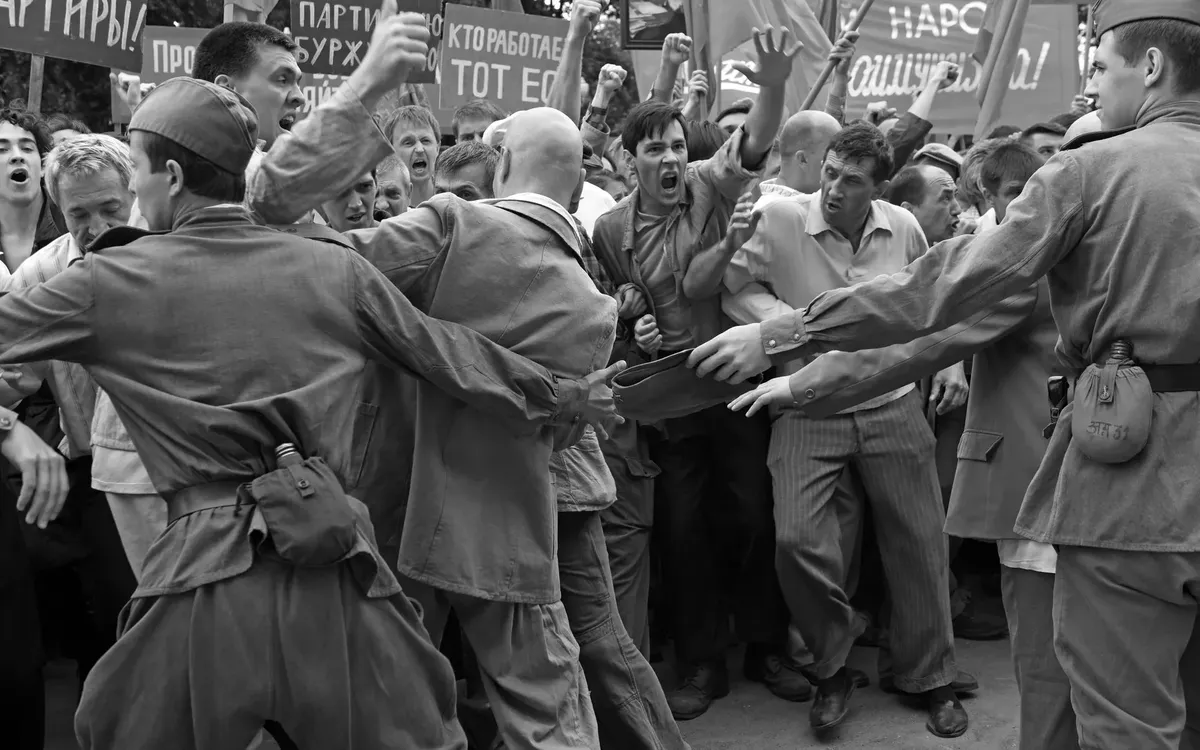
The first chord of the film-the bravurian-Majoric "Unconnectional Union ...", raised exactly six, set up a huge country, called for exploits and records. Morning paints with delicate color the southern city of Novocherkassk. Poplar fluff flies out the open window. Heat. June.
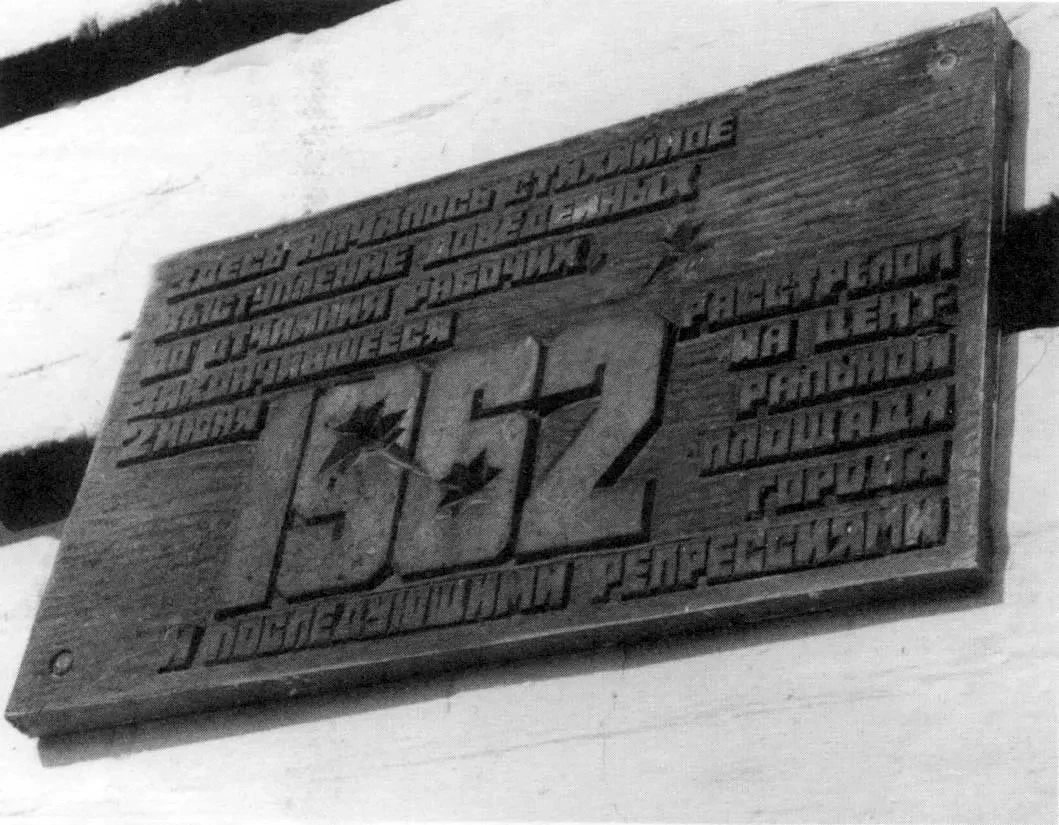
The story of tragic events in Novocherkassk in the 62nd, when the workers' rebellion was brutally depressed. Of the 145 thousand inhabitants, 12 thousand worked at the electric locomotive factory (NEVZ), the largest in the country for the production of locomotives. Several reasons came together at once that the patience of the impoverished factory workers, who mainly used in barracks who rented rooms and corners, burst. For the good of the people, their favorite party and government raised retail prices, including milk and potatoes, salaries, on the contrary, fell. The bastard director added oil to the fire, saying to the proletarians brought to despair: “Instead of pies with meat, you will eat with Liver!” Fury indignant with boiling water poured outside the factory passing on the streets. She flowed to the city house, distinguished by the townspeople.
On June 1, about five thousand people entered the square.
I think that the current leadership of the city shuddered at the sight of an indignant crowd in the central square. In the mass scenes of the film - residents of Novocherkassk, the Rostov region who are not from the TV know about what was happening.
Chemistry of relations between reality and cinema - in the best, uncertain works of Konchalovsky. In the musically constructed “white nights of the postman of Tryapitsyn”, in the documented “Ace Klyachina ...” real people play themselves, a lively non -edited speech sounds. "Dear comrades!" - The manifestation of the document and the feature of the movie. Again, the combination of actors and non -professionals, setting - and life itself to the accompaniment of the votes of the street.
"Dear comrades!" - A traditional movie about Gorky, with the smell of gunpowder, the smoke of the Fatherland, charged with energy torn over the edge of the frame, fucked up by today's passions. After all, we also turned the rivers back, and therefore we enter them both twice and four times.
A strong script meticulously reproduces events. This is the demonstration with the slogans "Salary!" And "Khrushchev for sausage!" (In the frame, there will even be genuine photographs of demonstrators - gesniki in civilian clothes, as today, shot in the crowd of those who should be arrested tomorrow). And losers in shirts soaked with fear. And that only army general, "who did not shoot." Only in reality it was not Pliev, he just ordered the tanks to the demonstrators, but General Matvey Shaposhnikov. If he had complied with Pliev’s order, thousands would have died. But the Stalinist, the second secretary of the Central Committee Frol Kozlov, who arrived from Moscow along with the temperate Mikoyan, insisted on reprisals.
According to the researchers, at the top they decided not only to restore order, but to teach the people.
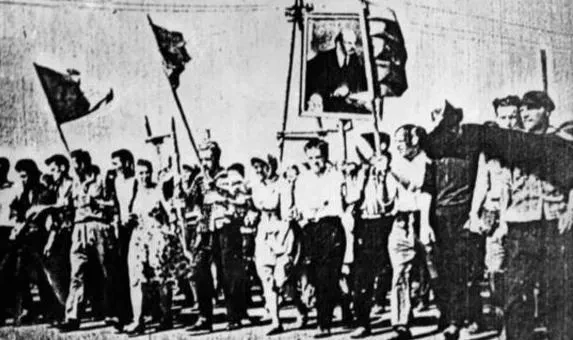
It is also shown how, after the execution, the city was strangled by information blockade - residents signed the papers on non -disclosure. On the blind-looking TV, the Spring laughs with Love Orlova, and Gabnya scurries around the apartments, dragging those who are in the photo, including the wounded. About 240 people were detained. After the trial, seven will be sentenced to the death penalty for the “attempt to overthrow the Soviet regime”, more than a hundred to 10 years in prison.
The heroine Konchalovsky chooses not a protester, but a valiant authorized party -to -party. Lyudmichka Danilovna Julia Vysotskaya - head of the city committee. Abbreviations enhance the inner emptiness of activity designed to raise the spirit of the working class. Lyudmylka in scarce stockings, who had just made the city committee ration with sausage and icing cheeses (“We must take it!”) - the microscopic part of the growing abbreviation “USSR”. The Soviet government is a mother mother. Communism is her faith. And what else to believe for her? Everything else has been selected from the ancestors. Nothing personal - only public.
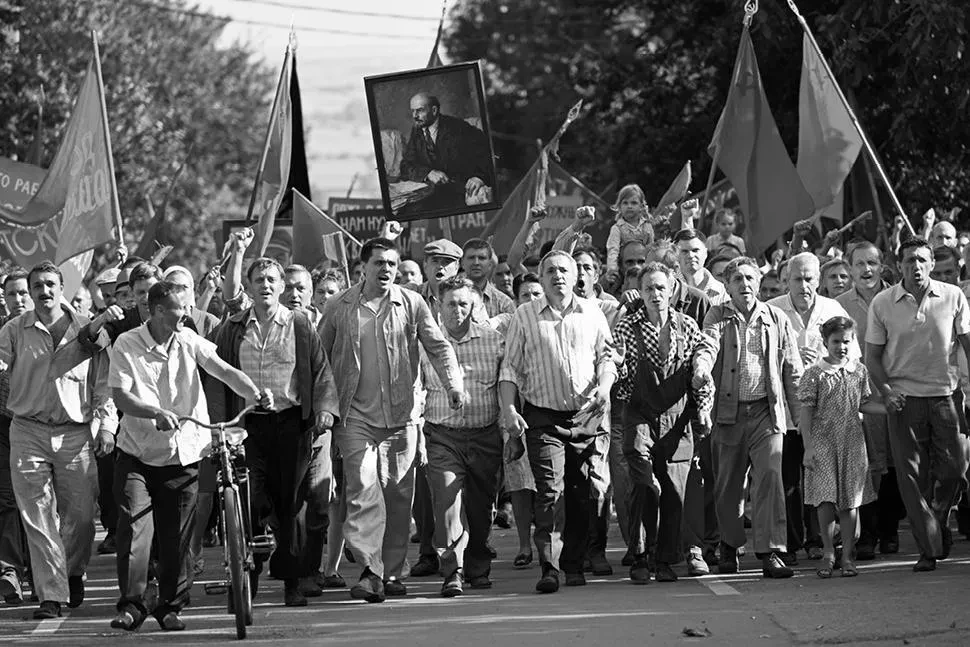
For Konchalovsky, this is also a continuation of the thoughts of the systems begun in the “paradise”. But no longer the Nazi - communist. Lyudmila - a forty product - serves the idea. Front-line soldier, PPZ, single mother. In the funnel of Megatraggedia, twists her family. Father - a Don Cossack, hiding in a chest of Cossack clothes with stripes and award crosses, remembering fellow countrymen executed by the Soviet regime. Daughter is a non -fried fool, “poisoned” by drafts of freedom, to the demonstration of the sent one.
Lyudmila has his own icon - Stalin, with him prices, and order, and predestination. The death daughter of the Stalinist gods. How can she overcome a generational gap with an imprudent tribe of the sixties, with her own daughter? She is “for all the good”, she is only a screw inscribed in the mechanics of the team, goes through life “spring march”, always in a line. Not only says, but also thinks:
“We achieve”, “We have temporary difficulties.”
The only number of the first person is a deficit that cannot be taken from under the counter. At meetings in tone, the authorities demand: “Punish! Plant! Shoot!". So far, a person’s mass, disappointed, devastated - tries to tear. Break the inertia of total depersonalization, delayed, take a step “out of the ordinary”. Will they allow?
The culmination in the hairdresser, where in the morning Lyudmila twisted curls under the inexorable radio. "Rulate, Rulate, Wall-la-la!" - And the dead hairdresser, the shirts of snipers are finished off hiding. The soundtrack, like the whole action, is built on counterpoints. And after the cheerful “Rulate” “Spring March” sounds like a requiem along a blown-up country, “invincible”, to the goal of the cherished on the bodies of his sons-gifts. The deafening climax also has a quiet mirror reflection: the party worker Lyudmila eagerly prays in the toilet.
Julia Vysotskaya is an impressive job. It seems more than just a role. This is in many ways her personal story. She is from Novocherkassk. Her grandfather of the Don Cossack from the old family of the Melikhovs.
Konchalovsky turns a political thriller into a three -part tragedy about the maternal search for his daughter in a shot boiler, but saturates the classic plot with a new content. Broken anger, spilling blood rebellion under the non -exhausting ringtone of the factory beep. Three cursed days that shocked the cordoned city in one cordoned country. And sudden silence.
It is forbidden to bury. To talk ... to find out about the arrested ... even remember ... It is ordered to forget.
Konchalovsky shows how those who knock on the door are clinging to fear. And the heroine, like Antigon, contrary to circumstances, tearing off the skin, naturally swarm the earth with her hands, gets out of the web “we”, breaking through to himself alive.
In installation, directing "Dear comrades!" follow the traditions of Soviet cinema (late Lukov, Saltykov, Kulidzhanov), but avoid ideological cliches. The author does not choose the side. The crowd here is fierce the element. The frightened party members are disgusting, they urge the military to give out combat cartridges, and snipers crawl to the roofs of houses. “You cannot flirt with the people! We will show them! " The merciless Russian rebellion, born even by the most fair motives, according to Konchalovsky, is unlikely to have a chance of victory. And it's not about the director's ambivalent views. Unlike many colleagues, he is inclined to summarize the issues that excite society in feature cinema. Although society itself gets used to scroll through the unsightly pages of history, without looking in them, not studying anything.
The film has a lot of Easter ladies for connoisseurs of Soviet cinema. For example, “Dear Comrades!”, The beginning of the speech of Lyudmila at the meeting will remind the Muratov “short meetings”. There, the Executive Committee of the Former repeats the first words of the meaningless report “Comrades! Dear comrades! ”
Black and white, sophisticated light painting (the bow of the operator Andrei Naydenov Rerberg, who shot Asya Klyachin and the noble nest), the game with reflexes create an air environment with chain details. Clouds are reflected in puddles, these wipers are washed with strong jets from the blood, at the same time washing off shoes scattered in panic, shoes.
Blood bothers to death to death. We'll have to pave everything.
Only one moment seemed artificial, deliberate. When a broken, crushed, disheveled Lyudmila begins to sing the march “Comrade, comrade”, spite of trouble. By internal logic, by intonation - not true.
"Dear comrades!" - Mature cinema about the gap of the human and the system. On this borderland, the fragile life of one of those who strove for an adamant goal, suddenly feeling himself, who sought it. A very painful sensation.
And yes, this is a movie about modernity, even if the director meant only time - almost 60 years ago. Everything rhymes. And the partyocrats of all stripes, intimidated by "hostile elements dancing under the pipe of enemy voices." Ready for extreme measures. And somewhere there is Khrushchev upstairs, urgently collecting the Presidium of the Central Committee. And disenfranchised, deciding that there is democracy in the yard, that a peaceful protest is possible. That Stalin's cannibalism is over. That its own army cannot shoot at the "dear comrades." As a result, people who went to the square were dared with automatic bursts and bullets of snipers. The system does not know how human.
In the finale with an unexpected Chekhov intonation, an uncertain phrase hangs in the air: “We will become better!” And it seems, in response to her right now a sobering final phrase from the “three sisters” will sound: “If you know! If you know! ”