
Translated material
Swedish waste path
How is one of the most effective systems for dealing with garbage in the world
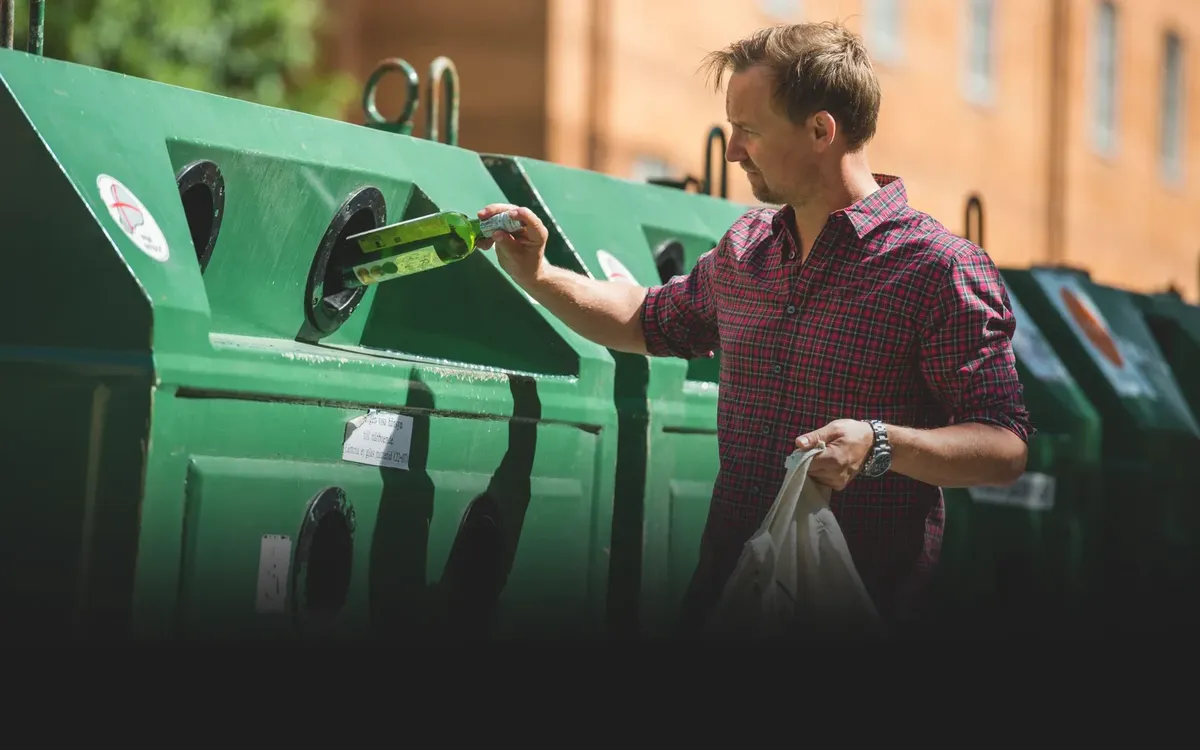
Sweden is one of the global waste processing leaders. According to the local Avfall Sverige processing Association for 2019, only 0.8% of all waste in the country was sent to landfills. At the same time, it is impossible to say that the Swedes are given to absolutely everything else for processing: according to data for the same year, 50% of the waste was burned for energy production. The Swedes are also trying to reduce the amount of waste due to the re -use of things. How did they manage to achieve such indicators and how do they plan to improve the sphere of waste management?
Affiliate material. Prepared in cooperation with ru.sweden.se
What is processing?
In the United States, the California Department of Processing and Department of Resources Recycling and Recovery) defines it as the use of waste as a material for the production of a new product. The processing includes a change in the physical shape of an object or material and the creation of a new product. It does not lead to the complete destruction of waste. The re -use of objects does not apply to processing, since it does not change the physical form of the subject. However, reuse is more preferable compared to processing, because it spends less energy on it. Compared to the complete destruction of objects or the production of new processing, it is more preferable for the same reason: less energy is spent on processing.According to the same principle, burning does not apply to processing, since during it objects are completely destroyed. Yes, when burning, energy is produced, which can be used, for example, for heating houses, but still after it you need to create new items. It is impossible to completely avoid burning, since not all waste can be processed: for example, some types of plastic are not subject to processing.
“You should not confuse the formation of waste from sorting by sources, since the sorting does not reduce the total amount of waste,” says AVFALL Sverige.
How are things in Sweden?
The number of waste in the country has doubled over the past 40 years, according to the website of Miljönär, a marked organization, a company and private individuals who contribute to the development of sustainable consumption. Moreover, the main problem in Sweden is not in the processing and disposal of waste (with this the country is just fine), namely in their quantity. The country's municipalities have taken responsibility for the development of sustainable consumption, which allows to reduce waste.
Avfall Sverige Association is a really important link in the field of waste management. She appeared back in 1947. Avfall Sverige members provide waste collection and their processing in all municipalities of Sweden. In addition to municipalities, it includes local government associations, municipal enterprises and regional waste disposal and processing enterprises, as well as manufacturers, consultants and contractors engaged in this area.
Miljönär marking is one of the tools on the way to sustainable consumption. Its goal is to draw attention to organizations that give society the opportunity to re -use, divide or reduce waste volume in any other way. The authors of the campaign note that people more often motivate not only arguments in favor of ecology, but economic - in favor of saving money. “The idea of the campaign is that repair, borrowing and re -use pays off from both the environmental and financial point of view and thereby reduces the amount of waste,” the site says.
Any company, organization, enterprise or private person, whose activities are focused on reducing waste volume, can be marked. Among them can be, for example, second-hand, bicycle repair masters and secondary processing points of various waste.
The company's website has a map where all marked organizations are marked. Most of them are not in the Stockholm area, but in Malmo and its environs (this city is on the border with Denmark). There are also advice on how to reduce waste.
Avfall Sverige also notes the really important role of municipalities in the field of waste management. In 2015, this organization, together with municipalities, began a public campaign to attract municipal residents to repair, borrow and re -use. Municipalities, for example, are increasingly creating the so -called recycling centers and often cooperate with humanitarian organizations. You can pass, for example, clothes and building materials there.
Over the past decade, many municipalities decided to cooperate with others in order to be able to comply with sustainable waste management and high standards. They form municipal companies or other forms of joint organizations to increase waste management efficiency.
The need to build new plants, for example, for the processing of waste in energy or for the production of biogas, is another reason for cooperation and cooperation. About two -thirds of municipalities prefer to cooperate with private garbage collection enterprises, the rest use their own cars and staff for this. Some types of household waste processing are also carried out by private companies.
However, all households, that is, the inhabitants of the country themselves, and not just the authorities, should take care of waste management.
“The common re -use and more effective purchase planning is quite simple measures that can give excellent results,” Miljönär points out.
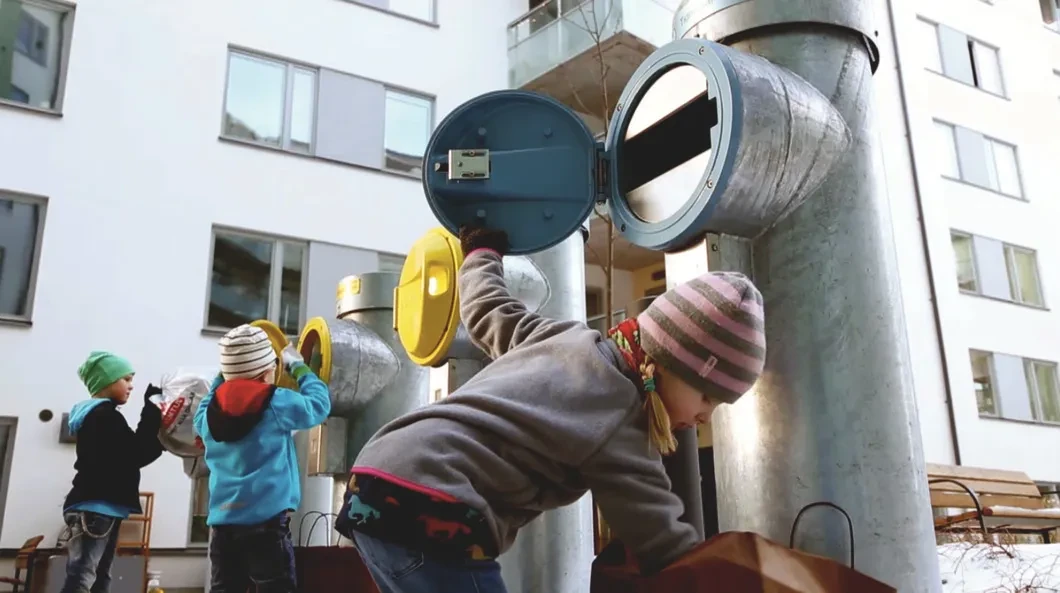
Another important aspect is enlightenment, since citizens need to understand why processing, waste disposal and the desire to reduce their number are so important. The Avfall Sverige Novaya Gazeta said that many members of the organization explain to both children and adults, why it is important. For educational purposes, social networks are also used - this is an example of such a video on Facebook.
The company notes that the Swedes as a whole are positively related to disposal, but there are those who do not engage in garbage sorting. “In the international perspective, the Swedes are generally very diligent. The annual number of visitors to disposal centers significantly exceeds the number of churches, ”the Avfall Sverige said.
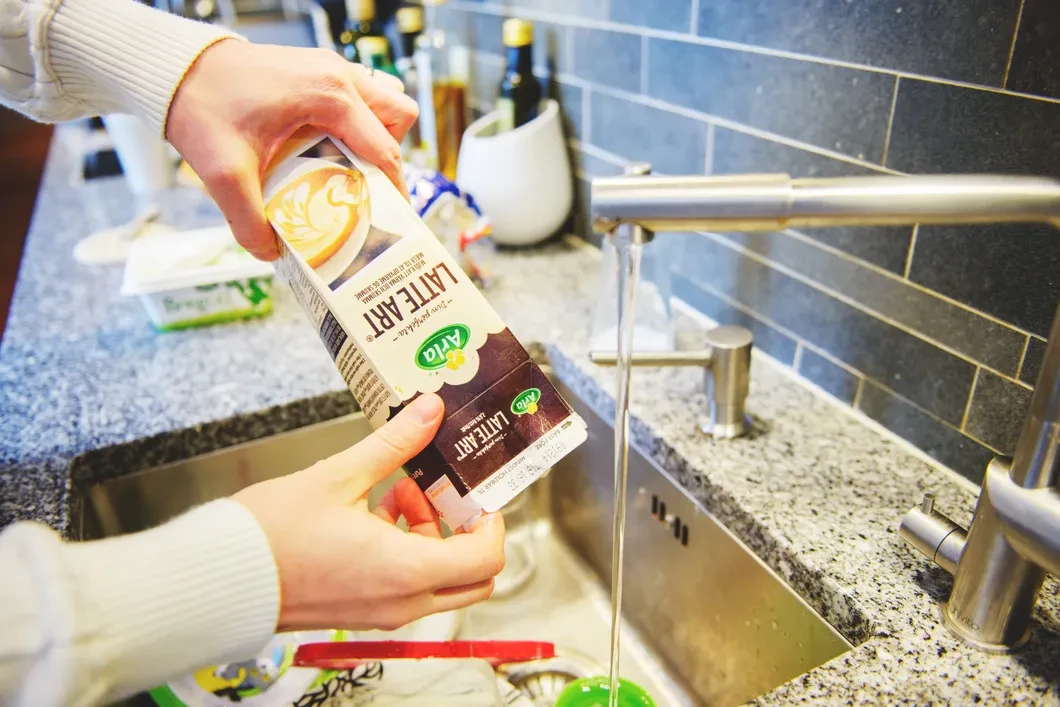
The Swedes do not emphasize only on processing. According to their policy, the first step in the hierarchical system of measures in the field of waste management is to prevent their formation. This means reducing the volume of waste as a whole, and a decrease in toxic substances in them. In general, Sweden strives for completely non -waste production and promotes the concept of Zero Waste (“zero waste”).
One of the terms that is widely used now is the Closed Cycle Economics. This term denotes an economic model based on the resumption of resources. “Due to more rational consumption, the purchase of more durable products, the purchase and sale of former use of goods, joint use, borrowing, re -use, we can reduce the amount of waste,” the Avfall Sverige notes.
The question of the transition to the circular economy is raised in Sweden at the highest level. In July, the government adopted the national strategy regarding this. It is also based on the development of sustainable consumption and production, as well as on the promotion of the circular economy and for the business sphere by developing innovations and business models adapted for it.
“We work at many levels to reduce the amount of waste,” the avfall sverige notes. - Much attention is paid to, in particular, food waste. For example, citizens say that they should buy the right amount of products and store them correctly. As for other types of waste, in particular clothing - if it is in good condition, then it can be handed over for processing or an organization that is engaged in it. ”
One of these organizations is Fritidsbanken. She collects the former for sportswear and rents it out for free for up to 14 days. In general, in many municipalities there are processing centers, where the collection of clothes, furniture and building materials is organized.
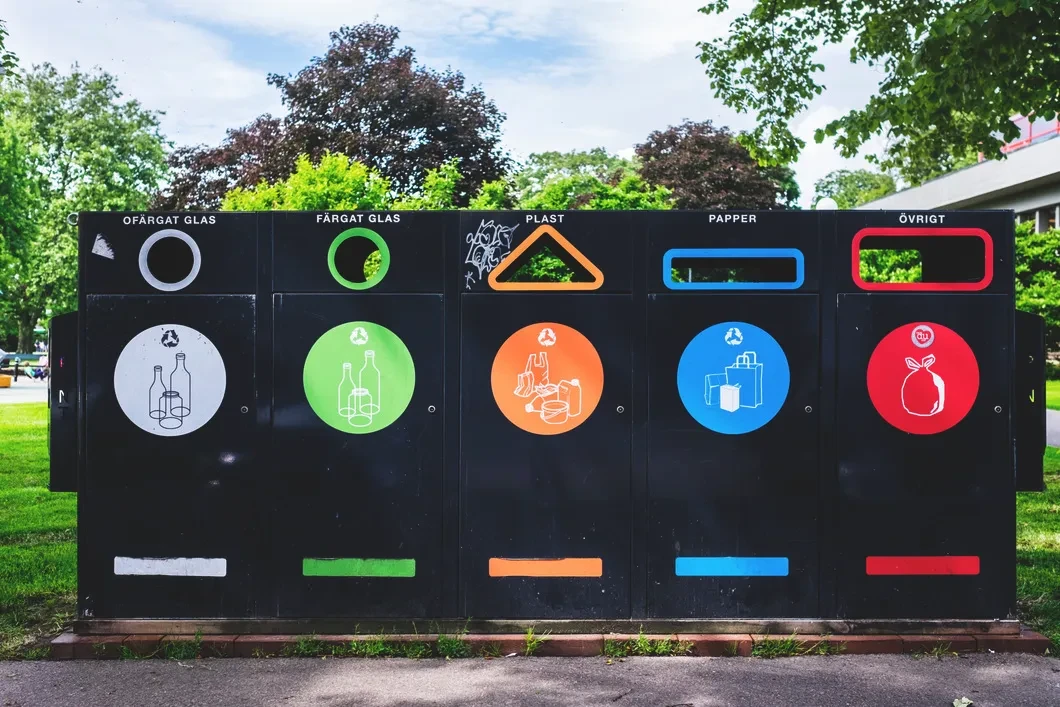
The Swedes must separate dangerous waste from the rest. At the same time, there are no special control measures-a lot of efforts are aimed at enlightenment. Avfall Sverige explains that most municipalities from time to time analyze the content of waste, and if more than 1% of the dangerous ones are made more and more efforts to inform citizens. If hazardous waste is detected when unloading the trash can, then the process is suspended. Dangerous waste in the tank is reported to the lessor, and if no improvements are happening (hazardous waste is still not separated from the rest), then other measures can be taken - for example, a fine will be assigned to the offender.
To summarize, then the hierarchy of waste management in Sweden looks as follows:
prevention of waste formation;
re -use;
Material processing and biological cleaning;
other types of processing - for example, for energy production;
Burial of waste on landfills.
Deviations from the hierarchy may be necessary for technical, economic or environmental reasons. Each EU country should have national programs to reduce waste and reduce the number of hazardous substances in waste. In Sweden, the Swedish Environmental Protection Agency is responsible for this work.
As mentioned above, plastic processing is one of the main problems in the field of waste disposal, and Sweden is no exception. Last year, a new factory in Mutal was launched, using first -class technologies to sort plastic packaging, they say in Avfall Sverige. However, in fact, only part of the sorted plastic can be used to make new products.
Due to difficulties with plastic processing, the main attention is paid to a reduction in its use.
Many stores replaced plastic and plastic bags with paper. Several large food stores now offer special paper bags. Therefore, the package can be used twice. A special tax on plastic bags introduced this year also helped reduce the use of plastic packages and increase the awareness of the Swedes. On the usual it is 3 crowns, on a thin one - 0.3 crowns.
Another point - a little less than 1% of waste is still sent to landfills. In 2019, their amount increased by 13% to 37.370 tons, or 4 kg per person.
The dumps in Sweden are monitored and take care that the so -called landfill gas does not produce, which does not affect the environment. This is 50% methane, the rest is carbon dioxide, nitrogen and a small amount of other gases. The formation of landfill gas was reduced by introducing a ban on the export of organic waste to landfills.
In particular, ash from the burning of biofuel and waste, a number of industrial waste, asbestos (mineral, used, for example, in construction and rocket science), ceramics and some types of metals, are sent to landfills. One of the landfills is Dåva Landfill, located in the city of Umo in the north of Sweden. There is also a waste center. DåVA notes that its landfills are built for a 1000-year perspective. They have a sealed bottom and an almost impenetrable top coating. Dangerous waste is annually covered with a plastic film, and they are sealing for long -term burial.
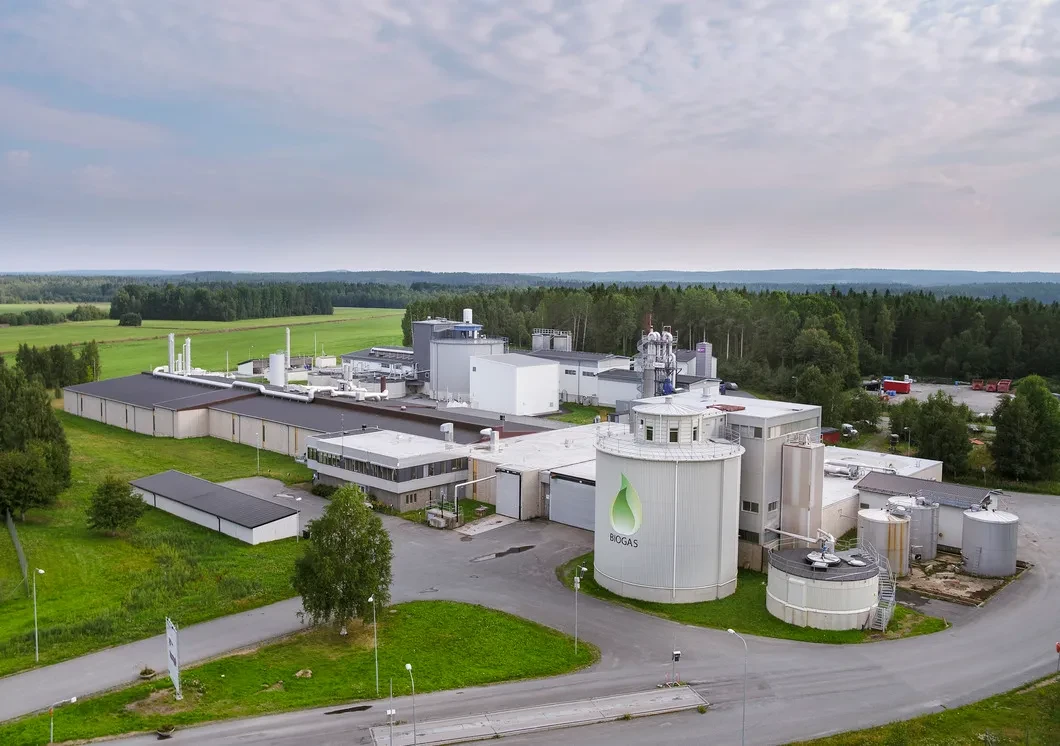
Organics, on the other hand, fits into the economy of the closed cycle and can be used, including for the production of biogas, the Energigas Sverige industry organization notes. As for food waste, the most common method of processing is anaerobic fermentation, in which biogas is produced. After the cleaning procedure, carbon dioxide disappears, and biogas can be used, for example, as a car fuel or for heating. In addition to the production of biogas, organics are also used for the production of fertilizers. According to AVFALL Sverige, in 2019, 685.980 tons of household waste, which is 67 kilograms per person, went to biological processing (anaerobic fermentation or composting). If we talk only about food waste, then 388.560 tons went to biological processing last year.
One of the main goals of the Swedes in the field of waste management is the reduction of food and residual waste by 25% per person by 2025 compared to 2015. “We call this our goal 25/25,” the Avfall Sverige report says. And slowly, but correctly, the Swedes really move to this purpose: the volume of food and residual waste in 2019 decreased by 3% (9 kg per person) - to 209 kg of waste per person per year. In 2018, this indicator was at the level of 216 kg and, compared with 2017, showed a decrease of 4%.