
Translated material
Brothers in poisons
Than Navalny's poisoning is like the murder of a Saudi journalist Khashoggi
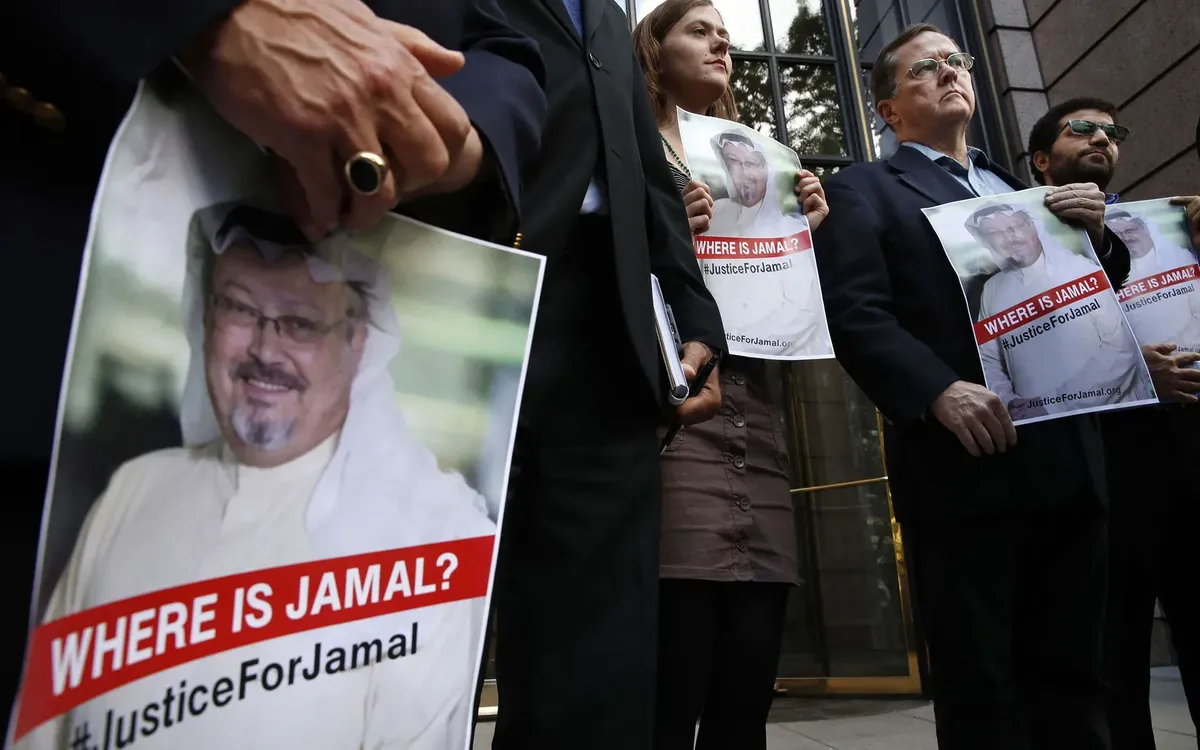
The recent poisoning of Alexei Navalny with a combat chemical substance of the Novice family and the slurred reaction of the Russian authorities painfully resembles the murder of the Saudi journalist Jemal Khashoggi. As in the case of the Saudi oppositionist, obvious attempts to hide the real customers of the crime are visible here, and the prospects for conducting a joint and transparent investigation are illusory. This makes us think about the external similarity between Russian and Saudi regimes.
Istanbul murder
Two years ago, one of the most resonant political killings of recent years occurred in Istanbul. The ardent critic of the Saudi regime and personally hereditary Prince Muhammad Bin Salman (or briefly MBS), the columnist of the American publication Washington Post Jemal Khashoggi disappeared after visiting the Saudi Arabia consulate. Further examination of the territory by Turkish services showed that the Hashoggi most likely was injected with a potent drug, after which it was divided.
A month later, the US Central Intelligence Directorate reported that the MBS person personally issued an order to kill the opposition, and a year later the Office of the UN High Commissioner issued an official report in which it assigned responsibility for the murder for the Saudi regime.
Despite the wave of international dissatisfaction, the leadership of Saudi Arabia to the last continued to deny any connection with reprisal. The first days’s statement that Khashoggi was alive and only “he was sick” gradually came reports that he was strangled during hand -to -hand combat in the consulate. As the evidence became more and more irrefutable, the leadership of the kingdom nevertheless pleaded guilty, which was assigned to the “amateur” of local security forces.
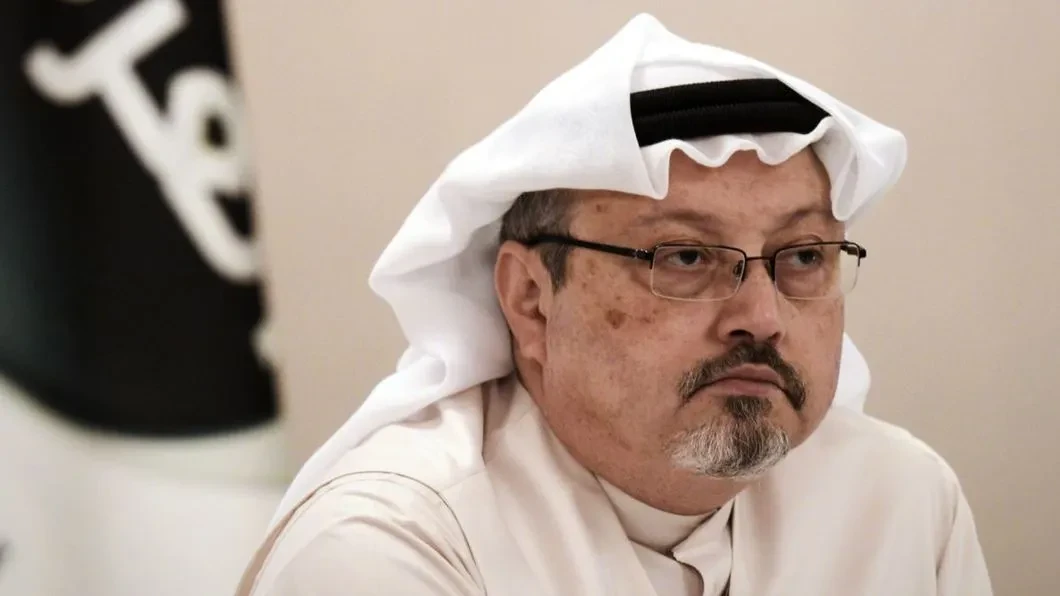
During an interview with PBS Documentary, the MBS said that he was responsible because the murder occurred during his “country leadership”. As a result, at the end of last year, the Saudi Arabia court at a closed meeting issued a death sentence to five officials, and three more prison were sentenced to 24 years in prison. The solution that Amnesty International described as a “circumvention” of real criminals.
One vertical for two
External analogies between Russia and Saudi Arabia have repeatedly surfaced in recent years, especially against the background of warm relations between the leaders of the two countries up to the collapse of the OPEC+ transaction in March this year.
From the point of view of the economy, both countries are extremely dependent on the export of hydrocarbons. In open sources, the export of the kingdom by 64.7% consists of raw oil and by 8.3% - from oil refining products. The largest import items are the import of cars (7.64%) and other equipment (3.3%). That is, in addition to oil, the country produces practically nothing.
In Russia, exports by almost 60% of oil and gas, the dependence of the budget on hydrocarbons exports exceeds 50%, and, according to the Federal State Statistics Service, starting in 2016 and despite the “Import substitution” policy, the percentage of oil and gas revenues in the budget increased by an average of 2% per year.
That is, the country is even more sitting on the "oil and gas needle".
If you look at the internal economic structure, then in both countries the state is the largest employer, and state employees are the largest category of employees. It also extremely negatively affects labor productivity and competitiveness.
Both countries rely on the “vertical of power”. Saudi Arabia is an absolute monarchy, where after coming to power of the MBS, even greater consolidation began. So, in recent years, the crown prince under the guise of modernization and the struggle with the dominance of religious orthodox has only strengthened his position. He did this in a variety of ways: from the conclusion of hundreds of officials and businessmen - members of the royal family accused of corruption, five -star hotels, to mass repressions and executions of dissidents.
We can say that few of the previous leaders of the country, with the exception of, perhaps, Ibn Saud, the first king of Saudi Arabia, had such a fullness of power in his hands. In Russia, after the adoption of amendments to the Constitution, the issued authoritarian regime of the personalist type is also obvious, where the president’s power is not limited.
In addition to economic and political analogies, both countries are similar in the field of compliance with human rights. Freedom House regularly puts Russia (20th place) and Saudi Arabia (7th place) at the beginning of the rating of countries with the lowest level of civil freedoms. Reporters without borders also put countries at the end of the press of the press freedom (Russia-149th place, and Saudi Arabia-the 170s out of 180) and celebrate as the most dangerous places for the work of journalists. At the same time, according to Transparency International, things with the level of corruption (51st out of 180) compared to Russia (137th place) are noticeably better in Saudi Arabia.
Overflow toxicity
Navalny's poisoning further enhances the similarity of two modes. Until recently, the murder of Boris Nemtsov and Alexander Litvinenko could still convince many of the "initiative" of special services or individual representatives of the elite. Now it becomes obvious that the attack on the main oppositionist of the country is covered at the state level.
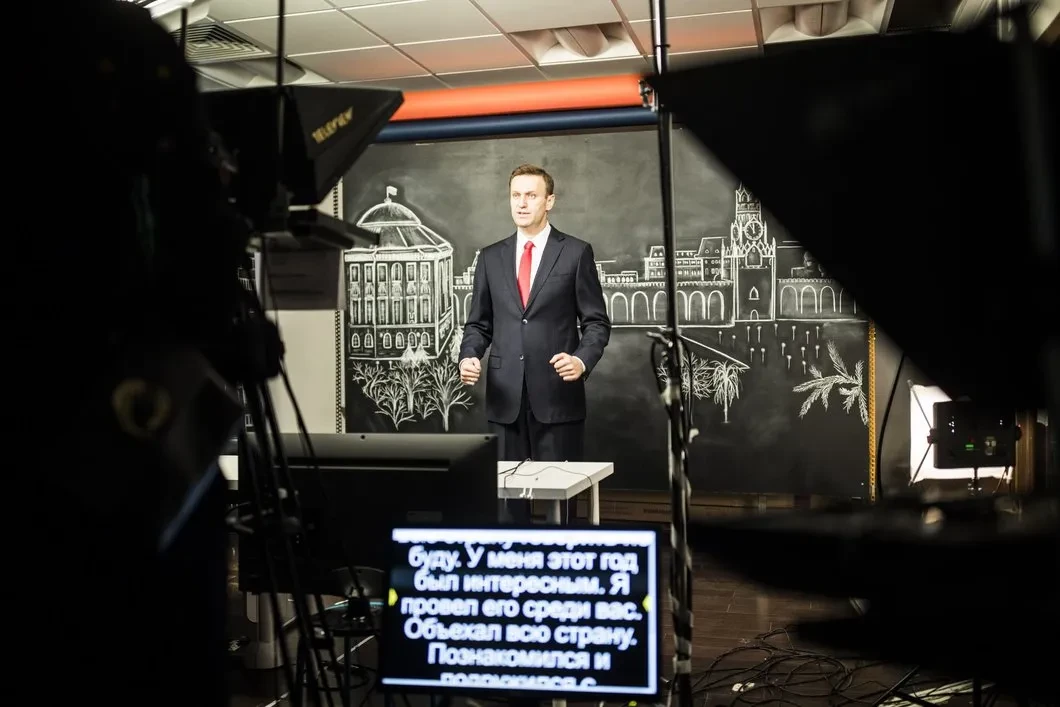
Despite the fact that experts indicate that the purpose of poisoning was not murder, but to cause maximum harm to health, after which it would be impossible to continue political activity, the similarity of the struggle with dissidents in Russia and Saudi Arabia is obvious.
The actual refusal of an honest investigation and attempts to disseminate an “alternative” version of Navalny’s poisoning indicate that in Russia the attack on dissidents occurs only in more sophisticated ways, and the presence of a built propaganda machine allows you to control public opinion inside the country and introduce a certain confusion outside its borders.
Navalny's poisoning will only add toxicity to the image of the Russian regime in the West.
For example, in Washington there have always been clear groups of supporters and opponents of cooperation with Saudi Arabia, as well as a universal cliche in relation to Arabic oil. After the murder of Khashoggi, the Saudi regime began to be perceived even more negatively, and the multimillion-dollar purchases of weapons by Er-Riyada became almost the only guarantor of maintaining relations.
For Russia, the attitude towards which was already worse than in the midst of the Cold War, Navalny’s poisoning means the implementation of Merkel’s words about the need for “peaceful coexistence”, and in fact further isolation from the Western countries, which will become even deeper as Russian hydrocarbons will become.
PS
On Monday, the court changed the verdict in the Khashoggi murder and replaced death sentences up to 20 years, as the journalist's relatives asked the killers.