
Translated material
What does the museum do
Conversation with a culturalist Solomon Volkov about the crisis of identity in a museum affair
- “Metro” after quarantine
- The museum is always - and today
- Is the “Museum of Music” possible
Alexander Genis: No matter how strange it may sound, most of all in quarantine I did not have enough society, not restaurants, not even freedom of movement, but museums, without which I never lived. It was especially difficult to do without the main museum of the city and the country - the subway. For the first time I got there on the second day after moving to America, and since then I have not missed a single exhibition for 42 years. Met is my second house, a summer house, where I am hiding from political news, home adversity and bad weather.
It is not surprising that when the Met finally opened - first for those who, like me, signed on the subscription of the “Museum Friends” - I entered the first, naturally in the mask, of course, observing a two -meter distance, without abusing to the toilet (not to collect more than two), abandoning the buffet and promising not to crowd. Concerned about the health of visitors, the administration checks the temperature of visitors and parks bicycles of those who prefer not to use public transport.
In ordinary times, the museum is visited by 5 thousand people per hour, but now there will be no more than two thousand of them - and no school excursions. In ordinary times, 70 percent of guests are visitors from other states and countries. Now the vast majority are New Yorkers who are hungry for communication with art.
“Metro,” said Max Hollein, the 10th director of the museum, who was unlucky to start duties just two years before quarantine, “plays such an important role in the life of the city that its return is sent to a difficult signal: the situation is gradually normalized.”
Solomon, do you agree that it is the Met of the Cultural Life of New York?
Solomon Volkov: Yes, I completely agree. But I would add a couple more organizations that, it seems to me, confirm the centrality of New York in American culture. Firstly, this is another organization called Met, that is, the Metro-Opera. She, of course, is one of the leading theaters of the world, along with La Scala, a Paris opera, with Covent Garden in England. But I would add two more ballet troupe-this is New York City Ballet, a ballet company that founded Balanchin, mainly its glory rests on the fact that this is a certain museum of ballet Balanchin. And another troupe - the American ballet theater, brilliant in composition, outstanding dancers there always appeared on stage, interesting on choreographic topics. At the moment, the so-called choreographer of this company is Alexei Ratmansky, our compatriot. In the ballet, in the opera, in the visual arts of New York, of course, the leader, which I can’t say about the New York Philharmonic Orchestra, by the way, so I do not include it on this list, he was never there. In recent years, its level, it seems to me, has significantly decreased under Alan Gilbert. Yap Van is stitched, the new leader, only proceeded to some revival of the reputation and quality of the game of this orchestra, but the pandemic, unfortunately, interrupted this process.
Alexander Genis: I agree with you, I undoubtedly, our opera and our ballet, especially the ballet in such a ballet will of the city as New York, plays a huge role. All this is so, but still not to compare with the museum. Because the opera, and the ballet requires the audience special training and considerable money, by the way. This is an expensive pleasure that requires planning. I buy a subscription to the opera six months before the new season, say, for five operas, and every trip to the opera is a big event. The museum is a completely different matter: Met is publicly available. This was the venture of the metro, he was exactly what for everyone, so this museum was conceived - publicly available. This, alas, does not apply to visitors, but for the inhabitants of New York it still remains almost free, you can give as much money as you want, at least five cents, at least a hundred dollars, please.
Among other things, he plays a huge role also because it is America, this is a new light, there is no luxury that is in Europe with its cathedrals, ruins, palaces and old quarters. The metro is trying to replace all this. It immediately represents everything interesting that was in civilization, this is an encyclopedic museum. If in order to enjoy the opera, you still need to understand the opera art and appreciate the conventionality of the genre, then you can find whatever the soul wants to be found in the metro. And this differs from many other great museums. Here you can find, for example, halls with medieval weapons or a magnificent collection of musical instruments, or anthropological collections, or Indian artifacts, or a whole hall dedicated to the art of Papuans of New Guinea. All this, along with Gothic sculpture, with Bruegel, with all the impressionists, and so on. Met - a collector of planetary civilization in its most interesting samples.
Solomon Volkov: Sasha, tell us about your impressions of the big anniversary exhibition that you have visited now.
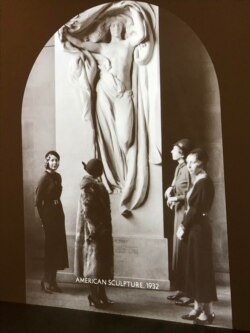
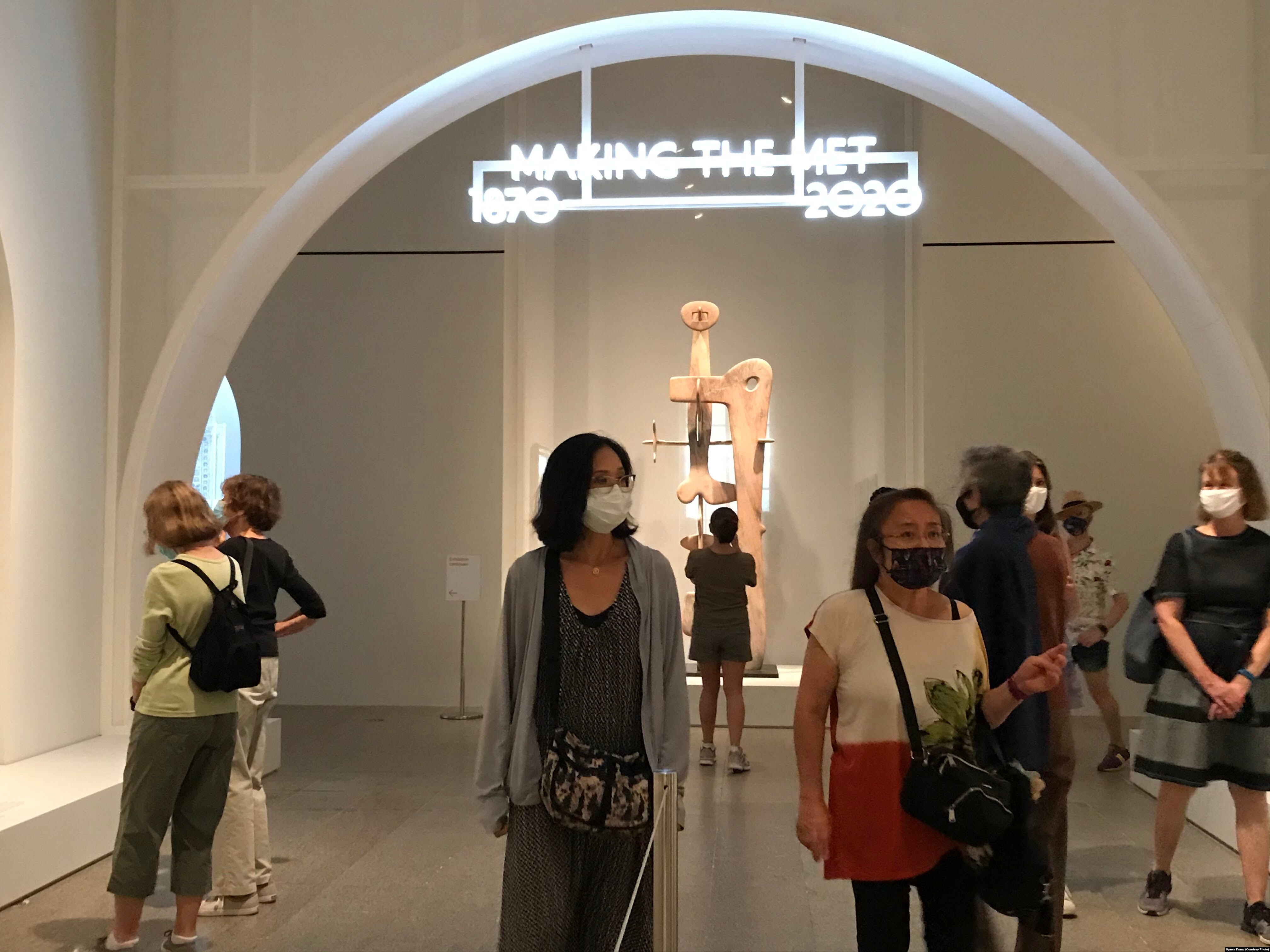
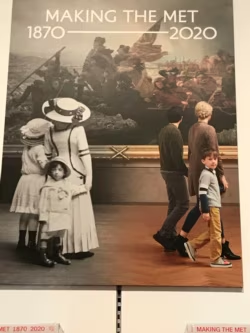
Alexander Genis: This year the museum celebrates its 150th anniversary. It was supposed to be a holiday stretched for the whole year: festivals, symposia, balls, the mayor had to present all sorts of awards. But quarantine began, and everything was canceled. But now, just the other day, the metro has opened and an exhibition has opened, which was so carefully prepared by the curators of the museum under the leadership of Andrea Bayer. She is my old friend, who has now become the deputy director of the museum. Together with her colleagues, she prepared the exhibition "150 years of metro". It is done great. 10 halls that describe one stage from the life of the museum. Each hall is associated with one central theme. The first tells the story of the opening of the museum created in the wave of optimism related to the end of the Civil War. Then, however, there was really nothing to show: the paintings were secondary, copies of sculptures, there were very few interesting exhibits, and there were no buildings. The exposition was placed in private houses. And so we see how the luxurious museum, which is now considered one of the most beautiful museum palaces of the world, was born from this poor project. We see how it all happened. The golden age of meta was especially important, not by chance coinciding with the “gilded century” of America. It began at the end of the 19th century, when the first billionaires, like Rockefeller, appeared, all of them were engaged in collecting art. It was a boom of collecting. So, the banker Morgan presented more than 7 thousand exhibits. Or Henry Havmeyer, Sugar Baron (we still drink tea with sugar of his domino company). The collection of impressionists in the museum began with his collection.
A separate plot of the exhibition is archaeological excavations, thanks to which the rare exhibits appeared in our museum. And all this is illustrated by the masterpieces of the metro, and the familiar exhibits look completely different in context. Shown not in the chronological, but, so to speak, in a chaotic order, they reflect the nature of the collectors who were versatile to unprincipled: they were interested in everything, everything is beautiful, all elegant, everything interesting, everything is bright. Like me.
Solomon Volkov: Exotic.
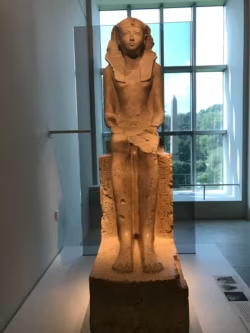
Alexander Genis: And exotic too. That is why the museum seems so exciting. In my opinion, this is the child’s dream, because there is a couple of each creature here. This time, one exhibit made a great impression on me-this is Hatshepsut, a female pharaoh, the only woman in the history of Egypt, her heir broke her statue (so this practice began back in the 15th century BC). Found fragments, gradually collected them. Some of the fragments were in New York, and part in Berlin. They exchanged for a long time, finally glued this statue, and we saw a charming young woman, elegant, elegant. It was put in such a way that the needle of Cleopatra, an obelisk from ancient Egypt, which stands near the museum in the central park, is visible in the window. And this species is completely crazy, if you think: in the new light we look not just at the old light, but at the very old light that settled in New York. This is amazing.
Now in the museum business, as experts say, it is important not what you bought, but how you showed it. Museums boast of feeding methods. When you enter this exhibition, you are met by 10 exhibits. All of them depict people, but in what form - this is the mask of the god Shiva from Nepal, and the ancient Greek sculpture, and the photograph of Merilin Monroe Avedon, and in the end we see the work of Isama Noguchi, the wonderful American sculptor of Japanese origin, which in the spirit of high modernism rethifies the ancient Greek figure of Kuros, the beautiful young man from which the European sculpture began. The curators show, and how differently you can see a person, and which we ourselves are all different. This, in my opinion, meets the tasks of the current museum, which seeks to demonstrate the great diversity of our world. This is the pluralism of cultures.
Solomon Volkov: Doesn't it seem to you that the emphasis here is inevitably transferred from the cognitive side towards entertainment?
Alexander Genis: This is wonderful. Enlightenment is entertainment. After all, everything that we love leaves more strong feelings in our souls. The museum should not be pedantic, but fascinating. I can’t understand how the museum can be uninteresting, especially such as a metro, where you can always find something for yourself. You don't like painting, well, go look at the outfits. There, by the way, the dresses of the 60s were displayed, which transfer us to that atmosphere of the sixties, hippies, which now seems charming.
The museum is now coming close to the theater. It is becoming more and more inventive, each exhibition competes with itself - with the previous exhibition. The metro does a lot to diversify the ways of presenting exhibits, the picture is not only hanging, but it plays, it plays, entering into dialogue with other exhibits.
Solomon Volkov: Sasha, one of the innovations is such explanatory posters that are posted in each hall of a new large interesting exhibition in the metro. There, in these inscriptions, the roots of the origin of all these are opened, you said about these billionaires, the oligarchs who were interested in a variety of corners of the world and arts, collected everything that their eyes fell on, then gave, sometimes many thousands of copies, their meetings to the museum. Now these inscriptions open the social background of the origin of these states, which far from always corresponds to today's ideas about the ethical business.
Alexander Genis: This is a separate story. Meta survived the racial riots heavily, which are now in the city and in the country, and demonstrations of protest against racial discrimination, and disputes about non -rights, and the struggle for equality. In short, all the social troubles of our summer affected the metro. But how did they reflect? The museum admitted that, yes, these rich, who, in fact, created the museum, behaved not as we would like, they were all oligarchs, which means that sharks of great capital are undeniably. Not always their methods were ethical, far from always they paid their workers as much as they should. All this is so, and special signs tell about this. In each hall you can find out everything bad about the collector thanks to whom this hall was born. This context, which acquire exhibits, seems to me quite reasonable. I would say, he’s not so frightening. The tablet on the wall is not the same as destroying objects only because they were collected in an incorrect way.
Another thing is that the metro is criticized and has long been criticized for the fact that the museum pays little attention to today's art. The great director of the Museum Montubello was not frankly interested in this, he believed that art should be eternal and classic, and not momentary.
One way or another, the latest art is little represented in the museum, the directorate obeyed in this, the last hall of the exhibition is dedicated to the works of today's artists. Including there there is a very interesting work of the artist from Africa. This is a huge panel, depicting like a wave of gold. The curators quite rightly write that the panel resembles the Byzantine mosaic: gold plays and flickers in skillful lighting. But the most interesting thing is that all this is made of caps from “Coca-Cola” and other plastic garbage. This is the exploitation of garbage, which has turned into a work of art. Literally - "When would you know what kind of Sora."
(Music)
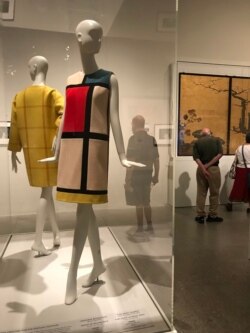
Museums around the world today are experiencing an identity crisis. They are accused of racism, sexism, inattention to non -Western cultures - in neglecting the work of all kinds of minorities. In this regard, the influential organization of the International Museum Council, based in Paris, conducted an expert survey, who are asked to give final definition: what is a museum? 269 definitions were received. One of the most impressive includes 99 words and two paragraphs. “The museum is a democratic, polyphonic space for conducting a critical dialogue between the past and future, which leads to equality, social justice and environmental health of the planet” - and so on.
The museum specialist from the Sorbonne called this definition “an ideological manifesto, a set of fashion trends that do not explain the main thing: what are museums doing?”
Solomon, what makes the museum for you? The archive of the beautiful? An example to follow? Material for reconciliation?
Solomon Volkov: Neither one nor the other and the third, I will say frankly. As a historian of culture or cultural scientist, I have a lot of my shortcomings and disadvantages in which I give myself a report, but there is one dignity, as I immodestly believe: empathy. That is, I always try to put myself in place in this case of the artist whom I watch. Therefore, for me the most interesting exhibits have always been, there are and will be portraits and self -portraits, especially self -portraits. Because when I look at the portrait of the work of some famous artist, I try to look at him with my eyes at the depicted subject and at the same time I put myself in the place of the portrait: what he felt when he sat in front of the artist, what he wanted to look, who he wanted to imagine. A great example is Serov. When I see a portrait of the work of Serov, I see the position of Serov there in relation to the portrait, and what the portrait was wanted to see Serov in him. Thus, some Hirschman who takes out a clock or some coin from his pocket, or Princess Orlova, sitting like some kind of exotic bird in front of Serov, it is clear how they positioned themselves, it can be seen how Serov treated them. Therefore, for me, there are always portrait exhibitions, the same Serov, whose exhibition was a relatively recently a grand blockbuster in the Tretyakov Gallery, is much more interesting than, say, Aivazovsky’s landscapes, whose exhibition was also a blockbuster, but it is far from so interesting for me. And portraits-from Serov to Egon Shile, to Picasso, to modern portraiters-are always interesting.
Alexander Genis: I understand you: “The eyes of mutuals” - look at the world with another look. I also think that if after the exhibition and my own look changed, then, then, the museum did something for me. The main thing here is not to fall under the car, because you become a little drunk.
But there is another problem, which, in fact, experts argue about today: how much the museum should correspond to today. I like to remember the anecdotic case that I had in my life. I visited the Museum of the Revolution on Tverskaya in Moscow immediately after the 1991 coup. Then there was a trolley bus burned during the coup, which represented the struggle of the people for freedom from communism. Many years passed, I arrived in Moscow again, came to the museum, but there is no trolley. You know that I sometimes visit the bore, and then I went to one caretaker, at the other, in the end I got to the bosses and say: "Do you have a trolley here. Where did it go?" And he answered me that the museum should not get stuck in the past, like a fly in amber, he should keep up with today, so the trolleybus was removed, he became irrelevant.
Solomon Volkov: Today, the trolleybus forever, as I understand it, disappeared from the streets of Moscow, he really went into history.
Alexander Genis: It remained only in the songs of Okudzhava.
But back to the problem of the relevant. In recent years, 20-30 years, many new museums have appeared, which exactly are following history. For example, museums of occupation, which are in all Baltic capitals, and I visited all. They make a huge impression on me, but even more important that they give an idea of what was, to the generation that had already been born after the end of the Soviet regime. I believe that these are priceless museums that answer the question of what museums should be today.
Solomon, what museum do you miss?
Solomon Volkov: Returning to the fact that I appreciate in museums, I advocate preserving the museums of artists, when you enter an authentic apartment if possible, where some authentic objects associated with this artist are preserved. Например, на меня незабываемое впечатление произвело посещение музея-квартиры Мунка в Осло. Для меня у Мунка главное – портреты и автопортреты, от них всегда исходит эта нервная энергия, которая всегда возбуждает, впечатляет, заставляет думать, переживать. В сочетании с обстановкой мунковской студии это создает незабываемое впечатление.
Александр Генис: Недавно я прочитал в Фейсбуке высказывание режиссера, Алексея Германа – младшего, мы-то дружили со старшим, теперь уже младший вырос. Он пишет о том, что дома-музеи писателей – скучное дело. Я понимаю, у художника есть что показывать, а у писателя нет. Поэтому нужно было бы создать один грандиозный музей русской литературы и придумать новый способ показать ее как целое. Это, конечно, интересный проект, особенно, если бы за это взялся какой-нибудь изобретательный человек. Я не скажу Хржановский – это такая фигура странная теперь…
Соломон Волков: Хржановский-младший.
Александр Генис: Да, Хржановский-младший, который после “Дао” пытался сделать новый музей “Бабий Яр”, сделать, по-моему, ему так и не дают. Но в принципе придумать такой музей русской литературы было бы здорово, я бы хотел посмотреть. Но я, как и вы, люблю ходить и в музеи-квартиры писателей. Я был всюду, где только можно. От дома Генри Торо, это крохотная хижина с тремя стульями, до дома, где провел последние дни Гоголь. Я смотрел там на камин, где сгорела рукопись "Мертвых душ", с ужасом представлял себе, как он ковыряет там кочергой. Впрочем, я считаю, что музеев чем больше, тем лучше.
Скажите, а может быть музей музыки? Не музей экспонатов, а музей, где бы играла музыка, такой, какой ее слышали авторы и их современники?
Соломон Волков: Мы тут с вами вступаем в очень сложную и интересную тему аутентизма, то есть то, что называется “исторически информированным исполнением музыки” сейчас. Может быть, стоит поговорить об этой теме отдельно. Но каков возможен теперь музей такого рода – это тема, над которой стоит подумать. Мы ведь сейчас с вами являемся свидетелями совершенно невиданного технологического прорыва в возможностях музеефикации, в возможностях показа. Когда-то об этом можно было прочесть только в научно-фантастических романах, а теперь мы действительно можем представить себе ситуацию, когда с помощью новейших технологий мы сможем оказаться среди аутентичной аудитории, скажем, XVIII века или XIX века, среди людей того времени, воссозданных с помощью новых технологий, и вместе с ними наблюдать за теми зрелищами, на которые они смотрели, чувствовать себя частью этого ушедшего времени, попытаться поставить себя на место этих людей. Это, мне кажется, было бы чрезвычайно заманчивой целью, которую стоило бы осуществить.
Александр Генис: А что бы вы хотели посмотреть или послушать таким образом?
Соломон Волков: На меня сильнейшее впечатление произвел спектакль, который я увидел здесь в Нью-Йорке, – это постановка Алексеем Ратманским "Спящей красавицы" Чайковского в версии Петипа. Опять-таки отдельная история, мы обязательно должны как-нибудь об этом поговорить, каким образом Ратманский сумел воссоздать хореографию Петипа в возможно приближенном виде. Я бы с удовольствием повторил бы этот опыт в такой виртуальной обстановке, то есть среди тех, кто были на этом спектакле, среди людей конца XIX века, чтобы получить представление о том, какой была атмосфера, ощущения, эмоции тогда. Вместе с Александром Бенуа вновь пережить возбуждение, испытать восхищение этим революционным спектаклем. Поэтому мы закончим музыкой из этого балета, которая сопровождала, одну из попыток аутентичной передачи этого гениального балета Петра Ильича Чайковского. "Спящая красавица", финал…
Александр Генис: … фрагмент из музея музыки.
(Music)