
Translated material
The price of "temporary measures" on the scales of history
Was the entry of the Baltic countries into the USSR “natural” and voluntary
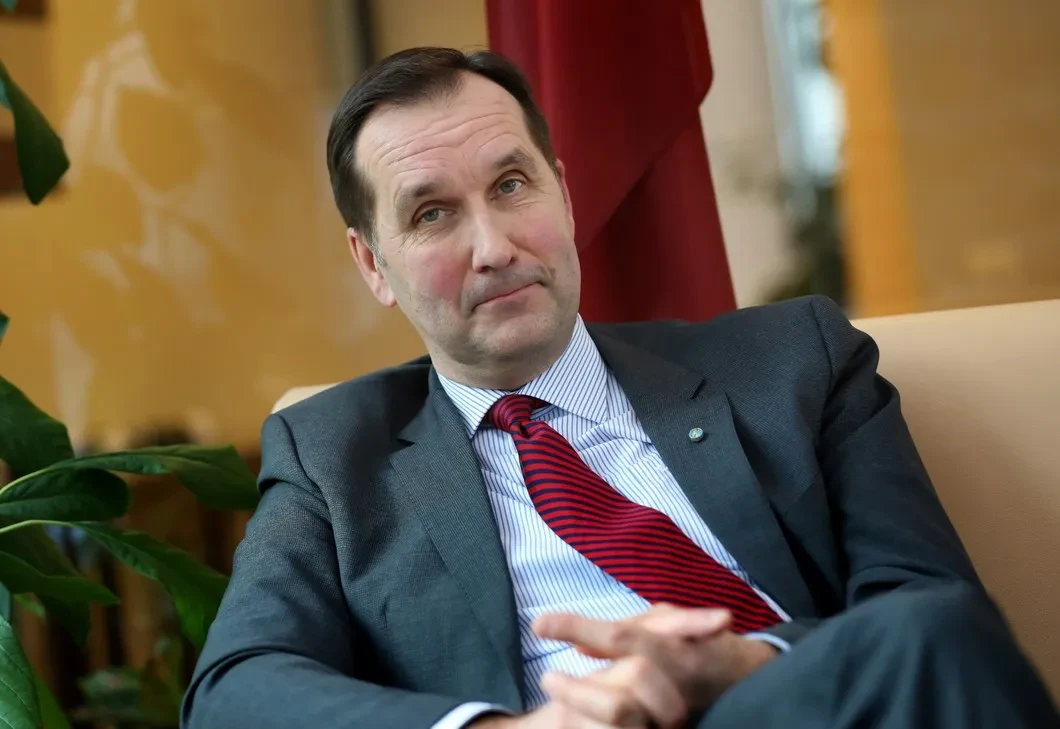
The mission of the ambassador in any state is to defend the interests of their country and its citizens. At the same time - especially between neighboring countries - this is building good -neighborly relations. This work, of course, is not conducted in a vacuum. It is affected by the general situation in the world and in the region, the gained experience of previous cooperation, as well as history.
The diplomatic alphabet states that building interstate relations (and we believe that they must be good between neighbors) largely depends on mutual respect. In turn, it is based on mutual understanding. But mutual understanding is difficult to achieve without taking into account how the parties consider historical events, especially those events that are associated with joint history.
Even more - without an honest view of historical events, their assessments, and when necessary - recognition of mistakes and condemnation of the wrong, and even more criminal actions, to hope for building a full -scale dialogue and relations that would use the entire potential of cooperation is very difficult.
To achieve this, politicians and diplomats should sometimes be able, as the British say, "to stand in other people's shoes."
Working in Russia for a little over three years, I noticed that special attention is paid to issues of history here. I will allow myself to express the statement that the presence of historical themes in the daily political life of Russia is more noticeable than in many other European countries.
This was especially evident this year in connection with the celebration of the 75th anniversary of the defeat of the Nazis in the Second World War. This is clear to me because those huge sacrifices that Russian and other peoples were incomprehensible to the altar of victory over Nazism are incomprehensible to the mind. And I understand that it is important for you to treat this with respect. I had to get acquainted with these tragic events, which affected most of the Russian families, including visiting very distant places of the country. For example, when visiting the museum of the village of Istan, the Tomsk Region, I gave data that out of 500 men who went to the front, 300 did not return. This very visual illustration of the depth of the human tragedy of military operations of the last century.
But the question is - what did I do in this very remote settlement in Russia? And here we come to some tragic events of the Latvia of the last century - one of the two mass deportations of the inhabitants of Latvia from the Soviet occupation, the deportation of March 1949, when the family of my grandmother’s brother was among more than 42 thousand deported persons.
53 hectares of land, four horses, eight cows and eight pigs were enough for the family to be sent to a special settlement in the Tomsk region with the “fists” label. The life of the head of the family breaks off in 1954, which is about the death certificate issued by the Istan village council.
And all. Nothing more. No information about the burial place.
Fate similar to thousands and thousands of other destinies of my countrymen. These are fates that still “live” among us. These destinies are connected with the events in Europe in the late 30s and in the 40s, when the Baltic countries became victims of geopolitical games and lost their independence for half a century. This tragedy for the then young statehood and for almost every family of Latvia, whose members in one or another touched deportation, extrajudicial executions, death in prison or at the front or searching for a safer life on other refugees status. According to historians, Latvia, as a result of these events, lost a third of its population.
Therefore, the true historical memory of this time is important to us - both within our state and abroad.
We called and continue to call our Russian colleagues to the objective assessment of the policy of the Soviet Union regarding their Baltic neighbors 80 years ago. We believe that there was enough time to impartially analyze the events of that period and thus try to turn this page in our history and move forward, building truly good -neighborly relations.
Unfortunately, we are often forced to observe the replication of myths, which greatly resemble the interpretation of the history of the last century stagnation period.
The most common among them:
- The Soviet military contingent in 1940 was introduced into the Baltic countries with the consent of the leadership of these countries, that is, everything happened legally correctly, and the thesis about the occupation of the Baltic countries has no legal justification.
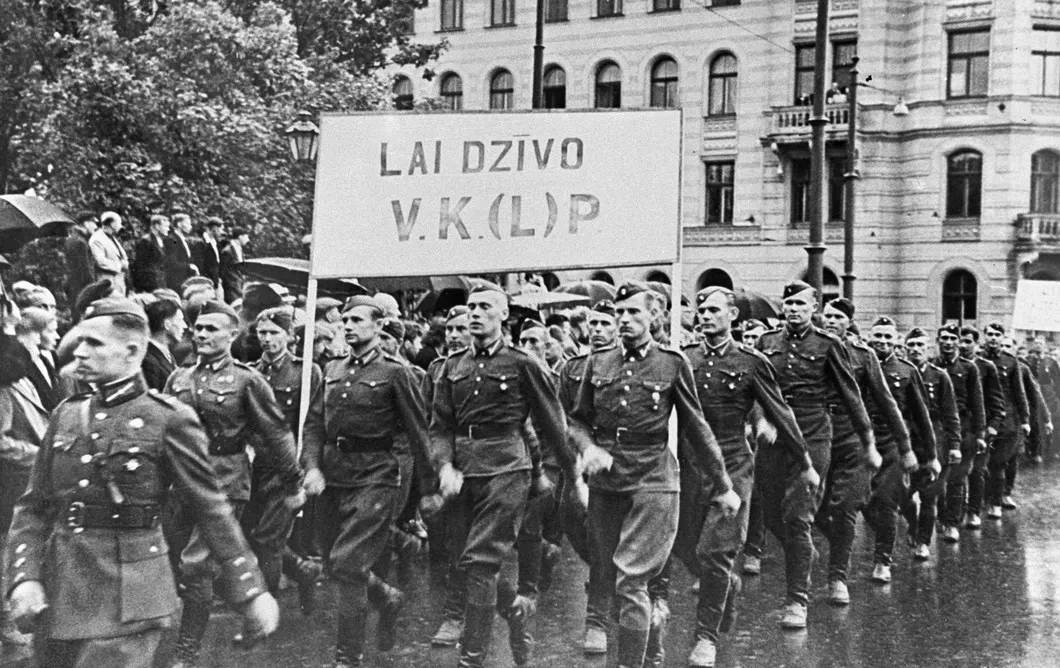
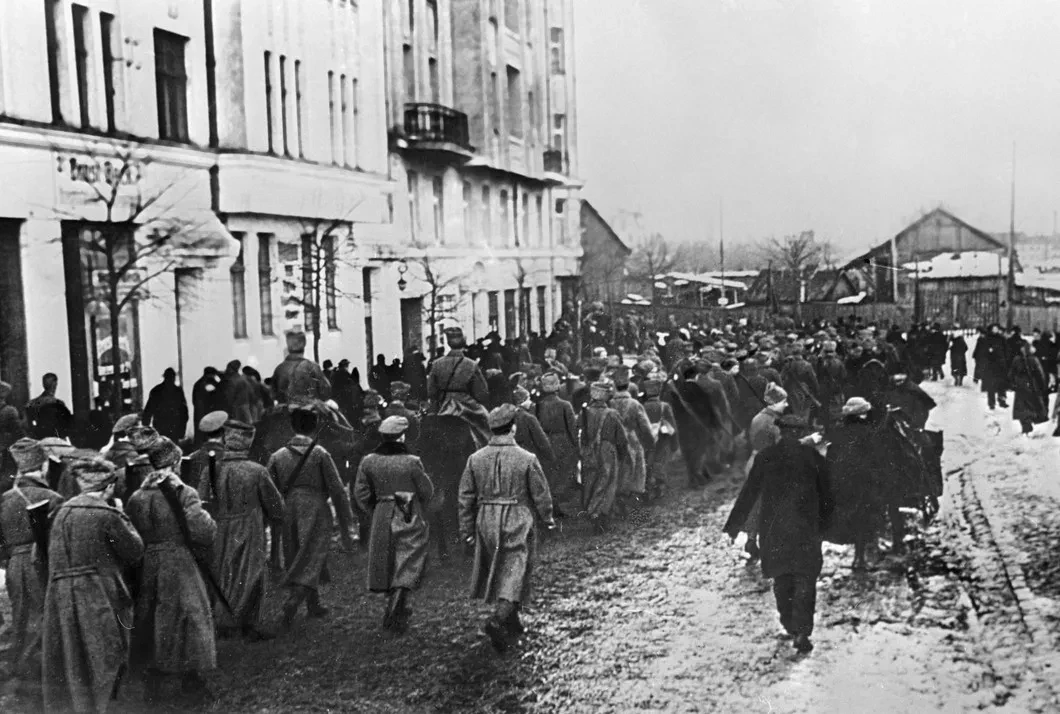
Fact: The People's Commissar of Foreign Affairs of the USSR V. Molotov in June 1940, on behalf of the Soviet government, put forward an ultimatum to the ambassadors of the Baltic countries about the need to change the governments of these countries to more benevolent to the USSR and demanding to agree with the immediate introduction of the contingent of the Soviet Army (it is interesting that in a conversation with the ambassador of Latvia, F. Kotsinsh, assures that “this measure is temporary”).
It is difficult to say what circumstances formed the basis of the “consent” of the Latvian government.
The desire to avoid numerous sacrifices in the event of an open military conflict? We will not forget that by this time Poland had already been torn, and the military conflict between the USSR and Finland clearly showed that the major losses of the personnel of defensive forces could not be avoided. Maybe they naively believed Molotov’s assurance that this measure is temporary? But in any case, such a “consent”, which is given under a direct military threat, is no different from the “consent” of the President of Czechoslovakia Benesh on the terms of the 1938 Munich Treaty.
It turns out that in one case, the Munich conspiracy in Moscow is condemned as “division of production”, and in the case of the Baltic countries, the actions of the USSR are justified by their compliance with international law. But this is a clear contradiction!
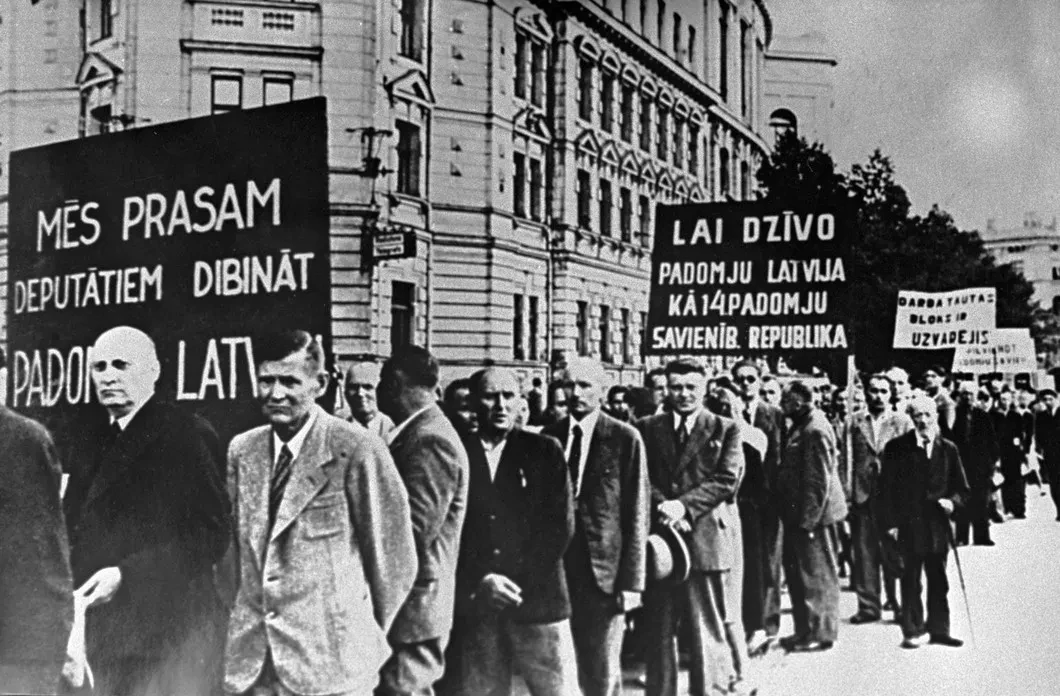
- The annexation of Latvia (and other Baltic countries) to the USSR was the “natural reaction of the vast majority of voters who expressed in favor of joining the USSR” (as in the commentary of the Russian Foreign Ministry dated 07.22.2020).
Fact: the so -called elections on July 14 and 15, 1940 (just a couple of weeks after the commissioning of the Soviet troops) were carried out in violation of the Constitution of Latvia and the law on parliamentary elections. Only one list (“block of the working people”) was allowed for these “elections”, and this list included candidates who were not citizens of Latvia.
The result itself - more than 97% of the vote is given to this list - fully gives the characterization of an “honest” election. And in general-with all the baggage of today's knowledge about Stalin's times, someone can really insist that the elections at that time were a free will of the people? It is worth mentioning that in the official election platform and slogans of the “Bloc of the Labor People”, the goal was not mentioned in a word - joining the USSR.
When evaluating the events of that time, the Baltic countries should take into account historical realities.
Of course, we can try to analyze whether the USSR had the actions of the USSR in 1939-1940 in the Baltic direction of purely military-strategic and defensive considerations or, nevertheless, the reason for these actions was the desire to return the “lost territories”. But this does not change the fact that these actions were implemented against the interests of the third sovereign states and entailed the loss of sovereignty with these countries.
In general, it seems to me that one must be very careful, appealing to the "historical realities." Can we just justify the congratulation of Molotov to Germany’s Searns after the capture of Paris by the Nazis? Or will it be immoral?
Probably, an analysis of the period of post-war occupation, which is also impossible to draw in black and white colors, would have earned a separate publication. I can only say that the population experienced during the two mass deportations of the population (1941 and 1949) exacerbates a sense of misunderstanding among the inhabitants of Latvia, when they are faced with an unwillingness to understand the whole tragedy of the people, which was experienced in the last century.
Also, the “full cycle” of Moscow’s “full cycle” regarding the notorious Pact of Ribbentrop - Molotov cannot but arouse some alertness: from the complete denial of the existence of this agreement in Soviet times, the subsequent conviction of it at the congress of People’s Deputies of the USSR in 1989 to today, when the assessments are fluctuating between the “forced step” and the excellent achievement of Soviet diplomacy.
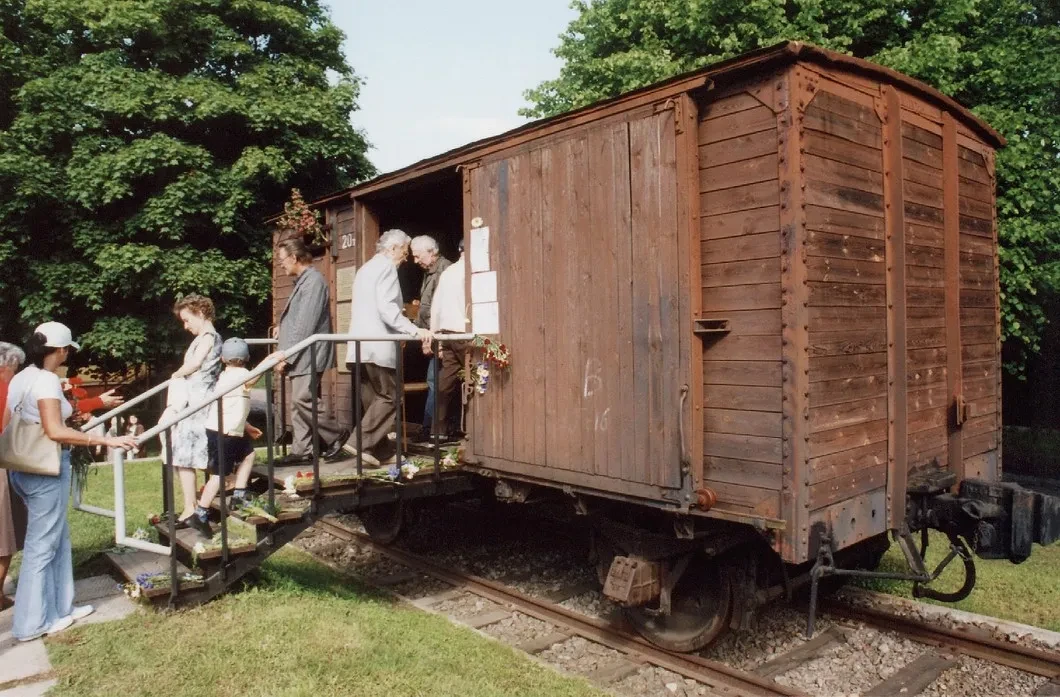
It is also impossible to forget the names of those thousands and thousands of Latvia, who were repressed after the occupation of the country, including many statesmen and diplomats.
Against this background, it is all the more alarming that, according to the polls of the public opinion of Russia, fewer representatives of its population consider themselves informed about the political repressions of the last century, more and more people positively evaluate the activities of Stalin, less and less respondents consider the human victims of the Stalinist regime unjustified. This, in my opinion, requires politicians and diplomats with the help of scientists and when organizing appropriate access to archival materials to conduct more active work to study genuine history, no matter how hard it may be. Our task is to study in the lessons of our history and avoid our mistakes.
Or as it is written in the Holy Scriptures, and you know the truth, and the truth will make you free.
Maris RiKstins , Ambassador of Latvia to Russia, - especially for "New"