
Translated material
"We want home"
Several thousand Uzbeks defeated the tent camp in front of the station in Rostov-on-Don. In the heat, almost without money, in a desperate hope to leave

Since the beginning of summer, Uzbek labor migrants have been leaving Russia. Due to pandemia, many lost their work and livelihood. Only in August, the authorities of Uzbekistan began to export compatriots from Russia. For money.
The spontaneous camp of the Uzbek migrants around the Pervomaiskaya station on the western outskirts of Rostov-on-Don arose a few days ago. The first “settlers” appeared there approximately on August 23, when it became known that it was from Rostov to Tashkent that a special railway composition organized by the authorities of Uzbekistan would go. One composition really left, it took 938 people. The Uzbek consulate, open a year ago in the Don capital, is engaged in the organization of export.

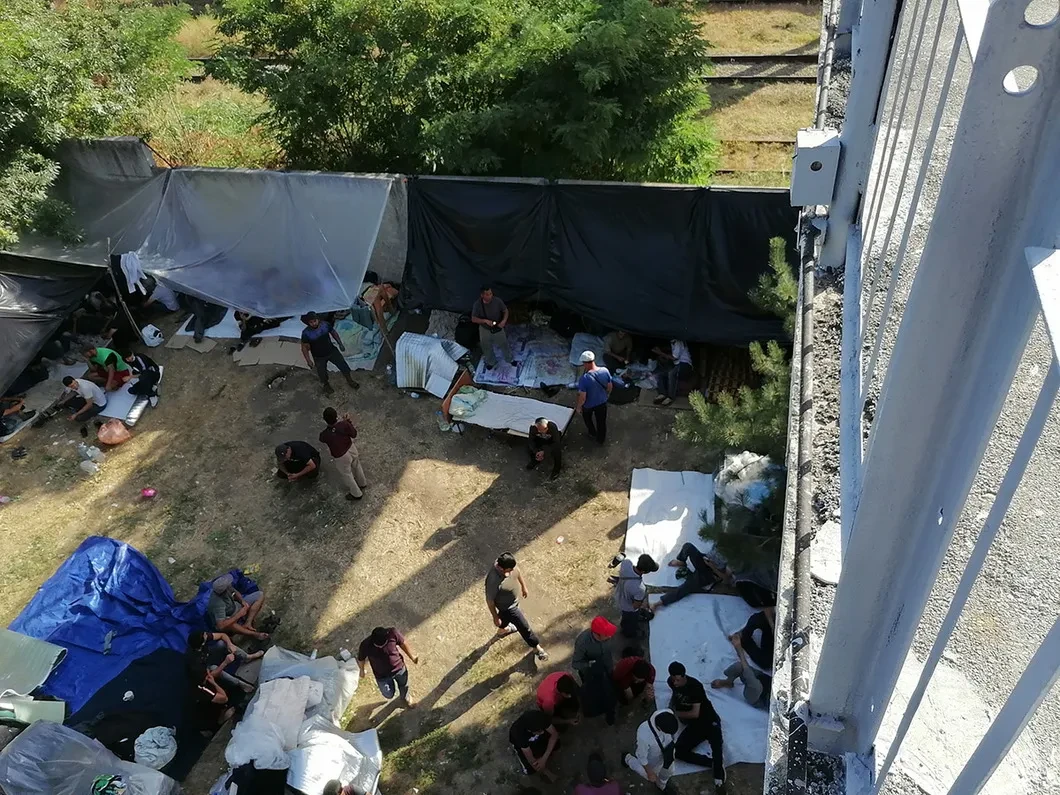
Meanwhile, more than two thousand people have accumulated in the vicinity of the station. Formally, this is a live queue for tickets for special train No. 902 CR “Pervomaiskaya (Rostov) - Tashkent”. All these people hope to get into it and beat daily for the opportunity to buy tickets.
The tents are divided directly on lawns and sidewalks. In some places, bare feet stick out from under homemade canopies, people lie on the parapets heated by the Rostov sun. A girl of about twelve in a bright national robe manages to intercept a one -year -old peanut, which is torn to the parking lot - everything is also clogged with cars. Rostov, rushing about business, photograph the camp from the height of the pedestrian bridge over the railway. From there, from above, police officers are watching the dusty interpretation. Holes of riot police flicker in the crowd.

“We want to go home,” one of the inhabitants of the camp, a man of about thirty, who called Alisher, agrees to speak with difficulty, calling for an alisher.
- There is no work. Coronavirus. Living is expensive: get 30 thousand, give it to the apartment, eat - give it out.
The patent used to be 4 thousand, now they canceled, but still expensive. It is necessary to go home.
Almost everyone has similar stories. There are actual work permits, but there is no work. With the last money, they came to Rostov almost from the entire Southern Federal District-from Stavropol, Astrakhan ... There are families from St. Petersburg and Moscow. Of course, you can fly to Tashkent, but the ticket now costs 65 thousand rubles, for most migrants - unbearable expenses.
Uzbekistan was one of the first to close his borders from behind the coronavirus-back in early March. This allowed the country to avoid explosive growth in the number of diseases, and this trend remained until the end of June, and then worsened sharply. According to the Coronavirus-monitor.info website, if 256 new cases were identified in the republic until May 3, then from June 23 to 26 it was almost a thousand. In addition, reports Deputy Minister of Foreign Affairs of Uzbekistan Erkin Khamroev, according to the end of July, almost 90 thousand citizens returned to the republic.

“Of these, 27,348 - charter flights, 1245 - trains and 60 589 - on vehicles,” quoted the Minister of the Uzbek edition Kun.uz. “Currently, more than 90 thousand have expressed a desire to return to Uzbekistan, work is underway to decide their delivery.”
In total, according to Khamroev, more than 2.5 million compatriots live abroad.
Including in Russia - 1.5 million, more than 100 thousand in the USA, 140 thousand in Kazakhstan, 13 thousand in Kyrgyzstan, more than 5 thousand in Tajikistan, 50 thousand in European countries, about 4 thousand in Japan. Almost 50 thousand students study in foreign universities.
From June 8 to 21, Uzbekiston Havo Yullari, the airline organized charter flights to Uzbekistan, was planned to return 5208 citizens from Russia, Turkey, South Korea, the United Arab Emirates, India, Italy and Ukraine.
An independent Uzbek journalist Shahida Tulaganova believes that a surge of incidence in late June is largely associated with the mass return of labor migrants home.
- The Uzbek authorities really managed to restrain the rapid development of the epidemic for a long time, they were proud of it. But everyone knows how many people work abroad. It is difficult to say how effective control over the arrivals was established. Most likely, in any way, hence the growth of incidence. In addition, often citizens of Uzbekistan were forced to return home on the crossroads, in difficult conditions, giving bribes to border guards. All this, in my opinion, only exacerbated the situation, ”says a journalist who lives in London and maintains a connection with his homeland.
After the tightening of the conditions of the transit of the Uzbeks, the conditions of the transit of the Uzbeks began to accumulate on the Russian-Kazakh border.
But only in August, Uzbekistan drew attention to them: on August 6, 920 people left from the Buzuluk station to Tashkent by train, and the next day another 930 migrants organizedly went home from Kineli (Samara region), also by rail. This information is confirmed by the Embassy of Uzbekistan in Russia. The diplomatic hospital has no data on the same composition that left Rostov on August 23. But the “mouth” worked, and the Uzbek migrants reached out to the Pervomaiskaya station.
Akhmadzhon Mizakarimov was lucky: he took out a ticket home on September 8. Despite the fact that the train was organized by the government of the republic and is intended specifically for the export of citizens of Uzbekistan, the travel on it is paid. Ahmadjon paid 13,800 rubles for a ticket, although it was not easy.

Before entering the station, there is an employee of the Uzbek consulate in Rostov, he decides who can go to the box office. The man is forced to continuously answer the questions of compatriots, they speak in high colors. People do not like how the list of passengers is formed, but on the side of the consulate employees - Rostov riot police.
“When you come to Rostov, you have to get into consular records, and then make a list who can leave,” says Akhmadzhon. - I got up on August 18. We were told that on September 20 the borders would be closed. People do not want to stay, they want to leave.
Excited Uzbeks vied with vying to the consulate, which, in their opinion, more speculates tickets, which is engaged in the organization of people's export.
“The consulate is deceiving us,” says the Alisher, a man of about thirty, says in a bad Russian. - They say only 400 tickets are left. Where are the others? They sell for a lot of money “their own”.
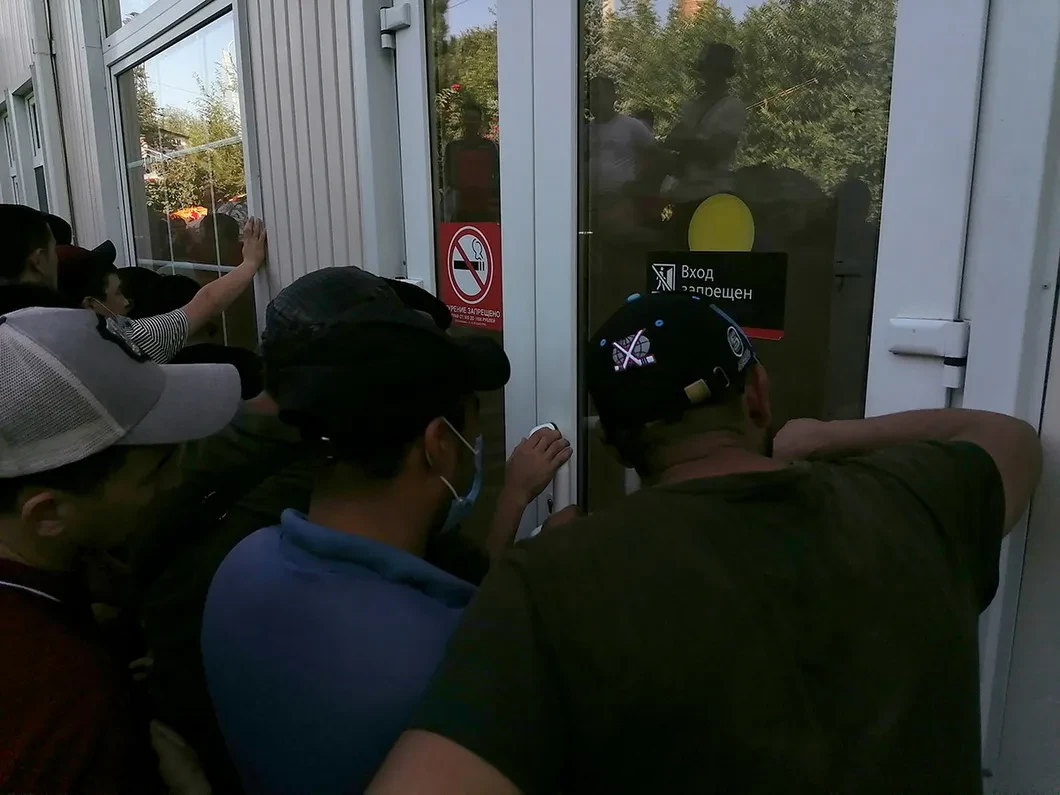
The consulate employee publicly denies these accusations, but the crowd worries. Women and children threateningly surround the official, and the police have to shout more and more often: "Step!" Behind the backs of women are silently men. They smoke a lot, occasionally talk to each other, throwing tense looks at the representative of the consulate - who will they let into the hall this time?
Who was lucky, leave their data at the post in front of the metal detector, and then go to the cashier - buy a long -awaited ticket.
“Now the tickets will end, and it will be necessary to ask for reinforcements,” says a man in civilian clothes on someone, watching the crowd from the hall.
Outside the window, several dozens of pairs of eyes are closely monitored by what is happening in the station building. Many have passports and certificates in their hands. The young woman, having removed the mask, cries, pressing the ultrasound photographs to her chest - she is pregnant.
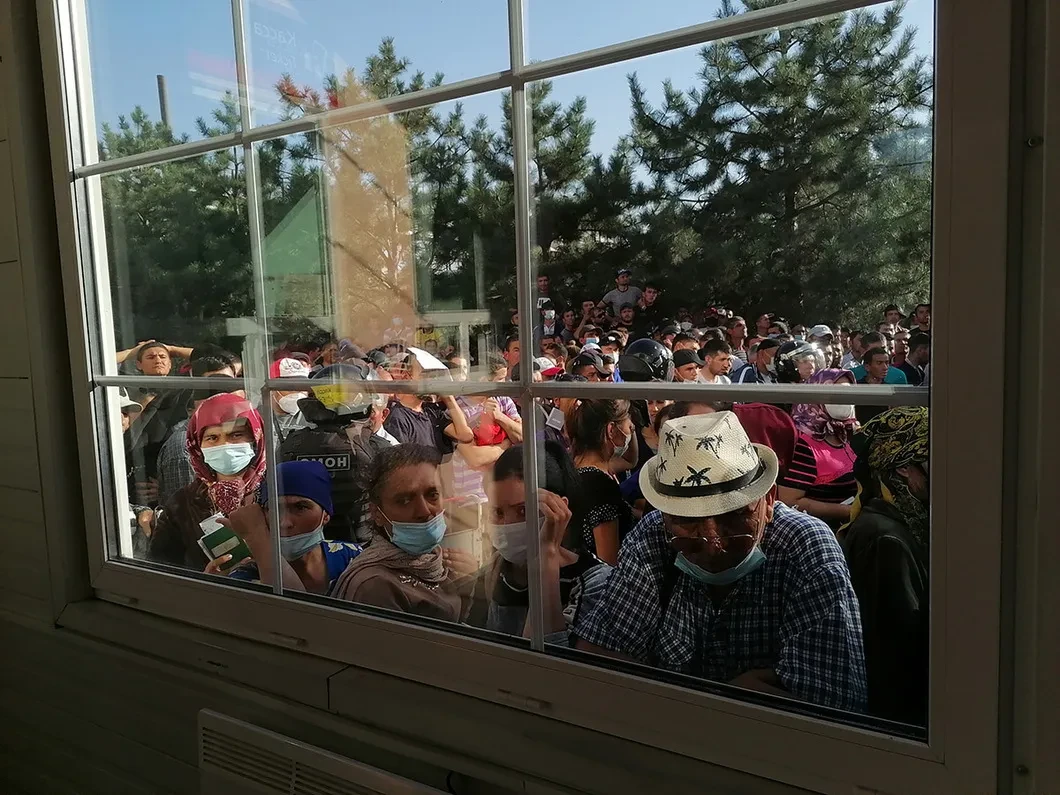
- Here yesterday they called an ambulance several times. And consciousness loses, and heart attacks. Doctors come, look, shrug with their shoulders - nothing. Simulates, says the station employee.
Suddenly, a brawl occurs in the doorway: an elderly woman in a long dark dress is screaming to break through the cordon, men in “covid” masks pushing her out into the street. She cries and shouts something in the language that they understand. OMON employees in a deaf equipment enter the building (relax under air conditioners), then put on helmets and return to the crowd. Outside the window - +30, but people do not diverge, and they have nowhere to go.
The authorities of the Rostov region say that they were not ready for the emergence of a spontaneous tent camp at the station, which had already begun to annoy the surrounding residents.
- A stressful situation was created in connection with the distribution of information not agreed on the Internet and the city administration on the sending of the export composition from the Pervomaiskaya station. The collection of citizens of Uzbekistan at the Pervomaiskaya railway station was also not consistent with the regional government and the city administration, ”explains the regional Minister of Economics Maxim Papushenko, who headed the working group to resolve the situation and who, despite the“ inconsistency ”, knows that the next train to Tashkent will go on September 8.
It is hard to believe in “inconsistency”: employees of the Uzbek consulate could “distribute” tickets at the main Rostov station, from where long -distance trains traditionally go.
Obviously, the suburban station for sending migrants was chosen on purpose: on the eve of the election of the governor and deputies of the City Duma, officials do not want to see a tent of thousands of migrants in the center of Rostov.
The minister notes with satisfaction that on September 8, 900 citizens of Uzbekistan will leave.
But what to do, Rostov officials do not know what to do.
“There are about three thousand of us here,” says one of the Rostov Uzbeks, who introduced himself as Jongjon. - So far, fellow countrymen who stay here help us. They bring water and food. But the money will end soon. Ask to give another train. We want to leave.
Journalist Shahid Tulaganova believes that the authorities of the republic are deliberately in no hurry to take compatriots from Russia: coronavirus rages in Uzbekistan. According to official figures, in a 34-millionth country there are 43,893 infected, the dead-352.
- I do not believe the numbers about the number of dead. Half of my friends and relatives got ill. There are families where five people died. And the return of migrants will aggravate the situation - the authorities understand this, ”says Shahida. -In addition, the authorities are afraid that the return of migrants will exacerbate the socio-political situation in the country. While the unemployed left for Russia and sent money from there - it suited everyone. The authorities of the republic did not carry out any reforms.
They could not even resolve the question with Russia in order to somehow facilitate the legalization of labor migrants from Uzbekistan. They do not care about their people in the republic itself, they do not help those who worked abroad and for years formed their money transfers for almost a third of the country's budget.
And now corrupt officials are also profitable in people who are in trouble and sell them tickets for charter trains. And what will happen when these people end with money?