
Translated material
Fake miracle
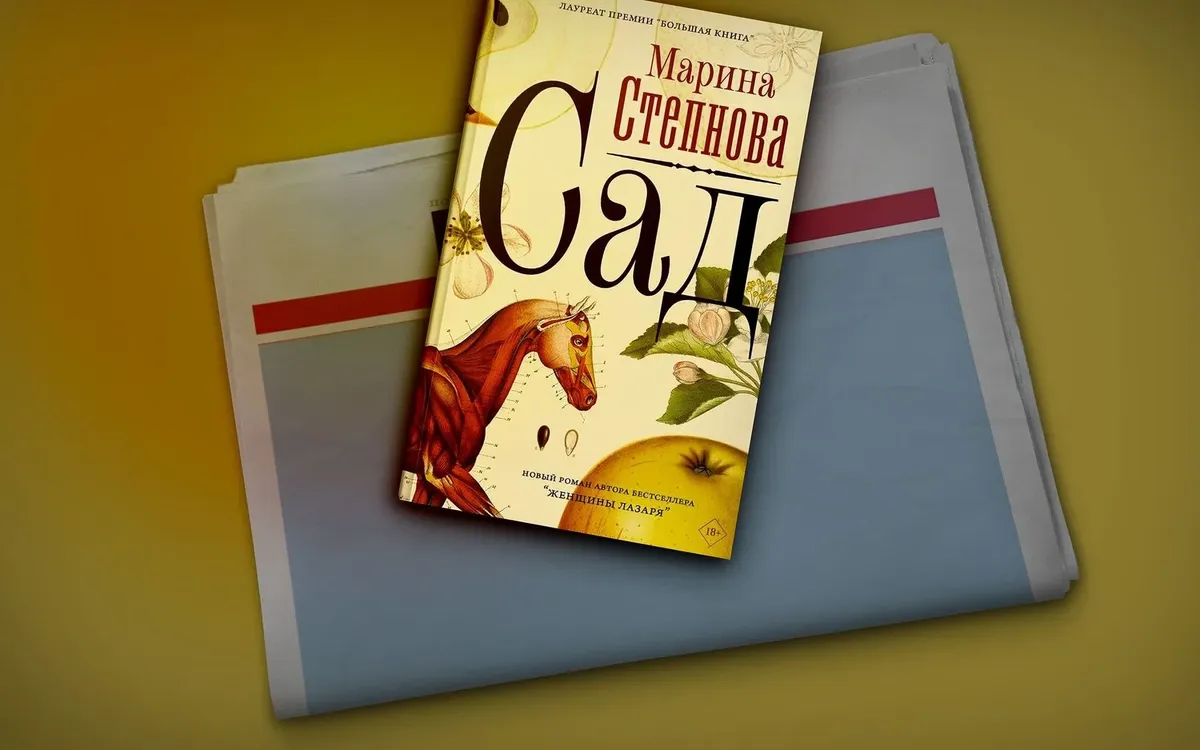
"Garden" Marina Stepnova: a book for the weekend from Ekaterina Pisareva
From the editorial office
Once a week on Fridays, Ekaterina Pisareva, the chief editor of the MyBook book service, including 260 thousand publications and 50 thousand audiobooks, will know with knowledge not only about the most interesting new products in 2020, but also choose those that can be read quickly and with pleasure.
The new novel by Marina Stepnova was waiting for a long time. For the first time, I met a fragment from it in the collection “Happiness what!”, Compiled by Maya Kucheskaya. It was called the "ether" and-obviously-was part of something about the lounger, large-scale, tireless, living. Two years later, I saw this “ for the most”, and it fascinated me.
This novel is emphasized literary. The name hints at this, the publisher Elena Shubina warns about this in the extension on the cover. Stepnova skillfully works with the artistic material: he walks around the “other shores” of Nabokov, quotes Mandelstam, reflects on the count Tolstoy, consciously makes a curtsy and leaves in the text many details that are pleasant to the philological eye.
It seems that the “garden” is at ease in the dialogue not only with Russian, but in general with world literature.
The action takes place in the 19th century in Russia after the abolition of serfdom. The prince and Princess of Boryatinsky have an unwanted child who turns their measured cozy life upside down. The newborn Tusya is a miracle that happened contrary to all decency: is it a joke, to become a mother at 44 years old, an age for childbirth, which is unthinkable by the standards of the 19th century. Shame and humiliation - this is what parents experience before taking it.
It is impossible not to recall another heroine that grew out of shame - Sufia Zinobia, or a “false miracle” from Salman Rushdi’s novel “Shame”. Having become the container of the most nasty human emotions, Sufi Zinobia grows up by a monster who kills people - Natasha is not considered at all with people. Evil, dark is torn from it out of the streams of foul language, with which it is forced to fight - and darkness retreats.
All in the world of Boryatinsky with the advent of Tusi seemed to be hot to the limit, and the girl herself flames with "non -General fire." Everything is “hot” here: air, wind, fingers, cherries, apples, envelopes - the author seems to be accelerated by the atmosphere, creating a hot haze in the novel, in which all its inhabitants live. To save Tusu, to devote her life to her and grow up a free healthy person, Dr. Meisel wants, a mane, as his pupil gently calls. It is he who replaces her father after the real one, unable to withstand the shameful turn of fate, retires to St. Petersburg. True, Tusya herself for a long time considers it not Meisel, but the boyar - a trembling horse her beloved horse.
The characters in this novel appear and disappear: a quiet nickety will go to oblivion, he will die in the torment of Caroline, an independent watermelon and Tanyushka will quietly leave the world. Motherhood will change the noble bookman to Princess Boryatinskaya beyond recognition - instead of Montaeny and Mill, washed pigs and economic affairs are waiting for her.
“Books of happiness will not bring,” as the author hints to a careful reader - and laughs at himself.
Men in this novel basically do not stand up to criticism. That the spineless, inertial prince Boryatinsky, that the cowardly and obsolete Radovich, who lives - both of them are only the shadows lying at the feet of women. One hero is truly strong and pretty here-revolutionary Sasha Ulyanov (brother of that Vladimir), trying to live in conscience and therefore doomed.
But political events are not particularly interested in the author, like emancipation. Stepnova talks about the loser pleasure of the stuffy pigs in which babies languish, and about orders in peasant families than about state riots, terrorist acts or infringement of women's rights. As a result, the novel, which some call the feminist response to all Russian literature, turns primarily by the novel of education, pushing the feminist agenda into the background.
It is necessary to look into the eyes of the obvious: Tusya is not a fighter for the rights of women, she simply does not like prohibitions and conventions. She does not want to behave as expected, does not want to dress as accepted - she always acts differently. “The freedom of the child should not be limited to anything,” said Meisel, and Tusya has learned well, gnawing personal freedom for herself, she is not considered those who are in her environment. Sisterhood and female solidarity are far from it just like Radovich - from the royal title. She sees the goal and does not see obstacles - she is ready to sacrifice others to become happy. Tusya is a typical egoist, the heroine, as if escaping from the 21st century and does not want to live according to obsolete rules.
Obviously, Marina Stepnova wrote a novel, looking into the past with modern eyes. She rethinks history and writes it again, affecting a huge number of topics: from conscious education and book escapism to the behavior of people in critical situations. And this is not only the story of one family - this is the cast of the era. The “garden” is arranged “reasonably and simply as a revolver”, therefore, so tempting is so beautiful.