
Translated material
Escape from the ruble
Why are difficult times for the Russian currency
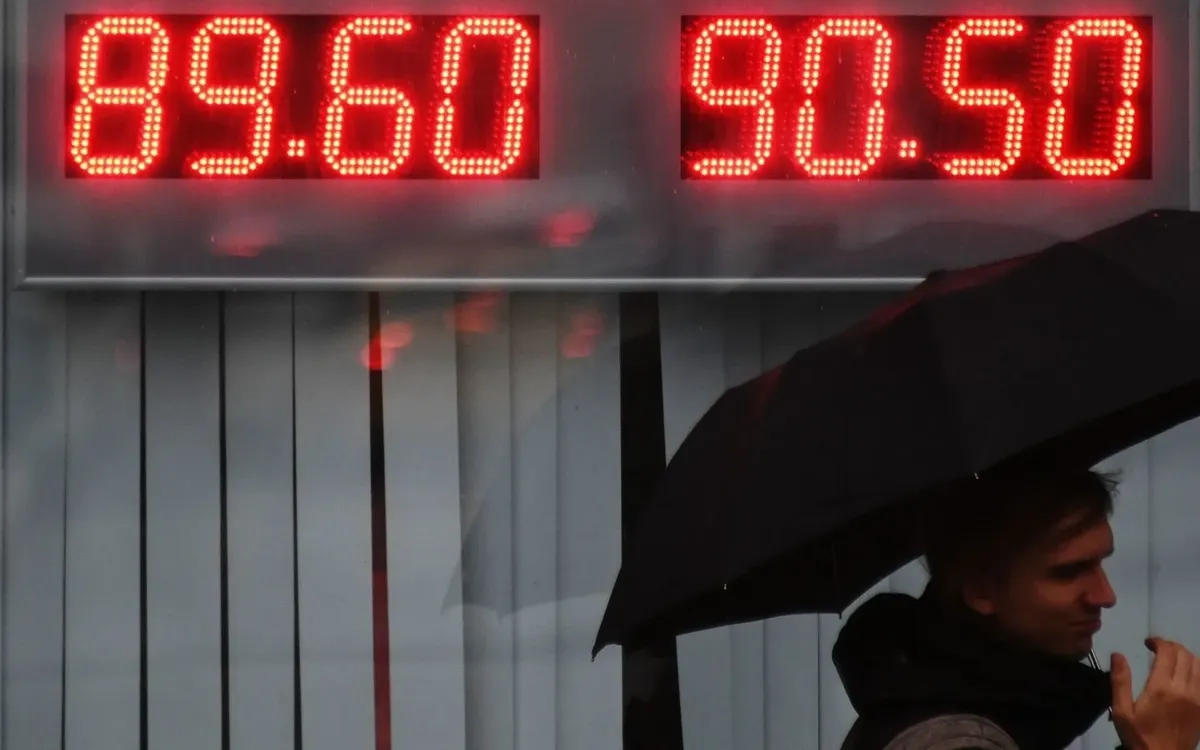
Sometimes it may seem that the ruble after its next subsidence always rolls back. And now, after the ruble dropped to 76 rubles per US dollar, and then swayed back, just such a moment. However, the bitter truth of life consists in the fact that he rolls as far as we would like, and as a result, the overall tendency to weaken remains.
The facts of ruble retrospectives should be recalled:
Relatively stable, the ruble exchange rate was only in 2000-2013.
If at the end of December 2000 the US dollar cost a little more than 28 rubles, then at the end of December 2013 it cost a little less than 33 rubles.
But at the end of December 2014, more than 56 rubles have already been given for the US dollar.
Well, how much does it cost today, we all know very well.
Were there rollbacks at the ruble? There were, but the trend is unambiguous: the ruble is weakening, and over the past six and a half years it has fallen in price in a foreign exchange dimension 2.5 times. This is a fact with which nothing can be done, it can only be stated. Of course, you can hope for a rollback, but so that these hopes are not in vain, we will better try to soberly evaluate the current circumstances for the ruble.
Firstly, the threat of new sanctions against Russia “lit up” in connection with what happened to Alexei Navalny. Secondly, world oil prices again swayed down, below $ 40 per barrel.
The difference between the new sanctions history is that the trigger of its development is the German government and personally Chancellor Angela Merkel, who admitted that new measures can affect the Northern Stream 2 project.
Never before the issue of sanctions in such a link from Europeans has been discussed. And it is obvious that it is Germany that will play a leading role in this process.
The threat of anti -Russian sanctions and a decrease in global oil prices more than ever “successfully” fell on the tendency to weaken the ruble that had already formed in recent weeks. The fact is that at the end of July 2020, the Bank of Russia reduced the key rate to a record low level - 4.25%. As a result, the money that commercial banks occupy the Bank of Russia has fallen in price to a record low level.
To record low levels, the percentage that owners of Russian government bonds can receive. That is, foreigners (and not only), who used to change the currency for rubles with great benefits and bought Russian bonds on them to get high interest income, have now lost interest in this asset. At a low key rate of the Bank of Russia, all these operations ( sold currency - bought ruble bonds - received a high percentage income in rubles - changed the rubles for currency and received the equally high currency income ) that are called Kerritrad , lose their economic meaning.
Yes, the income in the currency can still be obtained by buying and selling Russian bonds, but if you take into account the fee for the risk with all converts, then working with the ruble becomes unprofitable, the demand for it is reduced. Here are non -residents - owners of ruble Russian bonds and began to leave them. And here is the threat of new sanctions. Not that you will leave the Russian GKO - you will run from them.
In fact, the process of exit from ruble bonds began in the spring of 2020. The share of non -residents in Russian bonds reached a record high level on March 1, 2020 - 34.9% ( 6.0% - the key rate of the Bank of Russia ), as of July 1, 2020 there were already 30.6% ( 4.5% rate ) as of August 1, 2020, the share of non -residents decreased to 29.8%. A decrease in the rate to 4.25% has become a peculiar Rubikon. That is, new circumstances only strengthen the previously formed bad trend for the ruble.
By the way, there is another point - psychological. Today, in pair, the dollar -Europe is preferable to euro. And the euro has already reached a mark of 90 rubles the other day, beyond which a hundred -ruble line loomed. Such lines are called psychologically important, because they themselves turn into an independent factor in influence. They are considered as very real guidelines that will soon be achieved. So the line of 100 rubles for the euro today has already begun to attract and attract.
In a word, the ruble, although it can roll back, but still it will be a downward movement. Popures of the Lenin “step forward, two steps ago”, we can say this: “Two steps down, a step up.” One hope is not to rush down, jumping through a few steps.