
Translated material
Rain schools
New business and NPO projects help to teach children with special educational needs. What parents and teachers need to know
Who builds capsules
So that a child with autism can come to school, it is not enough to declare inclusions in it and simply put him in a regular class. But to create a structure within the school that would support inclusion, the school itself may not be affordable: it needs both the help of experts and financial assistance.
In 2015, the “Inclusive Molecule” experiment began in Moscow, within the framework of which conditions for teaching children with autistic spectrum disorders were created in several Moscow schools. This project was attended by the Department of Education, the Moscow City Psychological and Pedagogical Center, MGPPU, the Foundation Foundation, the Kontakt regional public organization and others. Now the project is actually completed: all the children who studied in the created classes released from elementary school and moved to secondary. “There are no official results of the project yet,” says teacher Olga Pogonina, a member of the Council of ROO Contact. - Several open resource classes continue to exist, and some have not survived - not everyone managed to adapt the model to a standard school:
A model based on the individual characteristics of children, at a school working according to the standard, turned out to be an alien body. ”
Now in Moscow, in practice, a resource class model is already being worked out in practice, but a model of a resource school, the task of which is to engage in children not only with autism, but also with other conditions that require additional assistance. Such a school should become a methodological center for its area: to accumulate the experience of inclusion and share it with other schools.
“Problems with inclusion still remain,” Olga Podonina believes. - After all, the school considers academic knowledge to give children to children - and nothing more. Social inclusion remains a secondary task in relation to academic. There is an opinion that resource classes are for the younger ones. At the middle step, those who pull the general educational program are laid, and those who do not pull are corrective training. On the middle step with inclusion, everything is much worse. The program is complicated, it is not one teacher who has to negotiate, with a number of subject teachers. The "preserved" children in the best case is supposed to be a tutor. And those who definitely do not pass the OGE, schools "bring" into correction departments.
And that in addition to teaching children, socialization among peers is needed is forgotten in 90 percent of cases.
There are still serious financing problems, while the most expenditure article is the payment of tutors and specialists. Much, as always, depends only on the persistence of the parents. ”
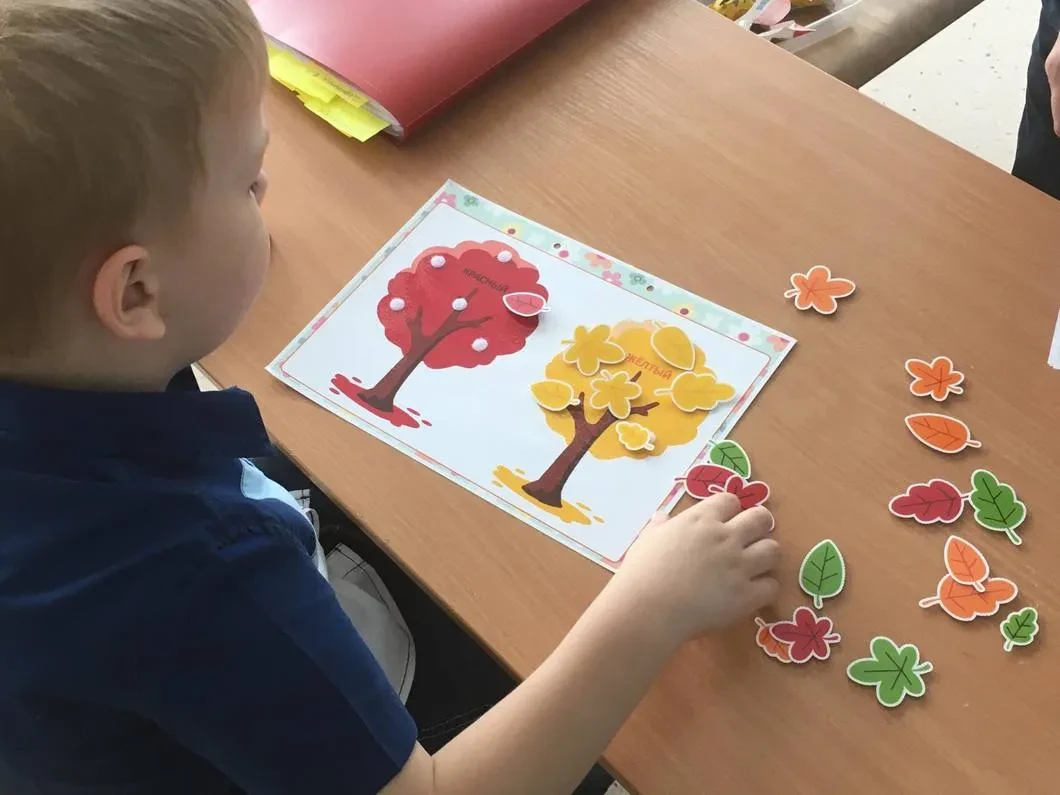
In insistent parents, the inclusive class model for children with autistic spectrum disorders is still in demand. Several public organizations help them organize such classes, including, for example, ANO “Bo“ Bo “Schuralik” as part of the Inclusive Capsule project: he teaches tutors, resource teachers and supervisors, equips classes, advises parents.
“Children with autism are attached to ordinary classes, but first study in the resource zone with resource teachers, only physical education and music are common,” says Irina Pudovinnikova, the head of the inclusive capsule. - Then they begin to spend 15–20 minutes in lessons with all the children, they are accompanied by tutors, which we also teach. All our experts have an applied analysis of behavior - this is a scientifically proven practice of helping children with autism. In the new academic year, we open the second resource class in Balashikha - Railway. ”
But the best news from the Cranes-this year he won the presidential grant together with the scientific and practical center of the mental health of children and adolescents named after G.E. Sukhareva.
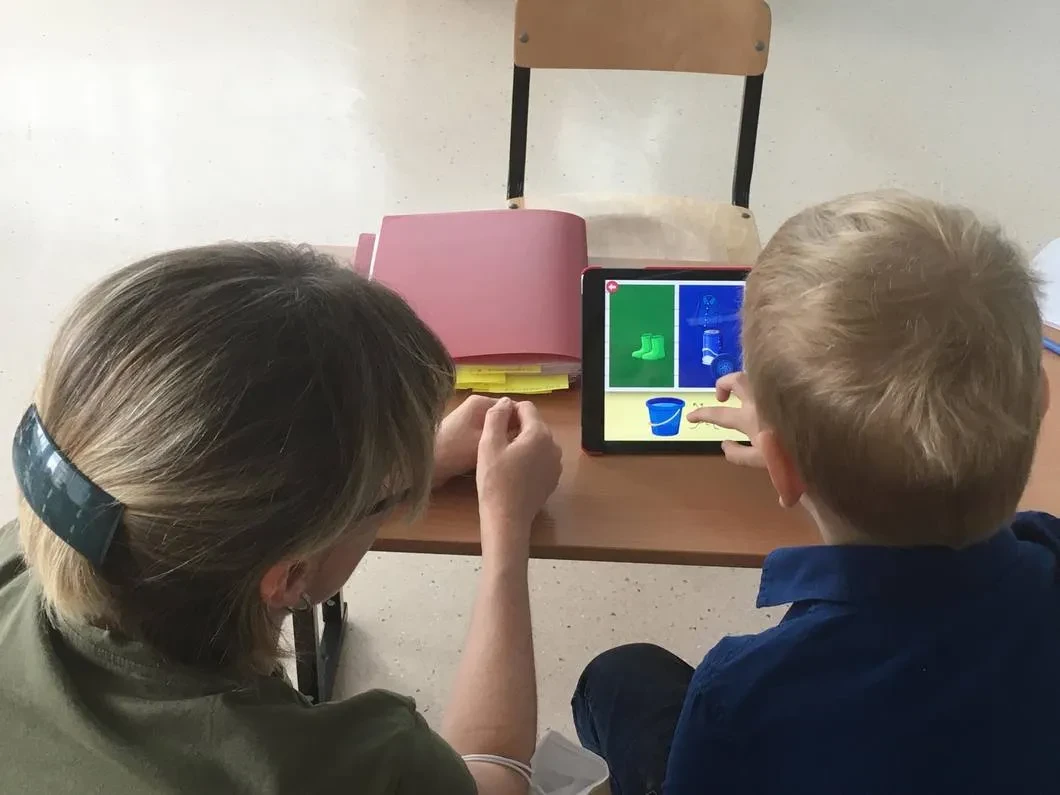
“The children with whom our specialists have to work are patient patients for babies from two to seven years old. They fall into the center for inpatient treatment-someone in the direction of the doctor, someone in an ambulance with self-regulatory behavior, for example. Our task is the socialization of such children, preparation for kindergarten and school, ”says Irina Pudovinnikova. - Using experts on applied behavior analysis, we hope to reduce the number of drugs that are sometimes unreasonably prescribed for children. And to show parents what they themselves can do for their children at home: after all, for full assistance to the child, there is little inclusion, even in kindergarten.
From 2 to 7 years old is the most favorable time, if you deal with a child at this time, he may have speech, he can serve himself better, manage his behavior, he can go to school. ”
Who helps at a distance
Children with dyslexia, dysgraphia, and diskalculia at school are difficult to get the necessary assistance. Outside of large cities, it is difficult to even find specialists that you can contact. That is why the association of children and parents with dyslexia is trying to make help accessible to children regardless of their place of residence. An online course for teachers who can pass it and receive a certificate of advanced training has already been launched. But most importantly, regional projects are being prepared to launch, which should provide children living in the outback, diagnostics, consultations and assistance outside the school.
Maria Piotrovskaya, the founder and founder of the Association of Dyslexia, says: “Without knowledge of dyslexia, she cannot be recognized, not to contact a specialist, and without a specialist, she cannot be dealt with. These are serious, high -tech directions. Therefore, our task is to convey to people that there are such difficulties that they need to contact specialists. ”
The association has two regional projects now. It is only preparing to launch: this is a “log train”, which is conceived and developed in partnership with Russian Railways. The essence of the project - brigades of specialists will go to six regions of the country. The second project has already begun work: on August 6, a remote center for assistance to children with difficulties in learning, organized with the support of the Ministry of Education and the Sberbank's Black Bank, has been opened. Not only parents of children with dyslexia and dysgraphia, but also schools who want to find out how to create favorable conditions for such children and specialists working with them can turn to this center for free online consultation. Schools and specialists promise methodological support, families - consultations, recommendations on working with a child, materials for classes with him.
Who teaches teachers
Perhaps the good news can be considered not only the launch of new programs, but also the fact that large business began to include inclusion among the areas of its charity activity.
Yandex, for example, in this academic year, launches a new project to help teachers “I am a teacher”: in September, he will discover for everyone to access a free online course for inclusive education. The course will contain recommendations for those teachers, among whose students there are visually impaired, deaf and hard of hearing, or having speech disorders, autistic spectrum disorders, attention deficit syndrome, musculoskeletal disease, and mental retardation.
Irina Savitskaya, head of the Yandex-Ochobnik promotion department, says: “We will try to use the Yandex resource as much as possible to tell all teachers how to work with special children. From existing courses, it is often difficult to extract useful information: why it is necessary to do this, and not how to talk with the guys and their parents themselves. Therefore, we try to make our course as specific and practical as possible. ”
So in this academic year, the parents of special children and their teachers will be sustained for virtual desks. And the children themselves will simply go to schools - real, real. I would like to believe that they will be happy there.