
Translated material
Under the cover of captcha
How the CEC protected the elections from electoral analysts. Open letter of Spilkin, Schulman and other researchers
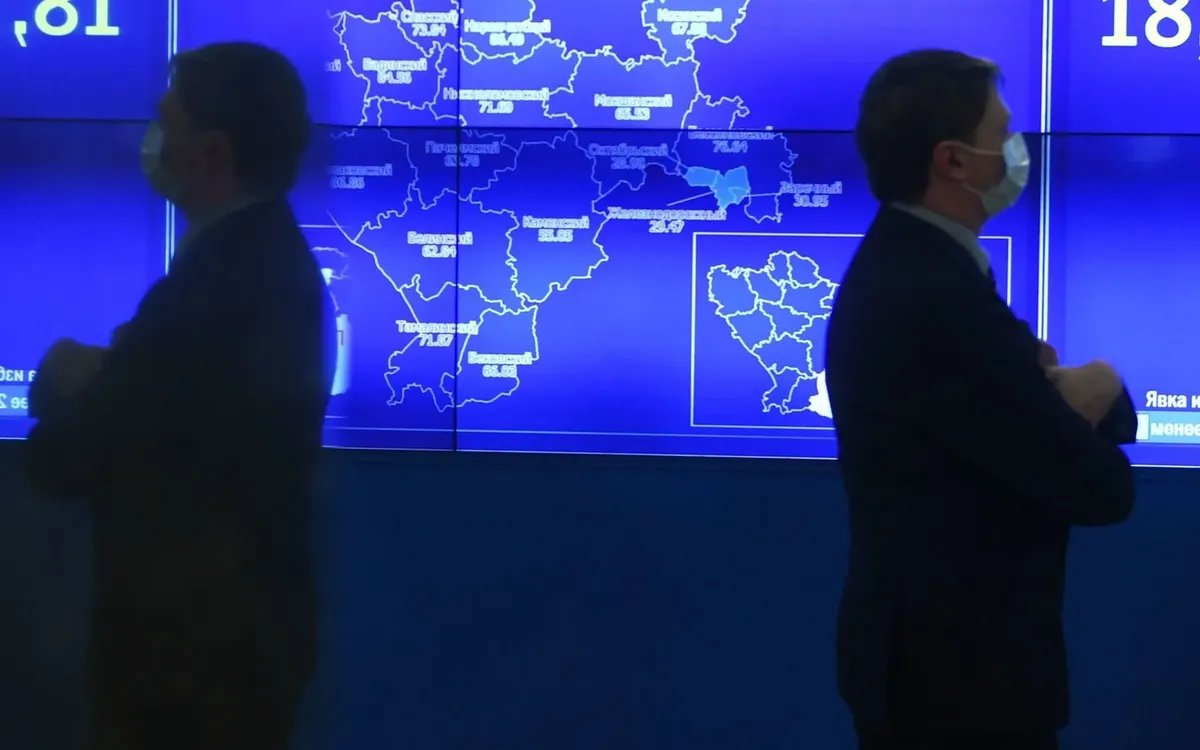
From the editorial office
In recent years, the New Gazeta has published an analysis of the main election campaigns based on a statistical data analysis.This time there will be no such analysis. Instead, we publish the text of the open letter, which the famous Russian electoral analysts, political scientists and sociologists direct to the Central Election Commission. From it you can find out why a statistical study of election results is more impossible.
The CEC broke its own tool, which made an analysis of the electoral data available to a wide range of scientists.
Back in 2017, Ella Pamfilova claimed that the elections should be as transparent as possible, referring to the relevant presidential attitudes. Now, judging by the actions of the CEC, transparency and openness of the elections are no longer relevant for the Russian authorities.
We invite the CEC to publish our answer on the pages of Novaya Gazeta.
***
Dear Ella Aleksandrovna!
The database of the Central Electoral Commission of Russia on preparing, going and held elections, posted at izbirkom.ru, until this year was an example of completeness, accuracy and openness of electoral data. A statistical analysis of this base in its All -Russian fullness gave a serious contribution to the development of social sciences in our country.
This year, access to this database was radically complicated ( in fact - blocked ) by introducing when transition to each of the next captcha page - a picture with which the living user should be recognized and introduced. Such a measure is aimed at preventing machine access to data and allowing only to manually view single sections of tens of thousands of election commission throughout the country.
The professional community of observers, political scientists, sociologists, journalists, analysts specializing in the study of elections, thereby turned out to be cut off from complete data in Russia, which is now impossible to get. To analyze all -Russian data,
It is necessary to manually enter the captcha about 100,000 times, i.e., taking into account the time of loading the page, spend about 30 million seconds - almost a year of work.
As a result, a regularly working tool created by the CEC over the past years has turned into a non -working one.
The election database provides citizens with socially significant information, and we regard the intentional difficulty of accessing it as a demonstrative neglect of the rights and legitimate interests of citizens. The introduction of captcha input when loading each new page greatly complicates the work of users with the site, without realizing any useful functions from the point of view of information security. Such a measure, as far as we know, has not a single analogue in world practice and causes the reputation of the CEC and Russian elections irreparable harm.
To increase the transparency of the electoral process and to reduce the load on the CEC servers, it would be advisable, on the contrary, to facilitate citizens to access detailed data on elections by providing data in the form of machine -readable tables, as is practiced in many countries of the world, from Poland and Finland to Spain and Brazil, as well as the scans of the protocols of election commissions online. The liquidation of captcha that does not require the costs of budget funds is a priority measure that can and should be immediately implemented.
Sincerely,
Vladimir Gelman, Candidate of Political Sciences
Alexey Zakharov, Candidate of Economics
Andrey Zasekin, candidate of physical and mathematical sciences, editor of the DATA department of Novaya Gazeta
Alexander Kynev, candidate of political sciences, member of the expert-consulting group under the chairman of the CEC and the Scientific and Expert Council under the CEC until 2020
Grigory Melkonants, co-chair of the Voice movement, member of the Scientific and Expert Council under the CEC until 2020
Stanislav Rachinsky, editor of the Observer Portal, member of the expert-consultation group under the chairman of the CEC and the Scientific and Expert Council under the CEC until 2020
Kirill Rogov, candidate of philological sciences
Konstantin Sonin, candidate of physical and mathematical sciences, professor of Chicago University
Sergey Spilkin, independent analyst, member of the Scientific and Expert Council under the CEC until 2020.
Ekaterina Shulman, Candidate of Political Sciences