
Translated material
Beauty publisher
Franco Maria Ricci died. He, perhaps, created the most famous labyrinth of our time - but it was just his last quirk
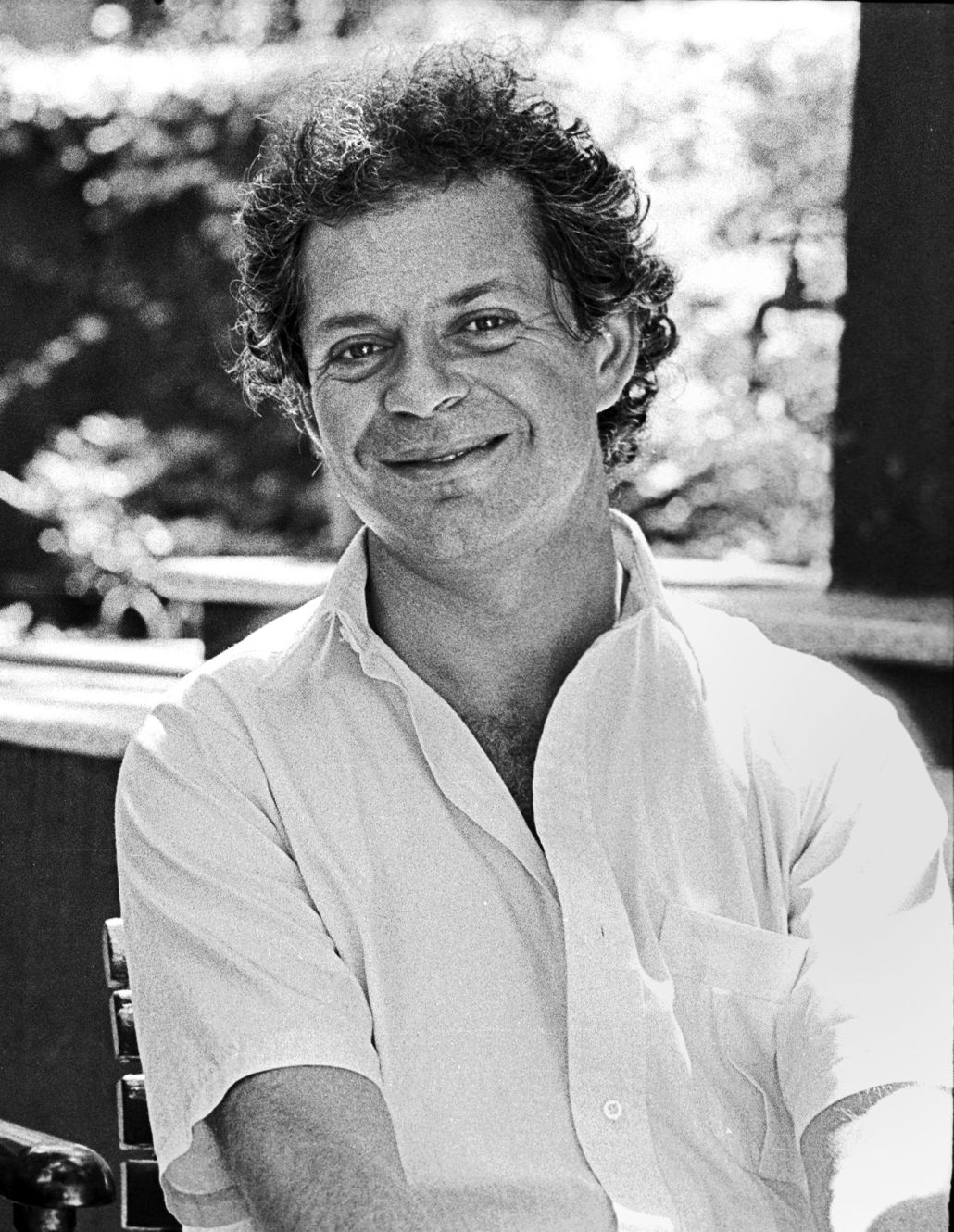
On September 10, 2020, an Italian designer, bibliophile, collector Franco Maria Ricci died at Villa Fontanellato near Parma. If you look for information about him in Russian, then the search engine will first give mention of the labyrinth, which FMR, as he was usually called in the book world, came up with and raised. But the labyrinth is the last quirk or feat (who likes what more) a person who painted not only strict banks for banks and playful flights, but re -invented art magazines and issued, possibly, the most beautiful books of the XX century. At the request of Medusa, journalist Julia Stutina talks about one of the very few people who could still apply the expression of Tacitus Elegantiae arbiter - “legislator of elegant taste”.
Ricci came from a family of aristocrats. In one interview, he recalled how the eccentric father sent him, a 12-year-old schoolboy, one of Genoa in Lucca. Upon his return, the boy had to report not only about the thousand lire spent, but also about what beauty he saw and visited. Relatives, of course, expected that he would engage in art with art or architecture, but at the end of the school, Ricci entered the Parm University of the Geological Faculty of pure perseverance, "because he was not strong in the natural sciences." After the university, he worked in oil exploration in the Middle East, but it bored him, and he returned home. He took up a graphic design for Italian companies, and simultaneously plunged into a personal project, which soon brought him fame: he issued a two -volume “typographic lead” (“Manuale Tipografico”) Bodoni.
Jambattist Bodoni (1740–1813), who spent the last decades of his life in Parma, was not only a hereditary typograph, but also an incomparable expert and a font collector. “Manuale Tipografico”, the main work of his life, was posthumously in a small circulation and soon turned into a bibliographic rarity (now the first edition of “Manuale” costs about 50 thousand dollars), but the influence of the encyclopedic approach and erudition of the great typograph did not run to this day.
Ricci discovered that the “leadership” is almost impossible to find in Italy, and equipped a small printing house, where he printed 900 facsimiles of this masterpiece. Decades later, he said that “Manuale Tipografico” turned him into an idol of the books of book, and assured him that his 25-year-old, personally met at the airport, the director of the New York Public Library-they say, they were highly appreciated by the “typographic leadership” that again became affordable (it was possible to “manuale tipografico” here ).
Ricci with irony said that he turned out to be the same age as books in paper covers: the first mass Paperbacks appeared in 1935, and he was born in 1937. He found an elegant form of snobbery: without denying the need for mass literacy and cheap publications, he simply ignored them, engaged only in such books that were physically pleasant to hold in his hands and in which the form and content reached complete harmony. In his books, everything was the meaning: paper (blue, heavy, from the old Babyano town, where for many centuries they make the best paper for writing and printing), a convenient and beautiful font (of course, Bodoni), etc. For his niche, he found optimal circulations: two or three thousand license plates-and did not strive for more. He willingly participated in international book exhibitions-fairs and, of course, turned into a landmark of Italian stands.
It is not surprising that he was often reproached for elitism, that he is Enzo Ferrari of the book of book. He shrugged and continued to do what he loved: he prepared and published the Facsimile of the “Encyclopedia” by Didro and D`Alamber, invented and published several outstanding series of art books, including “Quadreria”, “Enciclopedie Delle Città”, “Grand Tour”, “I Segni Dell_uomo (in the second half of the 1990s in Russia, at least two volumes from the I Segni Dell_uomo series (in the Russian version of “Traces of man”) were published: “Archimboldo” in 1997 and Erte in 1998). He invited Jorge Luis Borges and released 33 volumes “La Biblioteca di Babele” (“Babylonian library”) - a colorful collection of texts that were the roads of the Argentine writer.
By the beginning of the 1980s, Ricci was convinced that in the periodical dedicated to art, a crisis came, and undertook to correct the situation-he decided to publish his own magazine, calling it his initials: FMR. The joke is that when reading these letters in French, éphémère was heard-translated "fleeting"; In Greek, the consonant word “ephemeris”, εφημερίδα-“magazine” or “newspaper”. Having charged a new brainchild with irony and self -irony, Ricci brought the magazine to the market and found success. By the 1990s, FMR was already in four languages, and its advertisement consisted of two quotes: “The most beautiful magazine in the world” (Jacqueline Kennedy) and “Black Pearl of Art” (Federico Fellini). For the magazine, the beloved authors of Ricci wrote, including Fernana Brodel , Italo Calvino , Roland Bart and Umberto Eco.
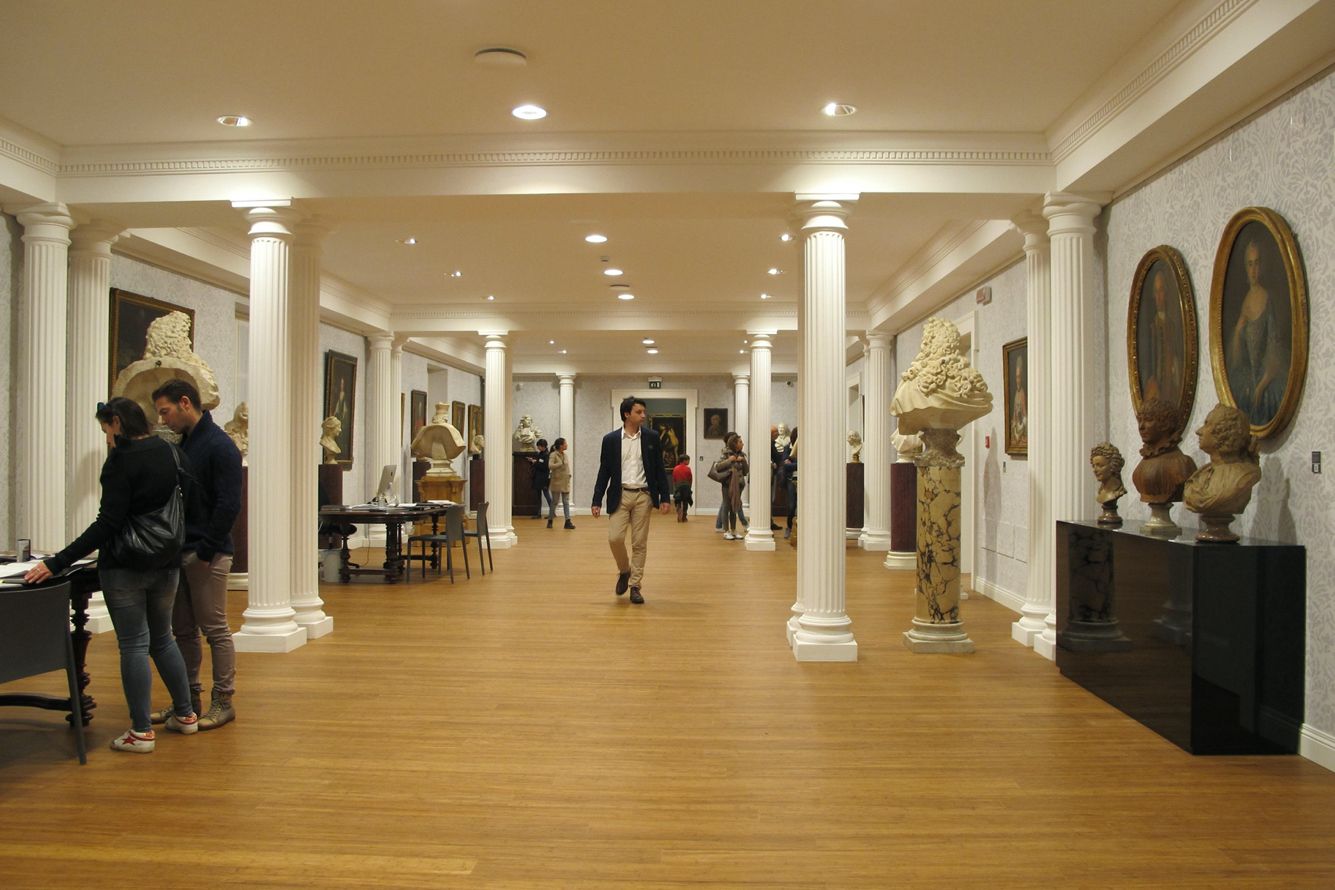
In the 2000s, the magazine did not go too well, and in 2009 Ricci finally closed it. He was already elderly, his time and effort took a large new project. Together with the architect David Dutto, he invented and planned on a villa in Fontanlatto Labyrinth. This was partly a tribute to friendship with Borges , partly a metaphor for human life, as FMR loved to represent it. Conscious that there was little time, he decided to make the walls from a living bamboo: although he, although not at all an Italian plant, is beautiful, growing quickly and deeply revered in the east. In 2015, the maze and the museum, which exhibited an eclectic collection gathered by the owner of the villa for half a century, opened for visitors.
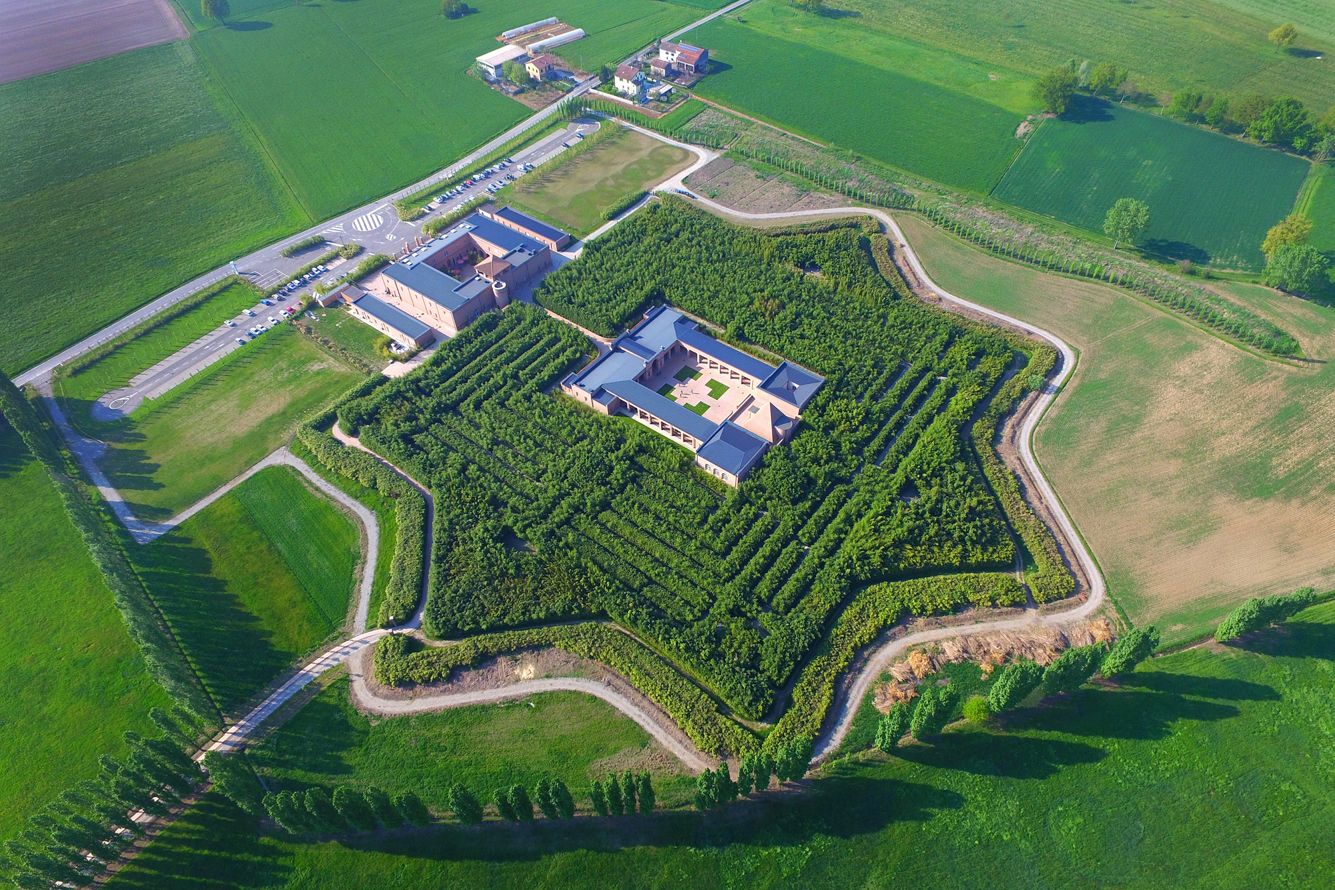
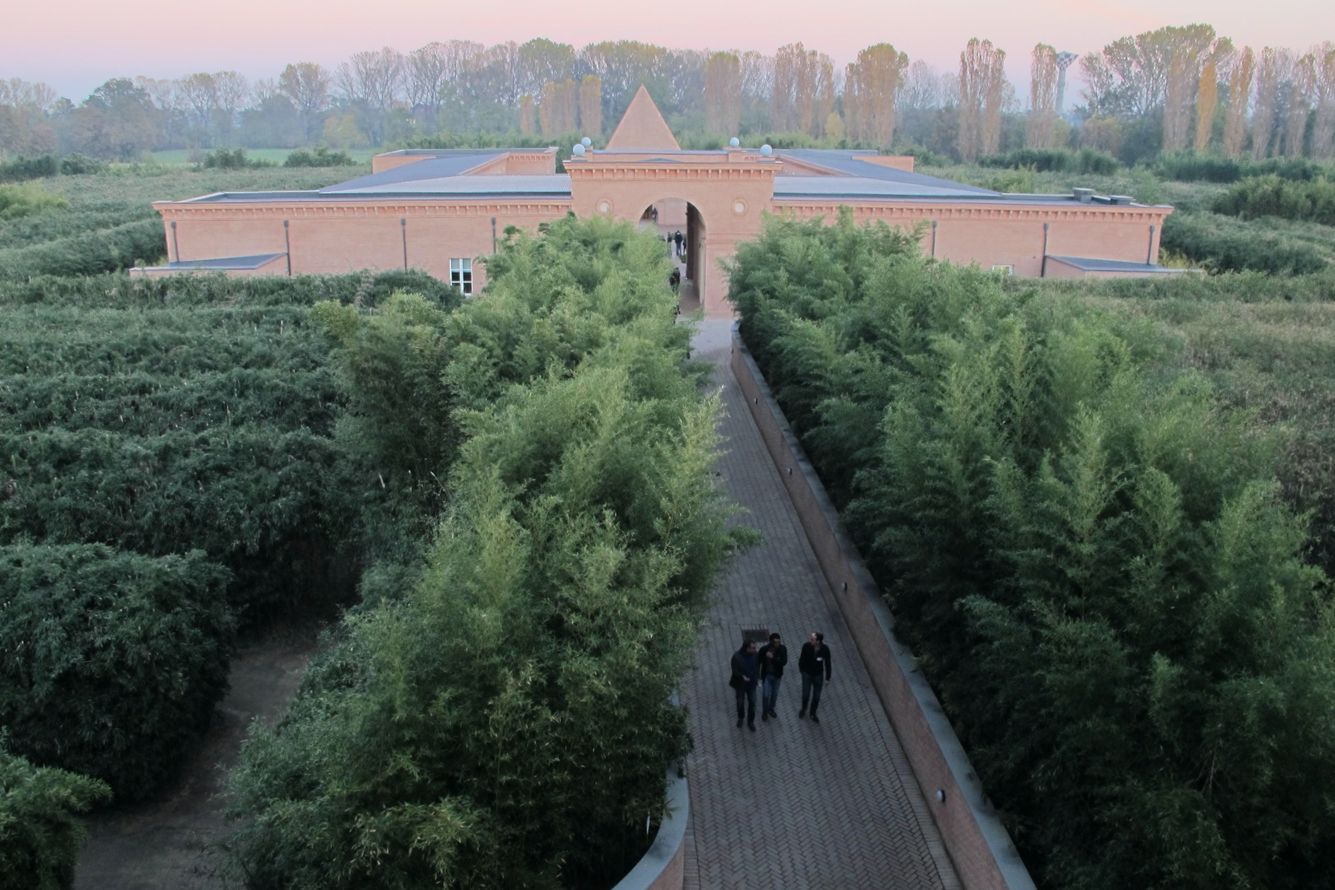
In its current form, Ricci rebuilt the villa with the assistance of the Parm architect Piercarto Bontempy together, they came up with how to combine classic samples with the utopian projects of the French neoclassicists Led, Bulla and Lex. Ricci was not going to imitate the antiquity, he played in it, and it turned out something unusually living, interesting and as if not completely understandable: the buildings, and the garden, and the labyrinth from different points of view look so unlikely that the visitor all the time all the time collects a puzzle from what he saw.
FMR was often asked what he was collecting. He replied that he had two directions: firstly, everything related to Bodoni, and secondly, everything else that can be described with the word Belezza, beauty with a capital letter. This was his main word.
Julia Stratotina