
Translated material
The Embassy of the Russian Federation requested consular access to Alexei Navalny in Berlin
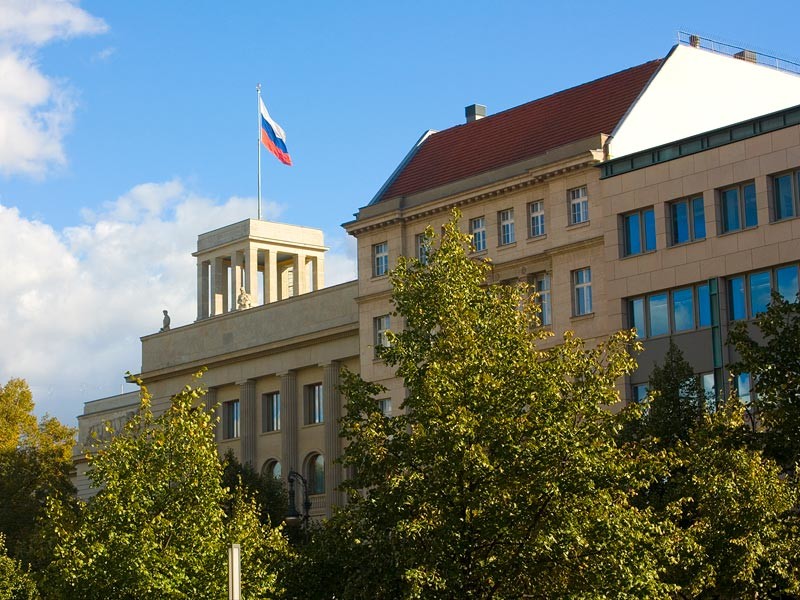
Russian diplomats in Berlin requested consular access to the leader of the opposition and the founder of the Corruption Fund (FBK Alexei Navalny, who is in the Charite clinic after the nervous nerve poison of the Novice family. The Informed Source told Interfax about the request of the diplomats.
Alexei Navalny became bad on board the plane on the way from Tomsk to Moscow on August 20. The liner was urgently landing in Omsk, where the opposition was hospitalized. Omsk doctors did not find signs of poison in his body and called a working diagnosis of metabolic disorders. 13 days he was in a coma.
On August 22, at the request of relatives who overcome the initial resistance of the authorities and medical functionaries, Navalny was delivered for treatment to Charite Clinic in Berlin. As the Bundeswehr laboratory installed, Navalny was poisoned with a new type of nervous paralytic poison. On September 14, experts from France and Sweden came to the same conclusions, examining Navalny at the request of the Government of Germany.
In early September, the Chancellor of Germany Angel Merkel demanded that the Russian authorities investigate the poisoning of the opposition policy. Many European countries and the EU have joined this request.
International experts believe that Navalny was poisoned by the new chemical development of Russian special services. A substance related to chemical weapons like "beginner". Presumably, the attackers poisoned tea or inflicted poison on a cup in which the drink was served as an oppositionist. The remnants of this substance were found by scientists in the hands of Alexei Navalny himself, as well as on the neck of a plastic bottle from which he drank water.
According to the Die Zeit newspaper, the Federal Republic of Germany no longer doubt that this poisoning is Russian intelligence agencies receiving orders from the Kremlin. The operation using such a dangerous and difficult to manufacture chemical weapons can be carried out only by special services, and such a substance can only be produced in a special laboratory.
Moscow stubbornly denies all accusations of involvement in the attempt. According to the press secretary of the President of the Russian Federation Dmitry Peskov, the Kremlin "is not inclined to perceive any accusations." And the latest stocks of chemical weapons, as Russian officials repeatedly stated, were destroyed back in 2017 in full accordance with international agreements.
Rejecting their involvement in the poisoning of Navalny, the Russian authorities simultaneously create the appearance of some kind of work to establish the causes of what happened. Although the criminal case is not started, and the criminal character in the incident with Navalny is not recognized, the Ministry of Internal Affairs intends to participate in investigative actions in Germany. To simulate the investigation, Russian diplomats, for example, announced the "inconsistencies" in the case of Navalny and asked the European Parliament 9 questions . And the Prosecutor General’s Office of the Russian Federation requested from the Ministry of Justice of Germany the results of analyzes by Alexei Navalny.
As the authorities of Germany explained, the results of test tests taken to Germany from Russian oppositionist Alexei Navalny were transferred to the organization to prohibit chemical weapons (OPCW). The representative of the Government of Germany Martin Fitz indicated that Berlin sees no reason to transmit this data directly to Russia and called on Moscow to provide information about the incident, including as a member of the OPCO.