
Translated material
"Scarecrow" from Yakut Hollywood
The Kinotavr has not yet been completed, but there is an obvious contender for the main prize. We are talking to his director
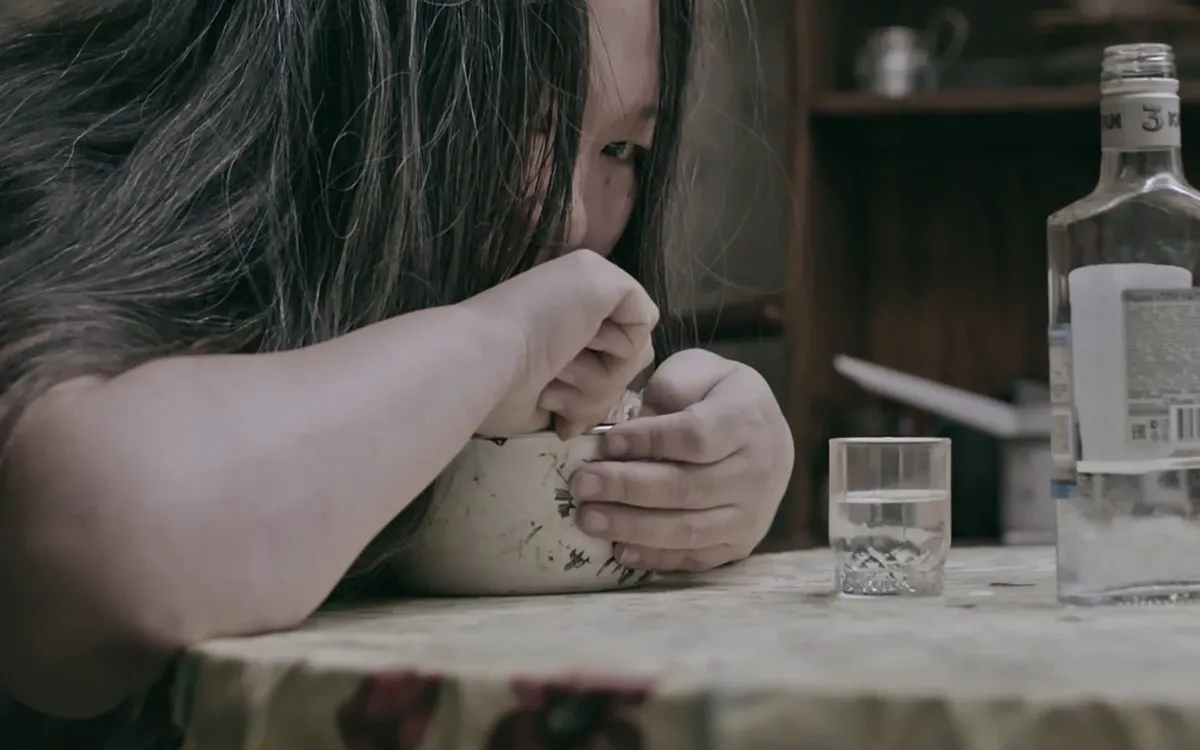
Dmitry Davydov’s “scarecrow” is a new message of the legendary Yakut cinema, which, against the backdrop of a sluggish Russian cinema, seems eventful, unpredictable, alive.
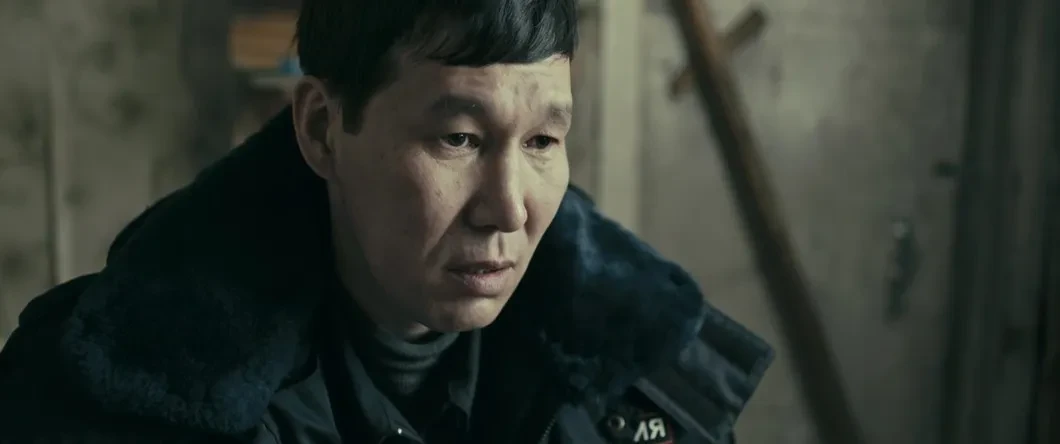
... A small, almost children's figure among the snow field froze with outstretched hands under a high sky. The healer was scared, a rogue in the leaky boots, about forty years old. Long with gray hair, torn plastic. He lives in a poor, not an incorrect hut. The first scenes are mystical eccentris. Wretched the life of the cops, the fraction of the typewriter. The policeman asks for scarecrow to save a woman wounded in the stomach. The scarecrow rests, but in the end it surrenders. He pulls himself as a multi -layer, like cabbage sheets, clothes. He climbs a gurney and lies on a wounded woman. Supports, draws into itself the smell of gunpowder and blood, inhales the pain. Almost gasp. Then she will be bad: she turns her right here in the courtyard, drinks vodka from the throat. She does not heal in Hami - he treats herself.
A renegade, a white crow in the village is despised. Alien. Sharp. Haughty. Drinking. Outcast. Incomprehensible. The incomprehensible scares. Sympathy is zero.
She does not allow her to buy bread in the store, boys are thrown by snowballs. And at dusk to the scarecrow stretch for help. Where else?
One of the sessions of forced healership will remind of a prologue from the Mirror. The scarecrow heals a stuttering child. At this moment, we do not see the face of the boy. Only probing breasts, strips of ribs, moving from rapid breathing. It seems that he is about to say: "I can say!"
When the scarecrow is fun, she dances, hits herself in the chest, circles that her perfumes in different directions, like an accordion, stretch her, pouring herself with vodka. And she also dreams of a Yakut creaky violin of Kyryympa, on which children play and which she will hug carefully, like a child.
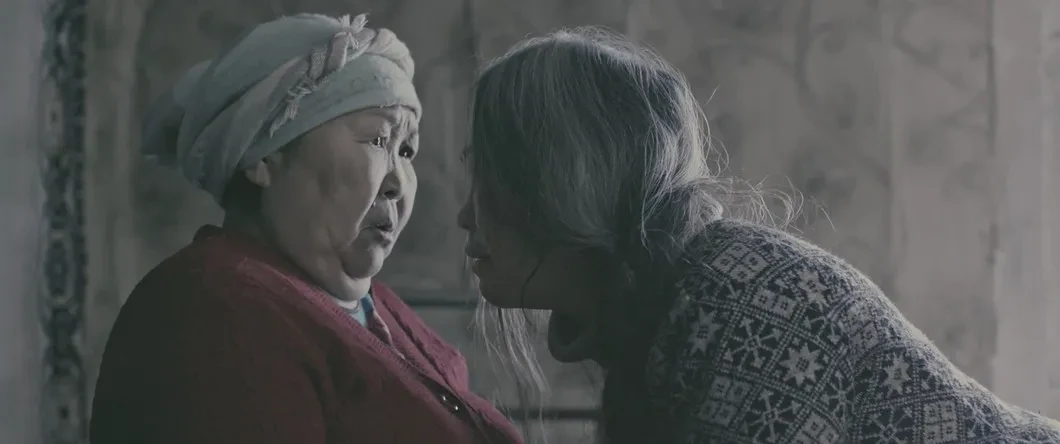
Personal story of the scarecrow is transmitted to the dashed. The viewer himself will combine scattered fragments into a holistic picture, in which the earthly and otherworldly is connected in the same way as the eternal permafrost and heat of the stoker, in which the scarecrow warms up. As a gift and a curse, sinful and sacred in herself.
The performer of the volcanic role of Valentina Romanova-Cheskyri-the main discovery, the magnet of the film.
A well -known ethno -lady in the republic, experimenting with music in the range from folklore to rock and avant -garde. The director found her videos in YouTube. Professional actors will envy its freedom and organics.
Many will probably remember the sign of the story of the "stuffed" Roland Bykov for their time. But in the small film, Dmitry Davydov is a rumble of centuries -old mythology, the secret of conscious sacrifice, prose and music of ritual poetry, a whisper of antiquity, the clumsy modern life and the inevitability of fate.
Nothing accidental, superfluous in this, as if played on the creaky Kyrymp Kinelodia. Details are transformed into metaphors, integrated into a tragedy growing from permafrost, which will not end with titers. Before my eyes, a children's figure scared in different felt boots, its black mouth, white-white snow and children's fabric patterns on a snow-white screen.
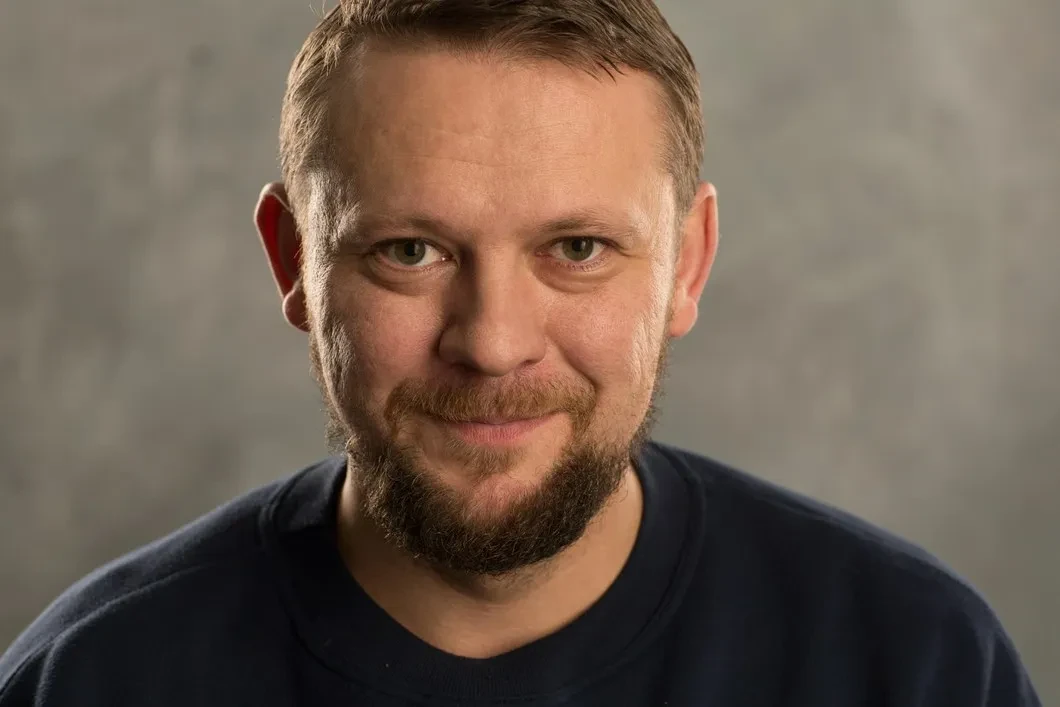
Dmitry Davydov is one of the talented authors of the Yakut cinema. A few years ago, an elementary school teacher from a small ulus got into debt and took off the “fire in the wind” debut in two weeks. His films are invited by international film festivals. He withdraws for very modest money (one and a half million rubles costs a “scarecrow”). We are talking with the director about whether it is easy to make a movie in Yakutia.
“You didn’t leave from your village Ampa.” It seems that they didn’t leave school ...
- Previously, I was the principal of the school, but when I took up the movie, it became difficult to combine. Then I became an elementary school teacher. Teaching the lessons of mathematics, reading, Russian. We only have one shift - a lot of free time.
- How many students are in the class?
- 23.
- Everyone goes to the “capital and foreigners”, and after festivals in Busan, Toronto, in Germany and New Zealand you return to live and work in your village. What is the advantage?
- There is my house. Leave somewhere-in the center of Yakutia, that in Moscow-to make a heap of problems: you need to look for housing, work. And I have children, schoolchildren. It’s convenient for me to live in my house. There are all acquaintances around. It is easier to shoot. My unprofessional actors are fellow villagers, many have known me since childhood. Not only the extras, but also the crew workers. I further plan to make a movie there.
- You said that the fellow villagers call you with resentment: "Why didn't you call me to a new film?" In general, the story of your village, which turned into local Hollywood, is a plot for a movie.
-Three years ago, a group came, made a documentary and game film about Yakut cinema. And in our village they shot, were very surprised. And all this is familiar to me.
- Who is your viewer? How do you imagine it?
- I have an adult viewer. Sometimes I'm going to the cinema to look at him. He is from about thirty to sixty -five. Young people do not really go to my films. She needs action, comedies, horror films.
- The genre is the strength of the Yakut cinema. But after all, your author’s work is gradually attracting an ever wider audience.
- They seem to be looking. My second film “There is no God besides me” repulsed the budget, even in a plus they went away. And on YouTube are good numbers.
- It is not easy to keep the balance between the author’s statement and the ethnographic “export product”.
- For me, the main problem is that I cannot completely go to the author’s cinema. I need to recapture the money spent, otherwise the next film will not be. It is necessary that the viewer wants to watch a movie. Therefore, you have to make paintings all the same about relatively simple, understandable things. At the same time, I’m trying not to sprinkle anyone, so that it is not only interesting, but not very convenient, to look restless.
As Lars von Trier says: so that there was a pebble in the boot. To rub the heart. How to remain free in such a situation?
I watch my previous films, and I really don’t like them, I see how badly I worked as the author and director. As he was busy, I thought too much about the viewer.
- Why in Yakutia people love Yakut cinema, even amateur, but in Russia they do not like their cinema?
- That's true, this is an interesting question for me. I think, at the beginning, about 15 years ago, it was just curious: the movie was shot on the same streets, in the villages, next door. On the screen you can see a neighbor, yourself, friends.
Now the viewer from us requires a higher level of operator work, history, acting. And we still cannot correspond. Too modest budgets. We have to tiny, fit into the framework. How does Yakut cinema change? From a technical point of view in a good way. Seven years ago, everything was shot on cameras. Now we are already working with the camera. I bring equipment from St. Petersburg, from Moscow. But there is an essential problem. Everyone is trying to work quickly, remove something light, disposable, trivial.
They took off - earned - forgot. There are fewer authors who want to make their own unique.
With the help of a movie language, to reveal yourself and the world around. There are two or three of us.
- How would you describe the peculiarity of the phenomenon of the growing Yakut cinema? Only this year 28 films have been made. In the republic, already under 50 screens.
-Indeed, we somehow imagine what Korean cinema or Indian. And we are very different here, we are trying to turn, as you said, into “local Hollywood”, but the understanding “who we are” is not yet. After all, I, I think, could take off my “scared” somewhere in Scandinavia. This is true a very serious question - what is our cinema, where we are going. Now we are told that our horse is a good, bright ethnic movie. And the viewer seems to love him. And the festivals like it. And I think something else. It is necessary to preserve a genuine, unlawed culture. In addition, we all shoot in the Yakut language, and we have about 18 northern languages in the Republic of Sakha. It would be great to make a movie in their languages to give an impetus to the development of individual Arctic areas.
- That is, cinema as the protection of the authenticity of Evens, Dolgan, Yukagirov?
- Certainly. It would be interesting for me to make and watch a movie in different languages, a movie about mixing and separately cultures.
- Your favorite Yakut films, what would you recommend to watch?
- We have hits like “king and bird”, “the sun does not sit down by me”, “the Republic of Z”. But I would advise watching the movie "White Day" by Mikhail Lukachevsky, a story on a real basis. We have terrible winters - minus 50. And here on the road a car with passengers stalls. This is a wonderful thriller about the invasion of fate in the usual course of life. He also has an interesting film "Road". And then he sour and went into the audience cinema.
- The film “Bonfire in the Wind”, in which there is a careless murder and thoughts of wine, are compared with Dostoevsky’s “crime and punishment”. And in the film “There is no God except me” - about the son trying to return the mother’s memory - you can find parallels with the “love” of Hanek. What do you rely on, composing your paintings?
- I'm trying to watch a good movie, study with other directors. In August, Roy Andersson watched the works. Now I look at Wong Kar-Voy, I did not know about him before. I am just spellbound, his stylistics infuriates and attracts. I am close to the cinema of aki Kaurisma, the owner of a unique humor. I find something, I watch how they solve their problems. I invent: how would I do it? I would like to try something new, intonation, style, language.
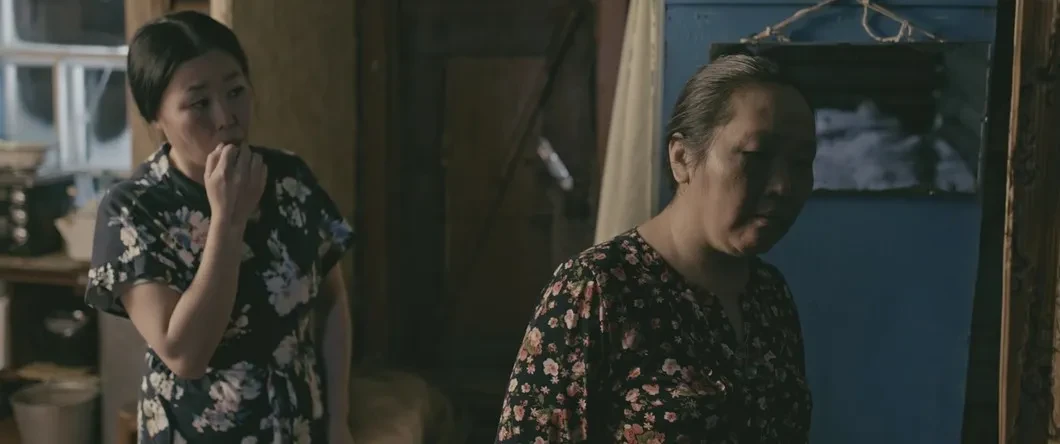
- You decided not to make the heroine a shaman, which is more logical for mystical drama, you decided to make it a healer.
- I am acknowledge this topic, we have a connection with spirits, shamanism are very developed. If I decided, there would be questions, problems. I walked away. Made a little easier.
- Are you afraid?
-No, I did not want to offend someone. In Yakutia, the traditions that animate the surrounding world are respected. Honor shamanov. But it turns out that instead of this, roughly speaking, I show a saint of a man that has fallen. After all, I came up with everything about our healer. I have no friends with such a gift.
- And what did Valentine bring to the movie?
“She is a musician, and it helped in the role.” I did not want to invite a professional actor, I could not work. And among her stage images there is a boat (shaman), in which both fire and something mystical. She convinced me. In the script she had a lot of text. When they started shooting, she spoke a lot in the role. For this image, this is superfluous. The closer to the denouement, the more silent it is. There is no silence until silence.