
Translated material
Bloodthirsty
For beautiful words about friendship and fidelity, the Soviet Union paid Satellites a lot of money: Leonid Mlechin's review
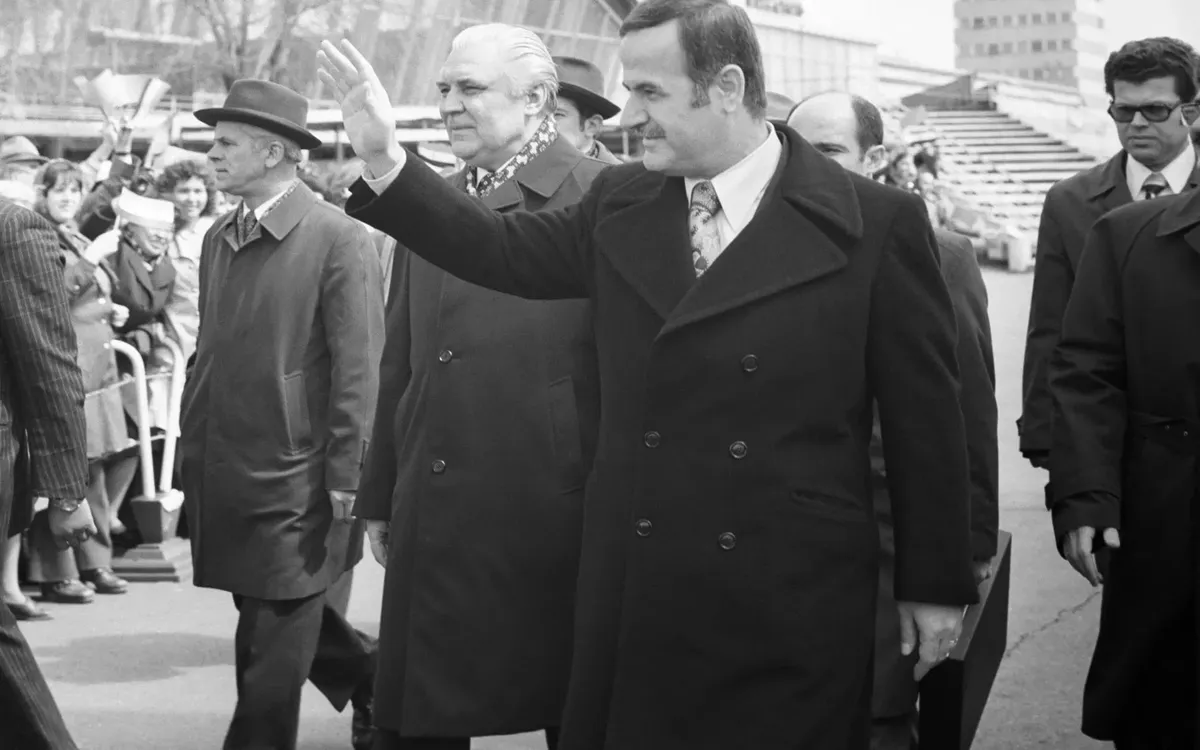
Only a few people knew the exact numbers. In Soviet times, even the members of the Politburo did not devote to everything. Materials under the heading “Special folder” were closed for everyone except the Secretary General.
Money and weapons - what could be more important? And this was special money and special weapons; They handed them to friends and allies to grow and enjoy. They gave in debt. Get rich - return.
They are not rich. The debt was not returned. And they stopped being friends.
The Russian government in early 1992 summed up the results: the debt of other states to the Soviet Union exceeded $ 142 billion. All this wealth was handed out in cash, weapons, goods, oil. To whom and why?
"You will arrest me"
The world revolution was the main goal of the Bolsheviks, so the support of revolutionaries is the number one task.
In the fall of 1923 they were waiting for an armed uprising in Germany. Allocated dollars for the purchase of weapons. They promised to establish the supply of bread so that the new power in Berlin would feed the workers. The Politburo decided to transfer a million gold stamps to German friends and organized a fee. But the country did not understand why it was necessary to sacrifice the last for the sake of other people's communists.
“At the open meeting of one cell,” said Alexander Beloborodov, the People's Commissar of the Interior, “a non -partisan worker, having heard about the events in Germany and the need to help German workers, said:“ How will it be?
The cell secretary asked her to go to him tomorrow. I wanted to explain why she should not relate to Germanic events. And the employee answered him:
“ Yes, you will arrest me there.”
And after the war, Moscow tried to influence the working class of Western Europe and help the Communist Party, but the money was not enough. On December 16, 1948, the Politburo was recorded in the minutes of the meeting: “To help the French miners send 600 thousand dollars on behalf of the trade unions of the USSR.”
At a meeting in the Kremlin, the leaders of East Germany, where the state of workers and peasants built the first on German land, asked Stalin to help the West German communists.
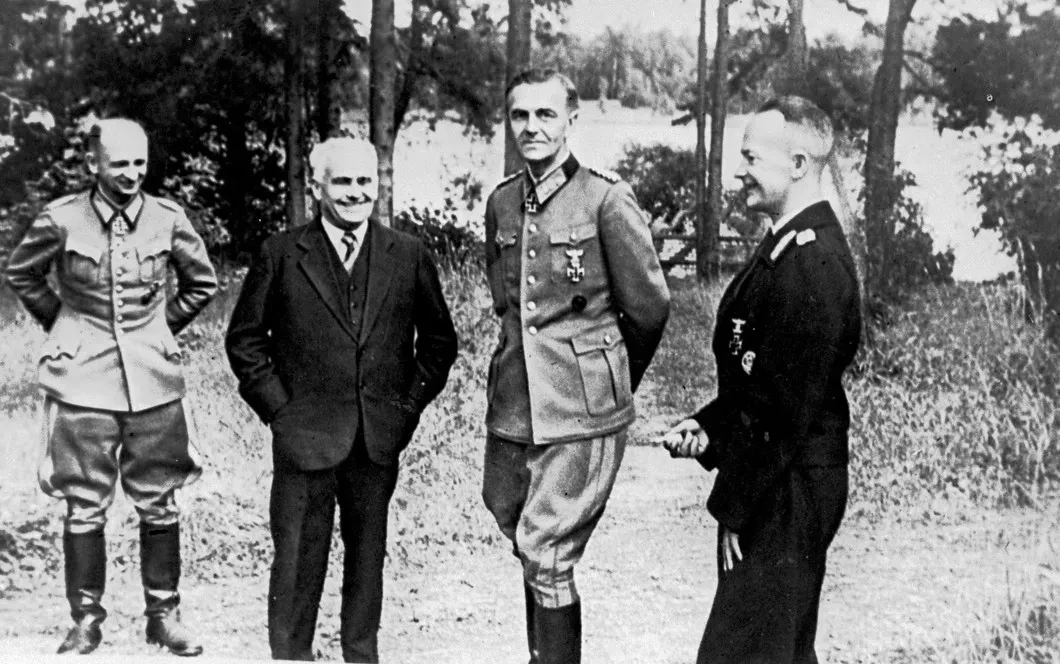
Wilhelm Peak listed:
- We need paper.
Stalin promised:
- We will give paper.
Otto Grothevol:
- It is necessary to organize an illegal printing house.
Stalin:
- This can be done.
Grothevol:
- Money is also necessary.
Stalin:
- We will help.
The Politburo allocated to the communists of West Germany 200 thousand American dollars. It did not help.
Sacrifice for us!
Fraternal socialist states simply demanded that Moscow. The head of Eastern Germany Walter Ulbricht was explaining to Nikita Khrushchev: “We understand that our requests require great sacrifices from you, but you understand that our economy needs to be helped.”
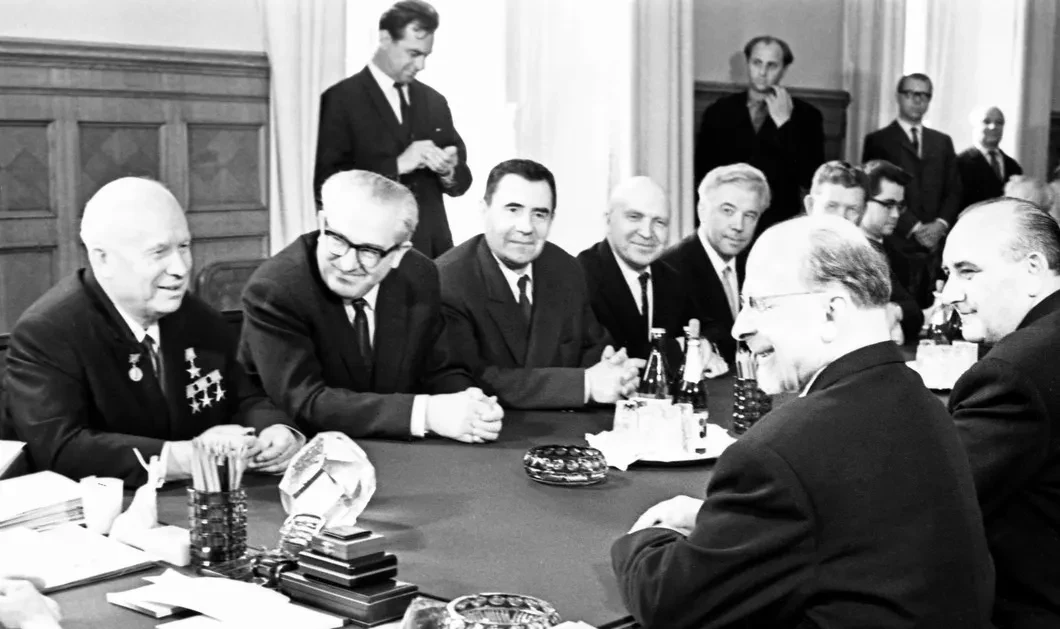
Khrushchev could not dismiss the requests and requirements of the GDR. In Moscow, they understood that a weak regime could collapse at any moment. Therefore, he satisfied the requests of Ulbricht and said:
- Our military, in agreement with the GDR, take some measures. We think the tanks are put in defense along the entire border. It is necessary to close it tightly everywhere, since the enemy can look for a weak place ... If now with attention not to be taken to the needs of the GDR and not make sacrifices, German comrades cannot withstand, they will not have enough internal forces. And what does this mean if the GDR is eliminated? Bundeswehr will come closer to our border.
Moscow capabilities were limited. Khrushchev refused to give Ulbricht gold so that he pays off the debts to the West:
“ You ask for sixty -eight tons of gold.” This is unacceptable. There should not be a situation when you buy goods, and we pay for them. We do not have much gold, we must keep it in case of emergency.
But the reputation of the Soviet leaders depended on the successes of East Germany.
They wanted to prove that socialism is more successful than capitalism. Therefore, the GDR was not shy.
“ No one in the West knows how Soviet people live,” the new head of the GDR Erich Honecker, who replaced Ulbrichta, frankly told his assistants. - And everyone does not give a damn how they live. And we are in sight, at the junction of socialism and capitalism. Therefore, the USSR is obliged to help us.
Watermelon without bones
In Moscow, a stream of requests for the help of the allied, friendly and not very friendly states was without fail. Moreover, it was known in advance that there was no hope at least for partial compensation. At best, they sought political concessions.
Deputy Minister of Foreign Affairs Mikhail Kapitsa said:
-We needed to achieve permission to flight our reconnaissance aircraft through the airspace of North Korea. And Kim Il Sign sought consent to the construction of a nuclear power plant. Ours did not want - a billion dollars had to invest, but Kim achieved his own.
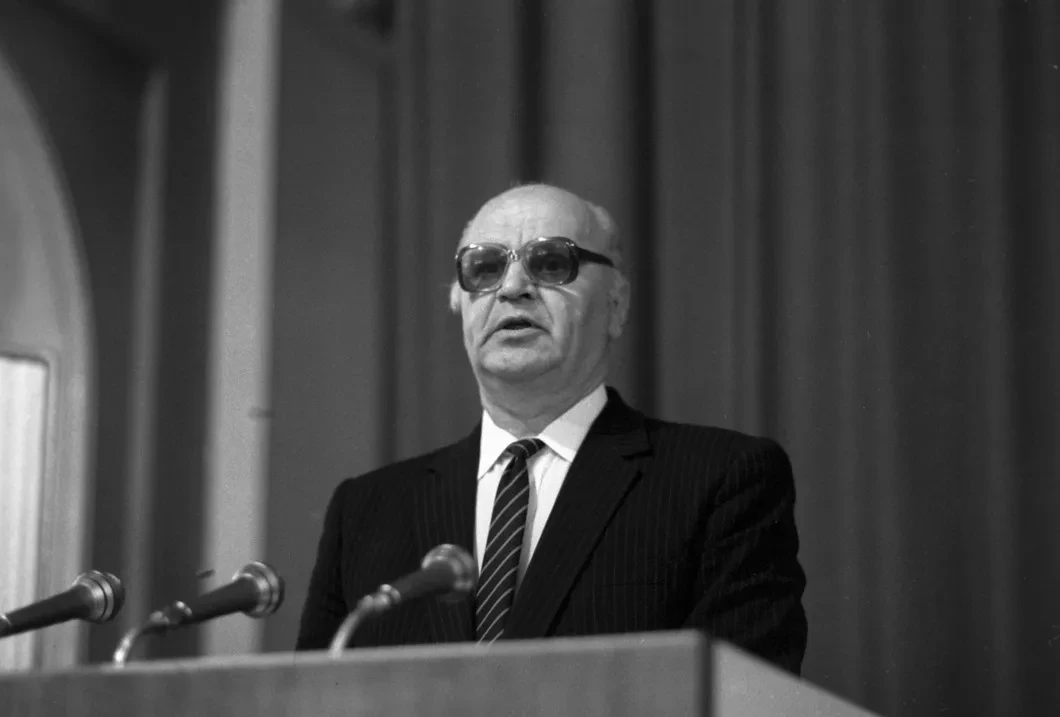
Kim Il Seine was valued for anti -Americanism. He received new loans, the old ones were written off. He was also promised by new fighters and missiles. In response, Kim allowed Soviet aviation to fly into Vietnam through the airspace of North Korea, and Soviet warships - to go for refueling and repairing to the port of Vonsan.
Kim Il Sign knew how to be grateful.
“ By the New Year, I received a box of pears and apples and a huge watermelon without bones,” Kapitsa recalled. - Kim Il Saint invited to him. We went to the DPRK for hunting, shot goats and pheasants.
"What is our interest there?"
Moscow politicians knew well with whom they deal with.
People close to Yuri Andropov recalled that the KGB chairman, and then the Secretary General of the Central Committee, did not have illusions. Regarding friends from a socialist camp, he said: "This is not a community, but a vulgar robbery."
Andropov believed that the USSR unjustifiably spends resources on supporting countries that declare their socialist orientation.
- What did we forget in Angola, Mozambique, Ethiopia? - Andropov spoke to his environment. - What is our interest there? Is it necessary to go to this to the detriment of the life of your people?
When Moscow began to actively support the Sandinists in Nicaragua, Yuri Andropov said: “What are we clinging to everyone? It is only to shout to someone louder: "We are building socialism!" “We are running to him with all our feet.”
But nothing has changed. Due to the increase in oil prices after the October War of 1973, Nefteedollars flowed into the country in the Middle East. But they also left - in the form of direct monetary assistance or supply of oil to the countries of the Warsaw Treaty, Afghanistan, Cuba, Mongolia, South Yemen, Algeria, Ethiopia ...
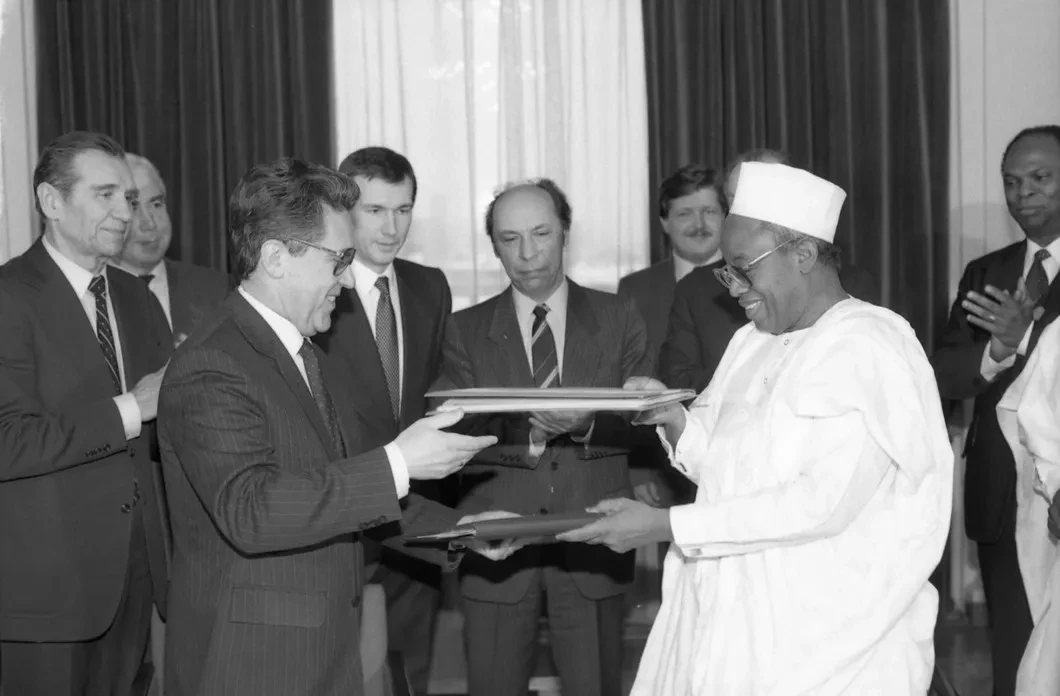
It is not possible to set the exact figures, but in the 80s the total volume of assistance to the Allies in Eastern Europe and the Third World amounted to up to $ 30 billion a year. This was eaten by more than half of export income.
Money gave modes that had nothing behind the soul, except for "anti -imperialist solidarity." But help did not benefit them.
Member of the Politburo Peter Shelest indignantly wrote in the diary: “The cube of our country is very expensive - about one and a half million rubles a day. The actual position in Cuba is far from the same as it is presented to us by a seal, radio, television. The Cuban economy is in a catastrophic state, the political situation is very unstable. So far, we, the Soviet Union, are holding Cuba on our full dependent. Every year we send 900 thousand to Cuba, or even a million tons of bread - one roll for a family per day. We import butter, meat, potatoes, fish, onions, vegetable oil and other foods there to feed more than nine million Cubans.
We will indulge Cuba, in many issues, Cubans behave simply irresponsibly, and we will not find wisdom, courage, prudence and, in the end, our pride to stop, look around, what are we doing? ”
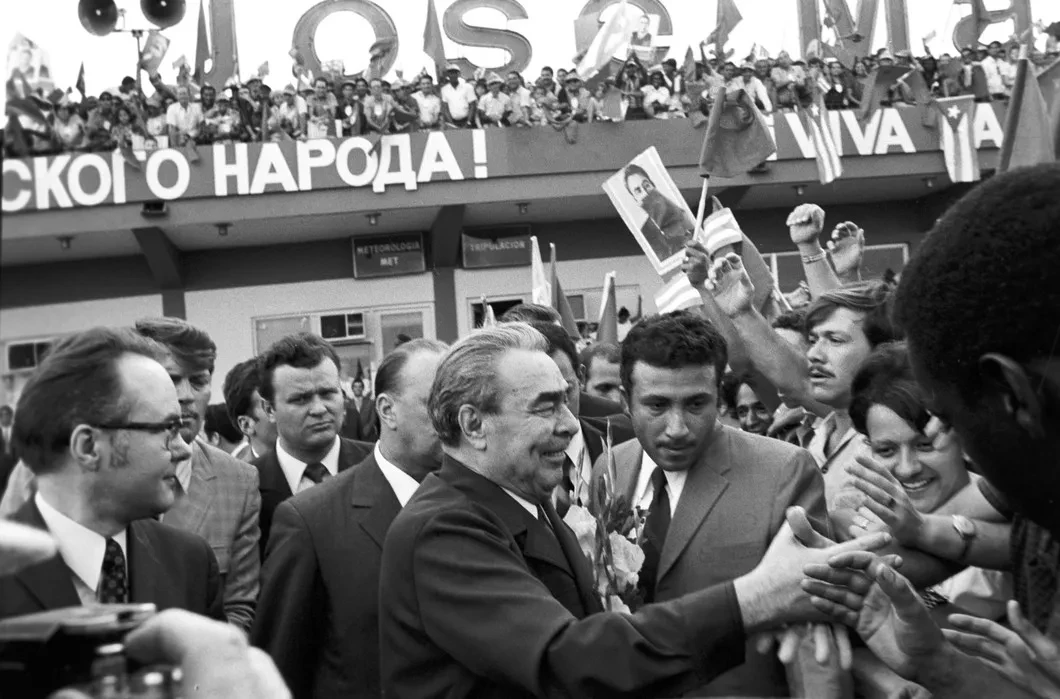
Anatoly Adamishin, Deputy Minister of Foreign Affairs, recalled: “In the early 80s, returning from Cuba, talking with local people, ours and Cubans, having read the materials, tried to estimate the size of our help. It turned out like this: the island of Freedom could live two months a year without working, at our expense. He shared his observations with Stepan Vasilyevich Chervonenko. He then headed the department of the Central Committee and was one of those who sincerely careed for the interests of the country. He listened to me carefully, putting me something, then sighed: "You will do little here. But do not tell Gromyko, you will run into trouble."
Took from us, and paid others
The Soviet Union distributed so many weapons that there were wars in the world, in which Soviet weapons fought on both sides.
In 1969, the military came to power in Somalia, who stated that they would go along the socialist path. Moscow immediately helped them, primarily with a weapon. In 1977, with this weapon, Somali attacked neighboring Ethiopia. But by that time the Somali military had already disappointed in socialism. But they began to show interest in socialism in Ethiopia. Then the Soviet Union switched to Ethiopia, which was generously delivered weapons so that it could resist the somali.
It is profitable to trade weapons, because another purchase is inevitably followed by another.
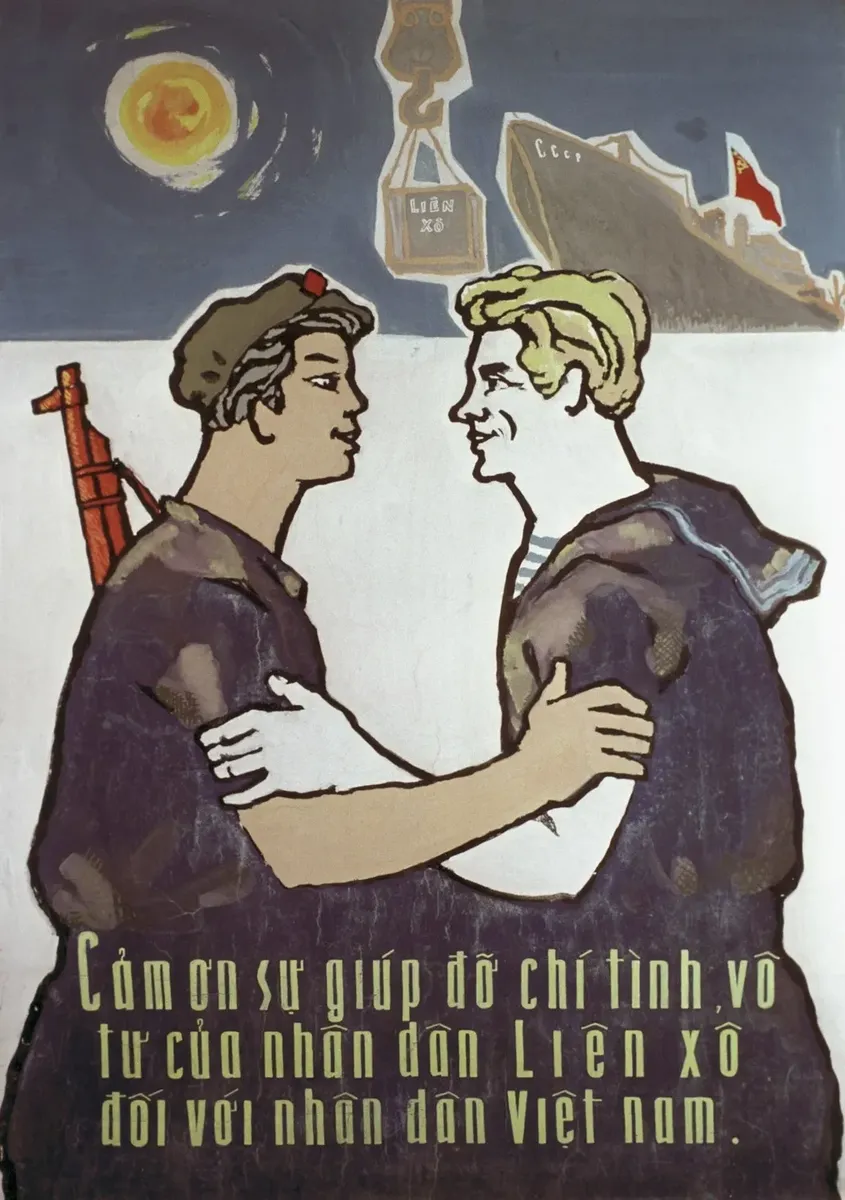
I bought machine guns, then you will buy cartridges. I acquired tanks, which means that spare parts will be required. I bought planes, buy and ground service stations. For the arms market, merchants fight like on the battlefield. But the trouble is that the Soviet Union did not sell, but gave weapons.
Some recipients of weapons are Romanians, for example, with great benefit for themselves, the Americans resell the latest samples of Soviet military-technical thought.
Friends took loans and weapons, but did not return the money.
“Weapon trade is not easy,” recalled Nikolai Ryzhkov, the secretary of the Central Committee, and then the head of government. - But it was especially difficult to lead her with "friends". This is a constantly growing debt for our supplies. These are countless negotiations, where requests for delayed payments were interspersed with threats not to repay debts at all. This is a persistent, almost prayer appeal to the “feeling of friendship”, which I, a shallow business executive, appeared far from everyone. For the most part, it did not appear at all. ”
Was the sheepskin costing? What real return did our country receive?
Was it more reasonable to reduce the production of weapons than to spend precious resources on it, and then give out?
But so the question was not even posed.
The owner of Iraq Saddam Hussein owed $ 7 billion. He was friends with Moscow because he wanted to receive weapons and everything else for free. But, not wanting to pay off the USSR, such lovers and connoisseurs of Soviet weapons as Iraq, Libya, Algeria, regularly paid American and French firms. The leader of the Libyan Revolution Muamar Gaddafi, who considered the permitter to be late for negotiations with the head of the Soviet government, beautifully ranted anti -imperialist solidarity, but paid money to Western companies. And the USSR owed 2.5 billion dollars.
Recognitions in eternal friendship and fidelity made a strong impression on Moscow leaders. But over the years, it became clear that these were very selfish friends who were holding on to the Soviet Union only until they established relations with the United States.
For example, Egypt was very expensive for the Soviet treasury. But President Anvar Sadat easily turned away from the Soviet Union and made friends with America when he decided to end the war with Israel and peacefully return the Sinai Peninsula, lost in 1967.
After that, all the unspent Soviet love for Arab friends switched to Syria. The owner of Syria, Hafes Assad, knew Moscow customs and customs and, perhaps, better than other Arab leaders, mastered the science of receiving from the Soviet leaders everything that he needed, without doing anything.
Assad frankly said: "I will not take the weapons from Moscow less than a billion."
They did not even stutter about paying for deliveries in Moscow.
Money right
It is believed that the foreign policy of the Soviet Union was determined by ideology. This is not entirely true. Let's say ideological cooperation with the Arab world did not work. The communist ideas were rejected there, the Communists were thrown into prisons, to which the leaders of the CPSU turned a blind eye. In Iraq, they killed the Communists, and Moscow did not want to quarrel with the Baghdad leaders. Ayatollah Khomeini, having come to power in Iran, destroyed the pro -Soviet party in Tuda. Moscow was silent so as not to annoy Khomeini.
The First Deputy Minister of Foreign Affairs Georgy Kornienko recalled: “It was constantly said about our international duty, but this did not mean that our own more and more involvement in the Civil War in Angola - in the form of supplies of weapons and parcels of military specialists - corresponded to the state interests of the Soviet Union.”
But in Moscow, anti -American politicians were highly appreciated. If they denounced the West, they guaranteed help and support. Everyone knew about this and cynically used it. It was cheaper to pay Moscow in words than dollars.
Western diplomats tried many times many times tried to discuss the situation in Cambodia with the Soviet Minister of Foreign Affairs, where Pol Pot was in power and where the blood spilled the river. The Minister answered stereotypically:
- We have a normal relationship with this country, and we do not own any information that would confirm your information.
The Cold War had a certain logic. Superpower needed allies and satellites: the more there are, the better. In gratitude for the anti -American slogans and the words of love addressed by the Soviet leaders to replace each other, Moscow supplied weapons, led money, sent numerous advisers and specialists.
*
How good it is to have many friends and allies! How nice to be a respected older brother! How nice to hear the words of gratitude! And think: we helped our friends! But the Soviet experience is as follows:
When our country could not give money anymore, friends immediately turned to us with their backs.
It turned out that our country was perceived as a dairy cow. And they appreciated only until she gave milk, that is, money, weapons and oil.