
Translated material
Credit before overthrow
How Russia spent more than $ 100 billion to support the Lukashenko regime
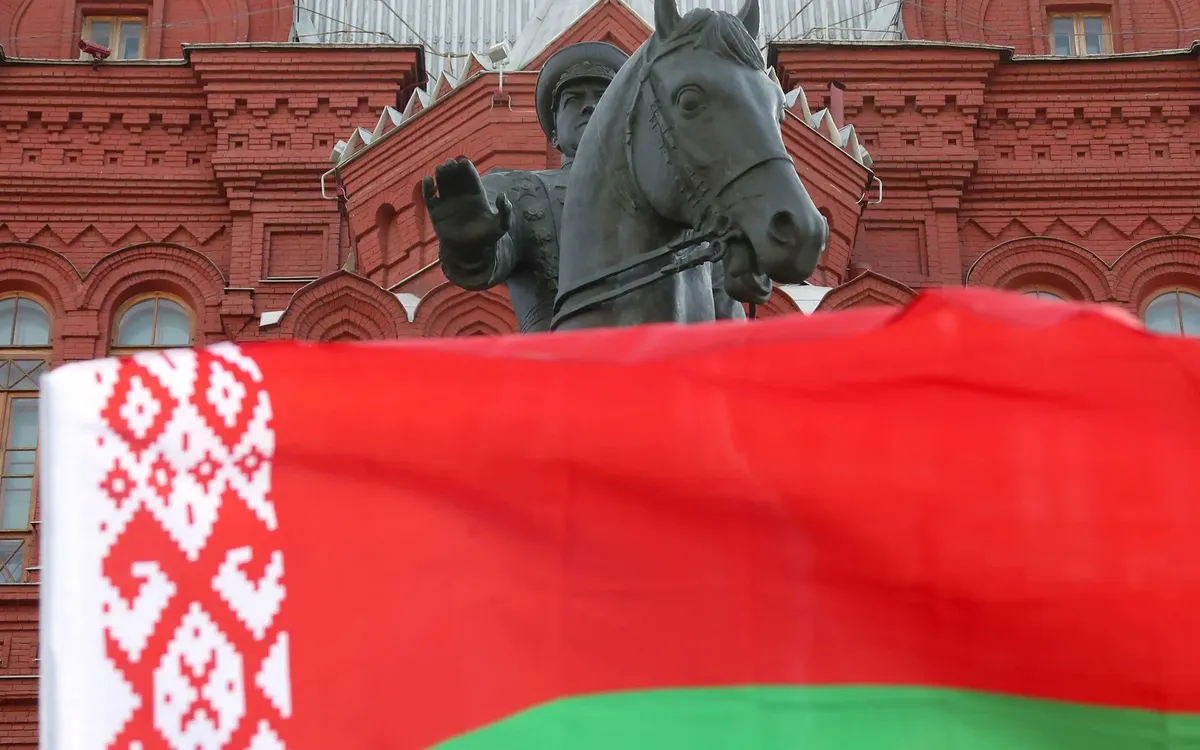
The State Duma on an emergency approved a bill, which allows Belarus to issue unscheduled loans at the expense of the Russian budget. The fact that Moscow will provide Minsk with another loan of $ 1.5 billion was known at a meeting of Vladimir Putin with Alexander Lukashenko in Sochi on September 14.
Along with Venezuela and Ukraine, Belarus is the largest debtor of Russia. The total debt of the republic to Moscow, excluding new loans, was estimated at $ 7.5 billion. In total, according to the IMF, Russia allocated $ 106 billion in different forms to support the Belarusian economy only in 2005-2015.
"New" asked experts to explain why Russia spends billions of dollars every year on the support of Alexander Lukashenko.
Alexander Knobel
Director of the Institute of International Economics and Finance, the Ministry of Economic Development
- The new loan of $ 1.5 billion is actually not so much help by Russian standards. This is support for the payment balance of Belarus in the current conditions of high demand for foreign currency.
In Belarus, an economic model has developed, in which a significant feeding of the economy is carried out using hidden Russian subsidies. Including due to cheaper supplies of energy, financial assistance and preferential loans. For Belarus, this model was advisable and allowed to maintain the budget. For Russia, this is support for a partner so that its model can survive and be competitive.
There is no customs border between Belarus and Russia, as, indeed, between other countries of the Eurasian Union. Russia supplies a large number of goods to Belarus, among which energy carriers occupy a significant share. Belarus exports to Russia foods, mechanical engineering and chemical industries. Trade relationships are quite well developed. For Belarus, Russia is about half the turnover, the most significant partner.
The sharp zerle of Russian subsidies would be a very difficult test for Belarus. But a smooth reduction in their minimum, if it is stretched for a fairly long period, may be accompanied by the transformation of the Belarusian economy and, accordingly, a less painful perception of these changes.
Sergey Kondratyev
Institute of Energy and Finance, Deputy Head of the Economic Department
- Russia does not receive benefits from the provision of Energy subsidies of Belarus, these are losses - primarily for the budget. If we are talking about economic cooperation as a whole, then the benefit is to maintain a rather close integration between our economies: many production chains have been preserved, because there were no such complex political conflicts with Belarus as with many other CIS countries.
Over the past few years, the regime of interaction between Russia and Belarus has changed several times in the energy sector. From 2016 to the beginning of 2020, Belarus annually received about 17-18 million tons of oil per year, which she sent for processing without paying customs duties to the budget of Russia. At the same time, Belarus exported 10-13 million tons of oil products produced from Russian oil, enrolling the fee from their export to its own budget. Prior to this, a scheme applied when Belarus transferred this fee to the Russian budget.
The second essential source of direct support is the so -called scheme of shuttlecock. Since 2017, Russia has paid Belarus customs payments for export of 6 million tons of oil per year. Belarus did not physically receive this oil, did not engage in its processing or transit.
Belarus received direct benefits from Russia with Russia. The relatively low energy prices, which were preserved thanks to Russian subsidies, also affected the general level of prices. Low prices for gasoline and diesel fuel (in comparison with the countries of the Baltic and Ukraine) supported agriculture, transport, etc.
In addition, low prices for Russian oil allowed Belarus to maintain their own processing and export of oil products to Europe, and this is the receipts of foreign exchange earnings and additional budget revenues. The import of cheap Russian oil allowed Belarus to completely direct the oil mined in the Republic (at the Rechitsa field in the Gomel region).
Belarus can do without Russia's energy subsidies (i.e., switch to “world” prices) - this also proves the experience of Ukraine.
If we are talking about oil, this will lead to an increase in domestic prices for oil products and a decrease in the competitiveness of Belarusian refineries. In case of refusal of Russian oil, Belarus would have to purchase oil on the world market, to establish an alternative logistics system. This is expensive, it will require negotiations with Lithuania, with Ukraine, and with a high probability this would lead to the fact that it would be difficult to compete with the Belarusian refineries in the European market, and prices for domestic consumers would have risen. This could negatively affect the general economic situation. Nevertheless, Belarus could live without energy subsidies from Russia, just life would be much worse.
But without Russian gas, as experience shows, Ukraine cannot do de facto. The scheme is first real, and now the virtual reverse shows that this gas is still needed. If we are talking about Belarus, then physically she cannot do without Russian gas now. The Belarusian electric power industry now, before launching the nuclear power plant, is 98% depends on the production of electricity from gas.
In addition, there are several gas-beam production, the same “Grodno Nitrogen”, and transfer the system to some kind of alternative supply, build interconnectors with Poland, with Lithuania-this, in my opinion, from the field of fiction even in the medium term. But even the implementation of this scenario would mean increasing prices in the domestic market, because investments in the reconstruction of the gas transport system, connecting to alternative sources-all this requires financing and should somehow pay off, and this pays off due to prices for consumers within the country.
In my opinion, Gazprom has long been ready to sell Minsk natural gas at market prices, because market prices for a long time were significantly higher than the prices at which Gas received by Belarus. The republic is not always ready to pay and comply with already concluded contracts, and this is a serious problem for suppliers, primarily for Russian.
This dependence is not some special feature of Belarus, the supply of Russian gas is critical for many countries of Eastern Europe, for which, in my opinion, this is not a problem due to a market approach. When switching to market conditions and concluding a contract with Gazprom without involving the Belarusian government to negotiations, without the requirement of some discounts, the situation in Belarus will become the same. ”
Ksenia Kotchenko - especially for "New"