
Translated material
The base of Soviet-fascist friendship
Secret naval cooperation between the USSR and Hitler Germany began immediately after the conclusion of the Molotov-Ribbentrop Pact
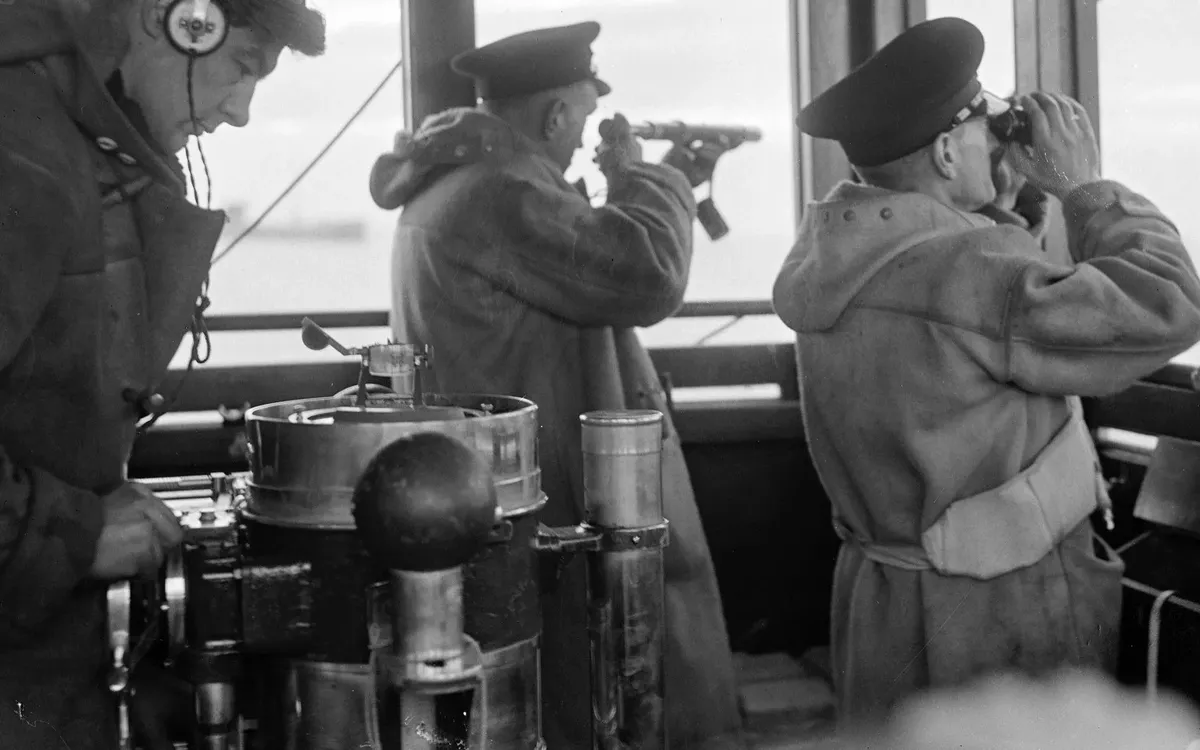
Kriegsmarin's command was interested in a whole package of Bonuses. At first, in particular, in Berlin, even very valuable for German ships, even the very opportunity for a while to hide from the British fleet in the ports of the Soviet Arctic (Murmansk) and the Far East (Vladivostok).
Shipyard for raiders
Berlin also hoped that Moscow would allow and ensure wiring by the Northern Sea Route from east to the west of caravans of German merchant ships, stuck in the Pacific because of the war. But in the opposite direction, already in the Pacific Ocean, it was originally planned to hold a significant group of German raiders - auxiliary cruisers who were supposed to undermine British and French shipping, acting on their trade routes.
Moreover, almost immediately after the outbreak of World War II, both parties discussed the opportunity to establish the re-equipment of German merchant ships into armed cruisers raiders ... right in Murmansk.
Initially, the Soviet side perceived this idea with great interest, even with enthusiasm.
Which is documented. At least, the St. Petersburg historian Pavel Petrov revealed in the Russian State Archive of the Navy and published interesting documents on this score: the correspondence of the chairman of the Council of People's Commissars (Council of People's Commissars) of the USSR Vyacheslav Molotov with the People's Commissar of the Navy of the Navy of the Fleet of the 2nd rank Nikolai Kuznetsov. The historian publishes a memorandum of the German ambassador of Shulenburg dated September 22, 1939, handed to Molotov, a copy of which the head of the Soviet government on September 26, 1939 sent the People's Commissar of the Navy Kuznetsov - "for taking appropriate measures, [about which I need to agree with you]."
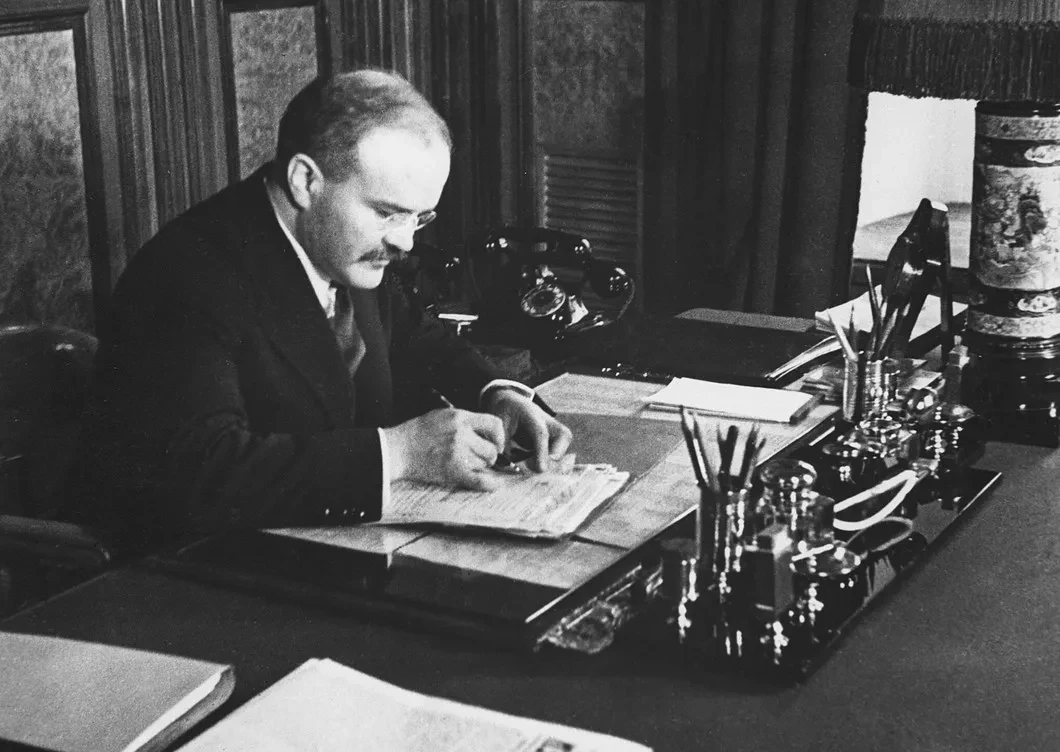
The German ambassador, on behalf of the "Supreme Command of the German Navy," informed Kriegsmarin's intention of "using the Jaler ship in the Murmansk port as an auxiliary cruiser." In this connection, the permission of the USSR government “for the transportation of the necessary weapons, combat supplies, etc., and so on, to travel the team is dry”, was requested. In general, the command of Kriegsmarine asked the Soviet side "to provide a general assistance necessary to turn the vessel into auxiliary cruiser."
A Message directed by the Hammer Prevenue is a directive direct act.
It is equally obvious that the indication in reality did not come from Molotov at all, but from Stalin - only he could make such a sharp decision.
Having received the preliminary consent of the Soviet leaders, the German side took the next step, sending the document more specific - that instance, which was supposed to provide an assistance. At least this is how the Message of the People's Commissar of the Navy for No. 3124ss dated October 7, 1939, sent to Molotov.
The document said: “The German Naval Attash, Captain von Baumbach [*Fregatten-captain (captain of the 2nd rank), later Captain-Tsur-See (captain of the 1st rank) Norbert Ortvin Augustus, Wilhelm von Baumbach, naval attache under the German Embassy in the USSR. - *IN. V. ] turned through the department of external relations of the NKVMF of the USSR with a request to assist on our part in converting German trading steamboats into auxiliary cruisers. ”
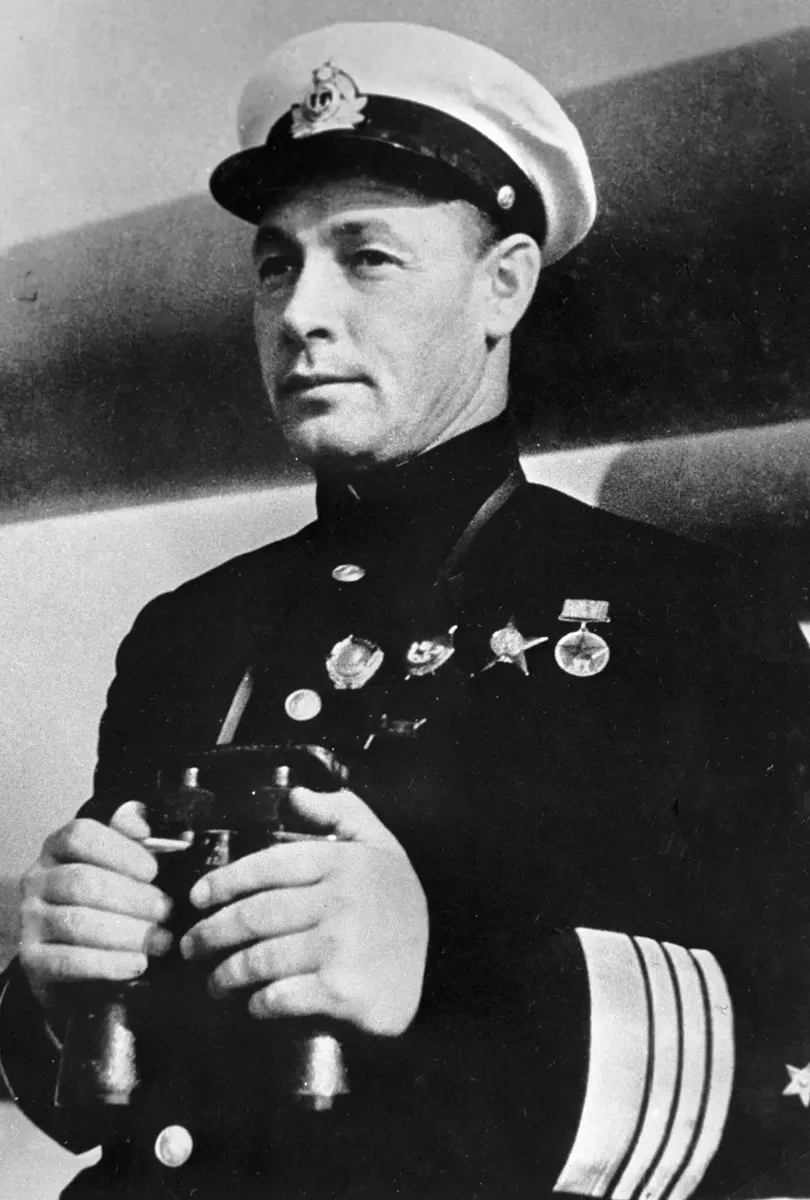
Re -equipment, as Kuznetsov reported, was supposed to be arranged in the arrangement of “additional fasteners for decks, for guns and torpedo devices that will be installed on these steamboats”; the device of "special covers at the holds for hiding and masking of guns and torpedo devices"; The device of residential premises in the holds for the command and, finally, the "device of spare bunkers for liquid fuel." “On our part,” said the Soviet People's Commissar, “he asks for help in labor and workshops for converting. The material necessary for this can be delivered from Germany. ”
The Naval People's Commissar of the People's Commissar informs a higher authority that the work itself on the removal of a German trading ship in a warship "can be completed by a shipyard and subservient shipyard of the People's Commissariat of Fisheries in Murmansk, which has at its disposal the relevant workshops." In connection with which, Kuznetsov reported, "I ask your instructions on the affected issue."
Of course, in his memoirs, the Soviet navy did not even hint about this, only carefully noting that when the highest instance made serious strategic decisions regarding sea issues, "no one asked me and the main naval headquarters." They did not consult in the Kremlin with the sailors and on this issue.
However, having calculated the possible consequences, then they decided not to go so far: to arm in their port a German ship, turning Murmansk into a shipyard of Kriegsmarin, was fraught with a military clash with Britain! So here Stalin played back (although later the Rayer’s wiring was carried out, but already equipped in Germany itself).
Denial of denial
However, in the framework of Soviet-Nazi rapprochement, the raiders were clearly not the most burning issue: the German admirals more attracted the opportunity to get a base or supply and service point near the same Murmansk. And in this matter, the Kremlin at first also went to meet. As evidenced by the history of the "Basis Nord). The existence of which, by this time, is categorically denied by "historians in boots." Thus, the FSB lieutenant General Vasily Khristoforov, the former head of the registration department and archival funds of the FSB, claims that all authors who write on this subject are “unknown or inaccessible archival documents”.
What is quite fair: Soviet documents on the “Basis Nord” are really inaccessible to researchers - they are still classified.
Therefore, the historian-chekist, together with his co-author of Cherepkov in the book “The Secrets of the Russian Fleet.
From the archives of the FSB "concludes:" The base of the German Navy "Nord", the existence of which has not yet been confirmed by any documentary source, no more than a myth. " Truly brilliant: since we classified it, this is a myth!
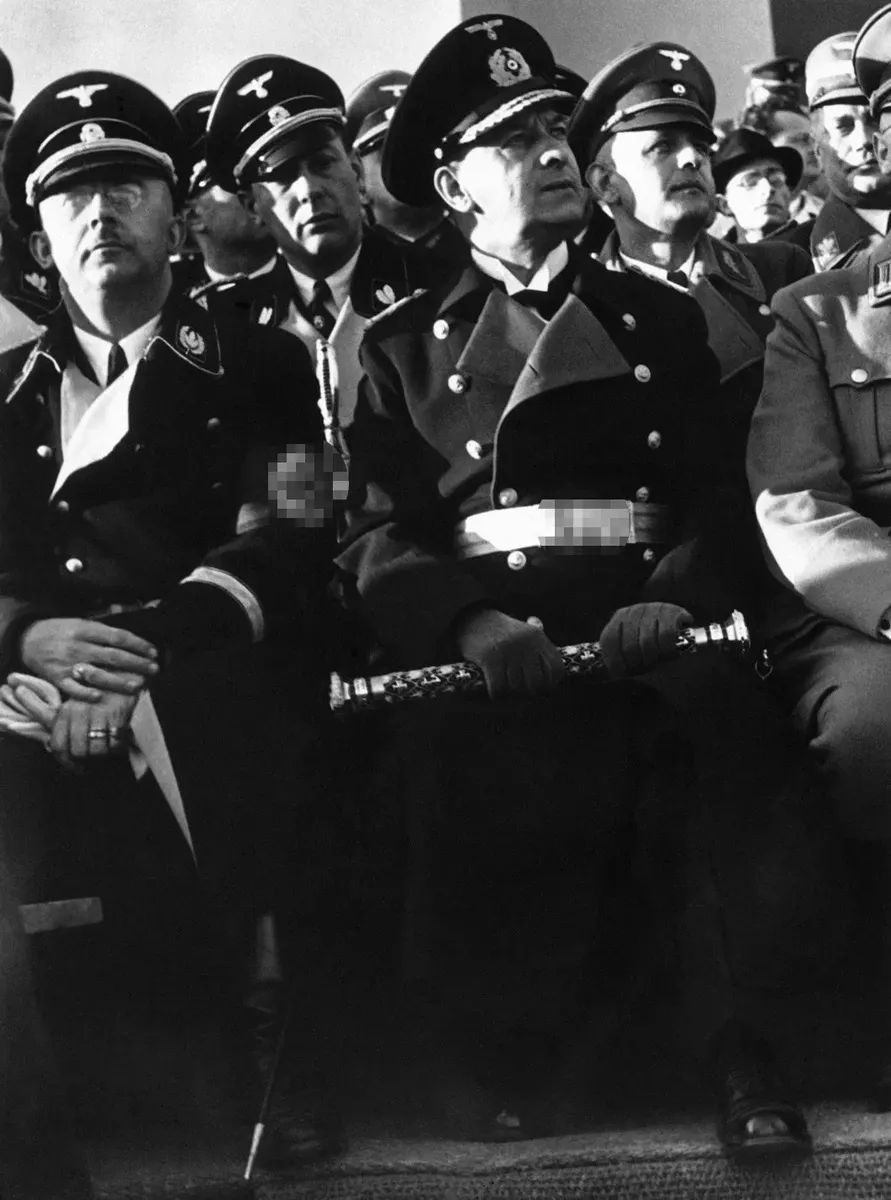
True, at the same time, they “modestly” forget to report that the German admirals told about the presence of this base a long time ago. Let us reveal the memoirs of the Admiral Gross Erich Reder: "Diplomatic negotiations in the framework of the Soviet-German pact on non-aggression gave us the opportunity to use the Murmansk port." In addition, writes Raeder, the German naval fleet also extracted other benefits from the 1939 Soviet-German pact. For example, “we could not worry about the situation in the Baltic <...> nothing threatened our Baltic coast. Our Rudovozes could calmly pass from Sweden, and we did not have to be distracted for their protection from the North Sea region. ” But most importantly, “the Russians granted us the right to use their non-freezing Port Polar on the coast near Murmansk as a German naval base and gave the right to transit through the Arctic Ocean to enter the Pacific Ocean.
The opportunity to go to Polyarny became a huge advantage for some of our merchant ships trying to return home from behind the ocean in the first weeks and months of the war. In order to pass the British network, most of these ships had to follow a much more northern route along the border of polar ice, constantly three -plundered by cruel northern storms; Having entered the polar, they could repair and replenish supplies to the rest of the path home through Norwegian waters. One of these of our ships was the Bremen high -speed liner, he made a visit to the Polar to give the necessary rest to the team, repair and replenish supplies for a further flight. ”
The necessary note: the German transatlantic liner "Bremen", the owner of the Blue ATLANTIC RATION ", on the eve of the war, was in the Harbor of New York, on August 31, 1939 secretly, without asking for permission, without passengers left the port and dissolved in the expanses of the Atlantic. So that September 6 is unexpectedly material in Murmansk.
This focus was thrown out so that the liner was not intercepted by the British, fearing that Kriegsmarine would receive such a powerful vessel for transporting troops. From the documents of the NKVD of the USSR it follows that the “Bremen” “was persecuted on the whole path by the British warships”, however, he took advantage of the foggy weather, while “on the pipes of the ship <...> the identification signs of the Soviet trade fleet were applied.”
“Historians in Boots” modestly mentioned that there was no data on the date when the airliner left Murmansk. Admiral Kuznetsov writes that "as a non -unified ship, he had the right to visit our port." What is the “non -united” if it has already been included in Kriegsmarin, obeying the orders of his command! “Having stood for some time,” the former People's Commissar of the Navy, “Bremen, Murmansk left just as unexpectedly and, taking advantage of the bad weather, broke into Germany.”
This is already complete cunning: it is known that Bremen left Soviet waters on December 6, 1939, escorted by the warships of the Northern Fleet ...
In addition to Bremen in Murmansk on September 7, 1939, for the same purpose - other German steamboats began to receive a safe shelter, and by September 13, 1939, 11 German merchant ships defended 149,120 tons with a total number of crews of 2140 people on the Murmansk raid. Soon this German “peaceful squadron” was replenished by at least seven ships ...
Once again, we will open the Gross Admiral Reder: “The German auxiliary cruiser with on-board number 45 ( *The same raider Comet.- *in V. ) left this port to his raid along the Pacific Ocean in August 1940. Then it was from the polar one that the only tanker came out that arrived in Narvik just in time to help our ships during the occupation of Norway. ”
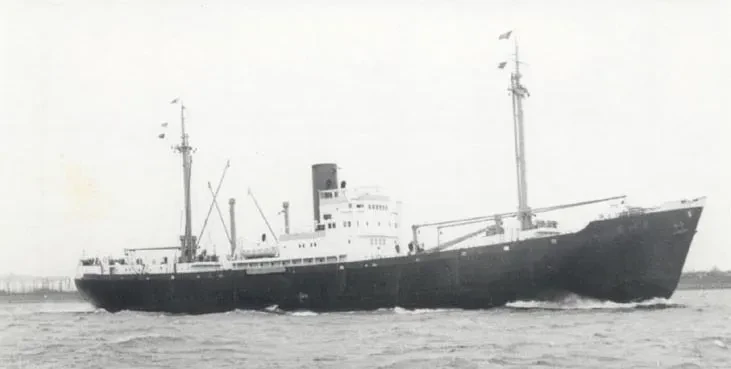
It is difficult to do more eloquent recognition, although the inaccuracy of Gross Admiral nevertheless admitted here: it was not polar. The Nord base, or, as it was called in German documents, the “Nord Basis”, created a Western person in the lip (bay) area.
The very fact of the existence of the “Basis Nord” for a long time was categorically rejected, however, state historians reject it to this day. Although back in 1990, historian A.V. Neznosov published in the “Military History Journal” the corresponding material-“Secret“ Basis Nord ”. He told, as, as a result of ambulance, on September 17, 1939, “two German auxiliary vessels with cargoes for the alleged supply base” entered Murmansk. "
True, the concept soon changed, and Molotov, rejecting the request of the German authorities to allow the parking lot and inter -routine repairs of warships in Murmansk, told the German side: in Murmansk, they say, little suitable berths and, most importantly, “Kola bay is not insulated enough to hide the calls of German military ships.”
Secret - first of all: to crap the British, they decided in the Kremlin, it is like good, but so far only in a stealthy one.
Therefore, instead of Murmansk, the Germans were offered to choose from two non -freezing bays: the Teriberk bay - 30 miles east of the entrance to the Kola Bay, and the lip of the western face. “These secluded places (bays),” the historian wrote, “was rarely visited by extraneous courts and therefore were more suitable for the equipment of the naval base, which was conditionally called the“ Basis Nord ”.”
Having reconfigurated on the spot, the German naval attache von Baumbach said: Teriberka Gulf is not sufficiently protected from bad weather and is not quite suitable for creating the advanced base of the fleet. Therefore, they agreed that the “Basis Nord” is optimal to equip the Western face in the Gulf of Motov: German ships could go secretly and almost any time of the year. Then negotiations were conducted on the provision of German sailors, in addition to the Western person, another bay - already on the Soviet Pacific coast, north of Vladivostok ...
Although the details of how exactly the Germans used the capabilities are still covered with the darkness of the strictest state secret, but even the FSB General Khristoforov (with co -authors), claiming that the “Nord” base of the German Navy <...> in its opuses led a lot of documents eloquently testifying: this is a reality. So, he himself publishes the details of the German and Viking-5 German vessels in the western person of the German vessels-the first, as it were, the trade, the second is whaling, but the Germans themselves were officially considered the military ships.
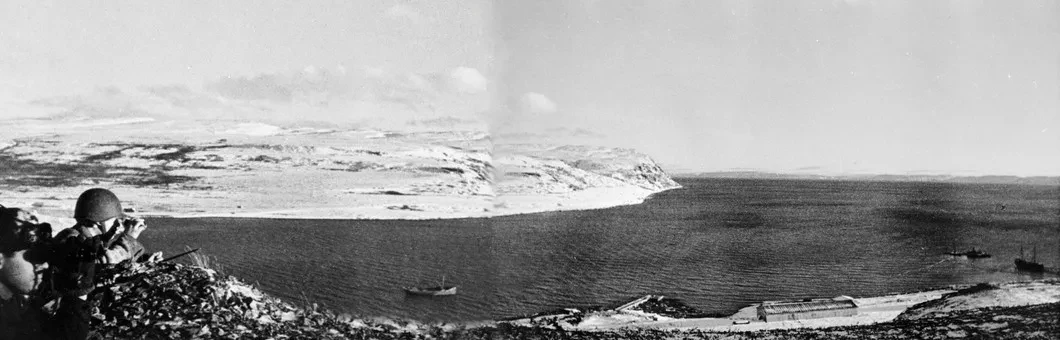
Their parking in the deployment zone of the Northern Fleet’s military units served as an official reason for private trips to this area of the assistant to the German naval attache, Erich Auerbach, who, according to the NKVD documents, went to the place of parking of the steamboats, accompanied by official representatives of the Northern Fleet. Both ships constantly changed the parking lots, based on Murmansk, then to Iokang, where the new base of the Northern Fleet was just built, then again to Murmansk, then in the western person-near the polar, the main base of the Northern Fleet: in some Soviet documents it was said that the ships were stuck in Soviet waters due to breakdowns, in others-that they were supposedly to be removed due to the circumstances of the war.
At the same time, the UNKVD of the Murmansk Region regularly reported to the Central apparatus of the NKVD: the assistant to the Aurbach naval attache, hiding behind the stay in the Soviet ports of these trading, and not military steamboats, conducts active intelligence work, and references to the inability to withdraw them from the Murmansk port are insolvent. Khristoforov quotes the letter of the main transport administration (GTU) of the NKVD of the USSR to the People's Commissariat of Foreign Affairs of the USSR with a proposal to refuse Auerbach to extend the visa in Murmansk, which indicates eloquent posting: “According to the direction of Molotov’s visa, the visa is extended. 9/8–40 ".
Simply put, the vigilant Chekists were extremely clearly made to understand: do not stick not in their business - this is a matter of great policy. However, they could have guessed themselves: the Murmansk UNKVD quoted by the Khristoforship said that "all the movements of both these vessels and Auerbach personally are produced with the permission of the command of the Northern Fleet."
Presumably, the People's Commissar of the Navy of the USSR gave such permission by no means by its own.
The notorious “finitia” was cunning in Soviet ports and waters from September 14, 1939 until September 16, 1940, Viking-5-until July 29, 1940. What the ships, listed in the register of Kriegsmarin, really did in the Barents Sea. Although, according to the geography of their parking lots, it can be assumed that in addition to the tasks of a clearly reconnaissance nature, they could well serve as fluids for the German submarines operating in that area.
Gratitude Gross Admiral
In a number of studies, there is evidence that during the construction of the Nord base, in order to conspiracy, the Finns - the fishermen of the Komintern collective farm were evicted from that area. Referring to the archives of the FSB, General Khristoforov assured that these data are “not confirmed”, there are no “data on their eviction in September 1939”. At the same time, he himself reported:
“It has been established that in accordance with the order of the NKVD of the USSR 001117 dated September 17, 1939" On events in connection with the attribution of the city of Murmansk as a number of regime areas "in pursuance of a decree of the USSR Government, the UNKVD in the Murmansk region was ordered on the basis of" compromising materials in relation to unconditional people, especially the Finnish and Estonians and other foreigners; Administrative-lord <...> to arrest 500-700 people, with the execution of cases for consideration at a special meeting of the NKVD of the USSR <...> the above work is completed within one month. " There was also a mass eviction of “citizens of foreigners” from the Murmansk region and in June 1940. But all this, according to the logic of the historian in civilian clothes, "was not interconnected with the presence of the German base in the western person." So the base was-was it?!
Military journalist Captain 2nd rank Sergey Kovalev and its co -author Anatoly Fedorov in his research also brought convincing facts of the “Basis Nord” existence, proving that it was functioning until the fall of 1940. Moreover, the “Basis of Nord”, apparently, was used by Kriegsmarin in the operation to capture Norway. This is also recognized by Gross-Admiral Reder, who told how exactly from the “Basis Nord” and “the only tanker who arrived in Narvik came out just in time to help our ships during the occupation of Norway.”
We are talking about the Yang Welle tanker, which really played a significant role in that operation. This German tanker-cones on April 8, 1940 entered the port of Narvik-supposedly to replenish the food supply. When German destroyers burst into the outer raid of Narvik, they were indicated from the tanker's side with the safest pass.
13 апреля 1940 года англичане вывели танкер из строя, но — уже после того, как он передал топливо эсминцам. Тем не менее после захвата Норвегии адмирал Редер направил, как он сам пишет, «благодарственную телеграмму командующему флотом Советского Союза за оказанную нам помощь».
Из одной лишь дипломатической вежливости, разумеется.