
Translated material
Punishment by eternity
"Circe" Madlen Miller: a book for the weekend from Ekaterina Pisareva
From the editorial office
Once a week on Fridays, Ekaterina Pisareva, the chief editor of the MyBook book service, including 260 thousand publications and 50 thousand audiobooks, will know with knowledge not only about the most interesting new products in 2020, but also choose those that can be read quickly and with pleasure.
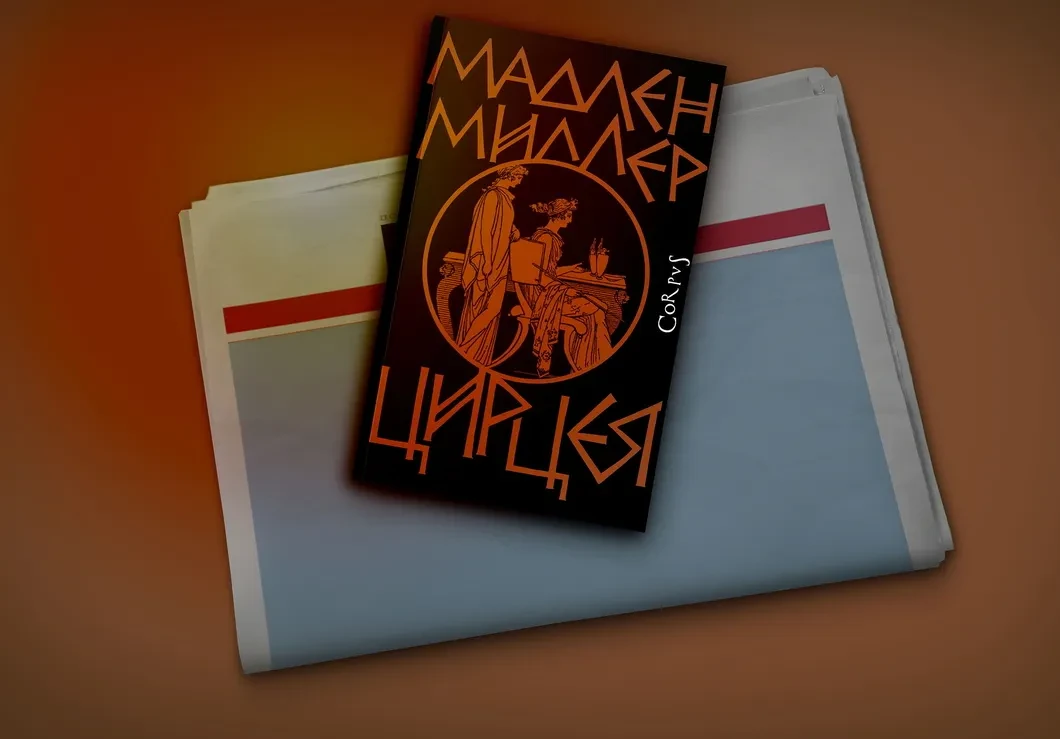
American Madlen Miller, a classic philologist and Shakespeared, became known to readers thanks to a loud debut-her novel “Achilles’s song”, telling about the tragic love between the two Trojan heroes, became an event in the literary world.
The fate of her new novel “Circe” is even more enviable - it has already been translated into 30 languages (translation into Russian - Lyubov Tronin), sold by a circulation of more than a million copies,
And the rights to its film adaptation were bought by HBO.
But what is it about and what is it interesting?
Miller again turns to antiquity - so beloved and mastered. This time it gives a voice that has existed on the periphery of reader attention for centuries. Circe (or Kirka) was mentioned in the myths briefly, Ovid spoke about her in his “metamorphoses” casually, but she was remembered thanks to Homer - Circe became one of the obstacles to the home of Odysseus and his team. Homer described her as “a terrible goddess with a human speech” - she turned travelers into pigs, it seemed, for no reason. Miller, on the other hand, tried to unwind the threads of ancient history and show what could actually happen - and who was the mysterious sorceress of EE.
The author immerses the reader into a world, familiar from childhood in the myths of Kun and Homeric epics. Interest in antiquity does not fade away - every year new interpretations of well -known stories appear: from Kolma Toybin and his “House of Names” (in which he examined history through the eyes of Clytemnestra and Orest) to Stephen Fry, retelling the myths. Miller seems to borrow Homer's tongue and passes through himself - it turns out elegant ligature, handmade. The imagery with which she describes the surrounding world is amazing. And archaicism here is very modern and appropriate - like an ideal outfit at a costume ball.
Miller tells the story of Circe since childhood. Her mother - the insidious and beautiful nymph of Perseid - conquered Helios with her beauty and insolence. I gave birth to children-but I was dissatisfied with Circea (“we will make someone better”) and immediately lost interest in her, giving her to educate numerous aunts. And so the heroine grew, deprived of parental attention and warmth - forgotten, superfluous, unnecessary to anyone.
The gods have always been bad parents, and indeed characters of dubious moral qualities.
If you look at ancient Greek mythology with modern eyes, then the blood freezes in the veins: Zeus raped and killed, the brothers and sisters divided the bed with each other, drunk and boiled, built the intrigues of mortals and did not put their lives in anything. But there were those who patronized them and even loved them - such was a cirse.
In the name of love, Circe makes his first witchcraft rite - to make a beloved by God equal to her. But a conceited mortal breaks her heart as soon as he receives strength and power - he needed a circus as a pass to high society. And when she is punished for witchcraft and referred to the far island of Eah, she humbly decides the decision of the gods, as he took his fate of Prometheus.
Together with Miller, we observe how the heroine grows and grows up, but still looks at the injustice around the injustice around. Circe is not only a sorceress - she is a contemplator. She finds herself in the thick of events, not wanting it herself - simply not knowing how to resist the world and say no to others. Hundreds of years will pass before it changes and gains its strength.
Miller reconstructs the personal story of the heroine, letting her through the prism of female. The author shows how the character is gradually formed. Its cirse becomes an independent personality, independent of men and someone else's opinion. She makes mistakes - and she corrects them herself, she chooses people whom she admits to her life and retains in memory. She loses those to whom she opens the heart, and does not despair. She learns to be cold -blooded and merciless.
The main desire of the cirus is to know itself, to find the meaning of life and freedom. And if at the beginning of the novel we see the weaknesses and doubts of the cirus in its divine nature, then by the end it completely accepts its otherness and is ready to sacrifice eternity in order to get rid of it.
Eternal life for her is not a gift of fate, but a painful punishment - to see how people will age and die. For their sake, she is ready to challenge the gods.
Obviously, it is important for Miller not only to show, but also to explain the actions of your heroes. They do nothing just like that-behind every aggression, behind every dubious decision there is a motive: someone gives birth to a monster to be glorified, and someone comes to her husband’s mistress to escape.
Miller skillfully flirts with reader expectations so as not to live up. He makes the heroine a witness to important events - from the punishment of Prometheus to the birth of a minotaur. In the final, the author will give a list of characters to introduce readers to those whom he mentions in his history. Many famous names come up on the pages of the novel: Medea and Jason, Pasifaya and Minos, Ariadne and Tesia, Telemach and Telegon, Hermes and Athena, Daedalus and Odysseus. The latter will become important people in the life of the heroine.
The author shows a world very similar to ours: where a lonely woman is a light target, where beauty and insidiousness are more appreciated than everything else where people use each other, not giving anything in return. In the world of "Circe", everyone is very human and vulnerable, even gods. A paradox, but it seems, with his novel Miller immortalizes the heroine, who only dreamed that getting rid of eternity.