
Translated material
Shamanism verbatim
"Conference"
Director Ivan I. Tverdovsky
Ivan Tverdovsky shot the first phenomenon in the Fatherland, based on the events of four autumn days of 2002, when the spectators of the Nord-Ost musical were taken hostage by militants requiring the Russian authorities to withdraw troops from Chechnya. The heroes of Tverdovsky are surviving. But they are not that alive.
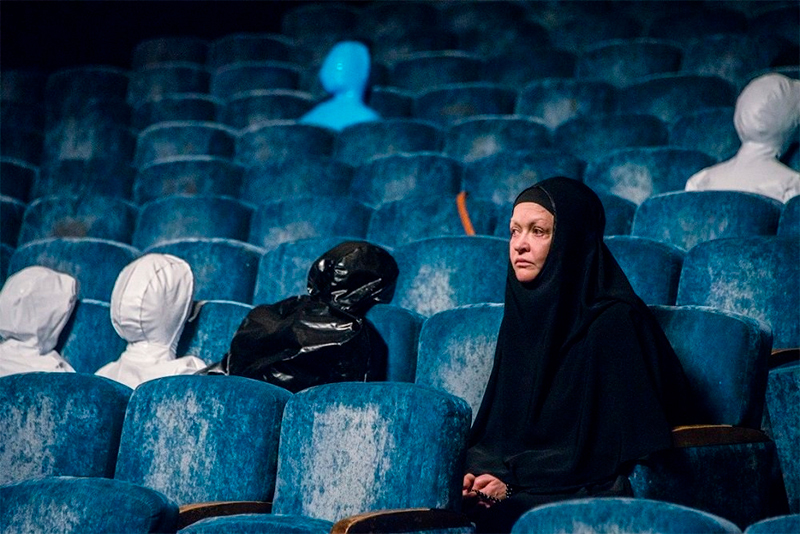
The face of the actress Natalia Pavlenkova appears as a chalk from the blackness of the monastic apostle. Her heroine is also the name of Natalia. Seventeen years ago, Natalia had children. Now - fathers, heavenly and spiritual. The son died with other victims of the attack. The daughter crossed her out of her life. The shepherd, Father Andrei, blessed Natalia to rent the same hall where seventeen years ago they were sentenced to death, and arrange for the survivors in the style of "memory, speak." The Directorate of the Theater Center will call him a “conference”, because the lease agreement is an official, permissible genres of events tightly agreed and approved. It’s not up to the memorial, everything is according to the regulations.
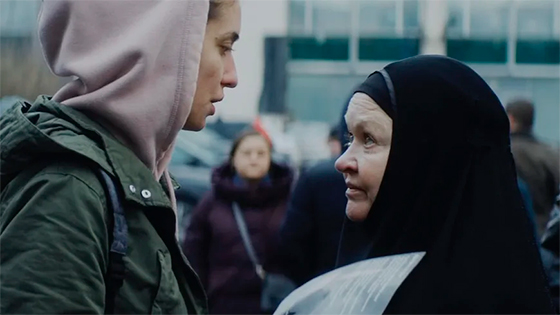
The verbal substitution that gave the name to the film is key. He himself is a double castling: the present gives way to the past without snotty flashbacks and a fake reconstruction, the past is replaced by the present. The stories of the participants in the memorial evening, restoring the chronology and topology of the attack, are receding to the background, and now the screen is captured by the tragic circumstances of the mother, a cowardly traitor to their children. In the face of the tests, she throws her family again and again, running out of the window, succumbing to an instant impulse, then to the monastery for forgiveness and peace.
The gradual shift of the focus from a historical catastrophe to a purely private particular, the crash of the family clearly clarifies the essence of those long-standing events: the hostages of the Nord-Osta were devoted, sacrificed twice-by strangers and their own. The “conference” with a burning cold is highlighted by a universal plot, in which the Motherland rejects responsibility for its citizens who invariably remaining consumable in its ambitions - it was Natalia who played it in her background, it was he who should be interrupted, replayed with the “conference”.
 © Vega Film Hard from the movie "Conference"
The fear of touching a smoking piece of pain forces to look for a form that will create a cooling barrier, turn the injury into a healing image, set the distance necessary for reflection and continuing life. The form found by Tverdovsky is dictated by the theatrical space-starting from the face-mask of Natalia. In the ominous gray limb of the theater hall, her memorial performance will unfold, the mystery of the new drama, which chose the language of the testimony. The half -empty rows will fill people and inflatable dolls - the surviving blue, dead white and attacked black. The former spectators will become the characters, living in short monologues the course of long -standing events, will analyze the scene whose language is no longer suitable for this new theater - the theater of the stalls. They barricade from the outside world in captivity of memory, conscience, pain. Still calling themselves hostages, they seem to remain them to this day. Among the participants in the evening, the young artists of the Gogol Center, Philip Avdeev and Roman Shmakov, who were still participating in the production of Nord-Ost , will appear.
In the very first, as if an endless footage of the episode, the theater hall is an abstract composition of the visual rows overturned into an acute diagonal, between which the yellow beetle of the vacuum cleaner creeps. Its monotonous tambourine is the first of the voices of the mechanical suite of sound terror, which forms the mourning of the melos of this picture. Recall that the Nord-Osta orchestra hole was turned into a cesspool, and we will listen entirely to a batch of a trolley rumbling along the steps of drinks-from the last to the first row of the amphitheater. We enjoy the shooting recitative in the rage of a window slammed again and again. But no less significant non -pericity and babble, the impossibility of conversation. The weakened, meek intonations of the mother-and the merciless, vindictive tantrum of the daughter in the fierce performance of Ksenia Zueva are equally necessary for this catastrophe film. How to remember this, isn't it better to forget everything?
"Scarecrow"
Director Dmitry Davydov
 © Bonfire Production Frame from the movie "Scarecrow"
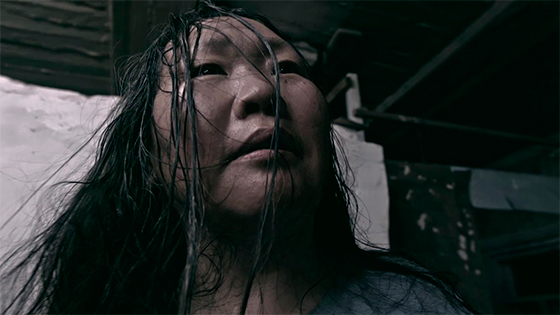
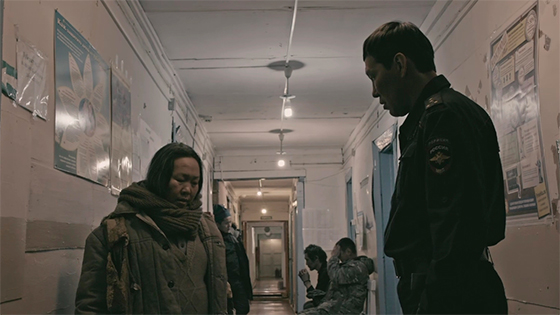
The first Yakut film (deservedly received the main prize of the festival) begins as a mystical horror in the history of Kinotavra, but it will turn out to be chronicles of pain and horror of the unfortunate mother before the troubles of the world and its own irreparable misfortune. The ghostly, nameless creature who almost lost human appearance has a floor and somewhere there, in the world, is a child taken away many years ago. The rural district police officer helps to look for his scarecrow.
Combat, unwashed, leaning away from alcohol and grief, a woman sewn into the skin of loneliness, extracts ailments from fellow villagers (she is either a shaman or a healer). They come to her with misfortunes and gifts, with gunshot and infertility, with canned goods and nonsense, but they are afraid, barely tolerate and spread rot who is more than the same. After each act of mystical healing, it tears it with blood or bullets, judging by the metal breakdown of pellets erupted behind the scenes.
Having accepted vodka, scarecrow writhes in a drunken dance and departs from suffering in the warm boiler room, impenetrable, inaccessible to human contact. Dmitry Davydov monitors the heroine convulsions, without causing the viewer to turn away, as if he was building a graph of the resistance of matter to the lawless intervention of a miracle. In contrast with the difficult processes taking place with its body, the installation of life scared the discouragingly simple. The scene behind the scene of Davydov brings contact with the heroine, sets up on her breath, the tremors of the blood, which she splashes along with someone else's pain, gives her a voice - the Yakut violin - Kyryysh.
 © Bonfire Production Frame from the movie "Scarecrow"
 The scarecrow works with a hidden, frightening world of guts, sick, hidden from a person. Davydov leaves the mechanics and consequences of this work behind the scenes, focusing on the equally ill and torn world outside with its superficial system of relations of strong and weak, well -fed and hungry, the right to have and trembling. "Scarecrow" exists on the border of these worlds. The miracle of healing appears in it a nasty routine, but the routine, ordinary world is shown as an attack of magic, a magical seizure, partly reminding the fabulous auster of the late cinema Alexei Balabanov, who worked with a metaphor as with evidence. We have not appeared for such a movie for many years. This is a session of the pure cinema, which is complete without warming melodramatic effects, but it itself produces heat, like a fire at which you can look endlessly.
In Moscow, the “scarecrow” will be shown on September 22, the “conference”-the 24th in the summer cinema Garage Screen.