
Translated material
Elena Duskina died
Elena Duskina died
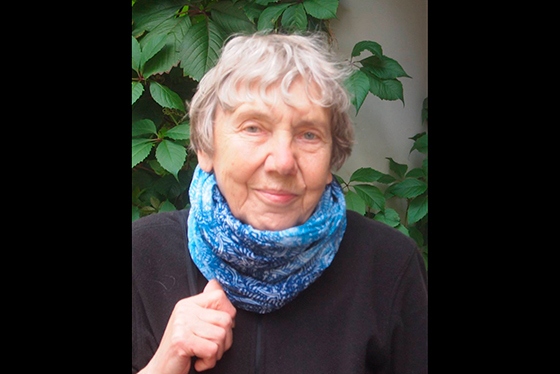 © Leo Lion
Today, September 21, in St. Petersburg at the age of 79, a literary critic and culturalist Elena Duskina died.
This was announced by literary critic Nikolai Podosokorsky.
Elena Vladimirovna Dushechkina was born in 1941 in Rostov-on-Don, studied at the Faculty of Philology of LSU and at the Historical and Philology Faculty of Tartu University, after which in 1966 he was accepted into graduate school at the Department of Russian Literature.
Under the leadership of academician Dmitry Likhachev, she wrote the candidate dissertation “The Artistic Function of Alien Speech in the Kiev Chronicle” and defended it in 1973. In the 1970s and 1980, she worked as a senior teacher of the Department of Russian Literature of the University of Tartus and the Tallinn Pedagogical Institute.
Since 1990, she served as an assistant professor at the Department of Literature of the Institute of Culture named after N. Krupskaya in Leningrad, in 1992 she became an associate professor of the Department of History of Russian Literature of St. Petersburg State University, from 1999 until recently she worked as a professor of this department. In the 1990s, as an invited professor taught Russian literature and conducted seminars at universities in the United States, Finland, Latvia and Estonia.
I read the courses of introduction into literary criticism, on the history of ancient Russian literature and Russian literature of the XVIII and the second half of the XIX century, led special seminars, and led folklore practices. It was a part of the editorial board of Elementa: Journal of Slavic Studies and Comparative Cultural Semiotics (USA), led the Virtual Laboratory project: Nikolai Semenovich Leskov: Life and Creativity, was a permanent participant in the annual seminar "Leskovsky" Leskovsky Palympsest. "
The author of the textbook “Stylistics of the Russian Household Tale of the XVII century (Tale of Frol Skobeev)” (1986), monographs “Russian Holy Story: Formation of the genre” (1995), “Russian Christmas tree: History. Mythology. Literature ”(2002), books“ Svetlana; The cultural history of the name ”(2007) and other works, as well as comments on a number of publications on the history of Slavic studies and the complete collected works of Leskov.