
Translated material
Sergey Aksakov
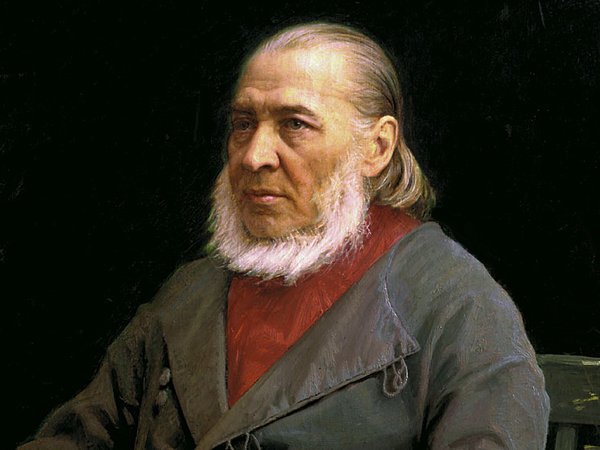
On October 1, 1791, writer Sergei Aksakov was born.
Personal business
Sergey Timofeevich Aksakov (1791 - 1859) was born in Ufa in the family of the prosecutor of the Zemsky court. Came from an old noble family. He spent his childhood in Ufa and in the family estate of Novo-Aksakovo in the Orenburg province. In 1799, Sergey Aksakov entered the Kazan gymnasium, but soon his parents took him home: his mother could not part with her son for a long time, and the boy, torn from the family, had seizures of epilepsy. He returned to the gymnasium again two years later. In 1804, the senior classes of the gymnasium were transformed into the first year of Kazan University, Aksakov turned out to be one of his students and graduated from his studies in 1807. Already in the gymnasium, he actively participated in the release of manuscript literary magazines.
At the end of the university, Sergei Aksakov went to Moscow, and next year he moved to St. Petersburg to enter the service. He served as a translator in the commission on the preparation of laws, then on the expedition on state income. He combined the service with literary activity, was fond of theater, met many writers, poets and actors closely.
In 1811, he returns to Moscow, in the war of 1812 is recorded in the militia of the Moscow province
The next year, he leaves the service and settles for several years on the estate in the Orenburg province, where he devotes time to hunting, fishing and literary creativity. In Moscow, it is only raids. At this time, Aksakov translates a lot (Sophocles, Boailo, Moliere, Walter Scott), composes poetry and fables, some of them appear in the capital's magazines. In 1816, in Moscow, Aksakov married Olga Platatina. The family lived in the estate of Nadezhdino, but in 1826 moved to Moscow, where Sergey Aksakov again entered the public service. In 1827–1832, he served in the Moscow Censorship Committee, but was fired for passing the joke Badoshniki jokes Vasily Protashinsky (under the pseudonym Elistrat Fitulkin) and the third issue of the European Magazine Ivan Kireevsky, where the Kireevsky Article was placed. After this incident, he became a friend of the Kireevsky family.
After dismissal from the censors, Aksakov became an inspector of the Moscow Konstantinovsky Earth School, and with the transformation of the school in 1835 at the Summer Institute, its first director. I stayed in this position until 1838.
For many years, Aksakov constantly acted as a theatrical critic on the pages of the Moscow Bulletin and other publications, and was also the editor and author of the “dramatic addition to the Moscow messenger”. The Aksakov’s House on the Sivtsevo became an important center of Moscow’s cultural life. The Aksakovsky “Saturday” was visited by Mikhail Pogodin, Mikhail Shchepkin, Alexei Vernovsky, Ivan Panaev, Alexei Khomyakov, Ivan and Peter Kireevsky, Stepan Shevyrev, Nikolai Stankevich, Alexander Herzen, Mikhail Bakunin, Vissarion Belinsky, Timofei Granovsky, Peter Chaadaev, Ivan Turgenev and many others. Although a circle of Slavophiles gathered around Aksakov, his house was open for their opponents. Repeatedly visited by Aksakov Nikolay Gogol.
In 1837, Sergei Aksakov inherited significant estates from his father, left the public service and focused on economic affairs and literary activities. In 1843 he acquired the estate of Abramtsevo near Moscow. The circle of Aksakov’s friends also moved there, and Gogol lived on the estate for a long time. In Abramtsevo, the main works of Sergey Aksakov were created.
Aksakov died in Moscow on May 12, 1859.
What is famous
 Sergey Aksakov
The first major books of Sergei Aksakov were devoted to his long -standing hobbies and were called “Notes on the Offs of Pisces” and “Notes of a Ruzhny Hunter in the Orenburg Province”. Initially, he intended them for a narrow circle of fans of fishing and hunting. However, the books fell in love with readers who, in addition to the deep knowledge of nature, fell in them, the beauty of poetic descriptions and an individual style, conquering on the one hand a deeply personal look, on the other - calm and rejection of pathetics. Gogol wrote to Aksakov that he would like to see the heroes of the second volume of Dead Souls as alive as his birds. Books instantly sold out. Success forced Aksakov to turn to the creation of the novels “Family Chronicle” and “Children's years of Bagrov’s grandson”, which are largely autobiographical. Aksakov also owns valuable memories of Gogol.
He is also the author of the fairy tale “Scarlet Flower” familiar to everyone since childhood.
What you need to know about
Sergey Aksakov had four sons and seven daughters. Ivan, Konstantin and Vera Aksakov became prominent figures of the Slavophiles. Konstantin and Ivan were active writers, the author of poetic dramas, historical and philological works, and journalism. In addition to other classes, Ivan became one of the founders of the domestic economic geography, creating the work “Research on Trade at Ukrainian Fair”, for which he received the Demidov Prize and Medal of the Russian Geographical Society, Konstantin was a linguist who created significant works “On Russian Verbs” and “The Experience of Russian Grammatics”. A significant memoir monument was the “Diary for 1854 - 1855” by Vera Aksakova.
Direct speech
“The collecting of butterflies was one of those hobbies of my early youth, which, although not for long, but with all the strength of passion, I owned me and left a deep, fresh impression in my memory. I loved natural history from childhood; The book in Russian (which I don’t remember) with popular images of animals, birds, fish that fell into my hands in the gymnasium, with awe, from the board to the board, was learned by me by heart. Seeing that in the book there is no fact that at the first glance it was noticed by my childish inquisitive attention, I myself tried to describe the animals, birds and fish, which I had to get to know more likely. These were childish attempts by a boy, to whom each knowledge acquired by him seemed to be news, not known to anyone, a precious and important discovery, which must be recorded and informed to others. With tenderness, I now look at these two notebooks in a quarter of thick blue paper, which you can’t find at present. On the pages of these notebooks, children's handwriting and syllable are described: a bunny, a squirrel, a swamp coolers, a wiser wagon, an unknown cake, a plane, a sand and a sucker; Obviously, the observer boy met them the first. Soon I have fun of many other new and even more important interests that young life is so rich in; He had fun and stopped describing his animals, birds and fish. But the ardent love of nature and living creations inhabiting God's world did not cool in my soul, and after fifty years, enriched with the experiences of the hunting life of a passionate shooter and fisherman, I looked around with love for my childhood - and the boy’s attempts were carried out by the sixty -year -old old man: the “notes on the carpet” and “Notes of the Ruzhny hunter of the Orenburg province” were published.
S. T. Aksakov "Collecting butterflies (story from student life)"
“He lived for a long time, and events bubbled around him, and he,“ sitting quietly and Smirne with a fishing rod on the shore of the lake or river bay, ”retained peace of mind. The world with its unrest swam away from him, did not disturb him. From the adolescence, we see before us this humble and quiet fisherman, this pure heart, respectful to people of a lover of nature, imbued with the spirit of honesty and goodwill, and he is smoking a touched heart with a warm wave, and our faith in man increases. After all, he himself respected so much in life, so sincerely revered both the past and the present; It was so embarrassing and painful for him to notice the dark in others - for example, in his favorite Gogol. And when, obscured by the brighter, more boiling figures of a new life, this good old -wing is leaving us with a slow gait of old age, some pure and bright trace remains in our souls and the green shores of the Bugurusl and the rifle hunter of the Orenburg province have grown on them - in the circle of his relatives, with which he and every Russian reader and every Russian reader. ”
Julius Aichenwald "Silhouettes of Russian Writers"
“What the skill of descriptions, what kind of love for the described and what knowledge of the life of birds! G. Aksakov immortalized them with his stories, and, of course, not a single Western literature will boast of anything similar to the “notes of a gun hunter”.
Nikolai Chernyshevsky
10 facts about Sergey Aksakov
- The surname "Aksakov" comes from the Turkic word "Aksak", meaning "blind."
- In addition to hunting and fishing, Sergei Aksakov also loved to collect mushrooms and called this activity “humble hunting”.
- Most of Aksakov’s articles of the late 1820s and early 30s were published under the pseudonyms or without signature, due to his service in the censorship department. Until now, researchers continue to argue about the belonging of many reviews and theoretical publications on theatrical topics. For example, it is likely that it was Aksakov who was hiding behind the pseudonym P.Sh., under which many articles about the theater were published.
- Aksakov published the fairy tale “The Scarlet Flower” as an application to the book “Children's Years of Bagrov -grandson”, and in the main text of the book, the story of this fairy tale, heard from the Key of Pelagia. The fairy tale is a literary processing of the plot about the beauty and the monster, one of the sources of it probably was the option written in 1757 by Jeannaya-Mari Leprens de Beaumon, the great-grandmother of Prosper Merima.
- Some local historians believe that the Scarlet Flower from Aksakov’s fairy tale had a specific prototype - the type of plant narrow -leaved ( Paeonia Tenuifolia ), found in the Orenburg steppes where Aksakov was.
- They also say that the original name of the fairy tale was “Olenkin Flower” and it was dedicated to the granddaughter of Sergei Aksakov - Olga, daughter Grigory Sergeyevich Aksakov.
- In August 1849, Gogol in Abramtsevo read the Aksakov family the first chapter of the second volume of Dead Souls. The next day, Gogol left for Moscow, and when Sergey Aksakov wrote a letter to him about what he read, Nikolai Vasilievich hired a carriage and on the same day he again arrived in Abramtsevo.
- In the 1840s, Sergei Aksakov’s vision began to weaken, and at the end of his life he could not write on his own and dictated his writings to his daughter Vera.
- 1991 was declared UNESCO by the year S. T. Aksakova
- The name of Sergei Aksakov in 2012 was named a crater in Mercury.
Materials about Sergey Aksakov
Article about Sergey Aksakov on Russian Wikipedia
Works by S. T. Aksakova in the Library of Moshkov
Literary Museum-Reserve of the Writer S.T. Aksakova
Memorial House Museum S. T. Aksakova in Ufa