
Translated material
Mercenaries join the battle
"New" became known the recruitment mechanism and the route for sending militants from Syria to Nagorny Karabakh
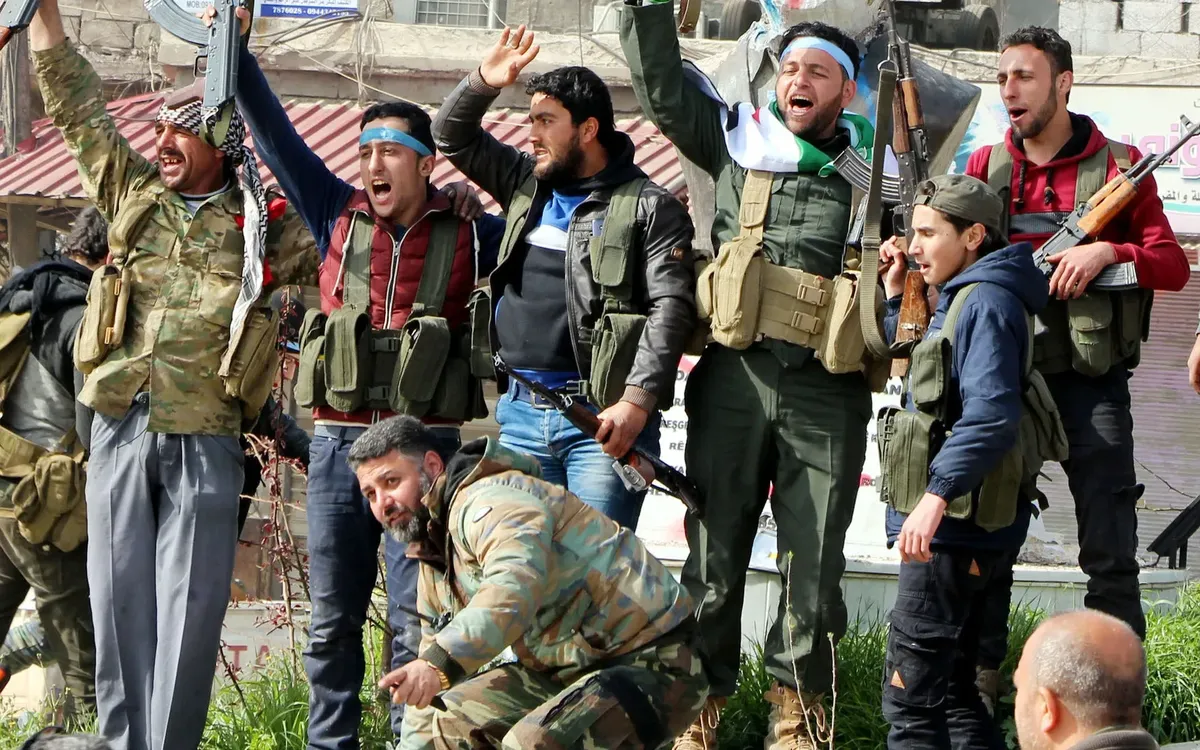
France President Emmanuel Macron at the EU summit in Brussels directly accused Turkey of sending Syrian jihadists to Nagorny Karabakh. “Now we have information that indicates that the Syrian militants from the jihadist groups went through the Gaziantep on the battlefield in Karabakh,” he said. Emphasizing: "This is a very serious fact that changes the situation."
Meanwhile, the Middle Eastern social networks have been overflowing with information about the sending of Syrian fighters to Turkey for several days, and the most conservative Muslim audience expresses the full support of Erdogan’s actions, drawing a parallel between the current conflict and the historical confrontation of Muslims and Christian Crossesuers. The "new" managed to install the parts of the recruitment of militants in Karabakh.
Our source in the Syrian Idlib on the border with Turkey said that the Syrian of Turkmen origin (Turkoman) named Seifa Abu Bakr is engaged in the registration of mercenaries.
In fact, he is a recruiter of the Hamzat brigade, which is fighting a free Syrian army (the SSA is tightly cooperating with Turkey).
Those who want to go to a new war are recorded in a small office in the village of Afrin (Idlib Province).
Any Syrian citizen can sign up for volunteers, whether it is a military or civilian who wants to fight on behalf of Turkey.
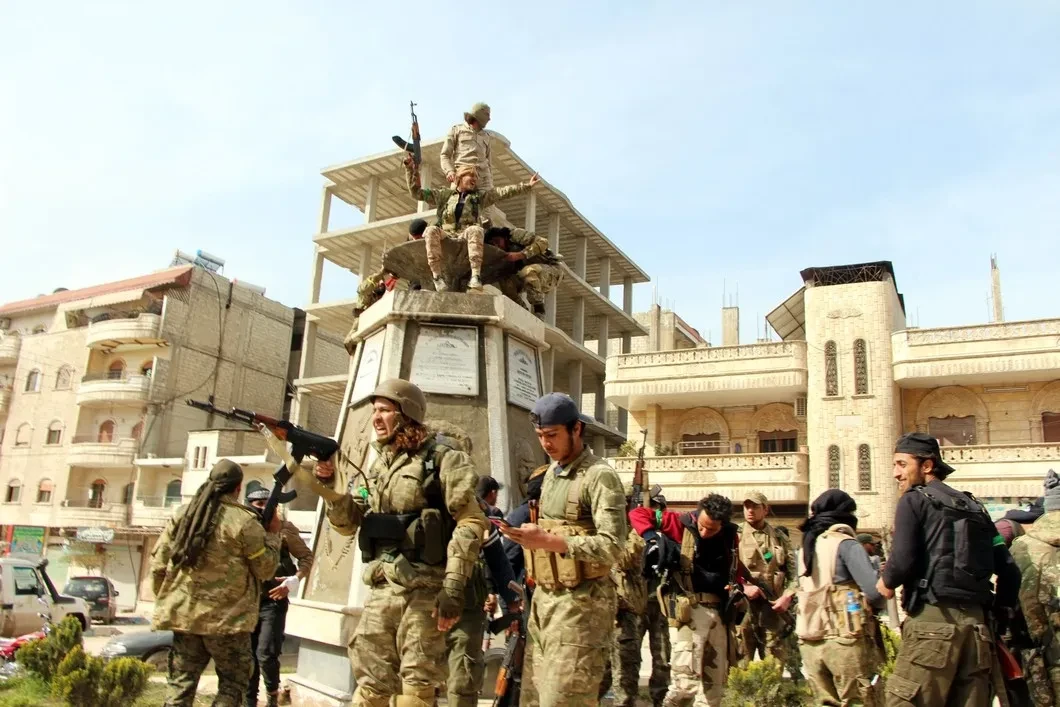
According to our source, today from 700 to 1000 militants was sent to Azerbaijan to protect gas and oil pipelines. Fighters are collected in groups of 300 people, then they are sent to the Turkish border town of Killis. There, in return for their field uniforms, in which the majority is dressed, they receive inconspicuous civilian clothes and from there go to the Gaziantop Airport to fly to Baku with a transplant in Istanbul. The flight passes through the airspace of Georgia.
Our source adds that every Syrian citizen choosing the path of the mercenary is in a very difficult life situation. Most of them have repeatedly moved inside Syria and are not able to work and earn enough money to support their families.
Many of these men are rural residents, peasants, who did not hold weapons in their hands before the war.
However, 9 years of the Syrian war were put under the gun of all men and young men, and today most of them are fighters of different brigades associated with the SSA.
Our source mentioned the "Samarkand" brigade and the Nuddin Zinki brigade.
For many, in the decision to leave Syria, the recent clashes with the prohibited by the terrorist group Haiat Tahrir al-Sham began to leave Syria. The KhTSH tried to supplant competing combat groups from Idlib - the only one uncontrolled by Assad of the country.
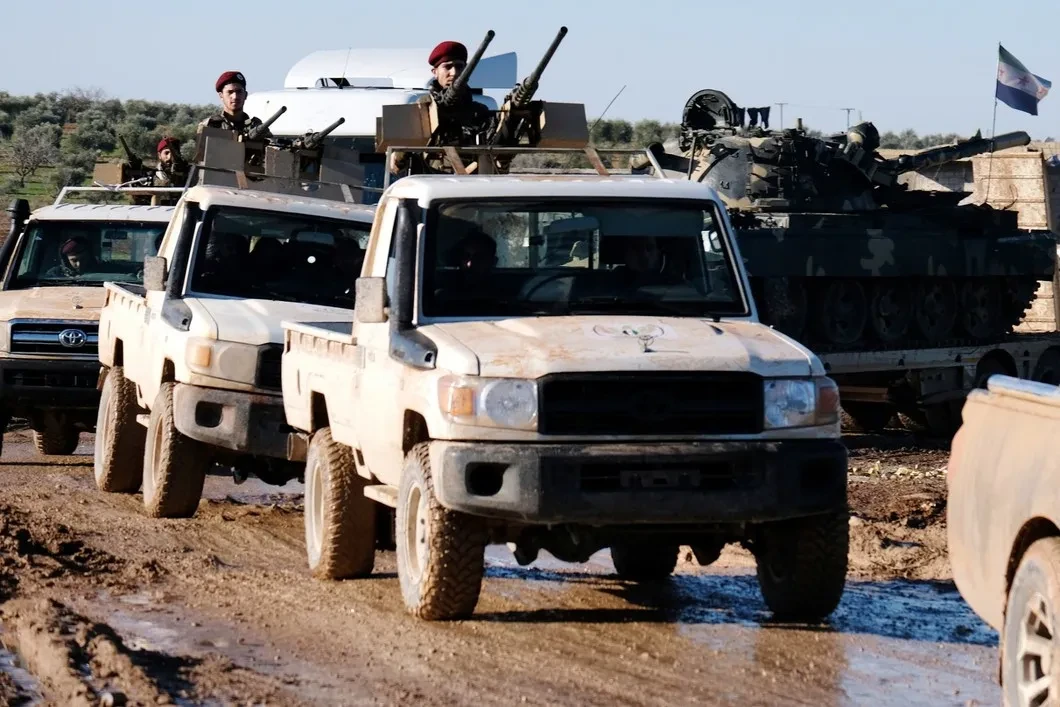
The Turks make mercenaries very attractive. The monthly salary of the mercenary is 1800 dollars. Turkish citizenship for the fighter and his entire family is also guaranteed. At the same time, the family (wife and children, and for unmarried - parents, brothers and sisters) will receive citizenship even in the event of the death of a fighter. Also, in the event of his death, the family will receive a one -time payment of 30 thousand dollars.
Meanwhile, information also appeared that the Syrian Armenians, mainly supporters of the Assad regime, are sent to Nagorno -Karabakh to support Armenia. They are supported by fellow tribesmen from neighboring Lebanon.
According to the closed information of the Ministry of Internal Affairs, Lebanon, in recent days, about 500 local citizens, ethnic Armenians, left the country to get on the battlefield in Nagorno -Karabakh.
Hundreds of thousands of Armenians found refuge in Syria and Lebanon after the 1915 genocide. Everywhere where the Armenians settled in the Middle East, they were perfectly integrated into the hosts and at the same time carried their culture and traditions with them.
Their homeland has always been with them, they retained their language, their customs. However, they retained the intention to take revenge.
In the countries sympathizing with them, such as Lebanon, there were armed resistance groups for many years, which were aimed at a partisan war against the Turks and the liberation of the “occupied territories”. So, for example, ASALA (The Armenian Secret Army of the Liberation of Armenia), the main purpose of which was to “force the Turkish government to publicly recognize its responsibility for the genocide of Armenians in 1915, pay reparations and give in to the territory of the Armenian Motherland”, and lasted from 1975 to 1990.
She had its own departments in Lebanon, in some countries of Western Europe, in Greece, the USA and in the 1980s it was even recognized by the United States with a terrorist group. However, since the beginning of the 1990s, the Armenian communities in Lebanon and Syria abandoned the idea of armed violence, switching to business and politics. In Lebanon, Armenians are elected to parliament, many Armenian ministers have been members of governments in recent decades.