
Translated material
On the shore of Babyeu Yar
The memorial in Kyiv should become a symbol of pan -European memory
The globe of hatred
A network of commemorative signs about the Holocaust - from huge monuments, museums and research centers to tiny “stalls”, or “stumbling stones” - the whole world is covered today. With a great delay, they also arise in the post -Soviet space, that is, where, in fact, the Holocaust began as the greatest population in world history. Not as geographical, that is, half -hearted and purely optical, but as a biological, that is, the final and systemic “solution of the Jewish question”!
However, there are several places on this globe with a completely special status.
These are nodes of the highest symbolic tension and significance, a kind of climax and at the same time historical archetypes of the Holocaust, talking not only about themselves, but also about the catastrophe as if for everyone and on behalf of all.
This is, firstly, Auschwitz (or, in Polish, Auschwitz)-the place of the invention, testing and setting on the stream of the most technological-conveyor-chemical-method of mass murder (1.3 million corpses, of which 1.1 million are Jewish). For almost three years, here, as in a funnel, he had delayed and sucked Jews from all over Europe - from Gurses in the Pyrenees to Belorussian Minsk and from Norwegian Tronheim to Greek Iraklion.
Secondly, Warsaw with her rebel on April 19, 1943 Ghetto. Perhaps, Amsterdam with the house of Anna Frank, a monument to the family scale of the Holocaust and everyone who tried to hide and leave, tried - but could not.
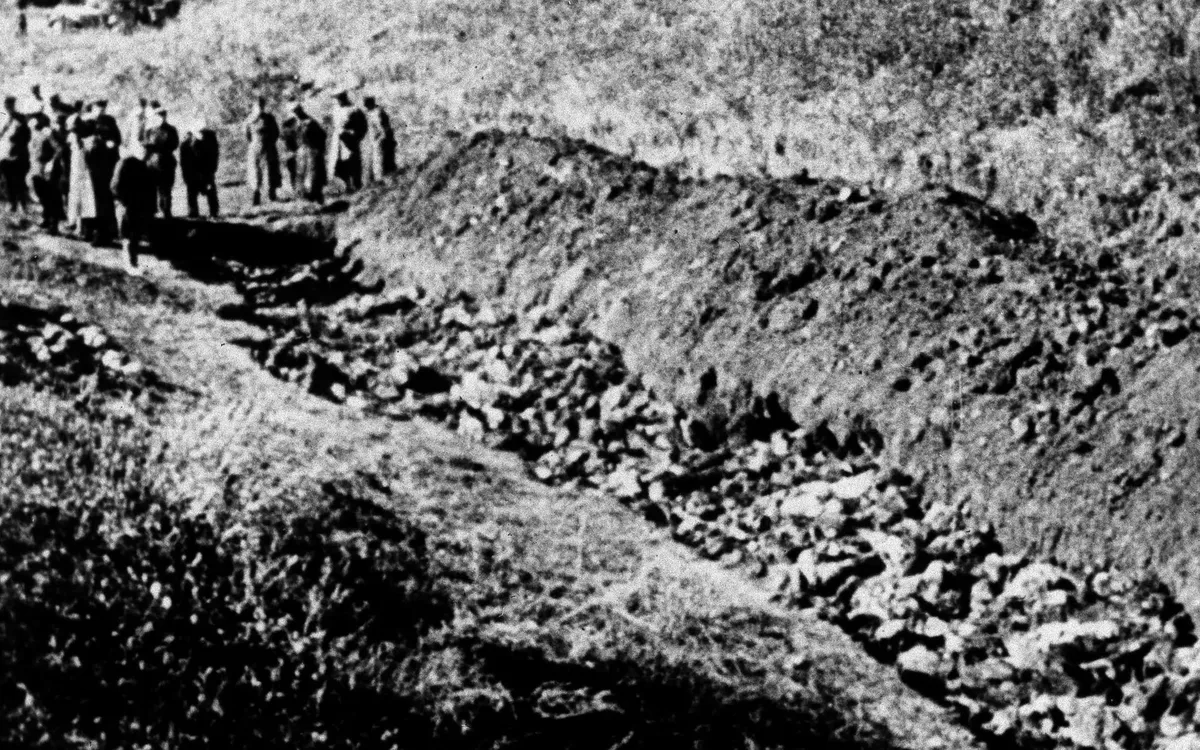
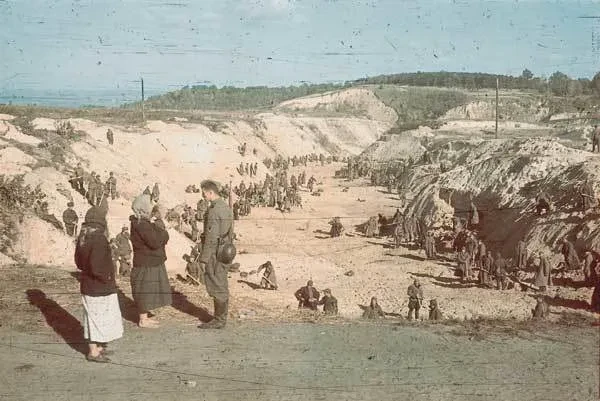
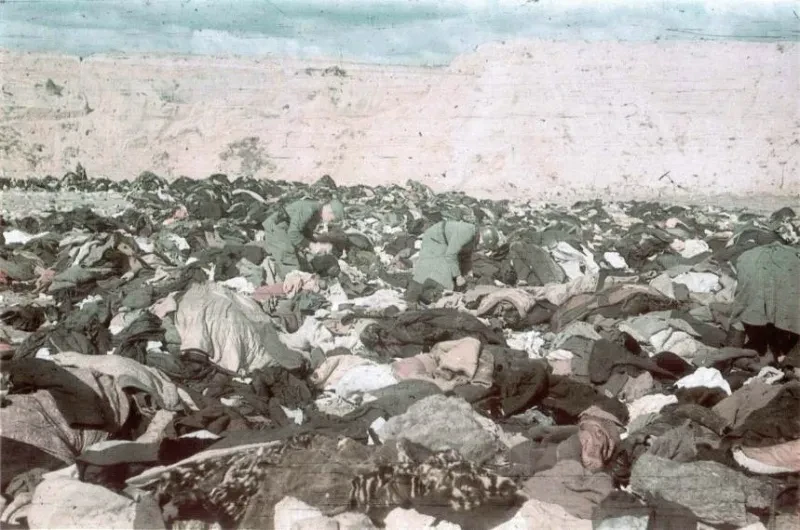
And this, finally, is the Kiev ravine of Babi Yar - the place of the record lump -sum execution of Jews (almost 35 thousand corpses in just a day and a half - September 29 and 30, 1941, and this, possibly, is even without taking into account children!). He became a household place, which can not be said about other shot pits and ditches on the occupied land (about the same serpent beam in Rostov-on-Don, for example).
The Warsaw ghetto, despite the defeat of the uprising, is a marker rather heroic and positive. Anna Frank's house - at least to betrayal and arrest - also a story of relative success. Aushwitz and Babi Yar, on the contrary, are markers of extremely negative sacredness, these are the residence of death and, both, a kind of Anus mundi (literally: “asses of the world”), that is, places of entry into hell.
This makes them world shrines and attractions, not only Jewish, but also universal.
Is it possible to imagine that museums do not arise in their place?
The path to the museumification of the death camp in Aushwitz-Birkenau, although it was passed, was not simple. At the end of 1945, after several Soviet hospitals and filtration camps were in the huts of the former concentration camp, replacing each other, its territory was returned to Poland, and she gathered here, in Auschwitz and Brzezinka, to create a state museum. Its actual discovery took place on June 14, 1947, on the 7th anniversary of arrival at the concentration camp of the first transport with the first prisoners, and this one already expressed the concept of that museum: Auschwitz-that is, the Calvary of the Polish patriots who heroically struggled with the Nazis for the freedom of Poland.
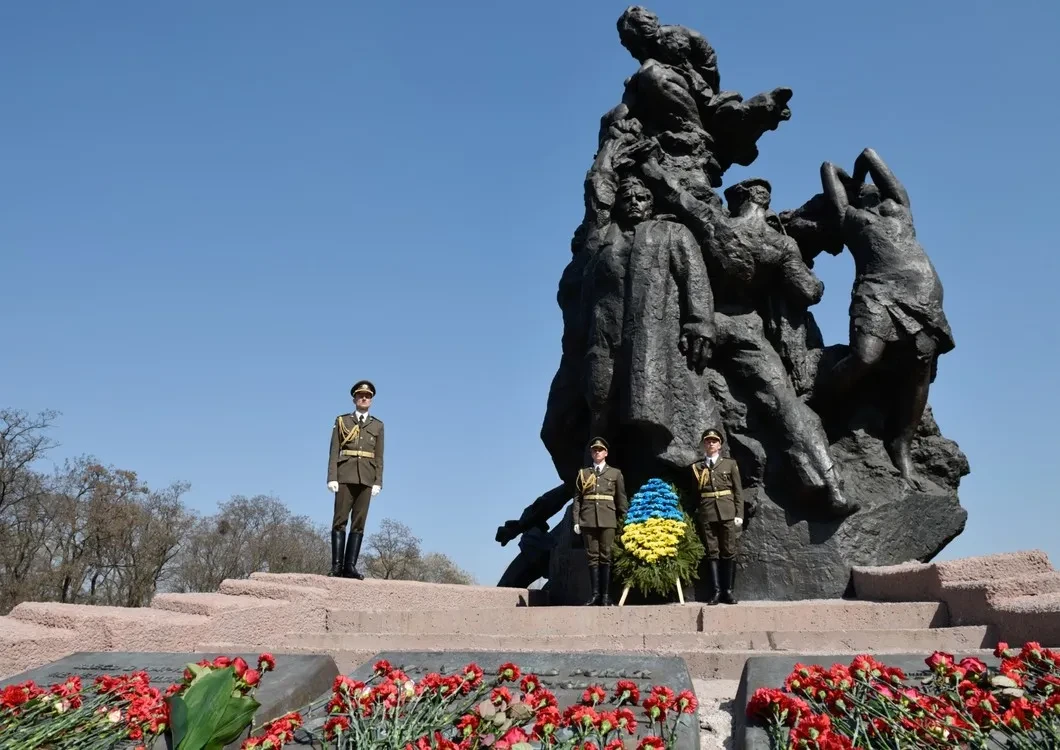
As for Babyeu Yar, the story of the memory of this entrance to hell is even sadder. And to this day, almost 80 years after that execution, there is nothing blatantly in this place, except for the obsolete Soviet memorial of 1976 and a pair of dozens of separate statues and memorable signs that have arisen here over the past 30 years, as it were, Samossev and Self -construction.
Asymmetric efforts are opposed by any efforts to overcome this gaping shame - state or, when the state goes into the shadow, it is public - but with an amazingly consistent result: torpedoing such efforts.
Jews and anti -Semites - to the woman
The history of Jews on the territory of present -day Ukraine began surprisingly early - more than a thousand years ago. Among the manuscripts of the Cairo genius-the largest archive of medieval Jewry taken to Cambridge-in 1962 the so-called “Kiev letter” was discovered, written in the X century in Kyiv-in Hebrew and with the ending of Khazar!
There was a whole Jewish quarter about that time in Kyiv: obviously, those Khazars-Jews stopped in it that in 988 they participated in the casting of faiths and seduced Prince Vladimir into their faith.
They, as you know, lost casting. Orthodoxy hardened in Kyiv, and therefore, non-Christ, the necessary substrate for steam and bloodletting appeared.
Therefore, the pogroms began, and such that for some time the Jews from the annals completely disappeared.
After the mass exile of Jews from Spain, Sardinia and Sicily in 1492 (and in 1496 - from Portugal), they spread around the world, settling in more tolerant countries. Some of them were accepted and welcomed by the Catholic sovereigns of North-East Europe-the Polish king and the Grand Duke of Lithuania, thereby launching the mechanism of turning the cheerful and red sfardism into mournful and resin-haired ashkenasia.
As a result of the three sections of the Commonwealth and the victories over the Sultans, the Russian crown gained what was re -absorbed into Little Russia, Belarus and Novorossia, and in the load received under a scepter from a million souls of Jews speaking in the Yiddish. For them, she established in 1794 a special foreign status, limiting the range of their resettlement to the Damn Settleness.
The Kyiv province was in it from the very beginning, but the city of Kyiv is not. It was possible to dwell in it, but only trade people, only for a limited period and only in a special part of the city. When, in an invisible fence along the Pale of Settlement, the gateway began to open one after another for merchants, then for artisans, then for someone, it was Kyiv, and not St. Petersburg or Moscow, who had been knocked into the main Jewish city of Russia, which had been in 1913 more than 80 thousand Jews, and this despite the pogroms of 1881 and 1905. And the case of Beilis 1911
The troubled time of the Civil War reinforced Kyiv with a carousel of the authorities and the alterno of the pogroms.
Anti -Semitism in the new Bolshevik life was not called, but he slipped. Nevertheless, the 20th anniversary between the Civil and World War II was without pogroms and set peaceful: as a result, by 1939 in Kyiv it was already for 225 thousand Jews.
After Babyeu Yar - "Soviet people"
The second world man showed the world, undoubtedly, the worst of anti -Semitisms - German: mechanical, racial and cannibal. Babi Yar appeared to be one of the apotheosis, where tens of thousands of Jews who did not have time or did not want to evacuate became victims of the “Union of the German people”.
It would seem, after what happened in Babi Yar, the destroyed, but the liberated Kyiv will receive his evacuated Jews with sympathy and warmth. But no - I met unkindly, even hostile: many during the occupation settled in German orders in Jewish apartments. And now - to free them to these steamy Tashkents, to return the furniture to them?!
So it is not surprised that on September 7, 1945, a real Jewish pogrom again happened in Kyiv - it seems, the penultimate in Europe (the last one in the cell on July 4, 1946). The occasion of this: two Ukrainians were offended and beaten Jews, and he, being an enkawadeshnik, shot offenders from a service weapon, after which, already at the funeral, the indignant crowd swelled and went to destroy and crumble the Jews and all the Jewish.
Since March 1945, it should be counted to attempts to perpetuate the memory of the Jews shot in Yar. But the Soviet government and its collective Glavpur quickly formulated their cornerstone slogan, he is also a contribution to the denial of the Holocaust:
"They killed not Jews, but Soviet people!"
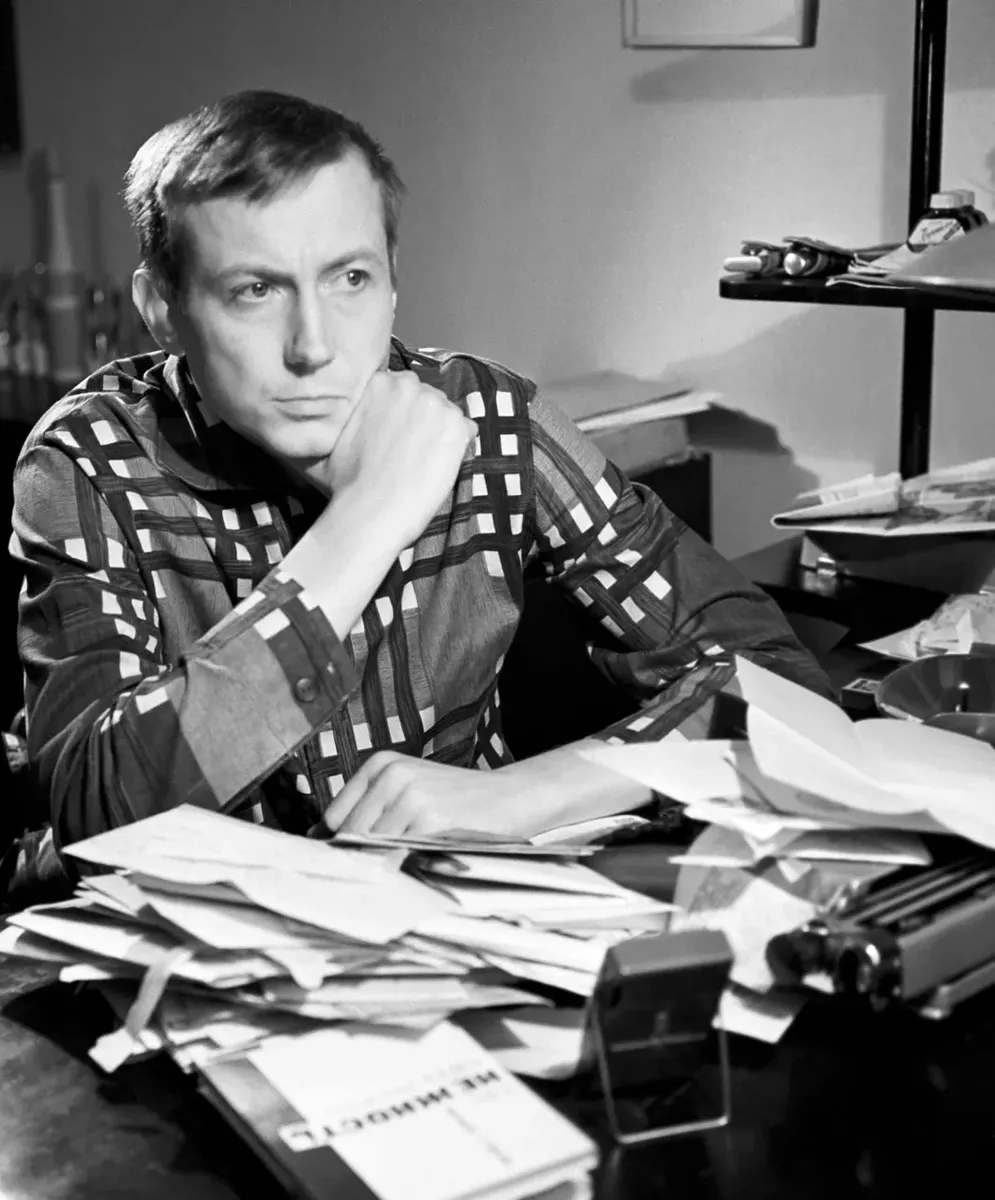
Neither the article of V. Nekrasov in Literary in 1959, nor the poem by E. Yevtushenko in the same Literary in 1961, nor even filling the ravine of the Kurenevsky mud village killer in the same 1961 could not change anything here. On the ground-where there was once Babi Yar, the desolation and the spirit of the landfill reigned, and the city was already picked up for the construction of the former ravine with its ideas.
But since the mid-1960s. On commemorative September days, people began to gather in Babi Yar and, recalling the dead, to demand the freedom of emigration for the living. The authorities branded them with the “Zionists”, but, oddly enough, he listened and took their measures: they established a embedded stone and announced an architectural competition. In August 1968, Babi Yar, An Yuni, was published in Yunost. Kuznetsova. But in the same month, Soviet tanks entered Prague, and the question of the monument again fell off. And only July 2, 1976 - 35 years after the tragedy itself! - The Soviet government showed the world its obscene monument - a bronze composition of 11 figures, among which there is not a single one, at least remotely reminiscent of a Jew.
The name of the monument is “Soviet citizens and prisoners of war and officers of the Soviet army, shot by German fascists in Babi Yar, a monument.” On the bronze plate, however, you can read in three languages: "Here in 1941–43, more than one hundred thousand citizens of the city of Kyiv and prisoners of war were shot by the Nazi invaders." And one of the languages is Yiddish: here you are, Jews, a bone, here's a hint of your dead - choke!
A decade will pass, the world will no longer be Kurenevka, but a Chernobyl. In 1988, Ilya Levitas would open his own “Babier Yar memory” fund, for the first time occupied not by protest, but creative - information, publishing, and scientific - activities around the Yar.
It began to seem that the Jews finally knocked out the legal right from the weakened state hands in memory of their victims.
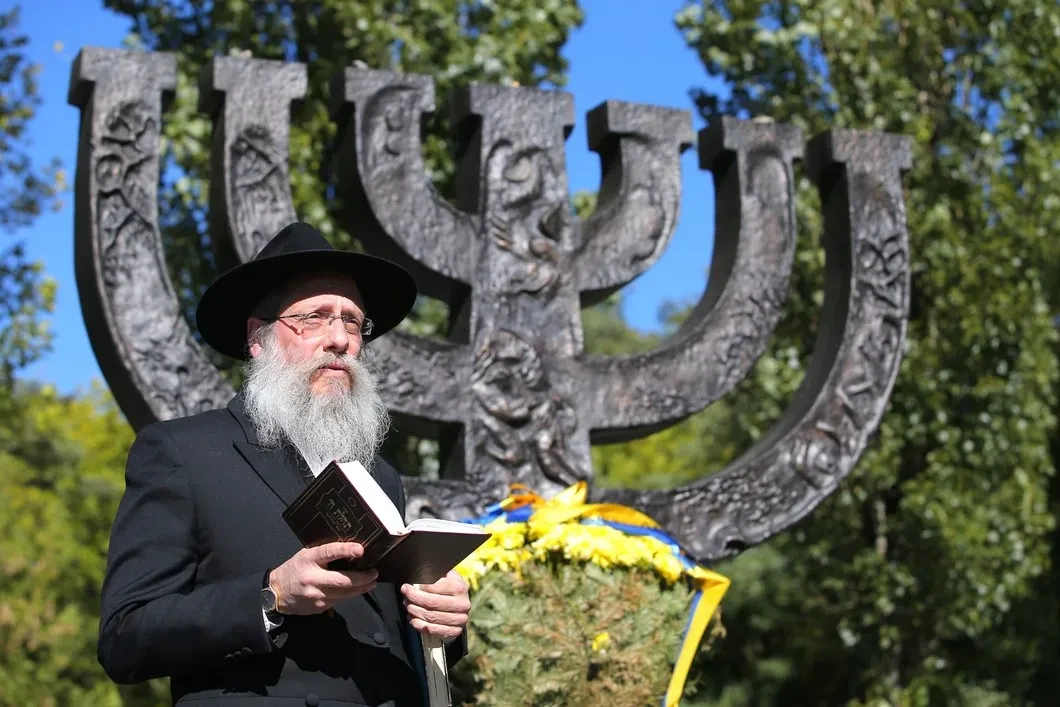
In 1991, on the 50th anniversary of the tragedy (the USSR was still intact!), Near the former ravines “Joint” and “Dry” established a large menorah. Bush Sr. and a delegation from Israel arrived at the anniversary, and Gorbachev was waiting, but did not wait. Kravchuk was behind the elder, about the family of which they immediately allowed a flattering rumor that they saved the Jews.
After the collapse of the USSR - "victims of different nationalities"
Since then, these September meetings near Babyeu Yar have become prestigious: all Ukrainian presidents, many premieres and all Kyiv mayors went to this VIP manager and spoke their vip-pronounced words.
In 2001, for the 60th anniversary, Kuchma and Chernovetsky spoke at Menorah, and a monument to executed children and the laying stone of the Jewish memorial and educational center “Heritage” were opened in Babi Yar, for the project and financing of which the American Jewish charity organization “Joint” was taken.
Around these plans, hot disputes immediately burned - disputes, but not dialogue. In April 2003, the Babi Yar Committee, a kind of Anti-Joint, arose as a public counterweight to Joynt.
He began to organize exhibitions and round tables, publish collections of scientific articles and archival documents. And he won! President Yushchenko supported the idea of creating Babi Yar to the 65th anniversary of the executions of the state historical and cultural reserve. He appreciated the idea, supported his own, but did not give money.
Meanwhile, the Anti-Semitian passionaries did not get tired of Wandal to Jewish cemeteries, and even a dozen tennials were committed on the poor VIP manager between the anniversaries.
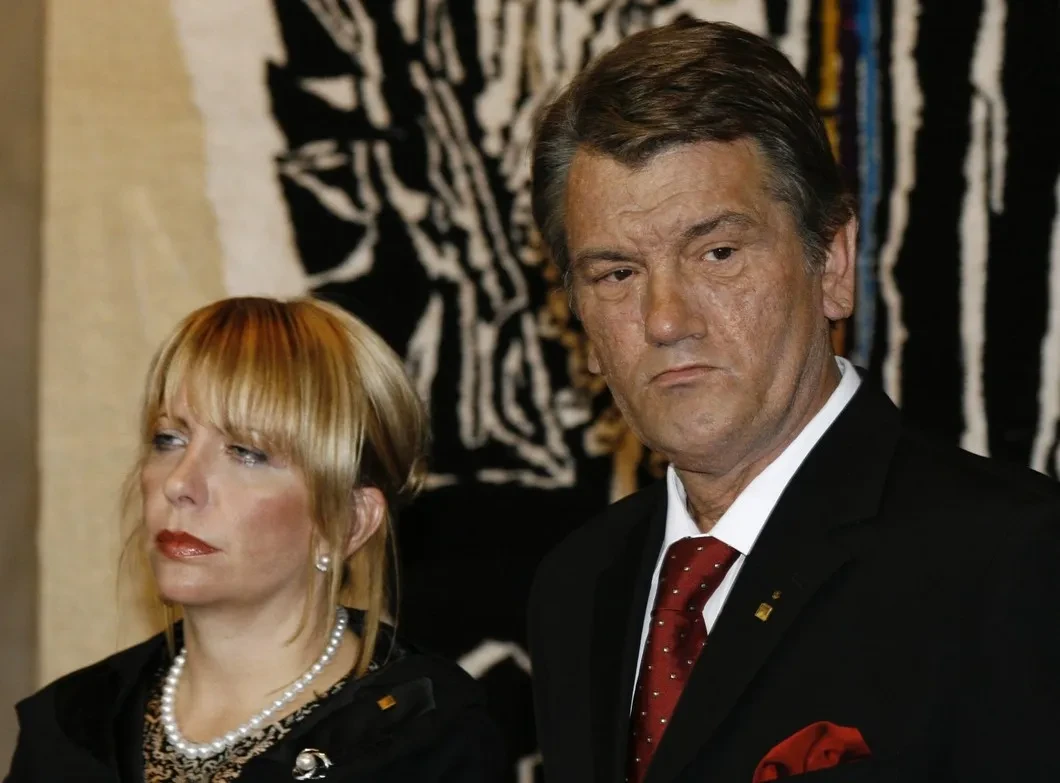
On September 29, 2006, standing next to M. Katsav, President of Israel, Yushchenko again spoke that they killed the martyrs of different - through a comma - nationalities.
These are not the “Soviet people” of the Glavpur, but not the not those Jews who were killed without recalculating for the fact that they are Jews.
President Yushchenko is not a random figure here. It is with his name that the search is not so much connected as the choice of new Ukrainian identity. Escaping from the USSR, swallowing the fresh air of independence and freedom, Ukraine felt itself, as it were, the Grouping State, who was in need of renewing its identity, in radical rebranding. A bouquet of worthy opportunities for this was not so small - the same Shevchenko, Skovoroda or Kotlyarevsky, for example. But they preferred a story, and the president’s gaze calmed down on the Holodomor and Bandera with Shukhevich.
Both of these plots, each in their own way, also got into the Holocaust. Historically, the Holodomor was the largest inter -regional tragedy of the south of the USSR, but its areas did not coincide either with the contour of the Ukrainian SSR or the borders of the ethnic resettlement of Ukrainians. The Holodomor, with the same for the same mercilessness, passed through other regions and peoples, was declared by the genocide only Ukrainians and the “national treasure” of Ukraine. For its denial, it was even proposed to punish - as well as for the denial of the Holocaust! The then Rada had the mind to wrap the bill on "two genocides in one glass."
Then, for identity, they turned to the most recent fighters for the independence of Ukraine-to OUN-UPA. At the same time, historically, the role of Ukrainian nationalists in the Holocaust is undeniable: these are convinced executioners! What does not at all annoy the ideologists of the new identity: let's turn the page, so to speak.
Do not offer the Russian world! Ukrainian too!
In the next five -year plan around Babyoge Yar, the next after the victory over the Joynt, almost nothing happened. And in 2011-the next mortgage stone of the next memorial-museum complex "Babi Yar". The oligarch V. Rabinovich (not to be confused with the Babier Yar Memory of I. Levitas) near the Lukyanovsky Jewish cemetery gathered to build it to build it. But you can’t build a loud rabbi dispute about where the border of the cemetery struck in the cemetery. Rabinovich, without even listening to this dispute, was retreated, and in 2015 lost the right to rent a site to another investor-bastard-the Babi Yar memorial center: Joynta 3.0, so to speak.
The new consortium of philanthropists included Ukrainian and Russian oligarchs, mainly Jews with Ukrainian roots (M. Friedman, G. Khan, V. Pinchuk, P. Fuchs, etc.). They took up the case with a grandmother: they gathered the most important supervisory board led by N. Scharan (in its composition, except for the oligarchs, the Klitschko brothers, J. Fisher, A. Kvasnevsky, etc.), a solid scientific council led by the Dutch historian K. Bercof, who developed a thick historical narrative in a couple of years, held a solid competition of architectural projects ... It seems that it seems that it seems that it seems that it seems that it seems that The charity fund has removed the lessons from the defeat of the predecessors and does everything in order not to share their fate.
Recently, for example, he enlisted the support of the President of Zelensky.
But for the collective “Anti-Joint”, which worked in the same years, and creatively, on its concept of the Babi Yar reserve, a new fund, alas, was just another Joint-Carfagen, which should be destroyed. Hundreds of intellectuals signed under letters of indignation and protest!
The most red rag this time is the Russian oligarch Mikhail Friedman. Atu him! Friedman is the Kremlin’s hand, Friedman is the Russian world! Hands away from our Ukrainian woman’s yar, give a sovereign Ukrainian Holocaust, etc.!
And when the supervisory board decided to change the performing team and the Russian film director Ilya Khrzhanovsky (with the film “Four” and the Dau Megaproject, shot, by the way, in Ukraine, in Kharkov), the scandal soared to heaven. After the sketch-presentation of Khrzhanovsky with preliminary considerations about the future of the memorial fell into the public sphere, the image of a sadomasochist was also attached to him. The Dau's presentations could not stand the Scientific Council, from which-“for ethical reasons” (having seen, apparently “Dau”), Bercof and several Western historians, as the Kharkov prosecutor could not stand, opened the criminal case (sic!) Due to the allegedly bullying of the orphanages during the filming. Such a feint in the history of the battles with the "Joints" has not yet happened!
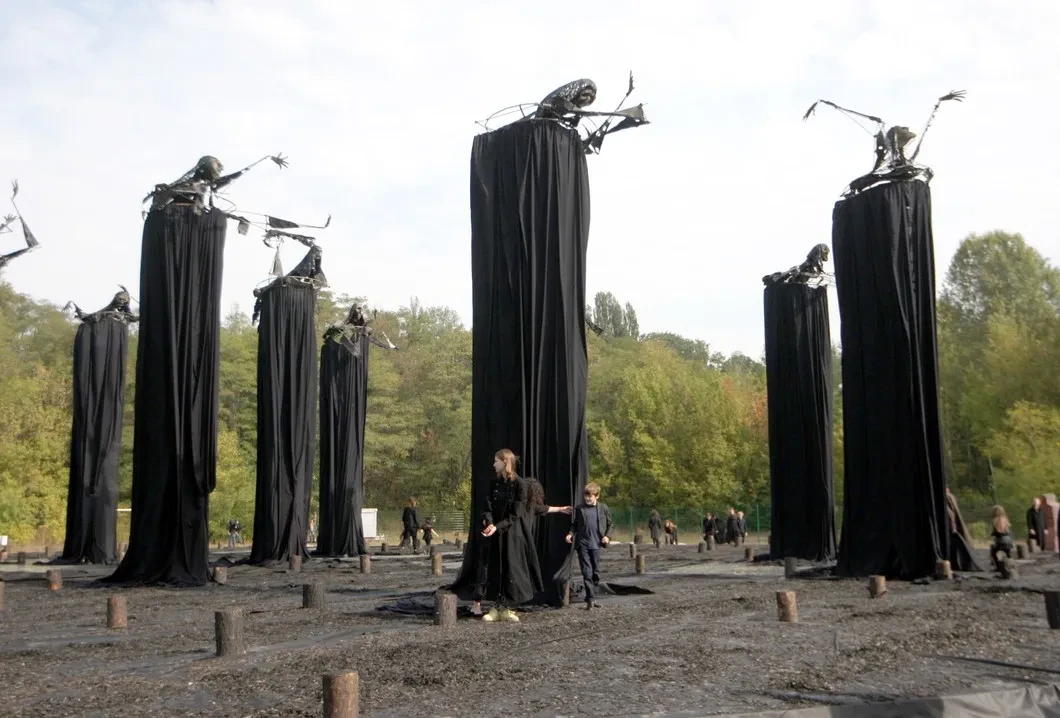
However, both Khrzhanovsky and his new team are also a “strong nut”: the new concept is promised by the end of the year, and for nowads, dozens of autonomous creative and scientific projects are launched with the participation of S. Loznitsa, M. Zygary, many Ukrainian historians.
By the way, both historical narratives implacably diverge only into the targeted of the future memorial: Ukraine and Ukrainians - in one case, and the whole world - in another (for which, as a historian of the Holocaust, I cannot but join). The contours of the memorial territory are also interpreted in different ways. But in many ways they complement each other, so that a calm discussion, partial revision and synthesis of concepts would be one hundred times more productive than verbal thunders and lightning.
It is sad that this war - a war of memory and ambitions - is waged on the bones and ashes of the victims of the tragedy, which had played 79 years ago and has not yet been worthy of a worthy perpetuation, or at least calm preparation for this.