
Translated material
Blood does not fall into heaven
About tragic visionary prose of al-zoobi kafa
The central topics of the frightening novels of the Jordanian writer of Al-Zobobi Kafa became the most difficult wounds of the Middle East: the oppressed position of women, on the one hand, and the tragedy of Palestinians expelled from their lands-on the other. Igor Permnikov tells about the heavy but necessary books by al-zoobi for readers of Gorky.On September 16, 1982, on the territory of Livan controlled by the Israeli army in the camps of the Palestinian refugees of Sabra and Shatil, a massive murder of the peaceful population by phalangists from the Christian community of Maronites took place, which, according to various estimates, became from 700 to 3,500 refugees, including many women and children. This event in the twentieth century takes a place in a row with the tragedies of Khatyn, Srebrenitsa and Rwanda, and various political forces are still transferred to each other to each other. A few days after the disaster, Jean Zhenya, who visited Shatile, described her consequences in his essay “Four hours in Shatile”: “The photograph has two dimensions, like the television screen, but it is impossible to cross them. From one wall of the street to another, curved and curved with an arc, with legs resting on one wall, and the heads propagating the other, black and bloated bodies that I had to step over, were Palestinians and Lebanese. For me, as well as for those who survived from the local population, the movement of Saber and Shatile resembled a game of classics. The dead child sometimes blocked the streets: they were so narrow, almost non -existent, and there were so many dead. Probably, their smell is familiar to the old people - he did not bother me. But there were so many flies. If I covered my head with a handkerchief or Arab newspaper, I interfered with it. ” The novel of the Jordanian writer of Al-Zoobi Kafa “Come back home, Khalil”, which she herself translated into Russian, was devoted to the same events. Al-Zoobi is a well-known writer in the Arab world: in 2019, her novel “Cold White Sun” entered the short list of the International Award in the field of Arabic literature. However, despite the international recognition and its own deep connection with Russia, for the Russian reader it remains more unread. Let's try to fix it.
Kafa al-Zoobi was born in 1965 in the city of Er -ramt, Jordan. Being a youngest child in a large family (five sisters and brother), in her essay “Back of wheat”, she recalls: “We lived in a two -room house of stone and cheese with a mother and father, who have not learned to read and write. As was customary in Arab societies, the inhabitants of our city never congratulated the family in which the girl was born. Instead, the words of comfort sounded: “Everything that God gives is good!” None of my parents asked me or my sisters about our future. The only worthy future that a girl in our city really could count on is to find a husband who will provide her. Therefore, my parents warmly and humbly prayed for the best that could only be imagined - so that our husbands were prosperous, kind and compassionate. My two older sisters did not deviate from the established city customs and parental dreams. Both of them threw school to get married as soon as suitable grooms knocked on our door. But the remaining four of us - in the first act of the rebellion - decided to finish education. "
Having made this fateful decision, the sisters receive a scholarship for training in college and independently begin to get acquainted with the world of fiction and philosophy: “These books resemble guests from the kingdom, far from the world of the village, its scorching heat and sleepy midday watches, when rumble of flies reigned, which was another manifestation of boredom and stagnation. This kingdom was alien to people who praised God from morning to evening for every nuisance that had befalled, and who constantly asked for forgiveness for sins, which they were unable to stop committing. The books were guests from the world where the words were filled with meanings that we had never encountered before, the world of words that brought the treasured hopes for justice, equality and changes for the better. ”
At about 16 years old, al-zoobi cafe, who had already introduced to this moment with the works of the sisters of Bronte, Viktor Hugo and Dostoevsky, comes across a Marxist pamphlet, dedicated to dialectical and historical materialism, which makes it a strong impression: “Reading one paragraph after another, I began to understand the logic underlying the explanation of the Marx of Nature, History and Laws, History and Laws, Stories, History and Laws The conflict controls and their dialectical evolution. The word “dialectical” sounded strange for my Arab ears, and it took me a lot of time before I could pronounce it, and even more so to understand. ” Subsequently, becoming convinced by Marxist, she retrospectively analyzes her own experience of life in a traditional Arab society:
“I think about human life as a dialectical text in which the individual produces and makes his own reality, after which this reality reproduces and rebuilds the individual, so that together they alternate the roles of the Creator and Creation. People create intellectual, political, social and economic systems, and then these systems connect human lives with their own context. In our Arab world, these systems constrain people, limiting the range and development of their intellectual views, and also connect them with chains of illusions and fear. They form a text in which the Arabic individual is doomed to incompleteness, whether in relation to God that has already predetermined their fate, or in relation to a tribal society, which has now turned into a political and economic education and which, despite its civilized, decent appearance, has yet to abandon their tribal, patriarchal concepts and the image of thinking, in which men dominate.
This is a dialectical equation in which objective reality and personality recreate each other, is a universal human phenomenon. This is also affected by the psychological warehouse of each person, instincts, the will to survive, the class struggle, as well as existential and philosophical issues. However, Arab experience is marked by its unique connection with religion, historical and cultural heritage and colonialism. Given this fact, the Arab woman lives in the subtext of her incompleteness as a woman. This subtext is her prison in prison: her own narrow camera in a slightly more spacious prison of her society. ”
Al-Zobobi connects his tendency to Marxism of Kafa al-Zoobi with the enthusiasm of the exact sciences-physics and mathematics. This hobby in the 9th grade becomes so strong that she decides to become a physicist. However, at about the same time, she makes a secret notebook, which begins to write down the first literary impressions, among which thoughts about the poor and oppressed alternated, for example, with a description of the water dripping from the ceiling in the container that the mother put next to the bed: “Then I wrote in response to a blurry but acute need to express things, to seal certain moments and write them down and write them down On paper, in order to express their opinion, which for a long time reached a low heat and was finally ready for the “feed”. It was an opinion about the world in which I live, but I don’t know why - whether “why”, which I later understand as existential and philosophical, or “why” of everyday life, which asks: why I ended up here, in this harsh place where people regard the woman as an incomplete creature for the simple reason that she is a woman, and even more so if she is from a poor family? ”
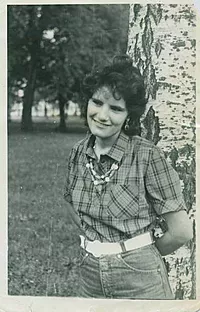 Kafa al-Zobi
And it was the Marxist views of al-zoobi that served as the reason for her higher education in the Soviet Union. Unlike sisters who already had scholarships for training at Jordanian universities, she was not satisfied with such a prospect. As she recalls in her essay, first of all she wanted to get out of first hand to get an idea of socialism, justice and equality in action. This was a serious step for a young girl, aware that students in the Soviet Union were forbidden to return home until they received a degree. For students who came home before receiving a diploma, there was a risk of being in the secret police of Jordan with the subsequent confiscation of the passport if they refuse to cooperate with the authorities. Such was one of the ways to struggle Jordanian intelligence with underground left -wing organizations working on the establishment of socialism and justice in the country.
Having arrived in Moscow in the mid-1980s, al-Zoobi instead of real socialism in action is faced with perestroika, which she evaluates in her essay as “... a coffin in which socialism was already with one foot. The “foremen” of perestroika all awaited when the socialist system will drive a second leg into the coffin so that they could take it with fingertips, like a bag of garbage, and immediately throw it away: without a funeral, roses and black tapes, without breeding neither a tear. ” And the first stage of these changes coincided for her with the end of the first year of studying the language in Moscow, when "the brilliance of dreams suddenly disappeared, and the idea to become a physicist became so unreal that it seemed just ridiculous." Then it became obvious that there were no physical laboratories in Jordan, and instead religious enthusiasm is growing and the centers of memorization of the Qur'an are opening: “It has not yet come to throw the world that I left only a year ago. Now, when the fog of illusions scattered, I clearly saw what awaits me in the future if I continue my studies: I will return to Jordan and will, at best, work as a physics teacher. I still heard the echoes of Friday sermons, which were not very remote and not very long ago. They thundered with evil, hostile voices that once took the country storm, and now they ordered people to rise in support of “our Mojahideen brothers” in Afghanistan in their sacred war in defense of God. And in the meantime, Israel stormed Bireut and committed bloody crimes there, not to mention the mass killings taking place in the occupied Palestine. ”
After the first year of training, Kafa al-Zoobi changes the educational profile from the research to the engineering and, despite the initial level of language proficiency, begins to get acquainted with Russian literature, reading it in the original. The first Russian book for her is “Farewell to the Mother” by Valentin Rasputin. This is a story about a dying mother who resists death, hoping to wait for the return of one of her sons. By the unfortunate coincidence of circumstances, at the same time, the mother of al-Zoobi dies, who is in a hurry to bury under the nameless tombstones, therefore, having returned to Jordania, she cannot even find her grave: “My mother lived with an nameless life in a house from a cheather brick, and now she is nameless in her dirty grave.” However, al-Zoobi herself learns about the death of his mother much later, since the relatives did not dare to immediately inform her of this so as not to interrupt the process of obtaining education. The theme of memory and oblivion will subsequently be repeatedly considered in her work.
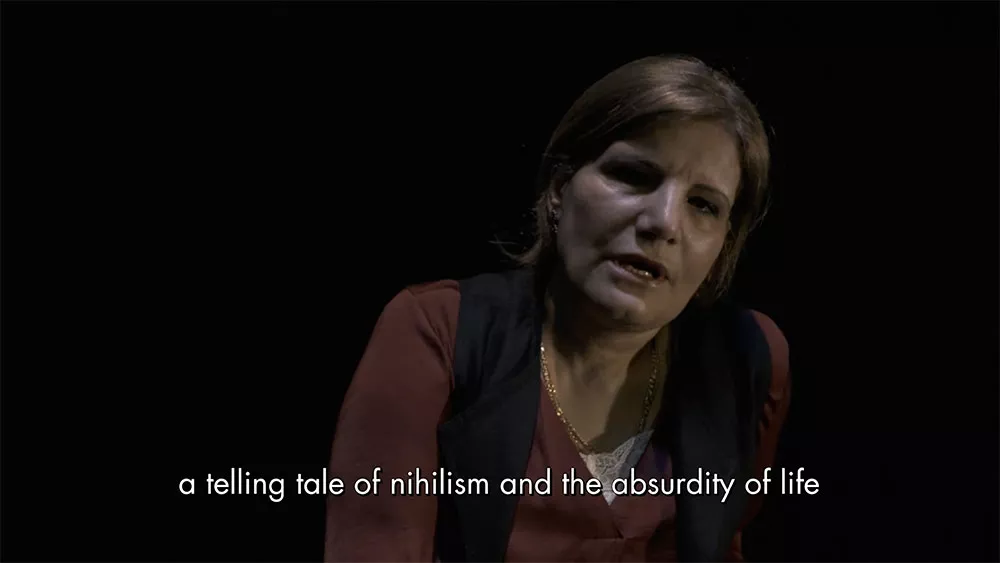 One way or another, Rasputin’s book opened a door for al-zoobi into the world of Russian literature. She reads Pushkin, Gogol, Chekhov, Nekrasov, Turgenev and many others. Dostoevsky followed them: “A powerful philosopher seeking to save Russia and reveal the soul of its exhausted people. Dostoevsky miraculously deepened not only into the analysis of the psychology of individual characters, but also the social system as a whole. ” And then Russian literature of the twentieth century: Aitmatov, Tsvetaeva, Akhmatova, Yesenin, Mayakovsky, Gorky, then Mikhail Bulgakov and Solzhenitsyn.
Being during the collapse of the Soviet Union in Leningrad, the future writer, together with her husband, decides to settle in this city on an ongoing basis. Speaking about this period of her life, she emphasizes the special role that Russian literature played for her then: “ I talked with the Russians every day, listened to local news and read newspapers, but I think that it was literature that helped me understand the Russian people and their life experience. I was always impressed by the integrated approach of Russian literature to life, when the authors consider people not as isolated entities, but as a product of the merger of all components of their society: political, economic, cultural and social. Russian literature - and especially the works of Dostoevsky - has always been engaged in the deconstruction of this reality. It was precisely this kind of concern that the concern prompted Dostoevsky to turn to political issues, which was best demonstrated in his two magnificent Karamazov Brothers and Demons, which, like the works of Andrei Bely, Bulgakov and others, predict future events and criticize them in advance. ”
When Kafa al-Zoobi says that she prompted her to engage in literature, she quotes Milan Cunder: ““ The history of art is the revenge of a person of the impersonal of the history of mankind. ” The art in this sense opposes the abstractness of philosophy. This is the invisible “I”. This is the meaning of the unknown in mathematics. This is the physics of society. This is a geometric structure. These are certain nouns, and marked graves. ” But she also admits that she did not quite understand this when, at the age of 30, having bought a notebook, she began to record her thoughts, which suddenly poured a continuous stream, like wheat from a torn bag, which was stored in the corner of one of the two rooms of her house (this image served as the name of the mentioned essay “bag of wheat” dedicated to the formation of al-zoobi):
“All I wanted was a handful of this wheat and have a bite to eat while I will learn the lessons. But the wheat poured out of the hole so quickly and violently that I could not stop her until my mother came to the rescue.
My mother and father, two of our rooms made of cheese brick, bookshelves covered with adhesive paper with a wood pattern, a closet with absent doors, cold, wind, a holey ceiling, evenings when cars rushed along the nearest international highway connecting Jordan and Syria, inciting stagnant air in the village and awakening in me a vague, only emerging. The longing for the distant world, where justice and equality reigned - all this began to pour out of me, forming a huge ocean of pain on paper, without the slightest performance, when the stream stops. "
Thus was written the first novel by al-Zoobi, called “Dirty Ceiling” (not published in Russian), behind which the second was immediately followed-“Leila, Snow and Lyudmila”, which touches on the theme of perestroika, the collapse of the Soviet Union, as well as the political, social and cultural transformations that followed him; In addition, it raises the issue of the mutuals of Arabic and Russian identities. “Leila, Snow and Lyudmila” was published in Russian at the publishing house “Ad Marginem” in 2010. We are interested in the third novel of the writer - “Come back home, Khalil”, from which we started our narrative, so we will consider it.
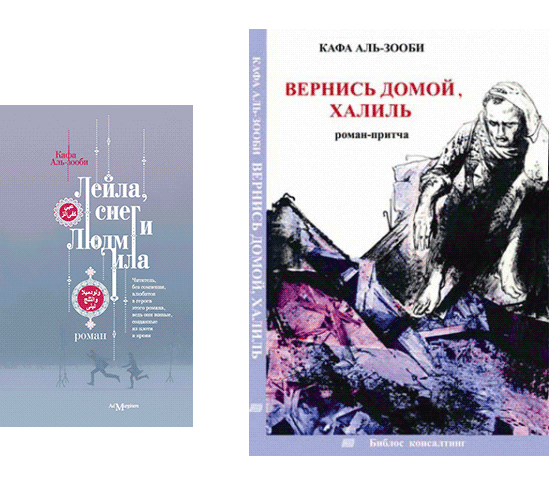 The novel “Back home, Khalil” tells the history of three generations of Palestinian refugees from 1948 (that is, “NAKBI” ( Arabic “Catastrophe” ) - the beginning of the Israeli occupation and the expulsion of the Palestinians from their lands) until about 2000, in which the “present” of the novel takes place. The main character is a young man named Khalil, who survived the massacre in Saber and Shatile on September 16, 1982, in which his whole family died. He had letters of his grandmother living in one of the Palestinian camps in the vicinity of Jerusalem, with whom his parents were separated during the events of 1948 (more specifically-massacres in Deir-Yasin on April 9, 1948) and to which he, having matured, sets off, being unable to endure the load of his own memory and a number of obsessive existential issues. Grandma, having received a letter from her grandson, also begins to live entirely with their coming meeting. Such is the simple tie of the novel, in which the attentive reader easily recognizes the plot of Rasputinsky's “Farewell to Mater”. However, in a formal basis, the novel with its non -linear narrative structure is much more common with William Faulkner’s “noise and fury” than with Rasputin’s book, and his ethical and artistic essence can be summarized by the words of the same Faulkner from his late work “Requiem on the nun”: “The past cannot be dead. This is not the past at all. ” We will try to deploy this comparison in more detail.
So, we recall that in 1929, the novel and rage, which was written in 1929, develops the theme of the doomed by the patriarchal tradition of the farm south and the total degradation of his social relations, which is associated with the monstrous crime of the past - the admission of these lands, as a result of which all the people formed without exception formed without exception formed without exception formed without exception. -Both representatives of the old plantator family and traders farmers. А поскольку намеченные Фолкнером в начале прошлого века проблемы не разрешились до сих пор, не слишком большим преувеличением будет перенести ответственность за чудовищную ошибку насильственного переселения коренных народов Африки на западную цивилизацию в целом. И ровну ту же ошибку она совершила, допустив насильственное переселение пяти миллионов палестинцев. Эта проблематика определяет выбранную Фолкнером и аль-Зооби художественную форму нелинейного многопланового повествования, поскольку история народа может быть рассказана только коллективно, а в индивидуальном опыте могут проявляться лишь ее отдельные аспекты. У аль-Зооби, как и у Фолкнера, в романе присутствуют три уже отмеченных временных плана (Дейр-Ясин (1948), Сабра и Шатила (1982) и расплывчатое настоящее романа), события из которых нелинейно соотносятся друг с другом. Также стоит отметить, что сознание молодого Халиля в своей склонности к абстракциям, визионерским образам и постановке экзистенциальных вопросов, до некоторой степени напоминает сознание молодого Квентина Компсона. На этом, пожалуй, сходство книг заканчивается и тем интересней выделить особенности романа аль-Зооби.
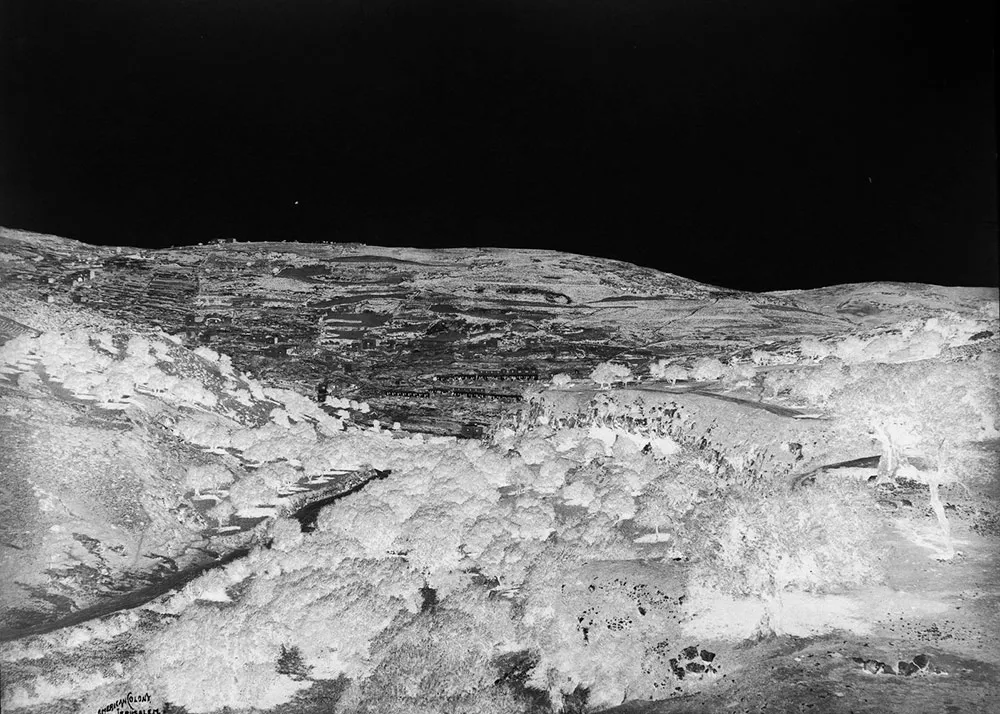
 И первое, что здесь бросается в глаза, это подчеркнутая нереалистичность происходящего. В романе присутствует как бы два плана: план реальный, в котором происходит куцое описание событий, будь то досмотр на израильском блокпосте или демонстрация палестинцев, и план визионерский, или онейрический, передающий ужас происходящего. На наш взгляд, эту структуру определяет центральная аллегория книги, которой является ночь или темнота. С темнотой и различными ее смысловыми оттенками так или иначе связано большинство ключевых образов: герои задыхаются от темноты, которой пропитан воздух; израильские солдаты, разгоняя демонстрацию, разносят темноту и запихивают ее в щели, из которых пытается пробиться солнечный свет, а само солнце — «желтое тусклое пятно с отрезанными крыльями» :
«Наступила ночь. Я думал, что глаза моих близких, которые вглядываются в небеса, а может быть, в меня или в небытие, — пропадут в темноте. Но этого не случилось, они по-прежнему смотрели, но я больше не мог их видеть, не из-за темноты, а из-за яркого света. Ночь перестала быть ночью. Я ничего не мог видеть, кроме яркого блеска крови, которая сверкала, отражая горящие огни в небе. Будто горела сама кровь. Мне казалось, что та ночь и есть ад, который пылал в самом сердце жизни.
Я не мог двигаться, словно мое тело омертвело. Может быть, единственным признаком жизни во мне остался пульсирующий ужас, от которого меня беспрестанно била дрожь. И унять ее было невозможно».
Образы ночи и темноты в данном случае вбирают совокупность исторического опыта угнетенного народа и конкретные социально-политические условия, созданные людьми. Поэтому, в отличие от ночи в традиционном понимании, как и других природных явлений, для палестинцев ночь не проходит с наступлением дня, а только позволяет видеть предметы:
«— Не жди, что день займется, сын мой, ибо с началом дня ничего не изменится.
- How?! Разве тьма не удаляется?
- No. Она только превращается в другую тьму — в древнюю, которая позволяет нам видеть окружающее, но не удаляется из воздуха!
Я, пораженный, спросил:
— Значит, люди тут умирают, задыхаясь от тьмы?!
- Yes. Но они сопротивляются».
В равной степени и другие «естественные» природные атрибуты, прочитываются через «неестественную» призму исторического опыта. Например, когда Халиль только попадает из ливанского лагеря беженцев в палестинские трущобы, его удивляет особая густота и затхлость воздуха этих мест, на вопрос о котором он получает следующий ответ:
«Это тот же самый воздух, которым люди здесь дышат пятьдесят лет, он входит в их легкие и выходит из легких, не обновляясь».
А вот как Халиль оценивает свое двухдневное пребывание в Палестине:
«Уже два дня прошло с тех пор, как я приехал в Палестину. Мне кажется, что прошло долгое время. На самом деле это не было обманчивом чувством, ибо страдания жизни тут настолько плотные, что они похожи на высококонцентрированный раствор, который приходится выпивать одним глотком, ежедневно, в больших дозах. В результате можно отравиться, и человек тут, не раздумывая, ищет для себя любой другой вкус, даже если это вкус смерти».
 С подобного же переопределения привычных «естественных» явлений (в данном случае это как «естественность» природы, так и «естественность» мифа) начинается роман:
«Я задумчиво смотрела на закат и внезапно услышала его голос:
— Небеса испачканы пятнами крови.
— Нет, Халиль, это не кровь, ведь кровь не попадает на небеса, только души могут воспарить к небесам.
— Значит, души попадали туда истекающие кровью, — ответил он и вновь замолчал».
И если в самом начале неясно, к каким событиям имеет отношении этот диалог, то ближе к его середине мы узнаем, что это первые слова, которые говорит Халиль, когда только начинает приходить в себя после резни в Сабре и Шатиле. И это подводит нас к следующей важной теме романа — индивидуальной памяти, меланхолии и экзистенциальному осмыслению абсурдности и значимости существования, что также отражается на структуре романа. Экзистенциальные размышления Халиля об абсурдности существования и постигшей его судьбе — быть единственным выжившим — на протяжении всего романа монотонно повторяются с незначительными вариациями, а все, что сколько-нибудь внушает надежду, представляется невозможным, поскольку разбивается о травматические воспоминания и полное безразличие мира:
«Мне хотелось остановить любого прохожего и завести разговор с ним о чем угодно; для меня важно было услышать другой голос, но не яростный шум моей памяти; ощущать чье-то ровное спокойное дыхание, но не мою одышку. Однако кроме меня в переулках не было ни души — люди здесь рано укладываются спать. Наверно, они понимают, что темнота, не позволяющая им видеть других, обрекает их на невыносимую встречу лицом к лицу с их горьким одиночеством. Вот так и я не видел и не слышал ничего, кроме собственного естества, с которым меня роднит только одно — мучительное чувство чужбины. Как будто я ни к чему и никому не принадлежу».
«Я открыл глаза и устремил вперед пристальный изумленный взгляд, словно не понимаю, где нахожусь: в прошлом или в настоящем. Я не знал, в чем отличие между ними, и может ли настоящее не служить зеркалом для прошлого? Меня охватил ужас, когда я неожиданно для себя пришел к выводу, что я затерялся в пустоте между двумя зеркалами, которые до бесконечности отражают одни и те же образы. Я пришел в такой ужас, что из глубины моей души вырвался мучительный стон».
Все же допуская абсурдность надежды, Халиль предпринимает попытки встретиться с бабушкой, отправив ей письмо, а после даже добивается разрешения на поездку к ней. И тогда, неожиданно для него самого, после приезда в Палестину в этой экзистенциальной пропасти начинают проявляться совсем другие образы и чувства:
«Мы идем по этой земле, но не сейчас, а на просторах отдаленного прошлого.
„Случалось ли раньше с тобой нечто похожее, Нура? Ты чувствуешь, будто когда-то давно прошла по этому месту, по которому ты на самом деле впервые шагаешь, или жила на нем в прошлом и у тебя сохранились воспоминания о нем?
Именно так и я почувствовал, и это было очень странное чувство. Как будто это чувство является результатом твоего познания места, или познания местом тебя. Или то и другое одновременно!”»
Подобные же чувства он испытывает, наблюдая за демонстрацией палестинцев против оккупационных властей:
«Еще я видел, как люди вырывались из своей кожи, из своего отчаяния, из своих мечтаний, из своих ожиданий, из своих терпений, из своих молчаний. Я видел их пожелтевшие фигуры, из которых свет жизни давно испарился. Они бегали в поисках камней.
All this happened very quickly. Я стоял, как вкопанный, наблюдая за людьми, держащими в руках камни так, будто они держат свою досаду, чтобы метать в солдат. Они точно знали, когда поднимать камни с земли, заставленной камнями, и в какой момент бросать их, и в какой момент отойти назад.
...
Может быть, это движение не длилось и секунды, но я за этот ничтожный промежуток времени впервые ощущал себя твердо стоящим на обеих ногах после того, как провел целую жизнь, балансируя на одной. Я продолжал поднимать камни один за другим, будто поднимал их не с земли, а со дна моей души, которая в тот момент казалось мне вулканом, извергающим неистощимую лаву».
Однако ночь истории и ее кошмары так просто не заканчиваются, а вспышки самости гаснут в этой ночи, едва успев зажечься, чтобы вернуться к тому же безразличию объективной действительности, что в начале, — именно так работает упомянутая диалектика памяти и забвения, которая дает зыбкую надежду, но не обещает победы. И, на наш взгляд, это нерв произведения:
«Мы приближались к концу, но я чувствовал, что это только наш конец, а не конец трагедии. Скоро жертва, скорчившаяся в руках чудовища, испустит последний выдох с наступлением конца, какого конца — неважно. А что касается вспышки совести, то забвение ее скроет. И пламя истории сожрет память об этой трагедии, так же, как ранее история сожрала память о других больших трагедиях, от которых ничего не осталось, кроме холодного пепла слов, редко бушующих в глубине памяти.
Такова реальность, и все обязательно случится именно так. Нас ничего не ждет, кроме смерти и забвения. И ничего, что могло бы напомнить о нас, не останется. Может быть, останутся некие стихи с мертвым смыслом, прославляющие неизвестных героев и борцов, которые погибли в далеком прошлом в забытых боях».
 Также хотелось бы отметить специфическую прямоту сообщения, заложенную в некоторых образах, обусловленную формой романа, которая в данном случае уточняется на обложки книги как «роман-притча». Так, мать только что убитого палестинского ребенка, вопреки логике повествования начинает, как в кошмаре, рассказывать его историю:
«Как я боялась, когда он бросал камни. Я никогда не запрещала ему делать это, потому что он любил выглядеть храбрым, как все взрослые. Однако по ночам он боялся своих снов и приходил ко мне, чтобы уснуть рядом. Он не любил, чтобы я об этом рассказывала, и я никогда не рассказывала. Но он сейчас умер. Когда страх его будил по ночам, он, стесняясь, приходил ко мне, и я сразу поднимала одеяло и, протягивая руку, звала его: „Иди сюда, сынок мой, поспи рядом со мной, и все будет в порядке”. И он спал спиной ко мне, чтобы я не заметила, что он стесняется. Я гладила его по плечам, по волосам, пока он засыпал, как засыпают дети. Может быть, потому что он был еще ребенком? А сейчас, когда он проснется и обнаружит, что они его убили, он поймет — то, что случилось, было не кошмарным сном, а правдой. И если он постарается встать, чтобы прийти ко мне, то он не сможет, потому что обнаружит, что они разбили его кости».
В конце романа Халиль все-таки встречается с бабушкой, но в соответствии с кошмарной логикой происходящего все равно остается сомнение, что это не было просто сном.
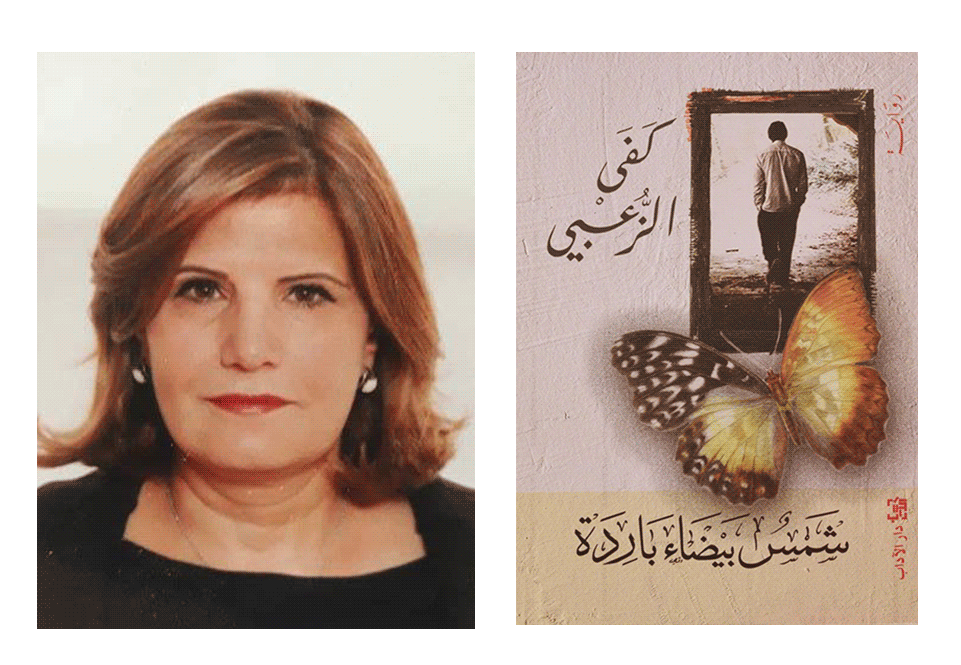
Прежде чем закончить, коротко расскажем про роман аль-Зооби «Холодное белое солнце» из шорт-листа Международной премии в области арабской литературы. Роман рассказывает о молодом человеке, который арендует выкрашенную в черный цвет комнату без окон. Позже он понимает, что в ней жил старик, который умер, о чем никто не подозревал, пока его мертвое тело не начало выделять отвратительный трупный запах. Таков реальный план повествования, но есть также план мифологический, в котором старик — это Энкиду, чей разлагающийся труп становится для Гильгамеша красноречивой историей о нигилизме и абсурдности жизни. Несмотря на огромную разницу между персонажами эпоса о Гильгамеше и персонажами нашего времени, писательница видит между ними сходство. Эпическая борьба сверхъестественных сил на открытых пространствах превратилась в историю угнетенных слабых персонажей, поверженных и тревожных, живущих в темных, узких, жалких улочках и задающих одни и те же вопросы о существовании, бессмертии, абсурдности и ничто. Борьба за выживание сопровождается сомнением и в целях этой борьбы, и в самом существовании, особенно если существовать приходится в мире, который ограничивает, угнетает и стремится навязать свое видение действительности:
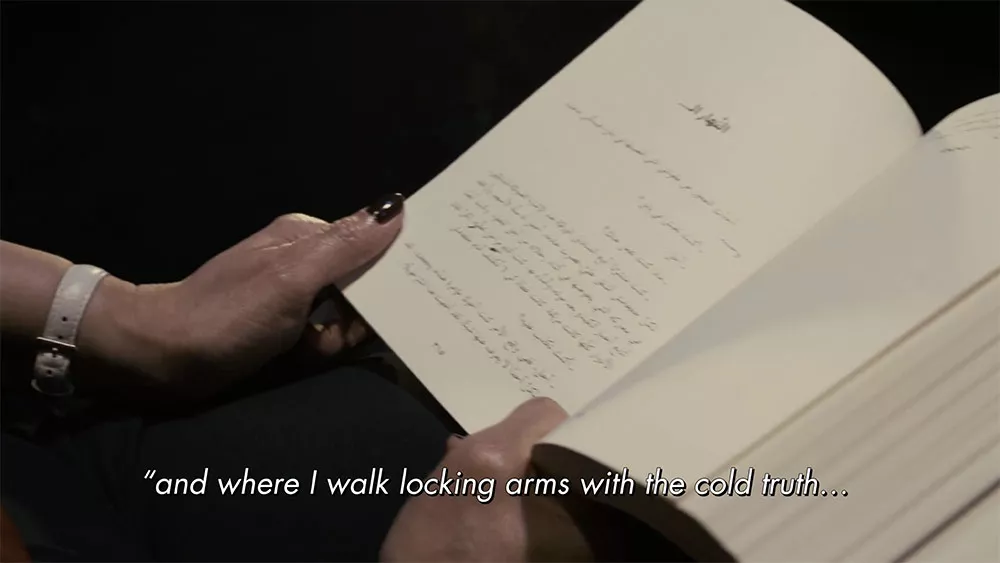
«Я хочу выйти из этой комнаты без окон и пойти по дороге, где сияет холодное белое солнце. Там я иду, сжимая в руках холодную правду — тот милый холод, от которого дрожит мое слабое тело. Я знаю эту правду, и эта правда знает меня. Эта печальная правда, которая всегда жила со мной, правда, которую я всегда скрывал иллюзиями забвения и ожидания. Я хочу быть свободным с этой правдой, выплакать все слезы сильной радости, которые наполняют мою грудь, и обнять ее, как путешественник, вернувшийся из долгого и далекого путешествия».
Завершить же наш рассказ о Кафе аль-Зооби хотелось бы словами уже процитированного в начале Жана Жене: « Выбор, который человек из привилегированного общества, вопреки своему рождению и принадлежности к этому обществу, совершает в пользу другого народа, является врожденным; этот выбор основан на ничем не обоснованной симпатии, это не значит, что справедливость здесь не имеет никакого значения, но справедливость и защита этого народа рождаются из сентиментального, может быть, даже чувственного влечения. Я француз, но целиком и полностью, всем сердцем и без всяких сомнений защищаю палестинцев. Они правы, потому что я люблю их. Но любил бы я их, если бы несправедливость не превратила их в скитальцев? "
И раз уж вы дочитали до конца этот, прямо скажем, не самый короткий текст, то позволим себе еще одно небольшое лирическое отступление.
Автор этого текста провел детство в белорусской глубинке, в деревенском доме с беленной мелом печкой, среди небогатой библиотеки которого был всего один альбом художественных репродукций — избранные работы Михаила Савицкого. Смотреть этот альбом запрещалось категорически. Однажды, выбрав подходящий момент и все же пролистав альбом, автор испытал ни с чем не сопоставимый ужас, который потом долго его не покидал: на картинах в основном были обнаженные тела мертвых детей и женщин, сваленные в кучи, на фоне которых толпились угрюмые немецкие солдаты. Главной же особенностью этих образов была, безусловно, их доходчивость. И ровно тот же самый ужас автор испытал, чрезвычайно медленно пробираясь через чудовищный текст романа «Вернись домой, Халиль».