
Translated material
The man who turned the river
In the Theater of Nations, there are gorges of the play "Gorbachev." Mikhail Sergeevich - in the auditorium
Mikhail - Evgeny Mironov. Raisa - Chulpan Khamatova. Director - Alvis Hermanis. On October 4, Mikhail Sergeyevich Gorbachev was at the play. In the final, the hall shouted to him in the director’s box: “Thank you!” Six years of his reign, six years of perestroika - with the first publications of the “foundation pit” and “Gulag archipelago”, with cooperatives and the opening of borders, with great hopes and publicity - there was no one on the stage. But we lived them ourselves.
QUOTE
Mikhail Gorbachev - “Novaya Gazeta” about the play of Alvis Hermanis “Gorbachev” at the Theater of Nations
- I showed them a thumb, expressing admiration for their acting skills and the fact that they have preserved interest in this outgoing era. I survived a lot again, although I never forget anything.
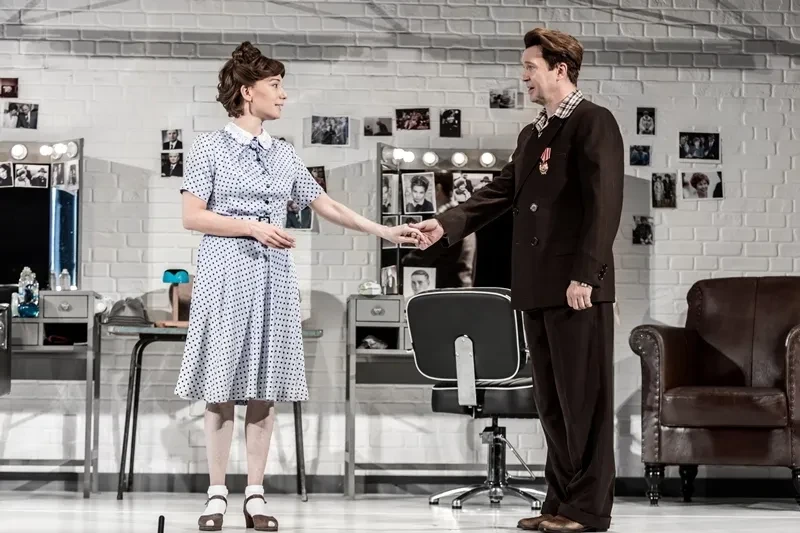
Here they come out, holding hands tightly: when we knew from what grief ... as, however, the entire Soviet people. Two students from the hostel of Moscow State University in Stromynka. On it is a jacket on a fish fur, on it is a red drapo coat with a cyeic rim. White mittens-samovyaz are laid for the coat. Raisa wears them childishly, on an elastic band: a valuable thing, go replace.
His grandfather was sitting. He returned - he told how they tortured in the NKVD, how they clamped his hands with doors.
Her grandfather was shot like Trotskyist. Although he was a peasant and did not know who Trotsky was.
In his family, they died of hunger in the early 1930s. And she too. He had it at Stavropol, she has in Altai: my dear country is wide ...
He graduated from school with a medal and was accepted without exams at Moscow State University. It is accepted the same. Both-in 1949.
Now, in March 1953, they will shift in the crowd for a day to bow to Stalin's coffin.
Where was all this possible - taken together, in a single batch of fate? Only in the USSR.
Decoration? It is almost none: two brightly lit dressed tables, old photos are shut up behind the mirror. Yes, a desk from the state-owned resident of the Moscow Region: Sergo Ordzhonikidze once shot at this table. By strange chance, at the dacha of Ordzhonikidze Gorbachev, they lived twice: in the 1970s (at the beginning of the Moscow period) and in 1992 (after the resignation of Mikhail Sergeyevich).
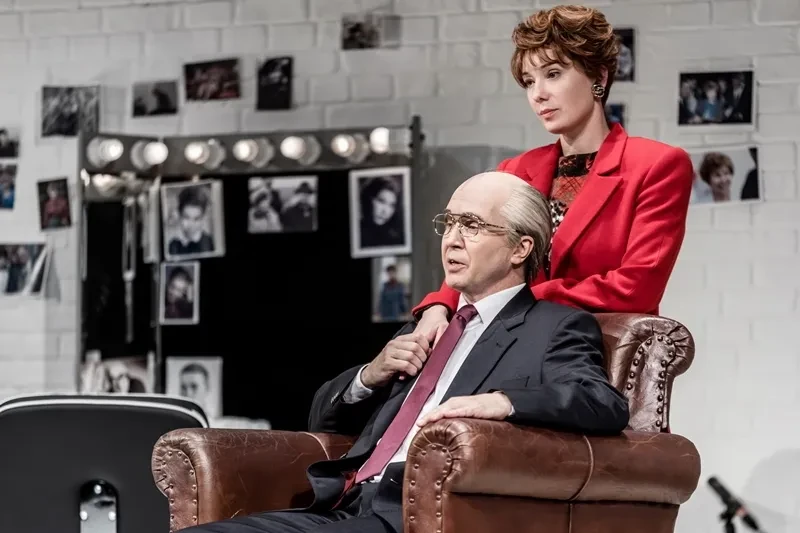
And this table was heavily stomped with oak legs for decades.
In the right corner of the scene-a bar with hangers, dresses of Raisa Maksimovna: a cherry blouse in which a student Gorbachev saw her for the first time in the recreation center of the Moscow State University, a wedding dress, sewn “in a real Moscow studio”, a rough sweater in the 1960s sociologist, fitted suits ...
Chulpan Khamatova and Evgeny Mironov together on stage. In turn, they sit down on the dressing tables, taking the appearance and image of their heroes - from student to this day. Similarity - especially for Chulpan - complete. Sometimes even frightening.

Raisa is a nervous, fragile, vulnerable, something similar to the heroines of a young Akhedzhakova (especially to the one, from the film "Garage"). Michael is a good fellow who is in love with dumbfound
With the Order of the Red Banner of Labor on the Cowboy (earned as a schoolboy, for shock labor on grain cleaning). In the first act, they seem to be fashioned from their great generation of sixties. From the hostel of Moscow State University in Stromynka (22 souls to the room!), From common huge hopes for his country and his fate. From desperate and cheerful poverty, from textbooks of dialectical materialism ... Mother ... mother ...-while the future partners of Gorbachev in negotiations were studied by completely different sciences in their Harvardy-Oxfords-Gidelbergs.
They both could die: in a hungry childhood, in the occupation, in a crush at the coffin of Stalin. And the people could be lost. (One of the best stories in the play-how a teenager Gorbachev was going to leave school and go to work in the field, but his mother hung up, exchanged his warm things for textbooks. He began to read about the penguins ... And somehow it became interesting, got involved forever.)
In them - in the game both Mironov and Khamatova - there is an inexplicable power of survival, which retained the country on the edge of the abyss in the 20th century. The power of Ivanushka, who came out alive from a boiling boiler. And the power of love, of course. Elevated, sometimes ridiculous.
QUOTE
Evgeny Mironov - about participation in the play "Gorbachev"
... They say by fragments of the memoirs of Raisa Maksimovna and Mikhail Sergeyevich. Quotes from letters, fragments of interviews. The director and author of the dramatization is Alvis Hermanis.
The laureate of the European -theater Award, the author of the remarkable productions of the Vienna Burgteater, the Salzburg festival, the leading scenes of Zurich, Berlin, Hamburg, Munich and his new Riga Theater - Hermanis puts in Russia for the second time. His first production in Moscow was “Shukshin’s stories” in the Theater of Nations - with Evgeny Mironov and Chulpan Khamatova.
For that performance for twelve years. And the return of Hermanis is a great joy.
“ I think, like the heroes of Shukshin’s stories, Mikhail Gorbachev’s heart of size XXL . He is the same chemical composition as the Shukshin characters. This is a very decent person, and this is his tragedy, ” says Alvis Hermanis about the main character.
The first act of the performance is about the "heart of the size of XXL." The second is about the tragedy.

…Maturity. Moscow. Burning, almost the despair of Gorbachev of the 1970s-the youngest in the decrepit areopaga of the gerontocrats, "in the country of empty heaven and shelves." Five -year plan of magnificent funeral (she is also “Races on the carriages”), growing fear of Raisa for her husband. March 1985: The beginning of new times.
But these - vertices, it seems, in fate - years, the performance is silent.
The performance continues in August 1991. Return from imprisonment in Foros. While Moscow rejoices, while Yeltsin performs on Manezhnaya, Gorbachev sits in a hospital near Raisa Maksimovna, who survived the brutal microst of the wire of these days. Without even trying to "intercept leadership" and the delight of the people. And so it is a little to slow down our rapid historical path ...
He will say later: "I was still married not to the country, but to this woman ..."
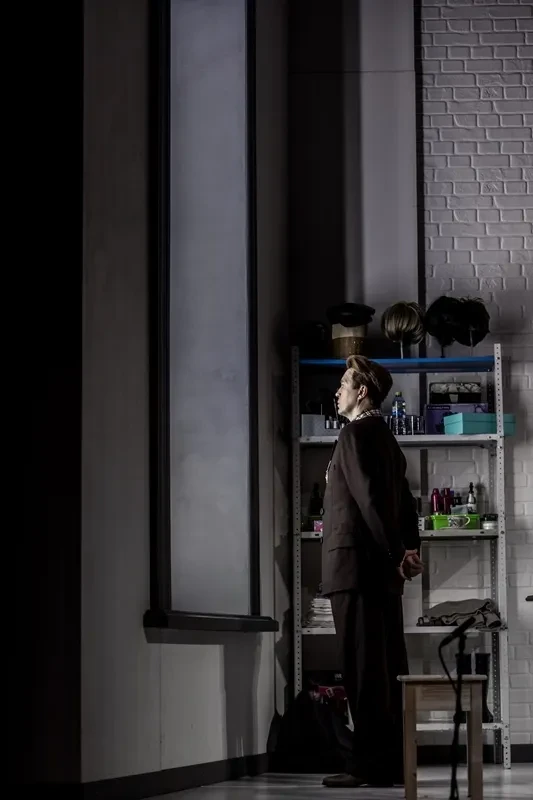
One of the main scenes is the last speech of the President of the USSR on December 25, 1991. Sitting at the very “table of Ordzhonikidze”, Mironov-Gorbachev heavily drops the words. Simple. Historical. “Dramatic changes in such a huge country, and even with such a heritage, cannot pass painlessly, without difficulties and shocks.”
All his early experience, the experience of his family, the Raisa family and millions of others is confirmation. And the prologue to the changes that he raised on his shoulders and it was he who began in the country.
On the table at the hero’s elbow there is a tea cup. After the ether, after this farewell speech, Gorbachev wanted to swallow tea. But ... the cup is empty. In television, they forgot to pour tea there.
And this story he had restrained by him talks a lot about the gratitude of his contemporaries.
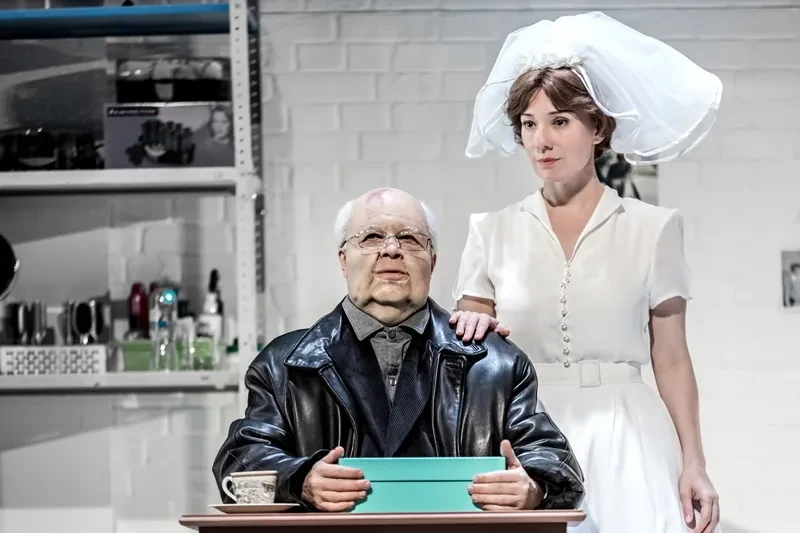
... Evgeny Mironov puts on the rubber mask of the present, 89-year-old Mikhail Sergeyevich. In a deaf Gorbachev voice, he says, as he still cannot completely make out his wife’s papers in their common office - and does not allow him to change anything in him. As I sat near Raisa Maksimovna in the clinic in the last hours of her rapid dying illness.
And she-in the splendor of youth, in a wedding dress-comes to him from behind the curtains.
Is this a Bayopic politician? Donation of gratitude? The story of a very great love? The general history of the twentieth century? It grows in a play from the private history of these two, is echoing in the minds of the viewer: everyone in the stalls clearly recalls what the years and their hopes for himself were.
And yet, first of all, a play about a person who has come out of many millions to turn a river of history. To start a long redemption of everything that we have done with us for decades. To start a slow, perennial, general return to the norms of common sense on this earth.
... This man is alive. He is 89 years old. Putting his head, he sits in the directorship of the theater.