
Translated material
The money was handed over with bags
In St. Petersburg, the first verdict in the case of billions of fraud in the structures of Rostekhnadzor was announced
Businessman Marat Kayumov, who participated in the embezzlement of 5.6 billion rubles with the construction companies of the north-west, received a suspended sentence, partially complining the damage to the victims of almost a million dollars.
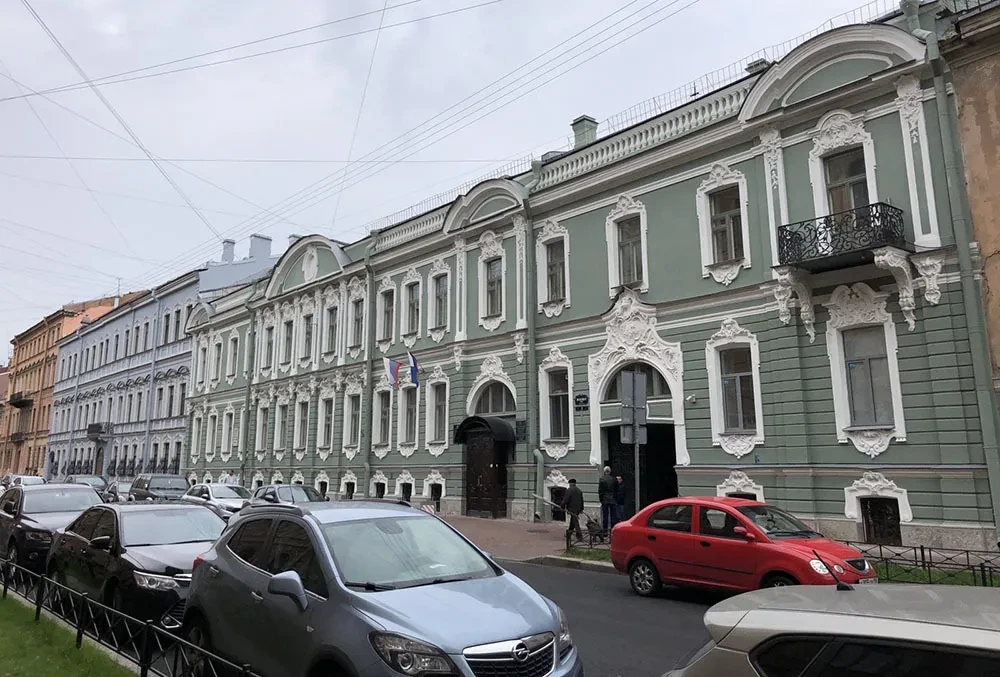
At the end of 2017 - early 2018, a wave of arrests swept through the structures of Rostekhnadzor. Criminal cases were instituted at once in several regional representative offices of the federal department. In 2017, investigators came to the North Ural and West Ural Directorate, in April 2018 the head of the Nizhne-Volzhsky was arrested. Then in May it came to the northwest: the head of the department Grigory Slabikov was arrested, who was suspected of embezzlement of 4.7 billion rubles (later the figure increased to 5.6 billion).
As the investigation established, the money was stolen from the accounts of self -regulatory organizations (SRO). These companies are created for the sake of compensation funds, from which in the case of force majeure circumstances you can get financial assistance. Companies participating in the creation of the SRO, in this case, construction regularly transfer to the fund the percentage of profit. There are several hundred construction companies in St. Petersburg, and therefore the total amount of contributions was impressive. To prevent money from lying down, they were sent to the Nord-West Capital investment company to invest in short-term investment projects. Its general director Alexei Shuvalov and his partner Alexei Eliseev were supposed to distribute money in growth to rapidly abundant projects.
How the investigation established
Instead of investing the received funds in some projects, Shuvalov and Eliseev simply stole them.
Moreover, they did this, as follows from the testimony of Shuvalov, at the direction of the director of the Rostekhnadzor Office for the NWFO Grigory Slabikov.
The SRO, where the builders made contributions, were three in the north-west of the Russian Federation: Standard Project, Construction Resource and Standard Subordination. The general director of the latter was Marat Kayumov before his arrest. As the investigation found out, the contributions collected from construction companies went to the Nord-West Capital. Part settled in the pockets of the directors of SRO. All of them are currently awaiting court decisions.
“The idea of creating a SRO as a kind of buffer in the construction business was born back in the late 90s,” said Yuri Igunov, director of the construction company. -Those who stayed in business after the default of the 98th year decided that surviving in a lump is easier than one by one. Anyone who paid contributions could use the money. But only in case of force majeure situations. After appointing the head of Rostekhnadzor, Slabikov immediately drew attention to this fund. ”
Literally everything in Russian business depends on Rostekhnadzor. Rostekhnadzor permits or does not allow the commissioning of shopping centers. He decides how safe the working conditions of workers created at the enterprise are. What height should be a pipe, what is the width of the elevator, what diameter is the hatch. Is the garbage cord is enough. Is it safe to produce oil in a specific place. Can a power plant work. Whether it is allowed to connect a residential building to communal networks - water supply, electricity, sewage. Is it possible to live in a built house. And in general - can one or another company in principle build houses.
It is not surprising that with such omnipotence, employees of Rostekhnadzor periodically fall into the reports of stimulated affairs in bribery or fraud.
Slabikov, according to the materials of the criminal case, did not take a bribe, but during the investigation he handed over money and values for a total of 35 million euros. Despite the fact that in the tax return for 2017, his income is indicated one and a half million rubles, his wife - two and a half million.
“None of us, the owners of small construction companies, know what amounts they operated on SRO,” Igunov said. - Everyone has different contributions, without them you will not go to the construction market. So we pay a kind of additional tax. The investigation revealed the theft of $ 80 million (5.6 billion rubles at the time of the arrest of Slabikov). But personally, I’m sure that we are talking about much more serious amounts. ”
Grigory Slabikov began his career as an official in 1992 at the St. Petersburg City Hall. At the age of 32, he headed the Committee of Property Relations: according to some reports - thanks to family ties with his wife Anatoly Sobchak Lyudmila Narisova. However, Slabikov did not work long at the St. Petersburg City Hall: in November 1993 he left the post of chairman of the Kuga for the not particularly significant position of director of the St. Petersburg Territorial Agency of the Federal Department of Insolvency (Bankruptcy). As the chairman of the Kugi, he was replaced by Mikhail Manevich (killed by Sniper on August 18, 1997). For ten years, Slabikov led various departments of the Russian federal property, and in 2009 he was appointed head of the inter-regional territorial department of technological and environmental supervision of Rostekhnadzor in the North-Western Federal District.
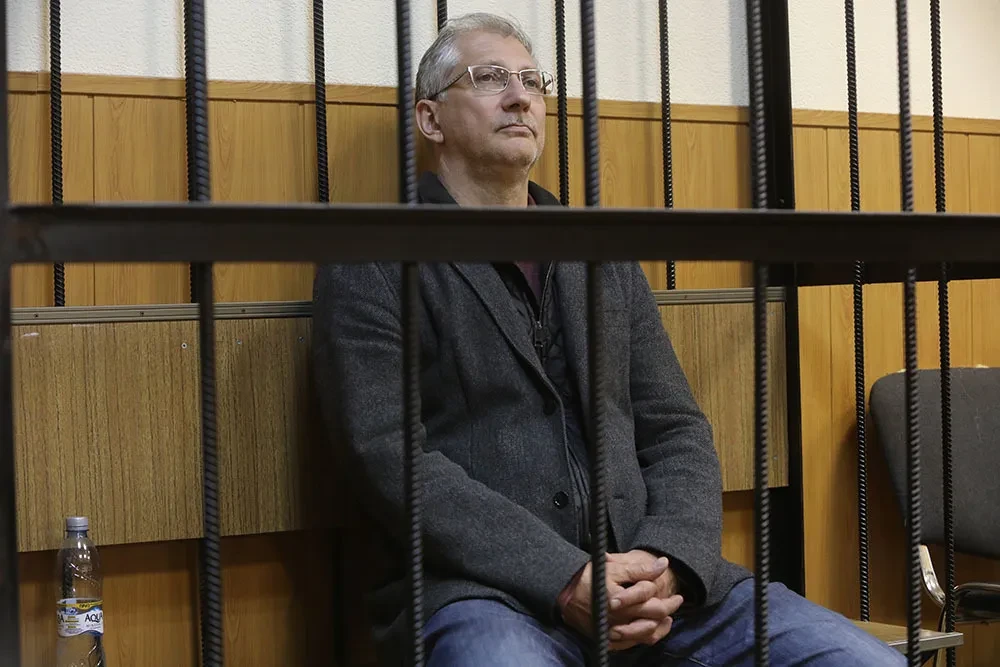
“I don’t know how in other areas of activity, but in construction, Rostekhnadzor controls literally every little thing,” says Igunov. -On the one hand, we will explain such control: if a residential building collapses due to poor-quality concrete, victims cannot be avoided. But on the other hand, the possibility of total control causes a feeling of permissiveness. Apparently, therefore, when Slabikov decided to control the SRO, the owners of the money stored there did not dare to object to him. ”
Having gained control over the SRO, the slabs, according to the investigation, decided to simply assign contributions. The director of SRO “Standard Raining” Marat Kayumov, in turn, according to investigators, was part of the criminal group created by Slabikov. Immediately after the arrest, he made a deal with the investigation, testified to the official and even returned part of the stolen: 811 thousand dollars stored in the bank cell. Such loyalty resulted in three years of conditional term (under Article 159 of the Criminal Code of the Russian Federation “Fraud” provides for the term of conclusion of up to 10 years in prison).
Another defendant in this case, the general director of Nord-West Capital, Alexei Shuvalov, also went to a deal, and the case against him will obey in a special order, that is, without a judicial investigation. The rest of the defendants completed the familiarization with 200 volumes of the case, and on October 1 of this year, the prosecutor's office of St. Petersburg stated that the case was referred to the Dzerzhinsky court of St. Petersburg for court consideration.