
Translated material
Impossible story
Why are state crimes justify in Russia, explains philologist Nikolai Epple
The publishing house “New Literary Review” published a book of philologist and journalist Nikolai Epple about how the authorities of different countries, and especially the Russian ones, are trying to avoid responsibility for crimes committed by the state in the past. The book “Unknown Past” is a classic example of Memory Studies - a complex of interdisciplinary sciences on the study of historical memory. According to Epple, an example of Russia, which cannot deal with its past, is not unique: other countries also went through different stages at first of the denial, and then the adoption of their responsibility for the tragic events of the past. The only peculiarity of the Russian situation is that right now in our country, all the events of Russian history are intensively justifying, including the worst. The special corner of the “New” talked with Apple about how to defeat the state in its struggle with the past, as well as the case of Yuri Dmitriev, which has become the main symbol that reveals the ambitions of the authorities in relation to the revision of the historical heritage.
A boiled dragon
- Your book is about the past, but its topic is very intersecting with the present, especially against the backdrop of toughening the sentence to the historian Yuri Dmitriev. You write that the main reason why this business arose is the total incompatibility of Dmitriev’s views on historical memory and how it should work, with the views of a state that is not ready for such changes. But Dmitriev is, in fact, a loner. Why is the state so afraid of it?
“Two things seem important to me in this matter.” Firstly, it is very noticeable that in the Dmitriev’s case, problems with the attitude to the heritage of Soviet terror and with the specific and more infringed position of those people who are trying to talk and write about it, study archives and to which the state relate to a rather stress belongs are symbolically. In the air there is a feeling of unresolved historical conflict. “Dmitriev’s case” is the point at which everything agreed. The article by Shura Burtin-therefore, the event in Russian journalism, that the image of the dragon, which Dmitriev woke up and which began to take revenge, grows up there, and this is in a sense the most accurate description of what was happening. The Dmitrieva Case is not just a legal incident:
Dmitriev involuntarily became a symbolic figure, a warrior of memory, who stands behind these people not humanly buried humanly and against the state that destroyed them.
And secondly, it is important to consider this case by discarding all possible policy as a mental exercise. The situation purely in fact causes a huge number of questions and bewilderment. The case was strangely begun, Dmitriev was actually justified and accused twice again. There are very ugly plums of photographs from the press in the press and a large number of strange examinations of experts close to the prosecutor’s office, who work exclusively for the accusation, despite the fact that the expertise deserving confidence says that there is no composition in this case. This is what you need to talk about constantly, and not about who ordered Dmitriev and the descendants of which executioners want to deal with him.
-Is it possible to name the excavations that Dmitriev was engaged in the most sensitive theme for the state in the sense that it is the mass shootings of the 30-40s that is not ready to recognize at all?
- Everything is somewhat more complicated. The state has long recognized a great terror with a fact: we are talking about mass political repressions since the 20th Congress. There were quite official confessions in state crimes: the same Katynsky execution was recognized. Moreover, in the 90s, when Sandarmokh was found, the local structures of the Ministry of Internal Affairs and the Ministry of Defense officially helped volunteers at excavations. In the end, we have a Gulag museum and there is a monument to the victims of repression. In other words, a large terror as a crime is recorded at the state level.
At the same time, memory is about how the past is displayed in the present. And when the state wants to remind of its strength in terms of lack of other mechanisms, it begins to respond much more positively of the Stalinist management model and more painfully relate to reminders of state crimes of that time. Specifically, the story with Sandarmokh and Dmitriev aggravated when the state after Crimea began to increase the number of appeals to a “strong arm” policy, thus trying to increase its legitimacy. Sandarmokh became a dangerous reminder of what such a policy leads to. Plus, it is necessary to take into account additional specifics: representatives of foreign states began to go to the place of executions, and no one wants to hear from the “strangers” a constant reminder of their own state crimes.
Add local security forces here, always especially nervous in the border regions, and then it will become clear why the degree of stress around Sandarmokh is so increased.
"Justice of the transition period"
- What is guided by the authorities when decides to recognize or not recognize state crimes? Is this always a matter of conjunctural political benefits?
- There are no actions based only on morality in politics - this is not good and not bad. For the state, recognition is always pragmatist. An example of post -war Germany shows that recognition of responsibility for crimes at the state level may be necessary to create a good image in the eyes of other countries. Having agreed to pay Israel a huge indemnity, Conrad Adenauer, firstly, was able to show that he was a responsible international partner, and secondly, he demonstrated that the GDR is an irresponsible partner. The gesture itself looks moral, but it is dictated by pure pragmatics.
When in Russia in the early 90s laws on victims of repression were adopted and a new wave of rehabilitation went, this was also dictated by pragmatic motives. The Yeltsin support base at that moment was the democratic public, which understood how criminal the structure of the Soviet Union was and what blood it was holding on. The authorities needed legitimacy in the support of this base, and the rehabilitation documents were signed.
In addition, new Russia wanted to show foreign partners that it is not like the USSR, that it is ready to take responsibility for crimes.
Now it is important for the state to show that we have seen the West in the coffin, that human rights are not a decree - in other words, we affirm in contrast to “their values” our “identity”. This is also a pragmatist, but in this logic the memory of those times is already used in a positive way - this is what it works.
- Is there an ideal formula for the state recognition of its crimes? What should it be-one document or some kind of full-fledged court, including the dead?
- Work with the past is similar to the fight against cancer. The disease is rather deadly, but she gradually can conquer some areas. No state is even the most ideal! - does not want to admit his responsibility if it may not recognize it. The ideal formula of recognition therefore does not exist. However, we can talk about some classic Transitional Justice models - “the justice of the transition period”. This justice appears when one political system is replaced by a dictatorship-another one comes to rely on something and not to fall apart, the new political system builds mechanisms that guarantee that there will be no return to the previous practices. The arsenal of measures of such justice includes the following things:
A certain court that is never perfect. By the way, they love to remember Nuremberg as an ideal example of the fact that all the guilty were put to the wall and a great future has come. But everything was not smooth with the process itself, and this did not help Germany very much: it took more than 10 years to recover after this “justice of the winners” and realize the significance of what happened;
Compensation to the victims: we can talk a lot about the recognition of responsibility, but this should be expressed in something specific. The amount of compensation just indicates the seriousness of the state’s intentions. In Russia, according to the 1991 rehabilitation law, compensation was limited by 10 thousand rubles - that is, they were rather declarative;
publication of documents on the facts of crimes;
inclusion of a story about crimes in the school curriculum;
A clear memorial policy - from museums to the celebration of symbolic dates. In this sense, it is interesting that we have a day of memory of victims of political repressions, actually a state memorable day, in fact has become a space of almost exclusively civil initiatives like the “return of names”.
If all points are clearly executed, this gives a certain guarantee that the new political system will not roll back.
- But this is a long process, and power can be replaced again, and then rolling back, it seems, is inevitable. The book describes the example of Argentina, where the leaders of the military junta either went to prison, then came out of it depending on who came to power. Is there a mechanism for blocking such kickbacks?
-The recognition by the state of crimes is always a living political process: some efforts are needed from above, some efforts should be made from below. Argentina is a good example of how society can put pressure on power in this matter in the absence of formal control mechanisms. We are talking about the so -called "courts of truth": legally state criminals are amnestied and there is no way to condemn them, but you can call witnesses to the court and give them a word. The same courts allow us to make requests for the publication of documents that are formally closed, and judges, realizing that the legal and formal truth on the side of the plaintiffs, in fact, interrupt the conspiracy of silence.
In Russia, this is also possible, and even despite the unwillingness of the state to open archives, a group of people through the courts seeks the publication of some previously classified documents.
Everyone understands, but they cannot say
- Stereotypically, it is believed that historical memory is a matter of a narrow layer of specialists. How would you generally assess the level of interest in the topic of state crimes in society as a whole?
- We see for sure that interest is growing now. It grows efficiently: now not only historians, human rights activists of the old wave or relatives of the repressed are engaged in attempts to learn more about the crimes of the state. Since 2014, when the state added iron in the voice and began to appeal to the Stalinist model, much more ordinary people began to go to the Stalinsky model, and moreover, much more publications on this topic appeared. For me personally, a strong experience was organized several years ago by the Memorial Society and several popular editions of Vorkshop. During this two -day school, it was possible to show that the topic of state crimes may be interesting to people outside the narrow group of those interested. And the publications were those who usually did not engage in such topics before: for example, the website Sports.ru or the Children's Journal "Hedgehog".
The workshop ended in that reporters were offered to create material on the topic, but for their audience. Sports.ru prepared chic material about how a football championship was held in one of the Mordovian camps with the participation of prisoners - athletes of the All -Union level. The material, however, was never published in the end. “Hedgehog” (now Chips Journal) prepared a story about Soviet history, including repressions, based on children's diaries. In other words, the topic of the state’s responsibility for crimes turned out to be another audience, because it is always unexplored and full of drama of human stories. Yuri Dudia’s film “Kolyma” is still popular because it opens up historical material for the new audience. At the same time, somehow it was not necessary to stop the Dudya in front of the audience: it turned out that his fans are also interested.
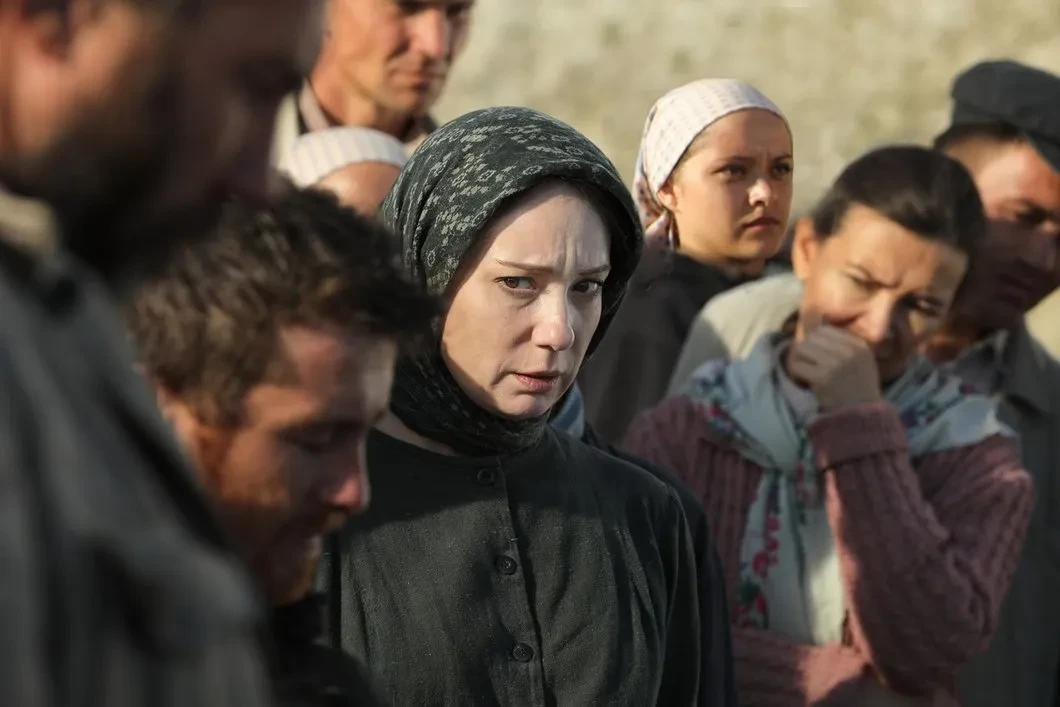
Before our eyes, the theme exits the topic outside the narrow layer of specialists and interested. And the film Dudia, and the book of Guzel Yakhina ( “Zuleikha opens my eyes.” - “New” ), and even the Dmitriev’s case - everything leads to the fact that the topic of state crimes becomes important for many. Yes, in mass culture, it will not become the most trendy by virtue of its specificity, but each such publicly voiced story about a particular crime of the past responds in society with a great resonance. And this is a large and powerful resource, including political and even political technological - in this sense, the conversation of the authorities and society on the responsibility of the state for what has happened is extremely important for the state itself. Not manipulative, as they are regularly trying to do it now, but a real conversation about responsibility - this is the only way the authorities can gain trust.
- At the very beginning of your book, you write that your relatives met at the family table, who survived the same time, but still seemed to exist in two parallel worlds. What about the fact that in the country a significant number of people still live in a world where there were no repression, or were they on business?
- A month ago, I sat in the same place with my old acquaintance, with whom we have not seen each other for several decades. I told what I was doing, after which he first said that "they just didn’t plant it with us," and then - "But we raised the economy and created a strong state." And then, when we talked a little, he said that he had a great -grandfather shot, and now is canonized as a new martyr, and we have already talked not about a strong country, but about where to find the investigative work of the great -grandfather.
When people say that “there was nothing” that “people weren’t planted just like that” that “Stalin is well done,” this is a greatly the psychological mechanism of unpleasant rejection. If a person did not think that something in this system is unclean, the mechanism of denial would not be so strong. And such statements appear due to the lack of narrative: in mass everyday culture there are extremely few state and public examples of how to talk about the topics of repression.
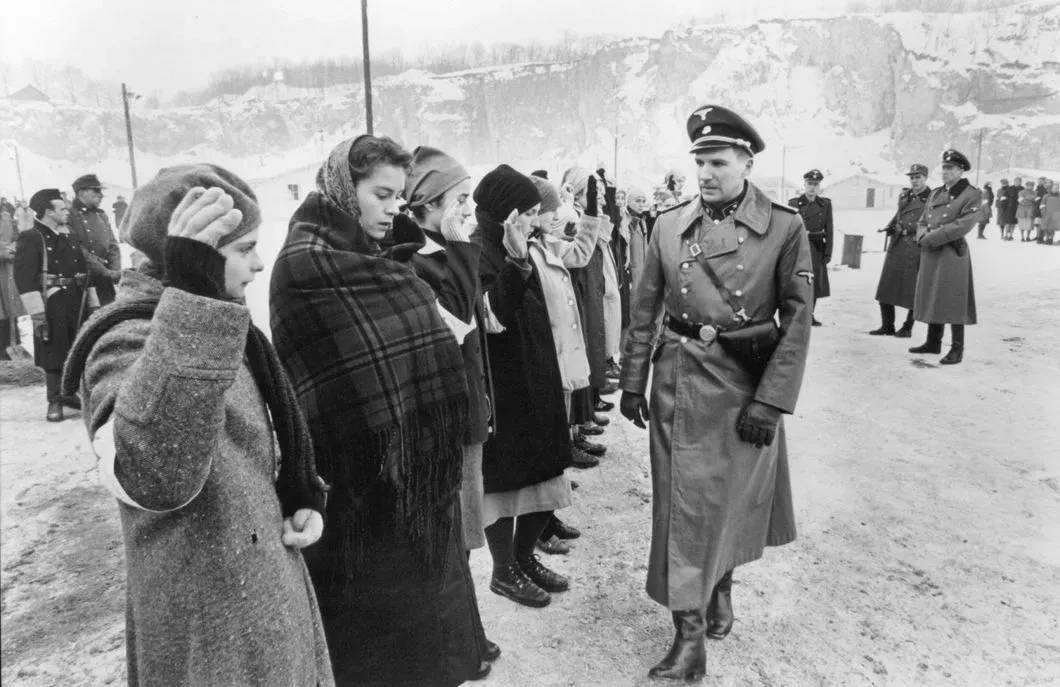
Now a new wave of reposts of the old text of Vladimir Yakovlev has gone that his grandfather had shot people. This text seems manipulative to me, but for many people who repose it, this is a way to translate their own unspoken experiences in this way. Building a memorial culture - through the same films like a “Schindler list” - it is important not only in the framework of “justice of the transition period”, but also because people receive a model, a method and a language of speaking about crimes of the past. So we are arranged that it is more convenient for us to speak about difficult things with other people's words (at least for starters), have samples that we can use to express our own attitude.
The past is a trauma
- You said that the topic of state crimes in the past will not become trendy for mass culture. Is it? Russian films about the past often turn to the topic of the past and repression. Another thing is that it turns out varnished: either before everything was too good, or too bad.
-You can answer this question by sending the reader to the phenomenon of the “boat of memory” in Europe in the late 80s, when it became clear that the study of academic history does not sufficiently answered the question of what happened in the 20th century. It was important now that it really happened, but as people recall, hence great attention to the memories of families, diaries, memoirs, and not just historical documents. Such interest came to us late at the age of 20.
When these topics become the property of mass culture, they inevitably simplify, it is not good and not bad. The Schindler list was reproached for the trivialization of the Holocaust theme, but it is in this film that new generations in the West are largely aware of the Holocaust. Any state is always interested in using this resource in its interests, because it is very powerful. Our specificity is only that the past not only plays the role of the past, but also replaces the image of the future - there is nothing better for lack of nothing.
- Why not leave everything as it is? After all, even Putin, during one of his speeches, said about the past : "But you never know." The logic of “do not turn the past” to most Russians, as it seems, still seems intelligible and understandable.
- The past cannot be forgotten. The metaphor for injuries in relation to the past is very accurate: when a person survived violence, this must be worked out. So with the past:
If you try to forget this, it will be supplanted somewhere in the subconscious and will continue to uncontrollably conduct its destructive work. Baby will when you will not be ready for this.
An example of Spain is interesting, which democratically agreed to forget about Francism and victims from one or the other. Существовал Пакт о забвении как форма общественного договора: в противном случае под удар ставилась целостность страны. Это было в 1975 году. Однако прошло 25 лет, и на политическую арену вышли внуки, которые стали выкапывать своих дедов, — сейчас это называется феноменом массовых эксгумаций. То, что Франко вынесли из Мавзолея, — результат процесса, запущенного снизу.
Забывание может быть логичным сиюминутным решением, но от проработки травмы вы в итоге никуда не денетесь. Поразительный пример, которого нет в книге: в Мозамбике, где больше 20 лет шла кровопролитная гражданская война, людей убивали и женщин насиловали целыми деревнями, после ее окончания было решено примириться и жить дальше без правосудия переходного периода. А затем в середине нулевых годов у женщин начали фиксировать психические заболевания, когда они массово заявляли о явлении духов: этот социологический и медицинский феномен подробно описан в профильных журналах. Казалось бы, национальное примирение произошло из благих соображений, однако травма все равно нагнала людей.
Проработка национальных и исторических травм нужна для повышения уровня доверия между властью и обществом, государством и гражданами — это очень болезненный вопрос для современной России. Важно лишь, чтобы этот разговор о прошлом был не формальным, а максимально эффективным.