
Translated material
Putin is in a circle of risks: he is already 68 ...
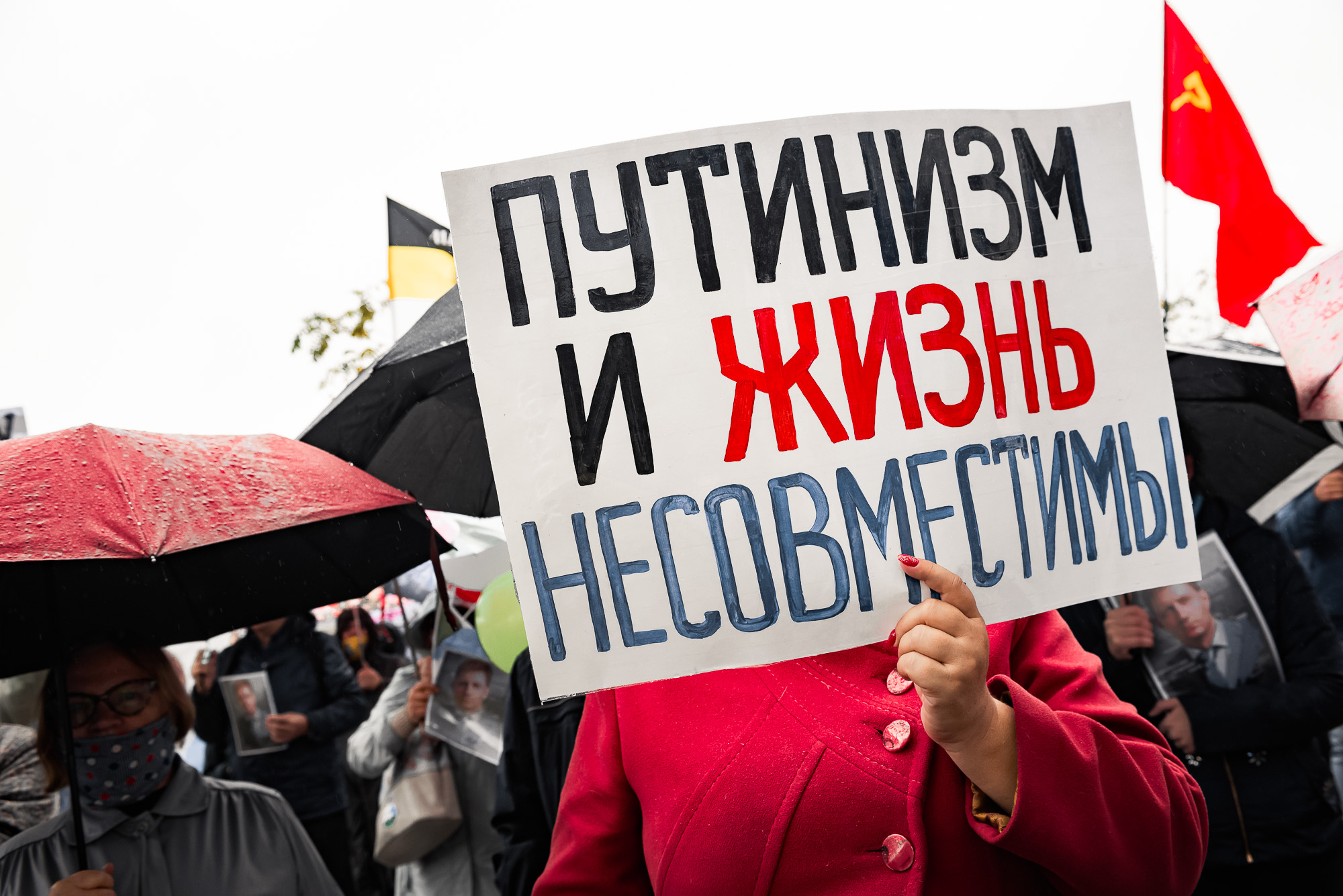
On the birthday of Russian President Vladimir Putin, the country and the world were awarded the right to find out that he plays hockey and ski skiing with FSO guards. He also works and communicates in his circle with his relatives. Perhaps with two daughters from his first marriage, whom he calls "these women", probably, with Mrs. Kabaeva and her three children.
At the same time, Putin met his 68th anniversary in a circle of growing problems. Poisoning of Navalny by combat Om is confirmed by the organization to prohibit chemical weapons (OPCO) and can lead to new sanctions against Russia. In Khabarovsk, supporters of the arrested governor Sergei Furgal have been holding mass protests for a month now. Self -immolation in Nizhny Novgorod Irina Slavina shows that people offended by security forces can go to the most desperate ways of struggle. The Covid-19 epidemic returns, undermining the economy.
In Kyrgyzstan, another clan revolution occurred, the crowd was swept by the regime that falsified the elections. Warning for the Putin system of three -day "elections" on hemp. In Belarus, opponents of Alexander Lukashenko, despite the arrests, continue daily protests across the country, bringing more than 100 thousand people to Minsk on peaceful manifestations. Finally, the war for Karabakh shows Putin's impotence: the Kremlin cannot stop the monstrous bloodshed, limiting himself to calls for the world and discussions about the "tragedy".
We discuss these problems of the President of the Russian Federation in the fall of 2020 with politician Dmitry Gudkov . Political analyst Mars Sariev (Bishkek), politician Alexei Vorsin (Khabarovsk) participate.
Mikhail Sokolov is broadcast.
Video version of the program
Mikhail Sokolov: The poisoning of Alexei Navalny with a fighting poisonous substance on October 6 was confirmed by the organization to prohibit chemical weapons. On October 5, a revolution began in Kyrgyzstan in response to falsification of elections. For several months, protests in Khabarovsk do not stop, like a peaceful uprising that goes against the Lukashenko regime in Belarus. And a large war is flared up for Karabakh. In the face of what problems the President of Russia Vladimir Putin celebrates his 68th birthday. Today in the Moscow Studio Radio Radio Freedom Political Dmitry Gudkov. Let us start with the first topic - with the poisoning of Alexei Navalny, now many unbelievers understand that Alexei Navalny was poisoned, this is a modified poisonous substance like a "Novice". Tell me, why is the Russian authorities, propaganda and officials in the face of very real sanctions that can be imposed on Russia are so lying on this way?
Dmitry Gudkov: Firstly, I do not see something new and amazing in this. They behaved in the same way in a situation where Boeing was shot down. Almost always, when their comments resembled a confession, they still continued to speak nonsense, lie brazenly in the face. This is their corporate identity.
Mikhail Sokolov: You wrote that the attempt on Navalny is no exception, and the rule, just in this case, such a conveyor technology failed?
Dmitry Gudkov: Firstly, this was not the first time to fail, the same thing happened to Vladimir Kara-Murza. I want to remind you, twice Vladimir tried to poison, thank God, he survived. Moreover, the first time he was also three weeks in a coma, the second time in a coma for two weeks. Further Peter Verzilov, then Dmitry Bykov, there are enough examples.
Therefore, it is very difficult to calculate the dose, I am not a specialist in this, I spoke with some experts, because it is not clear how this poison will enter the body. Either you will bed this poison into tea, or you will touch some subject ...
In fact, in the case of Navalny, it was obvious that he was lucky that they planted the plane on time, that he was administered the necessary medicine at the very beginning. It is not known how it would end. Therefore, it is obvious that they wanted to kill, I have no doubt about it. And the fact that this is the corporate identity of our power, here it is possible since the time of Schell or Politkovskaya, Nemtsov, there are also enough examples.
Mikhail Sokolov: Litvinenko, Magnitsky.
Dmitry Gudkov: A criminal authority, which does not completely disdain such methods of information.
Mikhail Sokolov: I would say that Putin meets his 68th birthday in this status of a villain of some thrillers. If you just take a list of its victims over the years, the victims of the regime, then really such a chain is very long, in the end Alexei Navalny is now, which really survived a miracle.
Dmitry Gudkov: Unfortunately, not at the end. I think that there will be some sacrifices in the future, because this regime will not stop at anything, he demonstrates it constantly.
Mikhail Sokolov: Alexei Navalny now gave several interviews of different, in one of them, at Dudia, he just formulated, why he had to poison him, as he believes, Putin personally.

Width PX Height PX
The url has been copied to your clipboard
No Media Source Currently Available
0:00 0:00:49Mikhail Sokolov: Is it possible to frighten politicians with such stories?
Dmitry Gudkov: I do not want to act in the role of Putin’s psychiatrist here, which drives him by actions. But it is obvious that many politicians were scared, someone left. Moreover, I do not condemn anyone, I want to emphasize this, but many have left the country, someone stayed, continues to fight. Not to intimidate everyone - this is quite obvious. In fact, the last summer, past elections showed that even when all the leaders are sitting, all the special receptionists were disposed of, new leaders, young guys who continue the struggle, still came out. So I'm sure that everyone is not intimidating with such methods.
Mikhail Sokolov: Alexei Navalny in his interview says that the “smart vote” worked successfully, especially in Tomsk, this is a great threat to the State Duma elections. As I understand it, they will now pass, after all, after Putin’s meeting with the leaders of the factions, it became clear so far, at least they plan to hold them in September. The mechanism of "smart voting", what can you say about him, the hopes of Navalny’s serious, can it really scare the power?
Dmitry Gudkov: At the time before Navalny’s poisoning, we could talk about some kind of “smart voting”, and now we are dealing with a different personality scale, I really hope that there will be another scale of the tasks that Alexey will put as well as his team. It is one thing to support some "ghouls" instead of "United Russia".
Mikhail Sokolov: Not necessarily "ghouls".
Dmitry Gudkov: There were normal candidates, but there were such. Moreover, they stated from the very beginning: yes, we support the "ghouls", in my opinion, Ilya Yashin said about this, but in order to not let United Russia. That is, this is a special tactic, they do not deceive, they say: yes, there are no good candidates, but at least we will make a unicorn does not pass. It seems to me that now, taking into account the attention to Alexei, it is necessary to set larger, more global tasks - the admission of normal candidates, including Alexei Navalny, who cannot be participated in the elections on a completely idiotic anti -constitutional law. I hope that the Navalny team will set and solve such problems.
Mikhail Sokolov: So you think that you need to start a campaign for the participation of a conditional list of Navalny or a list against Putin?
Dmitry Gudkov: Which includes, of course, Alexei Navalny. Because we saw a rating of approval of him, which published the Levada Center, is 20%.
Mikhail Sokolov: And 50% against for now?
Dmitry Gudkov: It doesn't matter. An anti -rating can become a rating depending on the well -conducted campaign. If the opposition will be 20% in the State Duma, and this is now 20%, during the election campaign these 20% can turn into 40%, and if you mobilize these 20 with an explicit of 60%, then these 20% become actually a majority in the State Duma. Therefore, this will be enough to start serious changes in the country. It seems to me that a 20% politician with a rating is simply obliged to apply for participation in the election campaign.
Mikhail Sokolov: They can block his return to Russia, although Alexei, of course, says that he is ready to return to Russia, apparently when he is a little heal.
Dmitry Gudkov: They may not be allowed, they can shoot, poison. We know this very well, the whole arsenal of their actions is familiar to us. But this does not mean that we need to stop and do nothing.
Mikhail Sokolov: The question is that society is not very, to put it mildly, active because of the same coronavirus.
Dmitry Gudkov: I heard the same thing about Belarus in the spring of this year: there will be nothing, they will not let these candidates, these will be imprisoned, Tikhanovskaya will not gain anything, there will be no result, everything will be falsified. We see changes in Belarus. Now Putin still has some kind of, but a fairly high rating compared to other politicians, but the trend is obvious-popularity is falling. And sooner or later he will be in Lukashenko’s situation - "Sasha three percent." Then public opinion will change, then there will be no legitimacy, including the legitimacy necessary for repression.
I want to emphasize how Russia differs from Belarus - to win the protest, an elite split is needed. In Belarus, the structure of the economy is built in such a way that there are no elites, there can be no split there, so there are still no result there, but I am sure that they will definitely succeed.
Mikhail Sokolov: One hundred thousand people every Sunday leaves in Minsk and also go throughout the country.
Dmitry Gudkov: Sooner or later, the Belarusian protest will achieve his goal. Therefore, I support them, I convey the rays of support just through the air of Radio Liberty. As for Russia, there are different elites, different Kremlin towers that do not like each other. It is quite obvious that there will be transit ahead, some kind of change in the balance of political forces in Russia will take place in the near future. Our elites are much more integrated into the world economy, these are the Belarusian elites anyway, what sanctions are imposed, but Russian does not care.
Mikhail Sokolov: By the way, about sanctions. I just look at the news tape, literally half an hour ago information appeared: "France and Germany will offer European partners options for sanctions against individuals in connection with the incident with the Russian oppositionist Alexei Navalny." This is a joint communique of two worlds of these countries. "The proposals will be directed against individuals whom we consider responsible for this crime and for violation of international norms and one structure related to the beginner program. Is it an imitation of concern for the use of chemical weapons within Russia, or non -control, or just by control of the authorities and use? How serious can these sanctions against individuals be?
Dmitry Gudkov: I communicate with different diplomats if we are talking about the mood of the Elites of the Western, they do not need any sanctions. They do not want to solve other issues by damage to their own interests. But public opinion is now quite serious and very strong in support of sanctions. Because Alexei Navalny is now on all bands of the main newspapers.
Of course, some sanctions will be definitely, Western politicians cannot simply ignore this case now. Firstly, there are norms of international law, there is an OPCHU that unites almost two hundred countries. All countries are forced to fulfill the norms of international law, which means that they are obliged to apply some sanctions now, because these norms of international law were violated by the Russian Federation. The question is, in relation to which persons will be sanctions. I have always been an opponent of economic sanctions, because they are against the country and citizens, we will primarily suffer if these sanctions are imposed.
Mikhail Sokolov: And then Putin bombs Voronezh, in the sense of counter -sanction introduces.
Dmitry Gudkov: All Putin's friends will receive money back, they will be compensated from the budget, from our money, from our tax revenues. But Putin is afraid of personal sanctions. Just recently, on my YouTube channel, the video even recorded what sanctions Putin is afraid of. Russian elites are very afraid of personal sanctions against themselves and their families. If we take the sanctions that were imposed on the Crimea, for the conflict in the east of Ukraine, Rashkin, Zhurov, a number of State Duma deputies, were there simply by position. There was even a joke about Rashkin: "You are Rashkin, so live in your rashka." The opposition deputy who has no interests in the West, he has no money there, he does not have any business there, he even rests in Russia, but he fell under sanctions. And those people who are directly responsible for the military conflict in the east of Ukraine, they calmly travel to the Western countries in diplomatic passports. If the top of the Russian elite really gets there, then these will be effective measures ...
Mikhail Sokolov: They can simply be valid for some officials who do not go, they are not forbidden.
Dmitry Gudkov: They can make people who do not make decisions that are far from the "beginner" and from some repression, just banal performers, scapegoats. Let's see how it ends.
Mikhail Sokolov: There is another gift to Vladimir Putin for his birthday. Events in Kyrgyzstan are really unpleasant such a thing. He just received the president of Kyrgyzstan a week before the elections, the elections were passed, suddenly the people go outside, the crowd was daring the regime that falsified these elections. Such a clear warning for the Putin system, these three -day stump elections. How Vladimir Putin reacted, it is interesting to see.
Mikhail Sokolov: We have Bishkek in touch, political scientist Mars Sariev. Explain to us what happened to you, how did the people be able to storm government buildings, the parliament suddenly appointed the prime minister of the man who was in prison? The previous president of the country Atambayev, who was also in prison, is now no longer in prison, but at large. The Zheenbekov himself, your president, went somewhere. Something we don’t even really understand, revolution, coup, what's in Bishkek?
Mars Sariev: In fact, this was a surprise even for us, experts. Because I predicted that there will be a variant of Belarusian events, that it will turn so, you know, for everyone like snow on the head in the morning has already happened. In the evening, rallies of protest began against falsified elections, dirty elections, bribery were very massive, possibly, nagging also during the vote count. Therefore, the remaining 11 parties overboard (four parties went to the parliament - three parties affiliated with the authorities, and one, as it were, opposition) gathered for an unlimited rally.
For the first time, urban youth is participated there, which for the first time participate in politics. In 2005 and 2010, they came from the regions, the city was silent. This time, because of the coronavirus, volunteers of the city played a large role in the salvation of people, while the government was very unsuccessful to the fight against coronavirus. These young guys mainly from the pro -Western Party "Reform", supporting the Western trends, began an unlimited rally. They used telegrams, these instructions on how to exhaust special forces, by three in the morning they exhausted the special forces, moving around the city according to these instructions. At three in the morning, a coup had already occurred. Now the parliament has finally gathered to legitimize power. Because there is a legitimate president, and all this happens in an illegitimate field.
Parliament, 62 deputies elected the acting Prime Minister Sadyr Japarov. He was in prison, he was released in the same way as Atambayev, two prime ministers and other supporters. Now such a situation is very interesting, Jeenbekov cannot affect the political situation in Kyrgyzstan, because he is deprived of all the levers of power, the security forces do not obey him, in the regions, his proteges are also shifted.
In the city there was a split between those who made the revolution, mainly made young people, the parties did not participate in this process. In the morning after the revolution, parties, leaders freed from prisons, acting leaders from the old guard pulled themselves up, I think that they have an unspoken agreement with Jeenbekov, so that he would give peacefully the authority to the new government, the new people, the new prime minister. Now the question of impeachment to the president is now acute. The new Prime Minister and the coordination group of old politicians disagree with this. Consequently, there is a confrontation between this group of politicians who were also against Jeenbekov, and young people, Western reformers, who require complete lustration, impeachment to the President of Jeenbekov. Now the confrontation between these seems to be supporters who went against Zheenbekov. The old guard wants agreements with Jeenbekov so that he will have folded powers, thus, a peaceful transfer of power occurred, respectively, Zheenbekov will receive security.
Young guys who actively participated at night, in fact, made a revolution, they are against, they require complete lustration similar to in Ukraine similar to Georgia or Armenia, and impeachment to the president. Now the battles are still in the White House between these groups. It turns out the conceptual struggle of the Western vector and vector, focused on an alliance with Russia.
Mikhail Sokolov: That is, we can say that now the authorities are lying on the ground in a sense and someone should choose it?
Mars Sariev: You are right, we get dual power, if you count the president, then triviality. The President, as you understood, is in contact with the group of the acting Prime Minister and the old cohort of politicians standing behind him, although opposed to Jeenbekov. Young guys who made a revolution at night, they are against, they are for the Armenian, Georgian or Ukrainian version.
Mikhail Sokolov: There is no risk of the collapse of Kyrgyzstan into some groups, clans, north, south, more difficult somehow, some clashes such as a civil war, aggravation of the situation now?
Mars Sariev: I think not. The biggest danger was previously. The coup of 2005 or 2010, in 2010, Bakiev generally wanted to separate the southern part of Kyrgyzstan behind the Ferghana ridge, and create a separate republic. Then he received the support of the southern clans. Only negotiations with Moscow and Washington allowed him to leave for Minsk. This time, the south does not support Zheenbekov, the southern clans understand that the South Branch will lead to a complete collapse of the southern clans, they will go under the protectorate of Uzbekistan, this is a losing option. And in general, the republic will fail. During this time, the northern and southern clans were very integrated, there are a lot of southerners in the north, so they, soberly assessing the situation, shift the proteges of Jeenbekov and put their people, local authorities to high posts.
Mikhail Sokolov: We see that the situation is really complicated, dynamic, we hope that it will stabilize. Dmitry, how did you perceive these revolutionary events? On the one hand, really in Kyrgyzstan this is not the first time, on the other hand, there are risks of the collapse of statehood. That is, it can inspire people alone - the struggle for changes, young people come out, on the other hand, scare, to put it mildly, there is now a mess there on the street.
Dmitry Gudkov: Probably the aspirations of youth can be supported. But in general, Kyrgyzstan as Fale Steit, a state that has long been split into two camps, there are constant coups, which have not yet led to anything good. That is, this is not a variant of Belarus, this is not what can happen in our country. I believe that any some changes should lead to democratic changes, and there, I am afraid, this does not smell yet.
Mikhail Sokolov: When one power comes and begins to plant another, as it happened in Kyrgyzstan recently, it itself is running into such instability, resistance.
Dmitry Gudkov: She drives herself into the framework and drives herself into a corner, then takes a defensive position forcedly, just all democratic mechanisms break in order to hold the power. This becomes a matter of personal safety - if you lose the election, you will be imprisoned.
Mikhail Sokolov: It turned out that the president with his parties formally won these “elections”, and now he is hiding and negotiating somewhere that he is somehow covered, to get away from power, to move away from power without getting to where his predecessor just sat. In this sense, it looks like a phantasmagoria.
Dmitry Gudkov: I think this is a good lesson for those who believe that dictatorship, tyranny, authoritarian regime can live long. No, he can suddenly collapse at any moment.
Mikhail Sokolov: You can also talk about surprises. Alexey Navalny, when he gave interviews, he said that for him a surprise was not even events in Belarus, because he fell out of life for a fairly long time, but Khabarovsk. When he turned off, in Khabarovsk people went out when he returned, they come out again. Here, he said, of course, an amazing thing.
Today we contacted Aleksei Vorsin, a representative of Navalny’s headquarters in Khabarovsk, we will now listen to the interview, which was taken by Arthur Davletshin .
Arthur Davletshin: How do rallies go in Khabarovsk now, has activity decreased?
Alexey Vorsin: The shares continue, many thousands of Khabarovsk residents come out every Saturday, it is quite difficult to calculate the exact amount, but this is still a lot of thousand. On weekdays, the number has always been a little smaller, there are several dozen of the most active, most combat protests. They come out regularly, daily from 8 pm to 10, the performance in support of the governor continues approximately.
Arthur Davletshin: What does power do, how does Degtyarev react?
Alexei Vorsin: Degtyarev’s tactics was originally in completely ignoring these protests, to try to put these protests marginal. Every weekend he leaves Khabarovsk under the pretext of traveling to remote territories, where he holds some formal meetings, presses his hands, photographed. All this is done in order to avoid meeting with protesters. But last week, Degtyarev at one of the meetings ordered something to do something with these protests, because they were clearly tired of him. Several provocations occurred when some strange people, very nervous, angry, tried to enter the people in the column, shouted, swore, provoked people to reciprocate aggression in order to shoot all and show all their paid media, to expose the protesters who protesters with some inadequate people. Honestly, the protesters must be given tribute, in general, they coped with this kind of provocations, until this has not influenced the passage of protests, the protesters continue to come out with respect to everyone around, and of course, continuing to ask sharp questions, criticize Degtyarev, and demand that he leave the Khabarovsk Territory.
Arthur Davletshin: And how do the security forces react?
Alexey Vorsin: Every day they delay new participants. This does not happen on protests - as a rule, either near the house are guarded, or near work. Every day, people are detained, fined. Today for five days they sent a man under arrest. Fines were made to people - men, women, no difference. Two times they fined and arrested even a priest of the parish of the Russian Orthodox Church, who also takes part in these protests, supports people.
Arthur Davletshin: How is the situation around the son of Sergei Furgal?
Alexey Vorsin: As I understand it, he is now at large, nothing threatens him at the moment. He was really abducted by security forces for the whole day, all day literally before the start of the protest action, he was somewhere with the security forces. There is a different information where exactly he was. It was released specifically from the Investigative Committee. This happened just a few minutes before the start of the action, because it was assumed that because of such events, there would be much more people. Apparently, the security forces decided that it was necessary to release him. Until the end, so far the whole situation that happened and how is incomprehensible.
Mikhail Sokolov: Dmitry, what do you say about the events in Khabarovsk? Indeed, this is a phenomenon.
Dmitry Gudkov: Yes, of course, it surprises me too. But most of all I am surprised by the reaction of the authorities. She’s just completely reckless, imperceptible.
Mikhail Sokolov: They are looking for leaders, they say that all this was organized by criminals from the organization "common fund".
Dmitry Gudkov: They act simply on the stupid template. Well, you want to rally - a rally, we will wait until you have a desire to go out onto the streets, we will slowly turn on the repression mechanism against the most active. But it does not work. Instead of holding the elections, let people choose their governor, no, they sent Degtyarev.
Mikhail Sokolov: This is, as it were, the estate of the LDPR, let's put someone from Zhirinovsky.
Dmitry Gudkov: The Kremlin believes that this is the estate of the LDPR. People in a different way perceive what patrimony of the LDPR or the Communist Party, this is our region, this is our region, we want to choose the power that we consider necessary here.
Mikhail Sokolov: Why is it so in Khabarovsk, and in other places people come to terms with falsified elections?
Dmitry Gudkov: Because, it seems to me, Furgal showed himself with dignity, he was not in the State Duma. Firstly, people chose in protest, because they were tired of the former unicorn, they received the governor who began to do something for them, the governor with a completely different stylistics. This is not an official who is not shouted, but this is a person who knows how to talk with people does something for them, somehow solves issues. Let there be a lot of populism, but, nevertheless, the governor Furgal turned out to be the people's folk. When they took the governor from them, this became such a spit in the face, so people go out. At first they went out, they were sure that they would be heard.
Mikhail Sokolov: I am worried that the authorities began to apply such methods, to take hostages. Сына Фургала Антона потащили, а в Иркутске взяли по очень странному обвинению Андрея Левченко, сын губернатора бывшего, коммуниста, и это тоже коммунист и один из депутатов Законодательного собрания.
Дмитрий Гудков: Во-первых, начнем с того, что брата Навального посадили. Я помню момент, когда моя мама в 2012 году прилетела ко мне на свадьбу вместе с моим сыном Ваней, ему тогда было 6 лет, ее попытались взять прямо у трапа самолета и отвезти в Следственный комитет на допрос. Тогда не осмелились, тогда были все-таки более травоядные времена. Сейчас просто всех берут, родственников, детей и так далее.
Михаил Соколов: Назначают человека свидетелем, приходят с обыском в 6 утра, и пожалуйста, ужас этот в Нижнем Новгороде, Ирина Славина, самосожжение в знак протеста.
Дмитрий Гудков: Я знал лично, я просто был шокирован. Сегодня еще одна история. Есть такая Надежда Белова, это Воронежская область, так вот Надежда Белова когда-то боролась за то, чтобы восстановили прямые маршрутки из большого села, там 70 тысяч, в Воронеж напрямую, собрала четыре тысячи подписей и вернула маршрутки. А местные депутаты, которые владели транспортной компанией, хотели, чтобы ходили какие-то автобусы по неудобному маршруту. Когда Надежда добилась восстановления маршруток, местные депутаты, местная ФСБ стали ее прессовать.
Судят ее по 275-й статье – "Оправдание терроризма", за то, что она когда-то написала твит, когда юноша взорвал себя у здания ФСБ в Архангельской области, она написала твит, перефразировав Путина "все погибнут, а он в рай". Причем было непонятно, что, кто взорвал, какие причины. Ее пытаются сейчас судить по делу об оправдании терроризма. Сегодня в суд вызывали ее мужа, сына, который учится в школе, в школу прислали телеграмму: срочно обеспечить явку мальчика в суд по делу об оправдании терроризма, что мама оправдывает террористов. Там устроили в школе целую травлю. То есть привлекают детей, привлекают родственников. Я сейчас понимаю, почему Путин так прячет своих дочерей. Он думает, что с ним так же поступят, он всех судит по себе.
Михаил Соколов: Он говорил про какого-то внука, дочка начала учить его жизни, Андрей Ванденко его переспрашивает: "А который?" Он говорит: "А какая разница?" Опять "эти женщины", не дочки, а "эти женщины". Внуки анонимные, то ли женат, то ли не женат.
Дмитрий Гудков: Он все судит по себе, что если его режим может позволить себе репрессии в отношении родственников, брать родственников в заложники, то значит и мы такие, поэтому он и прячет своих детей, все они прячут своих детей.
Михаил Соколов: Может, он смотрит про Киргизию и думает: смотрите, там один президент сажал другого президента, теперь этот президент вышел, тот прячется, а что там будет с родственниками, бог его знает.
Дмитрий Гудков: У меня сложилось ощущение, что Путин не особо уже в повестке управляет ситуацией в стране, по косвенным признакам. Конечно, всегда были репрессии в отношении политических активистов и так далее, но сейчас я просто наблюдаю за тем, что происходит в стране. Силовики пытают людей, не связанных с политикой и активизмом, это вообще никак уже не пресекается, это на самотек. Например, парня в Нижнем Новгороде, который был кандидатом от "Яблока", его опять судят по 275-й статье. Он написал: забор надо снести, потому что скорая не может проехать. 275-я статья – "Оправдание терроризма", его пытаются судить. Каждая спецслужба делает что хочет, нет какого-то органа, который бы это координировал, нет никаких правил игры, когда-то они были.
Например, лидеров оппозиции не пускают в Думу, их не пускают на выборы, но какие-то правила были. А здесь такое ощущение, что инструмент насилия уже не в одних руках, а каждая спецслужба делает что хочет, каждое подразделение в регионе делает что хочет.
Михаил Соколов: Интересное тоже дело Дмитриева, один оправдательный приговор, один полуоправдательный приговор, а потом 13 лет. Такое впечатление, что из разных башен Кремля туда в Карелию дают сигналы, эти судьи говорят: хорошо, значит теперь, раз сигнал из такой важной башни, мы так отреагируем, а теперь вот так.
Дмитрий Гудков: Я думаю, что это началось на самом деле еще прошлым летом во время выборов в Московскую городскую думу. Там же было совершенно очевидно, что сначала была линия на допуск каких-то кандидатов, потом была линия на то, что давайте этих не пустим, а этих, может быть, посмотрим, потом взяли и всех посадили. Стали бить, завели уголовное дело по статье "массовые беспорядки", а это, извините, до 8 лет, Егора Жукова того же взяли. Потом все спустили на тормозах, у нас, оказывается, не было массовых беспорядков, Жуков теперь просто экстремист.
Михаил Соколов: Есть отдельные люди, которые обидели полицию.
Дмитрий Гудков: Нет какой-то единой четкой политики, понятной, нет понятных правил игры. Есть какие-то башни, которые пытаются друг против друга бороться, которые пытаются доминировать, какого-то арбитра, который бы балансировал эти интересы, уже нет. Я уж не знаю, кто-то говорит, что у Путина проблемы со здоровьем, кто-то пишет, что он сидит в бункере и никого не принимает, чтобы попасть к Путину, нужно две недели провести в каком-то санатории, не дай бог, коронавирус занесете.
Михаил Соколов: Интересно, Медведчук просидел где-нибудь в санатории две недели, ожидая приема, украинский пророссийский политический деятель?
Дмитрий Гудков: Не знаю, может быть, они встречались не напрямую, а через экраны.
Михаил Соколов: Я бы обратил внимание на ситуацию с карабахской войной, с войной за Карабах, как ведет себя Владимир Путин. Ведет он себя достаточно странно.
Михаил Соколов: Такой странный текст: не будет прекращен, исчерпан, мы призываем. А где какая-то ясная жесткая позиция?
Дмитрий Гудков: Может быть, Эрдогана испугался?
Михаил Соколов: Ощущение такое, что не только во внутренней политике происходят странности, но и во внешней Россия потеряла свои позиции, которые у нее были даже при том же Путине, страшно нравились каким-то патриотам, она лезла в один конфликт, в другой конфликт, а в результате завязла.
Дмитрий Гудков: Я думаю, достаточно вспомнить разговор Путина и Макрона, где президент России говорит президенту Франции, что Навальный сам себя отравил. Есть дипломатический язык, который предполагает, что если тебе нечего сказать, ты все равно находишь какие-то слова: мы разберемся, мы посмотрим, соответствующие службы проведут расследование, мы заинтересованы в том, чтобы, если это преступление, оно было раскрыто. Есть самые простые фразы, которые должны знать все дипломаты. А он говорит: Навальный сам себя отравил.
Михаил Соколов: Он не первый раз же врет.
Дмитрий Гудков: Вопрос не в этом. Даже если ты врешь, ври убедительно, но ты соблюдай хоть какой-то политический, дипломатический этикет.
Михаил Соколов: В последние годы дипломаты в России перестали его соблюдать, послушайте их публичные речи.
Дмитрий Гудков: Поэтому во внешней политике Украину потеряли, Беларусь сейчас тоже потеряем, потому что Путин принимает Лукашенко, а против него вся страна. Он принимает начальника ОМОНа, который дает указания избивать женщин. Мы потеряем Беларусь как союзника. Какие у нас союзники остаются – Сирия, Венесуэла и все.
Михаил Соколов: Армения формально союзник.
Дмитрий Гудков: При этом какую позицию занимает Путин, он наоборот говорит, в переводе на человеческий русский язык: мы занимаем нейтралитет и надеемся, что у вас все само исчерпается. Безусловно, у этого конфликта есть в том числе внутриполитические причины, проблема с добычей нефти в Азербайджане, внутриполитические проблемы в Армении, Азербайджану выгодно отвлечь внимание.
Михаил Соколов: Я подозреваю, что Путину Пашинян не очень близок, тоже пришел в результате революции и реформы проводит.
Дмитрий Гудков: Плюс мы продаем оружие и одним, и другим, не хочется вмешиваться в конфликт, который может вовлечь туда и Турцию, и Иран, и другие страны, вообще это может быть серьезной региональной войной, которая Путину уж точно не нужна. Не факт, что у нас суперсильная армия, которая может противостоять турецкой.
Михаил Соколов: Вы думаете, может дойти до такого противостояния с турецкой армией?
Дмитрий Гудков: Почему нет? Когда-то я тоже был уверен, что никакой войны с Украиной не может быть. Я думаю, все так думали до января 2014 года, но потом все изменилось. Все авантюристы, что Путин, что Эрдоган. Да и конфликт достаточно долгий между Азербайджаном и Арменией, там можно серьезно увязнуть. Поэтому Путин и занимает такую странную позицию.
Михаил Соколов: Мне кажется, что для поклонников Путина это некое разочарование, для них же это демонстрация слабости. Он все время показывал мускулы, сильная личность, то на коне, то еще где-то, вдруг такая кашеобразная политическая позиция.
Дмитрий Гудков: Я давно не общался с поклонниками Путина, как-то их в последнее время редко встречаю. В деревне у меня под Коломной их раньше было много, а когда я там на карантине посидел, я там со всей деревней пообщался. Больше нет там поклонников Путина. Мне кажется, что даже тот рейтинг, о котором нам сообщает ВЦИОМ, Левада, он сильно завышен, народ на самом деле уже Путина не любит. Он еще терпит, может быть, где-то одобряет что-то после того, как выльется ушат пропаганды, но такой народной любви сакральной, которая была когда-то, сейчас, честно говоря, я не встречаю поклонников. Это не значит, что они кого-то полюбили вместо него, каких-то лидеров оппозиции, но народной любви больше нет.
Михаил Соколов: Может быть, дело еще в этой эпидемии, которая снова возвращается, ограничительные меры, не обещают никакой помощи, людей опять сажают пожилых в карантин, отключают им карточки для проезда.
Дмитрий Гудков: Недавно Сергей Собянин заявил, что мы же детей на каникулы отправили не для того, чтобы они куда-то в туристические поездки отправились, а для того, чтобы не заразились. Тогда не надо называть каникулами. Если сказали бы, что детей надо посадить на карантин, было бы понятно, а тут каникулы. Многие подумали: отлично, у нас две недели, сейчас кто-то в Турцию поехал, кто-то на дачу поехал, кто-то гуляет в парках, каникулы же. Просто власть постоянно людей обманывает. Сначала обманывала весной – карантин, масочный режим, пропуска заказывайте, штрафовать вас будем. А потом неожиданно поправки к Конституции, все идите голосовать на избирательные участки.
А еще и парад вам, пожалуйста. Как люди должны к этому относиться? Допустим, мы, кто постоянно следит за политической повесткой, можем разобраться, но люди, которые не очень политизированы, им сказали, что можно голосовать, сказали, что можно на парад, значит, все закончилось. Конечно, люди пошли на улицу, потом опять карантин. При этом вроде бы карантин, а компенсации вы не платите. В Америке платят, в Германии платят, в Англии, Франции, Японии, везде людям платят, бизнес поддерживают, а у нас не поддерживают. Это уже не карантин для власти. Поэтому это называется гибридное надувательство. Когда надо, вам карантин и штрафы за одиночные пикеты, а когда не надо, вот вам, пожалуйста, идите, голосуйте за поправки к Конституции, за вечного Путина. Это вранье уничтожило доверие между гражданами и властью. Поэтому, когда они жалуются, что кто-то не соблюдает масочный режим, они в первую очередь должны себя в этом винить, а не людей.
Михаил Соколов: В общем, неприятная перспектива. У нас все-таки праздник Владимира Путина, где-то он отмечает 68 лет со дня рождения.
Дмитрий Гудков: Сегодня кто-то пошутил: надеюсь, никого не убьют сегодня ко дню рождения Путина.
К сожалению, зато судят. Зато у нас Ирина Славина, которую я лично знал, единственный независимый журналист в Нижнем Новгороде. Она всегда писала про нашу кампанию "Вернем выборы мэра" в Нижнем, куда я ездил. Довели просто хорошего человека до такой страшной смерти. До сих пор все в шоке.
Михаил Соколов: У нас есть опрос, мы не спрашивали, что люди пожелают Владимиру Путину в этот день, мы спрашивали, что они ему посоветуют.
Poll on the streets of Moscow
Михаил Соколов: Дмитрий, вас радует такая картина общественного мнения?
Дмитрий Гудков: Уже лучше, я бы так сказал. 50 на 50, 50% за то, чтобы Владимир Путин освободил место кому-то еще.
Михаил Соколов: Но это в Москве.
Дмитрий Гудков: Не только в Москве, это уже и в регионах. То ли еще будет. Так что я уверен, что все равно перемены наступят.
Михаил Соколов: Мне кажется, мы по крайней мере показали, что со всем сторон вокруг Владимира Путина ситуация становится сложнее, риски растут.