
Translated material
Baby and law
In Rostov-on-Don, doctors of the maternity hospital do not let independent specialists to the newborn with hypoglycemia
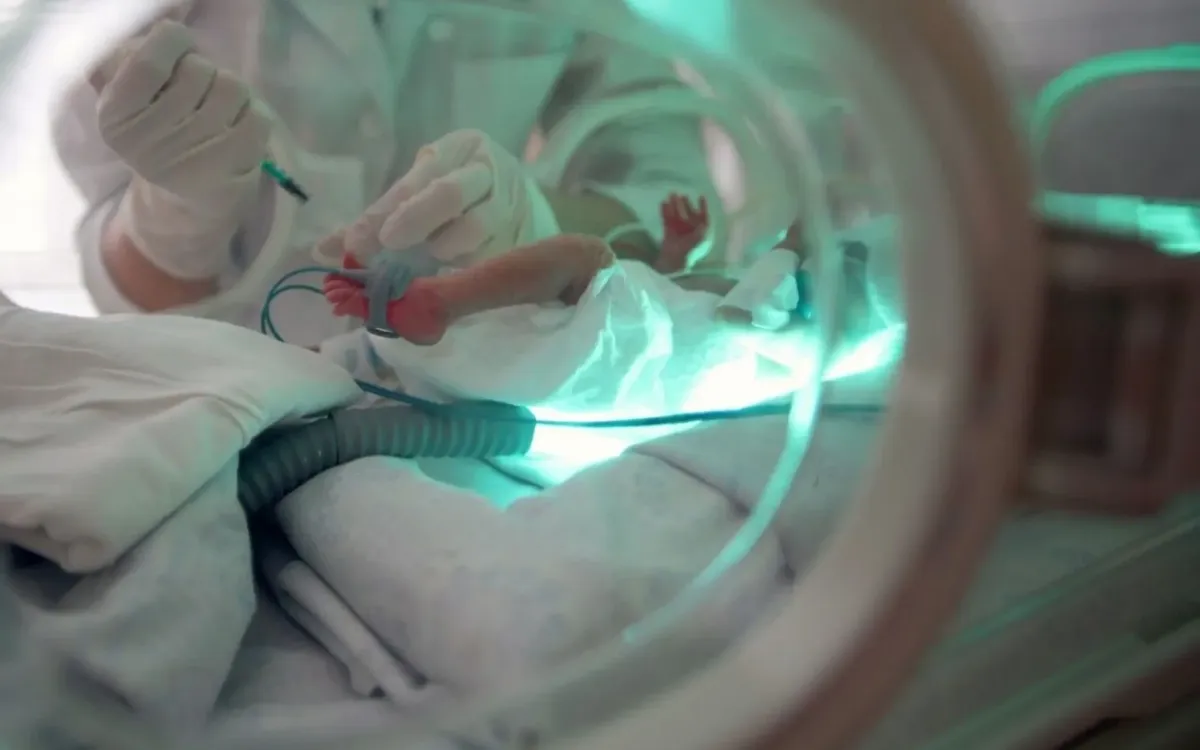
The boy’s parents are sure that doctors are hiding the consequences of their negligence, not allowing an independent expert to a small patient. The hospital refers to the federal law, then to quarantine and categorically refuse to show a newborn to third -party specialists.
Three days after birth, Little Rodion fell into a hypoglycemic one. He began cramps, signs of encephalitis, hepatitis appeared, sepsis developed and pneumonia began. All this happened to the boy, who was born healthy (8 points in Apgar), was placed on cohabitation with his mother, received breast milk for three days, and then ended up in the department of the pathology of newborns.

“The doctors said that he had a“ jaundice ”and took away,” says the mother of the newborn Elina Oganesyan. - And then I found out that the child is in serious condition. I was told that I was to blame for everything, that the boy had intrauterine infection. Although I came to the perinatal center in the direction, I had all the tests in order. The birth began on August 24. To stimulate labor activities, I was introduced to the so -called A balloon, then they began to stab oxytocin. All this lasted about 14 hours. At some point, I was terribly ill under my left spatula, I began to suffocate, the doctors came running, put on an oxygen mask on me, and I already woke up in intensive care after cesarean section.
Doctors confirmed - the boy is healthy, and the whole family was preparing for the discharge on August 29, but October is already, and mother and baby are still not released from the Rostov Regional Perinatal Center.
The "jaundice" was complicated by hypoglycemia, convulsions and bilateral pneumonia. The child was connected by oxygen, they began to give antibiotics and anticonvulsants. Judging by the medical card, the body correctly reacted to treatment, Rodion began to recover. The cause of the crisis, the doctors called the breast milk of the mother. According to them, a woman is a chronic carrier of golden staphylococcus. Treatment was prescribed, and by September 9, Rodion again began to turn into an ordinary restless infants. But on September 11, the tests showed the growth of leukocytes, the boy was again transferred to antibiotics treatment.
Officially, the diagnosis of a newborn sounds like this: "Congenital sepsis of mixed etiology, pneumonia, nephritis, hepatitis, meningoencephalitis, severe course, a period of recructions." Doctors accuse the mother of what happened. They insist that the infection occurred in intrauterine. The young woman first believed the doctors, but when, after the outlined improvement, Rodion again began to plunge into a serious condition, she could not stand it and demanded an independent examination.
- Does it happen that intrauterine infection makes itself felt on the fourth day of the child’s life? - Mom does not find a place. - The extract states that the pregnancy took place against the background of Kolapita, but this is fiction, all the tests and crops were in order. No specialized treatment was prescribed to me. And those strains that were identified by my son after a week and a half of stay in the perinatal center, as nurses, “relatives” for this hospital are secretly told.
“Regularly discovered in the analyzes of the little Rodion Klebsiella, the golden staphylococcus and the Pseudognyk - typical hospital strains,” says the former chief physician of the perinatal center, the well -known neonatologist Valery Bushtyrev. - Pneumonia in a child developed by the end of the third day in the obstetric department. This is the appearance of a sepsis in a newborn indicate contamination by hospital strains, ”says Bushtyrev, studying photos of a medical card and analyzes of the child, which his mother sends him by phone. - In addition, according to my estimates, a number of key provisions of existing clinical recommendations for the treatment of hypoglycemia in newborns were not implemented.
Most likely, the doctors underestimated or untimely diagnosed this state, which could affect the insufficiency of the immune response.
Elina Oganesyan found the honored doctor of Russia after she was desperate to buy new antibiotics for her son.
After the little Rodion spent 42 days on the strongest antibiotics, Elina wrote a statement to the prosecutor’s office demanding to check the medical institution for compliance with sanitary and epidemiological norms.
“I took all the drugs prescribed to me, and a completely healthy woman came up to the term of time, and the fetus, according to doctors, was healthy on the eve of childbirth,” writes a desperate woman. - For 42 days - this is grief and despair, these are endless reproaches of doctors, they say, herself is to blame, infected the child! But now we clearly began to understand that everything is not at all the way we were presented! My parents asked to advise our child to the honored doctor of Russia, a doctor of medical sciences, a neonatologist with a 40-year experience, the former chief neonatologist of the SEO Valery Bushtyrev, but we were categorically denied this, the letter says.
The perinatal center confirmed that they did not intend to let a well -deserved neonatologist, who, moreover, headed the center for 10 years.
“I have no right to let anyone in, especially a person who officially does not work in any medical institution,” the current chief physician of the Rostov Regional Perinatal Center Maxim Umansky explained his position. - Read the federal law, everything is said about it there. In addition, you probably heard about quarantine events in connection with coronavirus.
He refused to discuss the history of the disease of Rodonnesyan, citing a medical secret.
To fight for the health of the boy, the Oganesyan family was forced to hire a lawyer. But Olga Skazkin shrugs:
- In the Federal Law there is no direct ban on ensuring the patient is advised by third -party independent experts. The patient has the right to convocate the council of doctors to clarify the diagnosis or choose a treatment plan. But all this does not depend on the desire of the patient, but on the decision of the attending or chief physician of the medical institution.
According to Olga Skazkin, the law must expand the interpretation of the concept of “medical worker”. Now it means only an employee of the medical institution or a doctor - an individual entrepreneur. If you perceive this literally, then, for example, it is difficult to attract retirement doctors for the consultation, who have colossal experience and knowledge.
The President of the Patient Protection League, Alexander Saversky, confirms: it is extremely difficult to get an independent opinion of a doctor who is not built into a hierarchically interconnected system of local health.
- If we are talking about an adult patient and ordinary hospitalization, then the doctor may come to the patient under the guise of a visitor. If we are talking about the resuscitation department, then, of course, everything is more complicated here, ”says Saversky. - In the case of the parents of a newborn child, they have the right to convene a commission. Previously, patients had the right to a consultation of doctors, but several years ago this right was taken away from them. Therefore, it remains either to negotiate with the doctor, or transport the child to another medical institution - if he is subject to transportation and under his responsibility, of course. Objectively, getting another opinion is legally very difficult.
Valery Bushtyrev believes that former colleagues, ignoring objective problems with the diagnosis of little Rodion, simply do not want to let him into the perinatal center - either they will get scores, or they are afraid that the former head physician will see and unveil the dangerous failures in the work of the institution. From the history of the Oganesyan family, he has already found out that “in the child’s treatment protocol there are prescriptions of drugs that are not included in the current clinical protocols of newborns in the CPS”, that “clinical protocols are carried out with rude defects, which leads to poolic complications in the walls of the PC, despite the prosperous microbiocenosis and, in general, the initial state of the pregnant woman And the fetus on the eve of childbirth. "
In this regard, experts recall the FZ-323 “On the basics of protecting the health of citizens of the Russian Federation”-a law that protects not patients, but doctors who can experiment as much as they like, without fear either for the result of treatment, or for their reputation.